
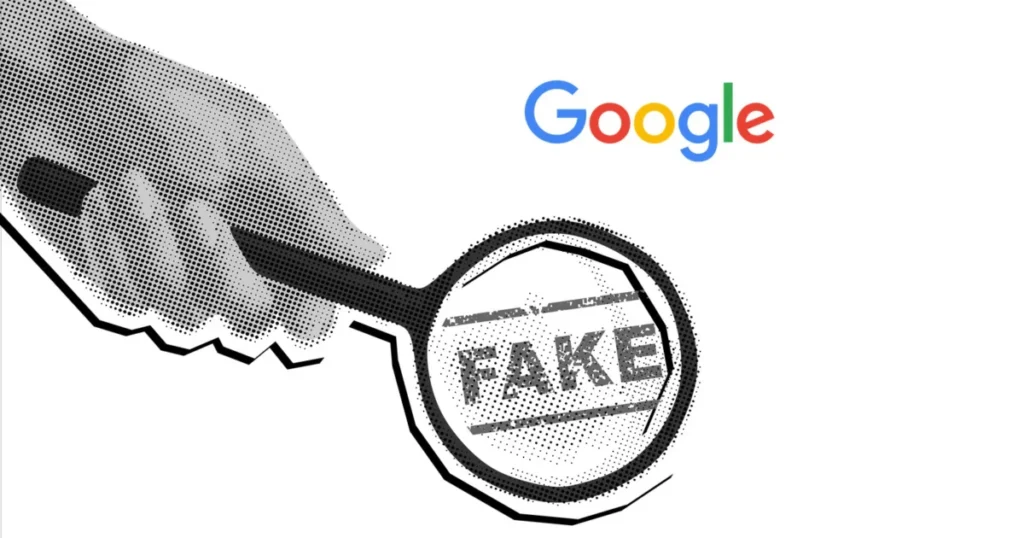
Google Cracks Down on Deception: Fake Author Profiles Now Explicitly Condemned in Helpful Content Guidance
By [Author Name]
Published: October 2026
Google has officially updated its core Search Central documentation to explicitly warn site owners against the use of fabricated creator profiles. The recent update to the "Creating helpful, reliable, people-first content" guidance targets deceptive practices such as AI-generated headshots, invented names, and false credentials designed to trick users into believing content was written by human experts.
While Google’s internal human quality raters have long been instructed to flag these tactics as severe forms of deception, this new inclusion bridges the gap between manual evaluation standards and automated search algorithms. For publishers, SEO professionals, and content creators, the message is unequivocal: manufacturing fake E-E-A-T (Experience, Expertise, Authoritativeness, and Trustworthiness) is no longer just a violation of quality rater protocols—it is a direct red flag for Google’s automated ranking systems.
Main Facts
The core update centers on a newly added paragraph within the "Who (created the content)" section of Google’s public-facing helpful content guidelines. Dated October 1, the updated documentation outlines how manufactured identities erode trust not only among human readers but also within Google’s algorithmic infrastructure.
- Explicit Warning Against Deception: The updated text states that fabricating creator profiles—including the deployment of AI-generated headshots, made-up names, and fraudulent credentials to simulate human expertise—constitutes active deception.
- Algorithmic Penalization: Google explicitly notes that any form of deception renders a page untrustworthy to both users and its automated quality systems, classifying it as a definitive signal of low quality.
- Alignment with Rater Guidelines: The update mirrors Section 4.5.3 of Google’s Search Quality Rater Guidelines, which instructs human evaluators to assign the lowest possible ratings to pages utilizing fake author profiles or artificial personas.
- The Distinction of Bylines: While Google encourages accurate authorship information (such as verified bylines), company representatives have repeatedly clarified that author bylines themselves are not direct ranking factors. Instead, they serve as a trust mechanism for both human audiences and algorithms evaluating overall site credibility.
Chronology of the Policy Shift
To understand how Google arrived at this public policy update, it is necessary to examine the timeline of how the search giant has targeted fabricated authority over the past several years:
- January 2024: Google’s Search Liaison publicly clarifies that author bylines are not direct ranking factors. While helpful for establishing transparency, simply adding a name to a piece of content does not inherently boost its position in the search engine results pages (SERPs).
- May 2025: SEO reports highlight a major update to Google’s Search Quality Rater Guidelines. Human quality evaluators are given explicit instructions to target fake E-E-A-T content, specifically identifying AI-generated author images, fictitious biographical backgrounds, and fraudulent medical or professional credentials as grounds for a "Lowest" page quality rating.
- June 2026: Archived snapshots of Google’s "Creating helpful, reliable, people-first content" documentation confirm that public-facing guidance for site owners has not yet explicitly mentioned fabricated author profiles, leaving a disconnect between what human raters evaluated and what site owners were officially warned against.
- October 1, 2026: Google updates its Search Central helpful content documentation. The new paragraph regarding deceptive authorship information is officially integrated into the public guidelines, alongside definitions concerning main content and broader AI-content clarifications.
Supporting Data and Technical Context
The intersection of artificial intelligence, scalable content production, and search engine optimization has created an environment where generating thousands of articles with simulated human oversight has become trivial. Publishers looking to bypass traditional editorial costs have increasingly turned to automated tools not just to write articles, but to manufacture entirely fictitious editorial teams.
The Scale of AI-Generated Personas
Industry analyses suggest that thousands of programmatic SEO sites rely on fabricated author dossiers complete with stock photography or AI-generated headshots, manufactured educational degrees (such as degrees from recognizable universities), and fabricated work histories spanning major publications.
How Automated Systems Interact with Deception
Google’s search algorithms rely on a complex matrix of signals to determine page quality. While Google has not publicly detailed the exact algorithmic mechanisms used to detect a fake author profile, the updated guidance confirms that automated systems are calibrated to penalize pages where authorship markers clash with broader authenticity signals.
When a page utilizes a stock or AI-generated headshot paired with a generic, unverified biography, Google’s systems treat this mismatch as a low-quality indicator. This reinforces the broader ecosystem trend: generative AI can assist in content drafting, but fabricating an entire human identity to vouch for that content crosses the line from automation into intentional deception.
Official Responses and Industry Reactions
The SEO community has largely welcomed the formal documentation update, viewing it as long-overdue clarification that bridges the gap between public documentation and internal evaluator handbooks.
The Role of Search Quality Raters
A persistent point of confusion among webmasters has been the relationship between Search Quality Rater Guidelines and core ranking algorithms. Google has long maintained that human raters do not directly control or influence individual page rankings in real-time. Instead, rater data is used to train and evaluate machine learning models.
By bringing the "deceptive authorship" warning out of the rater guidelines and into the public developer documentation, Google is signaling to site owners that the criteria used by human evaluators to judge low-quality content are deeply aligned with what automated algorithms are designed to catch.
The Distinction Between Transparency and Manipulation
SEO experts emphasize that Google is not penalizing the use of AI tools per se—Google’s longstanding stance is that automated content is acceptable as long as it is helpful and people-first. However, the distinction lies in transparency versus impersonation. Using AI to draft an article is one thing; inventing a fake human doctor, scientist, or industry expert to falsely endorse that content is viewed by Google as malicious deception.
Implications for Publishers, SEOs, and Content Creators
The formal inclusion of fake author warnings in Google’s guidelines carries profound implications for digital publishers, content marketing agencies, and enterprise SEO strategies.
1. The Death of Pseudo-Anonymous "Ghost" Teams
Sites that have relied on "content farms" populated by fake editorial boards must audit their digital footprints immediately. Maintaining pages dedicated to fictional editors, complete with generated headshots and fake credential claims, is no longer just a grey-hat tactic—it is explicitly classified in official guidelines as deceptive behavior that risks algorithmic downgrades.
2. A Higher Standard for E-E-A-T
Experience, Expertise, Authoritativeness, and Trustworthiness (E-E-A-T) have dominated SEO discussions for years. This update makes it clear that attempting to fake E-E-A-T is treated more harshly than simply having weak E-E-A-T. A site with genuinely inexperienced writers may underperform, but a site that actively manufactures false credentials to deceive users faces the compounded penalty of being flagged for intentional deception.
3. Verification and Real-World Credibility
For legitimate publishers, the best defense is absolute transparency. Websites should ensure that their bylines reflect real, verifiable individuals with genuine subject-matter expertise. Linking author profiles to active social media handles, professional portfolio sites, or recognized industry contributions helps establish the authentic human footprint that Google’s quality systems reward.
4. Continuous Monitoring of Documentation
Google frequently updates its Search Central documentation without widespread public fanfare. SEO professionals and site owners are advised to regularly check the Google Search documentation updates page and audit their own content governance policies to ensure alignment with evolving standards.
Conclusion
Google’s decision to integrate warnings against fabricated author profiles into its helpful content guidance marks a significant milestone in the ongoing battle against low-quality, programmatic spam. By drawing a bright line between legitimate content assistance and malicious identity fabrication, Google is making it clear that trust cannot be synthetically generated. For publishers and creators, authenticity is no longer just a best practice—it is an absolute prerequisite for long-term organic visibility.
