
Peak Martech: Has the Great Expansion Finally Hit the Ceiling?
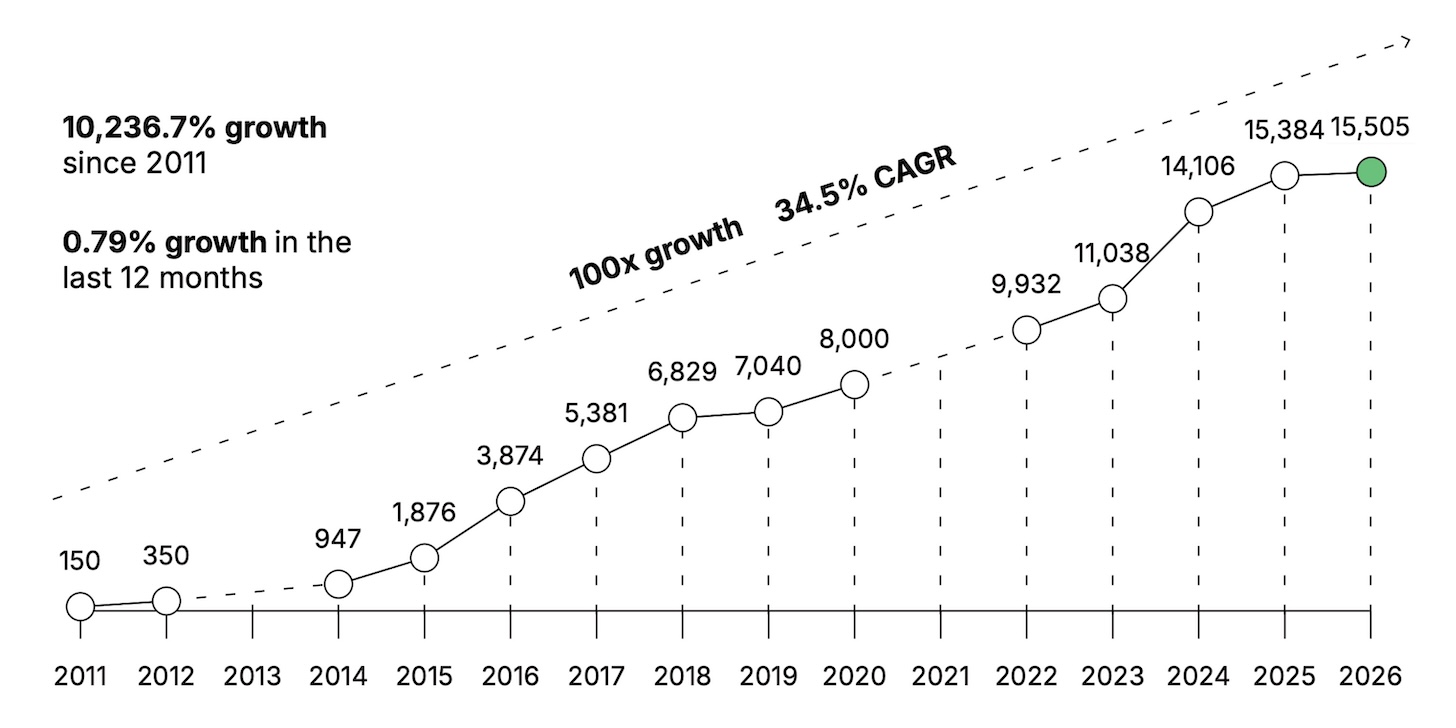
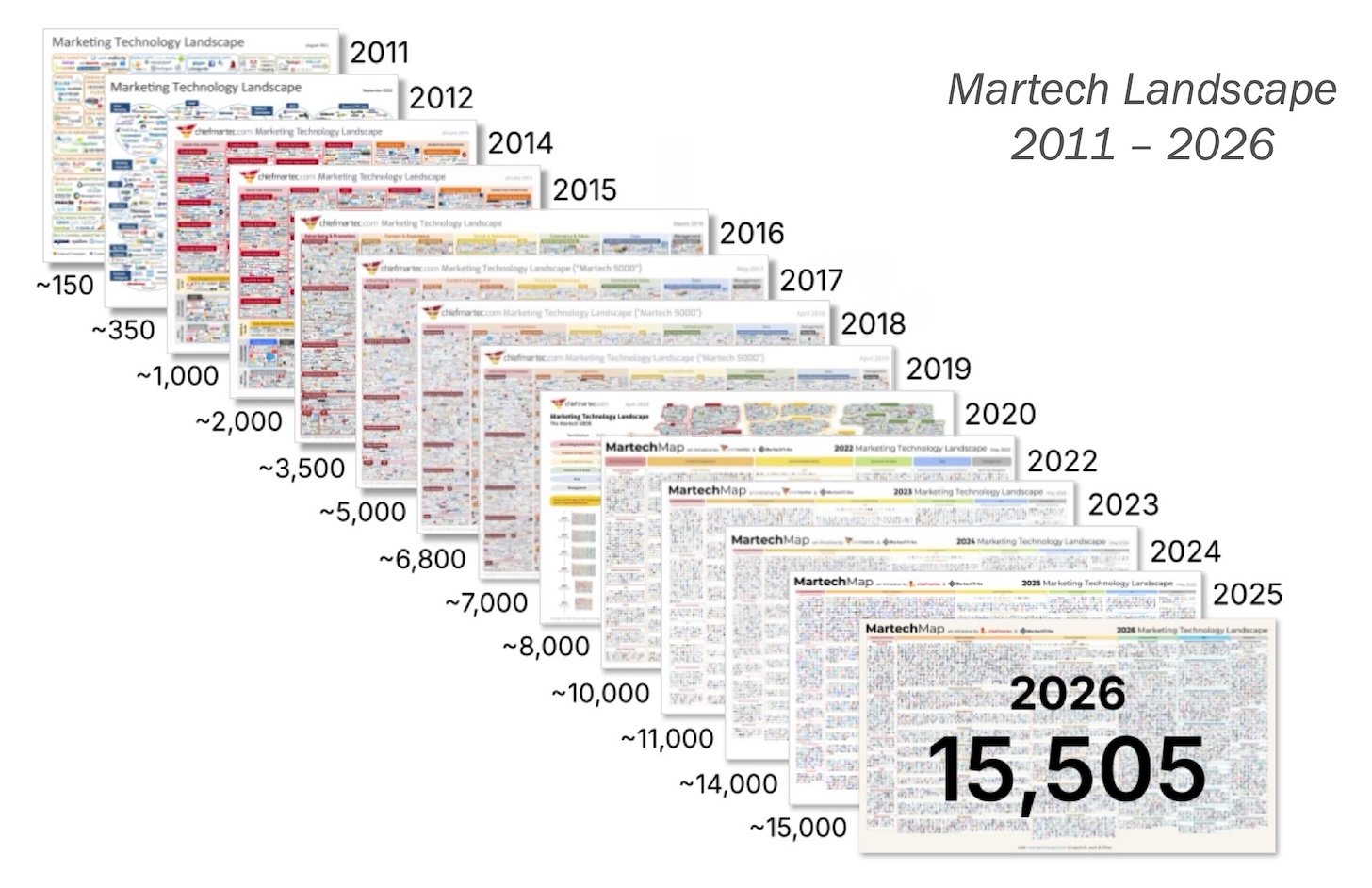
For fifteen years, the Marketing Technology (martech) landscape has functioned as the industry’s most reliable barometer of digital ambition. Since 2011, when the first iteration of the now-infamous "Supergraphic" contained a modest 150 solutions, the sector has been defined by a singular, relentless trajectory: more. More startups, more logos, more categories, and more existential dread for CMOs attempting to harmonize a fragmented stack.
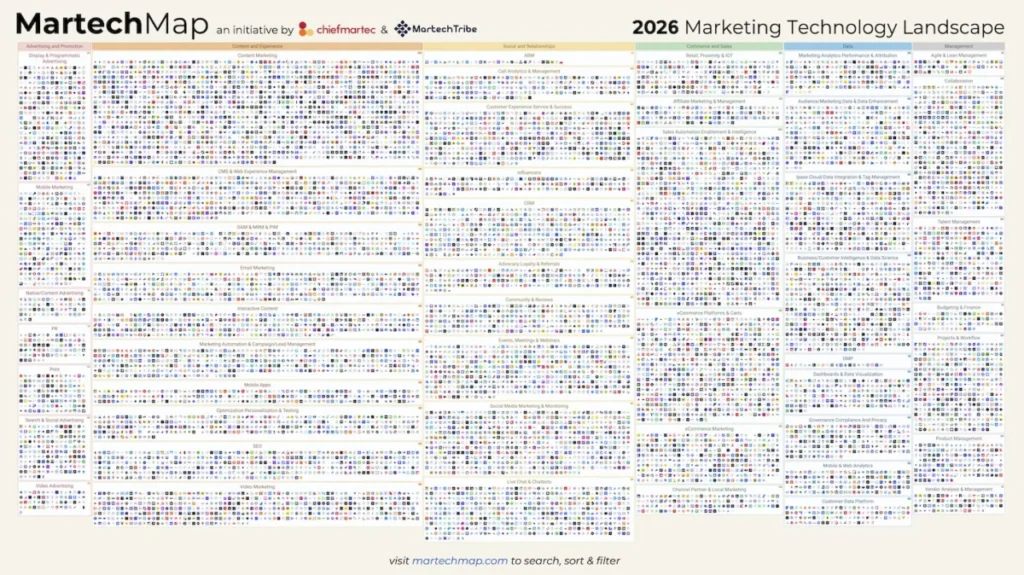
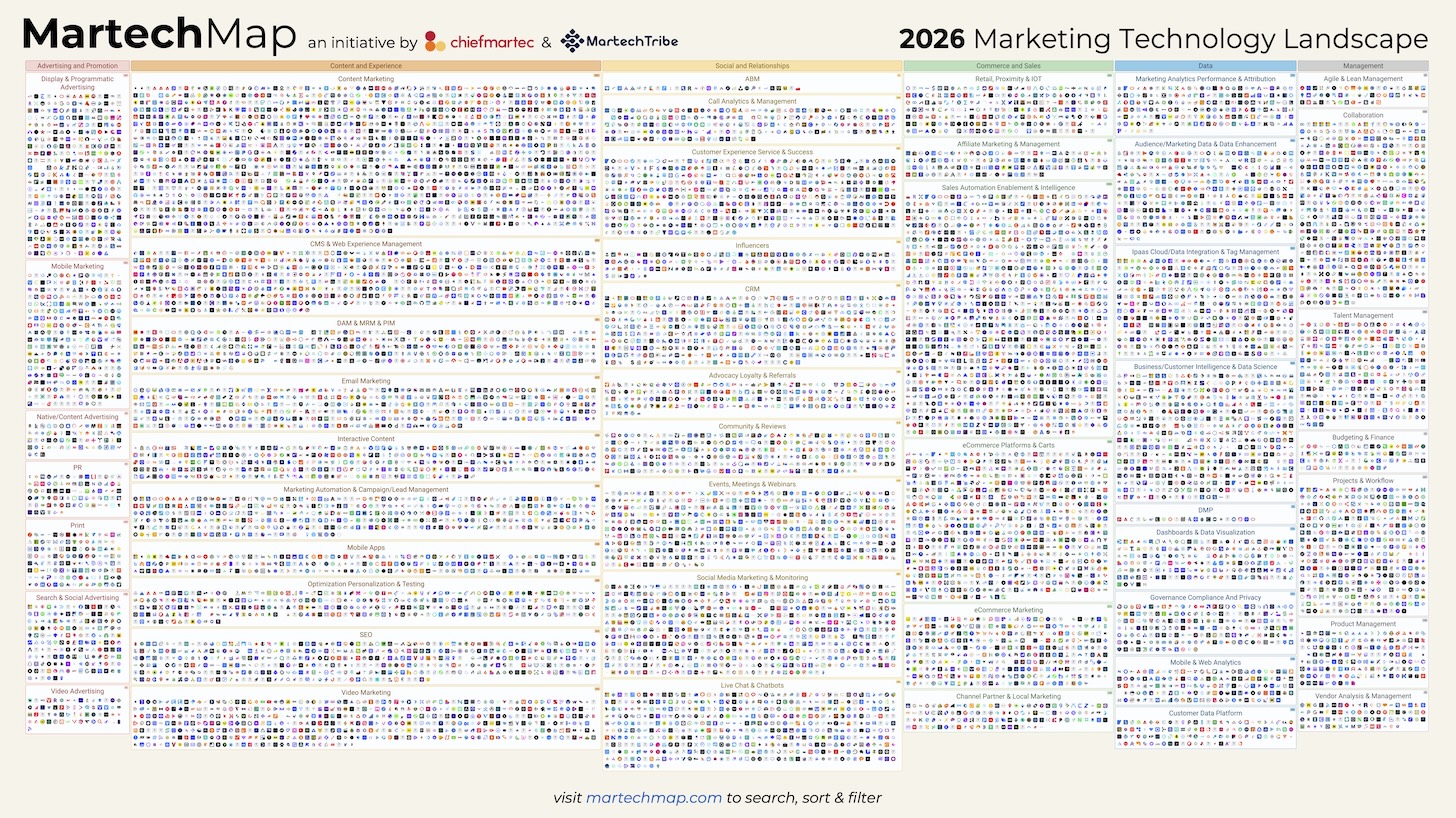
However, the 2026 Marketing Technology Landscape, released this week, suggests the narrative has undergone a seismic shift. For the first time in over a decade, the growth that once seemed inevitable has effectively stalled. With 15,505 products now on the map—a marginal increase of just 0.79% from last year’s 15,384—the industry is staring at a new, potentially permanent reality: the era of "Peak Martech."
The Chronology of a Plateau: From Hypergrowth to Equilibrium
To understand the current stasis, one must look back at the chaotic, exhilarating growth of the last decade. Between 2011 and 2025, the martech ecosystem expanded by more than 10,000%. This was the age of the "SaaS explosion," fueled by low interest rates, the rise of cloud-native infrastructure, and a marketing philosophy that dictated every business problem could be solved by layering on a new software subscription.
Year after year, analysts predicted consolidation, yet the market defied gravity. Every time a skeptic declared the landscape "full," another thousand logos would emerge to fill the gaps. But the 2026 data indicates that the "Jurassic Park" effect—where martech always found a way to grow—has finally encountered a genuine barrier.
The data confirms a cooling of the entrepreneurial engine:
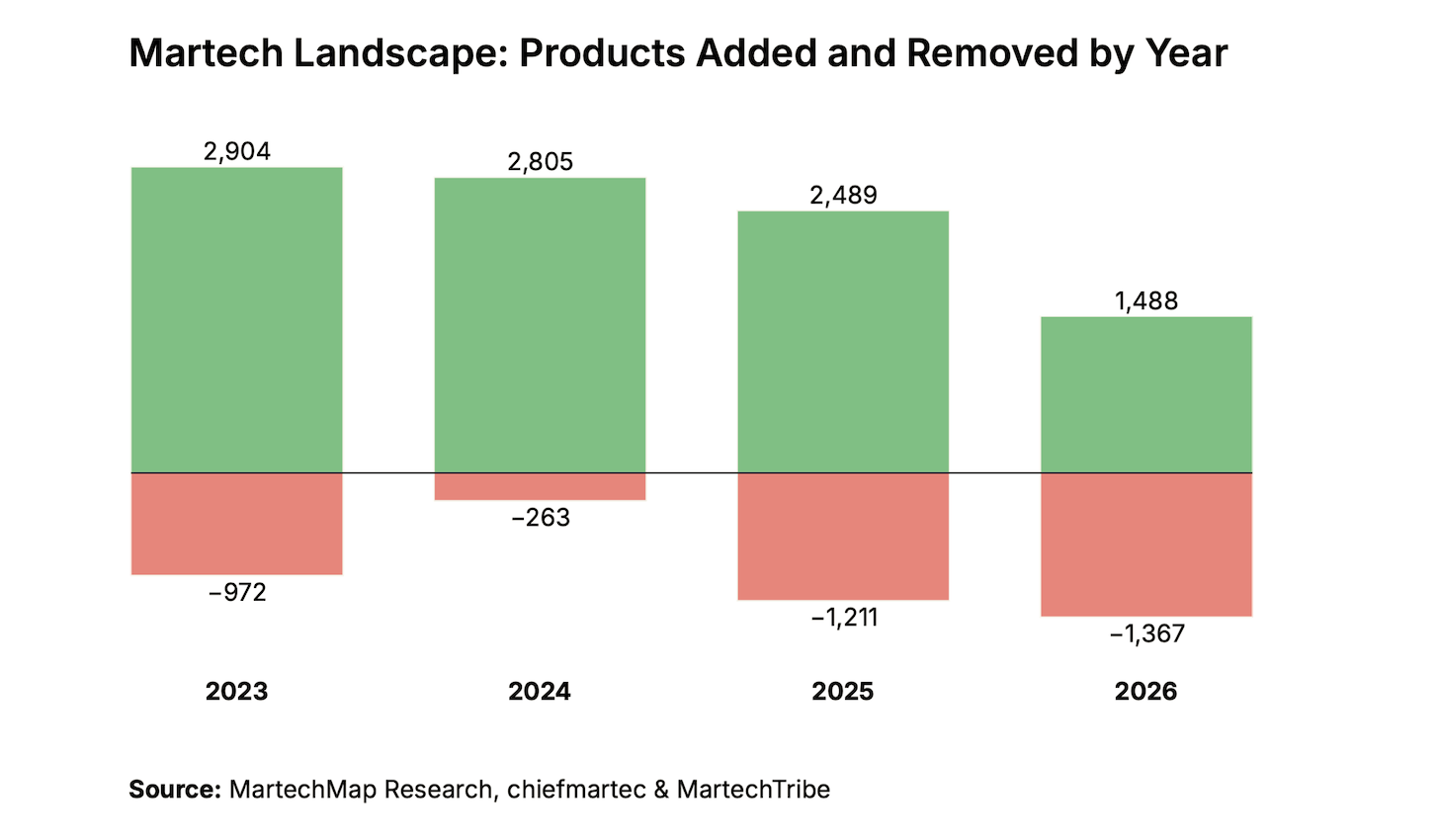
- 2025: 2,489 new products were added.
- 2026: Only 1,488 products were added—a staggering 40% decline in new entrants.
- The Churn: While new additions slowed, the "exit rate" accelerated. 1,367 products were removed from the landscape this year, a 13% increase over the previous cycle.
The net result is a market that is no longer expanding into a vacuum but is instead consuming itself. We are no longer seeing the frantic creation of new tools; we are seeing a rigorous, often brutal, process of market rationalization.
The Anatomy of the Exit: Who is Leaving the Landscape?
The stagnation in the total count of martech solutions is not a sign of inactivity; it is a sign of intense, high-stakes competition. The "bonfire" of startups is not limited to the amateurish "AI wrappers" that flooded the market in the immediate aftermath of the generative AI boom.
According to the latest report, 51.7% of this year’s exits consist of software from the 2010–2019 SaaS generation. These are not fly-by-night operations; they are established companies that successfully navigated the early growth stages but failed to secure an "inevitable" position in the modern stack.
The profile of the average "exit" is telling:
- Revenue: 45.5% of removed products were generating between $1M and $10M annually.
- Headcount: 41.2% of the departed firms had between 1 and 10 employees, while 38.7% employed between 11 and 50.
These firms are victims of a "squeezed middle." From above, large-scale incumbents are aggressively bundling AI capabilities into existing enterprise suites. From below, AI-native startups are offering hyper-specific, low-cost solutions that solve singular problems better than bloated legacy tools. For the mid-market vendor, the value proposition has evaporated, leading to a wave of shutdowns, acquisitions, or pivots that have effectively pruned the landscape.
The Paradox of Innovation: Why Old Categories are Booming
If the headline is "Peak Martech," the subtext is "AI-Driven Resurgence." While the landscape as a whole has plateaued, specific categories are experiencing explosive growth, defying the overall trend. Notably, these are not new, fringe categories, but the foundational pillars of the web.
- CMS & Web Experience Management: Up 21.4% (504 to 612 products).
- Ecommerce Platforms & Carts: Up 19.9% (547 to 656 products).
Why are these "mature" categories growing? The answer lies in the shift from human-facing websites to machine-facing infrastructure. For twenty years, web design was optimized for the human eye and the search engine crawler. Today, the primary audience for a brand’s digital presence is increasingly the AI agent.
We are witnessing the rise of the "agentic web." Whether it is a shopping assistant, a procurement agent, or an answer engine, these machines do not browse websites in the traditional sense. They extract, compare, and act. Consequently, companies are scrambling to upgrade their CMS and Ecommerce backends to provide the structured, machine-readable data that allows these agents to function. This is the era of "context engineering," where the competitive advantage of a brand is determined by the richness and accessibility of the data it provides to AI systems.
Implications: The New Rules of the Stack
The stabilization of the martech landscape signals a fundamental shift in how organizations should approach their digital investments. The "more is better" strategy—where firms purchased hundreds of point solutions in hopes of creating a competitive edge—is being replaced by a focus on integration, governance, and orchestration.
1. The Rise of Data Connective Tissue
As agents begin to act across multiple systems, the importance of iPaaS (Integration Platform as a Service) and data governance tools has spiked, with the former growing by 8% and the latter by 7.1%. When software is "talking" to other software, the security and privacy rules governing those interactions become as important as the software itself.
2. Instrumentation of the Dark Journey
As customer journeys move away from traditional click-paths and into AI-mediated conversations, the "visible" funnel is shrinking. Marketers are responding by reinvesting in analytics that can track these fragmented, agent-led interactions. Mobile, web, and call analytics have seen a growth of 11.3% and 8.9% respectively, as marketers desperately attempt to map the "black box" of AI-driven customer behavior.
3. The Reactivation of Marketing Automation
Perhaps the most surprising finding in the 2026 report is the 5.9% growth in the "Marketing Automation & Campaign Management" category. Long considered a commoditized, mature sector, marketing automation is experiencing a renaissance. AI is not replacing the need for orchestration; it is making it more complex. As marketers move from static campaigns to dynamic, AI-orchestrated customer journeys, the tools that manage those workflows are being fundamentally reinvented.
Conclusion: A Mature Market, A New Horizon
The data suggests that the martech industry has matured, moving from a period of reckless, additive growth to a period of thoughtful, subtractive refinement. The "State of Martech 2026" report paints a picture of an industry that is still highly innovative, but no longer defined by the sheer volume of its participants.
For the modern marketer, this is good news. The "Peak Martech" plateau means that the focus can finally shift from "how many tools do we have?" to "how do we make our tools work together?" As the industry consolidates, the winners will not necessarily be the ones with the most features, but the ones that provide the clearest context, the strongest governance, and the best interoperability for an AI-first future.
The landscape may have stopped growing at its previous breakneck pace, but the underlying currents of change have never been stronger. As we move into the latter half of the decade, the question is no longer whether we have enough technology, but whether we have the wisdom to use it effectively.
For a deeper dive into the specific data, industry shifts, and the 70+ AI use cases currently reshaping the landscape, the full "State of Martech 2026" report is available for download at the ChiefMartec archives.
