
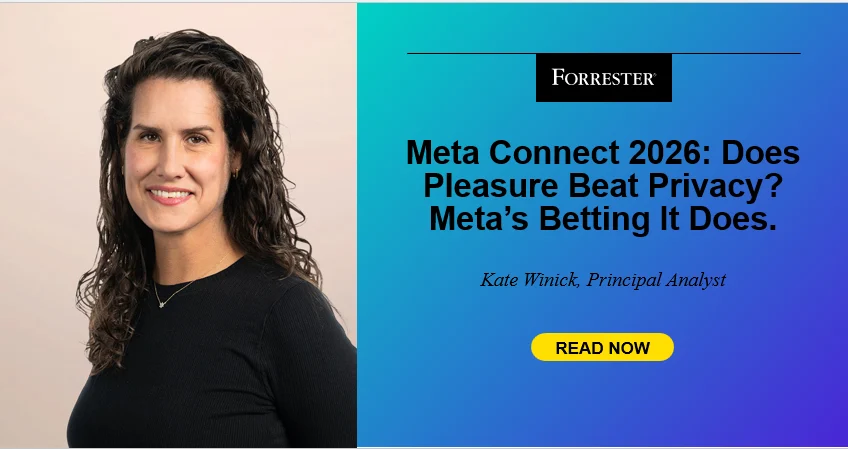
Navigating the Privacy Precipice: Inside Meta Connect 2026’s High-Stakes Bet on Wearables, AI Agents, and Consumer Trust
By Tech & Market Intelligence Desk
Published: September 2026
Introduction: The Subtext of Meta Connect 2026
When Mark Zuckerberg and the executive team took the stage for Meta Connect 2026, the official presentations outlined a dazzling array of next-generation hardware, lifestyle collaborations, and advanced artificial intelligence. Yet, the true subtext of the entire conference lingered quietly in the air, prompting a much heavier question for the technology sector at large: How much access—both willing and unwilling—are consumers prepared to surrender to Meta regarding their most private lives, and at what ultimate price?
Beneath the sleek product reveals and celebrity endorsements, Meta Connect 2026 served as a calculated stress test for public boundaries. The tech giant launched an anticipated line of camera-free audio glasses alongside an innovative handheld device designed to interface with its flagship AI ecosystem, Muse. These rollouts subtly acknowledged that a significant portion of the consumer base remains deeply hesitant about the proliferation of constant recording devices in public spaces. Simultaneously, however, Meta doubled down on its immersive virtual and augmented reality portfolios, rolling out devices engineered to tempt a hesitant global market into becoming far more comfortable with an all-encompassing wearable lifestyle.
To understand where Meta’s sprawling product ecosystem truly stands with the general public, researchers polled 552 members of Forrester’s ConsumerVoices Market Research Online Community (MROC). The resulting data paints a complex portrait of an undisputed market leader colliding against an unyielding wall of consumer privacy anxiety.
Main Facts: Hardware Innovations and Strategic Pivots
Meta Connect 2026 introduced a sweeping catalog of hardware designed to diversify how users interact with ambient computing and artificial intelligence. The announcements fell into three primary buckets: audio-first eyewear, camera-enabled smart glasses with high-profile fashion partnerships, and decentralized agentic AI tools.
1. The Pivot to Audio and FDA-Cleared Hearing Tech
Five years after the commercial debut of Meta’s smart glasses initiative, public backlash has grown increasingly severe. Viral videos exposing how users could easily tamper with or obscure the mandatory LED filming indicator light triggered a wave of public concern. Reports of smart glasses being weaponized for public harassment, nonconsensual filming, and unauthorized data harvesting have dogged the product line.
In response, Meta introduced the long-rumored Audio Glasses. Stripped entirely of cameras, these frames are designed to offer the ergonomic convenience of wearable audio and seamless AI access without the associated privacy anxieties of a lens pointed at passersby. Furthermore, Meta announced a major healthcare pivot: Meta Glasses have officially secured FDA clearance to function as a clinical-grade hearing enhancement device, accessible via a $149 software activation fee at the time of purchase.
2. High-Fashion Collaboration and Gen 3 Upgrades
Despite addressing privacy backlash with camera-free alternatives, Meta has not abandoned its visual recording hardware. The company debuted its slimmed-down Gen 3 models of camera-enabled Ray-Ban glasses, introducing two brand-new frame styles. To maintain its cultural momentum, Meta announced high-profile creative collaborations with global style icons Kylie Jenner and BLACKPINK’s Lisa.
With an expansive catalog reaching 51 distinct style combinations for Meta’s proprietary smart glasses—including an entry-level "Adventurer" model starting at $249—the company’s overarching vision remains resolute. Meta is banking on a feature-rich, highly fashionable product ecosystem and a frictionless user experience to simply overwhelm lingering public privacy concerns, conspicuously introducing no groundbreaking physical hardware features dedicated to protecting bystander privacy.
3. Muse and the Agentic Future
The crown jewel of Meta’s software strategy is Muse, an advanced personal AI agent personified by its mascot, "Jolly," whom consumers can expect to see prominently featured across marketing campaigns in the coming months. Muse promises a genuinely autonomous, agentic experience. Operating even after the user closes the corresponding application, Muse can independently place purchases, offer real-time proactive suggestions, and remember the holistic context of a user’s cross-platform interactions.
However, this level of intimate digital surveillance naturally raises alarming security flags. To mitigate these concerns, Meta emphasized that Muse operates entirely within the Muse Secure VM (Virtual Machine) and will soon expand to Muse Confidential VM for hyper-sensitive tasks. Leveraging end-to-end encryption architecture borrowed from WhatsApp, these secure environments are engineered to shield user interactions—rendering them invisible even to Meta itself. Integrated directly into Meta’s wearable glasses, Muse eliminates the physical friction of typing text prompts. Subscription tiers for advanced agentic access start at $20 per month.
4. AR/VR Breakthroughs and Project Phoenix
Meta Connect originally established itself as a showcase for metaverse-era virtual reality hardware, but recent years saw the division take a backseat to AI investments. That changed in 2026 with the official unveiling of Project Phoenix—Meta’s long-rumored, ultra-lightweight VR glasses. Additionally, Meta surprised attendees by launching a charm bracelet and a companion handheld device designed to provide direct access to Muse without requiring the user to wear smart glasses. This compact accessory is also camera-enabled and slated to hit retail shelves just in time for the Christmas holiday shopping season.
Chronology of Events: From Metaverse Hype to Ambient AI Agents
To fully grasp how Meta arrived at its 2026 product lineup, it is essential to trace the chronological milestones that shaped the company’s hardware and software evolution over the past half-decade:
- 2021–2022 (The Genesis of Smart Eyewear): Meta launches its initial smart glasses line in partnership with EssilorLuxottica (Ray-Ban). Early iterations focus on basic photo-taking and audio playback, treated largely as novelty items by early adopters.
- 2023–2024 (The Backlash Era): As smart glasses proliferate, public pushback intensifies. Activists, businesses, and privacy advocates raise alarms over nonconsensual recording. Viral social media clips demonstrate how users easily bypass privacy indicator lights with simple modifications or tape, sparking widespread bans of the glasses in gyms, schools, and private venues.
- 2025 (The Standstill and Market Assessment): Forrester data reveals deep-seated public resistance. In 2025 polling, 79% of respondents report owning no AI glasses and holding zero interest in purchasing them. Despite this public coldness, Meta aggressively iterates on its AI integration, laying the groundwork for ambient assistant frameworks.
- Early September 2026 (The Ecosystem Stress Test): Just weeks before Meta Connect, Muse experiences a public relations stumble when Amazon officially blocks Meta’s Muse AI agent from operating or shopping on its retail platform, highlighting early friction in the cross-platform agentic economy.
- Late September 2026 (Meta Connect 2026): Meta formally unveils its bifurcated strategy: rolling out camera-free audio glasses and FDA-cleared hearing tech to appease critics, while simultaneously expanding high-fashion camera glasses, Project Phoenix lightweight VR gear, and the subscription-based Muse agent ecosystem.
Supporting Data: What the Public Actually Thinks
Market speculation and keynote presentations tell one story, but consumer data tells another. According to Forrester’s ConsumerVoices Market Research Online Community (MROC) poll of 552 everyday consumers, the chasm between Meta’s ambitious roadmap and public readiness remains vast, though Meta commands an iron grip on the niche demographic that does participate in the market.
Year-Over-Year Ownership and Intent
Public sentiment toward AI and smart glasses has remained stubbornly static year over year:
- In 2025: 79% of poll respondents did not own AI glasses and expressed zero interest in owning or buying them.
- In 2026: Among the 93% of respondents who currently do not own smart glasses, a striking 76% stated they have no intention of buying a pair.
Meta’s Dominance Among Adopters
While overall adoption remains low, Meta has successfully cornered the market among active early adopters:
- Among the minority who do own smart glasses, 73% own Meta glasses, making them the definitive category leader.
- Meta has captured the lion’s share of prospective shopper interest: 70% of prospective buyers expressed interest in Meta’s glasses, giving the company a commanding lead of more than 20 percentage points over its nearest competitor.
- However, when asked specifically about the newly introduced privacy-conscious hardware, only 21% of respondents said they would be more likely to purchase camera-free glasses, indicating that removing the camera is not a silver bullet that suddenly unlocks mass-market appeal.
The Interplay Between Muse and Smart Glasses
Meta’s hardware-software ecosystem approach mirrors how modern consumers discover and adopt emerging tech. Forrester’s data highlights a reciprocal interest funnel:
- 31% of respondents reported becoming interested in Muse after researching smart glasses.
- 19% became interested in smart glasses after learning about the capabilities of the Muse AI agent.
- 49% noted that the integration of Muse had zero effect on how they felt about smart glasses.
- Despite heavy marketing, only 8% of surveyed respondents reported having tried Muse already, though Meta’s multi-billion-dollar infrastructure bets are entirely predicated on that number surging exponentially over the next twelve months.
Official Responses and Industry Dynamics
The announcements at Meta Connect 2026 did not occur in a vacuum. They triggered immediate reactions across the technology and regulatory landscapes, particularly concerning platform interoperability and data security.
The Amazon-Muse Showdown
Just days before Meta Connect, Amazon executed a high-profile block, legally and technically barring Meta’s Muse AI agent from accessing and making retail transactions on Amazon’s e-commerce platform. Industry analysts view this move as the opening salvo in a much larger corporate war over "agentic commerce." As AI agents increasingly act on behalf of consumers to buy goods, book flights, and manage finances, traditional retail walled gardens are fiercely protecting their platforms from autonomous third-party scrapers and transaction bots.
Meta executives largely brushed off the setback during the conference, emphasizing that Muse’s capabilities extend across a decentralized web of applications, financial institutions, and service providers. Nevertheless, the blockade underscores the friction that consumer-facing AI agents face as they attempt to bridge proprietary corporate ecosystems.
Privacy Safeguards and the Virtual Machine Defense
Responding directly to criticism regarding continuous data harvesting, Meta’s engineering leads went to great lengths to detail the security architecture behind Muse. By housing agentic interactions within Muse Secure VM and the upcoming Muse Confidential VM, Meta is attempting to replicate the zero-knowledge security ethos that made encrypted messaging apps like WhatsApp standard-bearers for privacy.
"Your agent works for you, not for us," Meta’s product leads emphasized during technical deep-dives. By utilizing hardware-isolated virtual environments and end-to-end cryptographic shielding, Meta hopes to convince enterprise clients and privacy-conscious consumers that ambient AI does not inherently require surrendering personal data to corporate servers.
Implications: The Future of Wearable Tech and Ambient AI
The rollout at Meta Connect 2026 carries profound implications for the future of consumer technology, digital privacy, and the human-computer interface.
1. The Normalization of Ambient Surveillance
By offering a sprawling array of choices—from high-fashion camera frames and FDA-approved hearing aids to camera-free audio glasses and discrete charm bracelets—Meta is executing a classic saturation strategy. The company recognizes that direct confrontation over privacy yields diminishing returns. Instead, Meta is attempting to normalize ambient computing by embedding it into everyday accessories. Whether consumers want to record video or simply listen to podcasts and converse with an AI agent, Meta wants to be the default hardware provider.
2. The Rise of Agentic Lock-In
The introduction of Muse marks a structural shift from app-based interactions to agent-driven workflows. When an AI remembers your preferences, anticipates your purchases, and manages your daily schedule across devices, switching costs skyrocket. The implications for digital monopolies are massive. If consumers channel their entire digital lives through an agent like Muse, Meta transitions from a social media platform into the primary operating system of human life.
3. The Unresolved Bystander Dilemma
Despite introducing camera-free audio glasses, Meta’s stubborn refusal to implement hardware-level safeguards for its camera-enabled lines leaves the "bystander problem" entirely unresolved. As smart glasses become indistinguishable from traditional luxury frames, public spaces will see an escalation in nonconsensual recording anxiety. This friction threatens to trigger legislative crackdowns, workplace bans, and public pushback that could ultimately constrain the mainstream growth of augmented reality.
Conclusion
Meta Connect 2026 demonstrated that Meta is no longer merely building social networks or virtual reality headsets; it is constructing an omnipresent, ambient infrastructure designed to merge human cognition with machine intelligence.
While Forrester’s consumer data proves that the general public remains deeply skeptical, cautious, and largely unmotivated to strap cameras to their faces, Meta’s long-term play relies on inevitability through saturation. By diversifying its hardware lineup, introducing robust zero-knowledge security wrappers for its AI agents, and aligning with global pop culture icons, Meta is daring consumers to prioritize convenience over privacy. Whether society takes the bait or draws a hard line in the sand remains the defining technological question of the decade.
