
Fourthwall vs. Spring (Teespring): The Ultimate 2026 Creator Commerce Showdown
For digital creators, influencers, and online entrepreneurs, monetizing an audience has never been more straightforward—yet choosing the right platform has arguably never been more complex. Two of the most prominent players in the creator economy space, Spring (formerly known as Teespring) and Fourthwall, have evolved significantly over the years.
At a glance, both platforms allow creators to launch custom-branded merchandise without managing warehouses or dealing with upfront inventory costs. However, a deeper look reveals that the two platforms are further apart than they initially appear.
This comprehensive analysis examines the core facts, chronological development, performance data, feature sets, and strategic implications of choosing between Spring and Fourthwall for your creator business.
Main Facts: Core Offerings at a Glance
Before diving into the nuances of design, fulfillment, and cost, it is essential to understand the foundational philosophy behind each platform.
Spring: The Social Merch Specialist
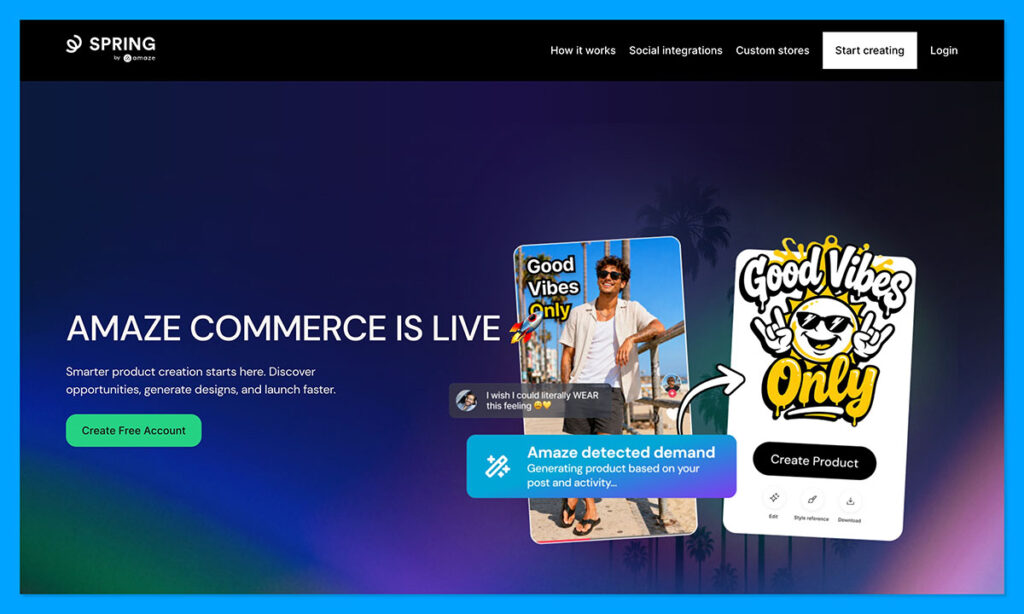
Spring remains one of the easiest ways to sell merchandise if you have an existing audience.
- Core Setup: Creators build a simplified, hosted storefront with a limited layout, select products from Spring’s manufacturing catalog, apply their custom designs, and sell directly.
- Integrations: It connects seamlessly with major social channels, making it a favorite for creators monetizing a YouTube, Twitch, or Discord following.
- Operations: Spring acts as the Merchant of Record, handling production, international payments, web hosting, physical delivery, and basic buyer support.
Fourthwall: The Comprehensive Brand Ecosystem
Fourthwall caters to creators who want a much more comprehensive ecommerce solution.
- Core Setup: Beyond retail-grade print-on-demand (POD) merch, Fourthwall allows creators to sell digital downloads, recurring memberships, subscriptions, and physical items they self-fulfill.
- Storefront Control: Users receive a completely customizable branded website powered by a custom domain, full HTML/CSS access, Merchant of Record support, and a built-in AI shop assistant named Eli.
- Monetization: It accommodates direct customer donations, fan tipping, and non-expiring digital gift cards.
Chronology: How Both Platforms Evolved
Understanding how Spring and Fourthwall reached their current market positions helps explain their divergent feature sets.
The Spring Timeline: From Teespring to Social Commerce
- 2011–2018 (The Teespring Era): Originally launched as Teespring, the platform pioneered the crowd-funded apparel model, where creators ran campaign-based shirt launches.
- 2020–2021 (The Rebrand): Recognizing that creators were selling much more than just t-shirts, Teespring rebranded to Spring and expanded its catalog to include accessories, home goods, and a digital product launcher.
- 2025–2026 (Recent Updates): Spring shifted its focus toward tightening account security, improving backend listing controls for bulk-editing, upgrading checkout speed (adding support for crypto, Apple Pay, and PayPal), and establishing a dedicated Creator Experience team.
The Fourthwall Timeline: Building for the Modern Creator Brand
- Launch & Early Development: Fourthwall emerged as a challenger brand designed to bridge the gap between simple merch platforms and complex independent stores like Shopify.
- Ecosystem Expansion: Rather than relying solely on basic POD, Fourthwall integrated native membership tiers, video-gated content, and direct fan engagement tools.
- 2025–2026 (AI and Retention): Fourthwall heavily invested in retention architecture, introducing advanced marketing automations via a direct Kit integration, a Throne integration for community wishlists, a designer marketplace, and the rollout of its 24/7 AI assistant, Eli.
Supporting Data: Pricing, Fees, Margins, and Product Quality
When evaluating creator platforms, the true cost goes beyond headline claims of being "free."
1. Pricing and Fee Structures
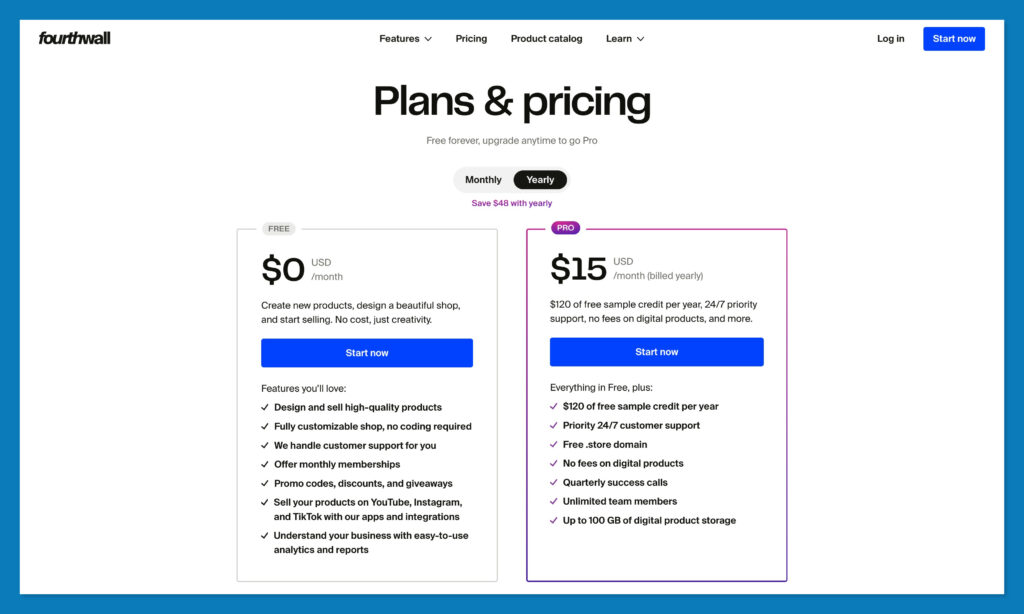
- Spring: Operates on a single free plan. Creators set their own retail prices above a fixed base production cost set by the platform. For digital downloads, Spring charges a steep 20% fee plus $1.70 per sale (e.g., selling a $10 eBook nets the creator just $6.30).
- Fourthwall: Also offers a feature-rich free plan with zero transaction fees on physical products (beyond standard payment processing). However, it applies a 5% fee on digital products and memberships. Fourthwall’s paid tier costs $19 per month ($180 annually), removing digital product fees, raising the listing limit to 500 items, granting unlimited team members, and providing $10 monthly sample credits.
2. Print-on-Demand (POD) Quality and Logistics
| Feature Area | Fourthwall | Spring |
|---|---|---|
| Catalog Philosophy | Curated, retail-grade blanks & signature items | Broad catalog (approx. 200 items) |
| Print Methods | DTG, embroidery, screen-print, cut-and-sew, sublimation | Mostly direct-to-garment and screen printing |
| Global Fulfillment | US, EU, UK, Canada, Mexico, Australia, Japan (5–10 days delivery) | US, EU, Mexico, India, Australia (10 days production + 4–7 days delivery) |
| Sample Ordering | Available via platform credits/purchases | Base-cost samples available for quality checks |
While Spring often offers slightly lower base costs on generic items, Fourthwall’s curated collection yields higher-quality end products that appeal to high-ticket fashion and premium brand seekers.
Official Responses and Operational Policies
Both platforms function as the Merchant of Record (MOR), relieving creators of the administrative nightmare of calculating, collecting, and remitting global sales tax and VAT. However, their customer service and fulfillment philosophies differ:
- Defective Product Policies: Both companies step in when items arrive damaged or defective. Spring utilizes a "Make It Right" policy for issues reported within 30 days, while Fourthwall handles replacements for manufacturing defects on all print-on-demand goods.
- Buyer Error and Returns: Because items on both platforms are made-to-order, neither platform accepts general returns if a customer orders the wrong size or simply changes their mind.
- Creator Support: Spring offers standard email and help-center support. Fourthwall offers 24/7 assistance through its AI assistant, Eli, alongside priority support and success calls for Pro subscribers.
Strategic Implications: Which Platform Should You Choose?
Deciding between Fourthwall and Spring ultimately depends on your long-term business goals.
Choose Spring If:
- You want a quick setup: You have an existing social media audience (YouTube, Twitch, Discord) and simply want to drop a few merch items or digital files without building an intricate website.
- You prioritize social channels over brand ownership: Your primary sales funnel runs directly through platform-native tools like YouTube Product Shelves or TikTok Shop, and you don’t need an independent brand hub.
Choose Fourthwall If:
- You are building a scalable brand: You view merchandise as just one pillar of a broader digital business that will eventually include recurring memberships, private community spaces, digital downloads, and self-fulfilled inventory.
- You need advanced marketing integrations: You rely on email marketing tools like Klaviyo, Mailchimp, or Kit to build automated customer journeys, welcome sequences, and targeted retention campaigns.
- You want creative autonomy: You require custom domains, advanced CSS/HTML editing capabilities, blog features, and granular control over the customer checkout experience.
Final Verdict
If your goal is to launch a quick side-hustle merch line for your existing social followers, Spring gets the job done efficiently and for free. But if your vision is to build a legitimate, multi-faceted creator brand that you truly own and can scale over the next decade without being forced to migrate platforms later, Fourthwall is the definitive winner.
