
Beyond the Dashboard: A Masterclass in Measuring Content Performance
Last Modified on March 19, 2025
If you believe that measuring content performance is simply a matter of glancing at a monthly report to see if your traffic numbers are trending upward, it is time to reconsider your strategy. In the modern digital landscape, superficial metrics are the equivalent of "vanity metrics"—they provide a snapshot of activity, but they rarely tell the story of impact, conversion, or long-term growth.
![How to Measure Content Performance [+Reports] (2025)](https://measureschool.com/wp-content/uploads/2025/03/how-to-measure-content-performance.png)
True performance measurement requires a sophisticated, structured approach. It demands a clear understanding of growth drivers, a rigorous selection of Key Performance Indicators (KPIs), and a foundational grasp of the technical architecture that powers your data collection. This guide serves as a comprehensive framework for transforming raw data into actionable business intelligence.
1. Defining the Content Space: The Anatomy of Success
To measure effectiveness, you must first define the boundaries of the content you are analyzing. Content does not exist in a vacuum; its performance is inextricably linked to the platform on which it resides.
![How to Measure Content Performance [+Reports] (2025)](https://measureschool.com/wp-content/uploads/2025/03/Meta-ad-library-example-1-1024x489.jpg)
While KPIs may overlap across platforms, terminology often differs, and unique metrics exist for every channel. To simplify the complexity, we categorize content into three primary domains:
- Website Content: Owned media that acts as the primary hub for conversions.
- Social Media Content: Top-of-funnel engagement and brand awareness drivers.
- Marketing Campaign Content: Targeted, time-bound assets designed for specific acquisition goals.
The Importance of a Measurement Plan
Without a centralized strategy, you are merely collecting data, not measuring performance. We strongly recommend creating a Measurement Plan—a living document, easily managed in a tool like Google Sheets, that maps your objectives to specific KPIs and benchmarks. This plan prevents "analysis paralysis" by keeping your team focused on metrics that actually correlate with business outcomes.
![How to Measure Content Performance [+Reports] (2025)](https://measureschool.com/wp-content/uploads/2025/03/SpyFu-example-1024x518.png)
2. Chronology: The Evolution of Measurement
The journey of content measurement follows a predictable evolution. Understanding this timeline is critical for teams looking to scale.
- Phase One: The Manual Baseline. Early-stage teams typically rely on platform-native dashboards (e.g., Google Analytics 4, Meta Insights). At this stage, the goal is identifying trends. By tracking weekly and monthly averages, you establish a baseline. If you average 2,000 users per month, that figure is your "floor." Setting a goal for 2,600 users allows for a calculated 30% growth target.
- Phase Two: Competitive Benchmarking. Once internal trends are established, you must look outward. Benchmarking against competitors provides context. Are you underperforming, or is the entire industry seeing a seasonal dip? Tools like the Meta Ad Library for creative intelligence or SpyFu for SEO competitive analysis allow you to reverse-engineer the strategies of market leaders.
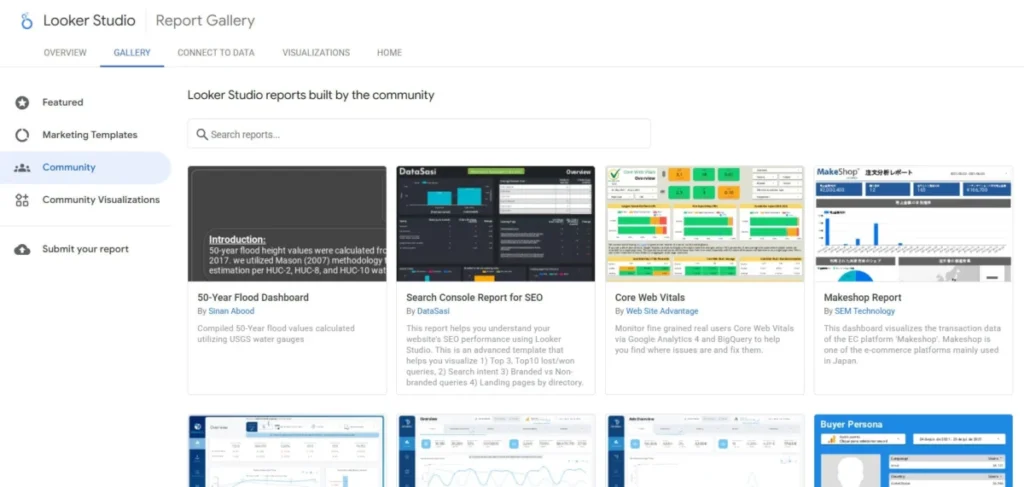
- Phase Three: Scaled Automation. As your content volume increases, manual reporting becomes a bottleneck. The final stage of maturity involves integrated, multi-channel reporting where automated pipelines feed data into visualization tools like Looker Studio, Tableau, or Power BI.
3. Supporting Data: Essential KPIs for Every Channel
When building your Measurement Plan, focus on these critical metrics to ensure a holistic view of your performance.
![How to Measure Content Performance [+Reports] (2025)](https://measureschool.com/wp-content/uploads/2025/03/Wix-traffic-overview-1024x524.jpg)
Website Metrics
Your website is the heart of your digital presence. Ensure you are tracking:
- Active Users & Sessions: The volume and frequency of your traffic.
- Average Engagement Time: A more accurate measure of interest than the deprecated "bounce rate."
- Key Events (Goals): Specific actions, such as newsletter sign-ups or demo requests, that drive revenue.
Note: Data accuracy depends on implementation. Whether through hard-coding, Google Tag Manager, or CMS integrations, ensure your tracking is robust.
![How to Measure Content Performance [+Reports] (2025)](https://measureschool.com/wp-content/uploads/2025/03/GA4-landing-page-report-1024x492.png)
Social Media & Marketing Metrics
For external channels, prioritize:
- Reach & Impressions: Your total potential audience.
- Engagement Rate: Comments, shares, and saves that indicate community health.
- Click-Through Rate (CTR): The efficiency of your creative assets.
- Conversion Rate: The percentage of social traffic that translates into tangible business results.
4. Official Methodologies: Leveraging Reporting Frameworks
Automation is the key to maintaining sanity while scaling. Rather than building reports from scratch, utilize standard frameworks to address repetitive questions from stakeholders.
![How to Measure Content Performance [+Reports] (2025)](https://measureschool.com/wp-content/uploads/2025/03/GA4-Pages-and-screens-report-1024x490.png)
The Power of Standard Reports
Google Analytics 4 (GA4) offers pre-built reports that provide immediate value:
- The Landing Page Report: This is your "first impression" diagnostic. It tells you exactly where users enter your ecosystem. If your top-performing landing pages have high exit rates, it indicates a disconnect between user intent and your call-to-action.
- The Pages and Screens Report: This provides a granular view of your most popular content. It helps you identify which topics resonate most with your audience, regardless of where they entered the site.
- Search Console Integration: By syncing Search Console with your analytics, you gain the "Why." You can identify the specific queries that bring users to your site, allowing you to optimize content for high-intent keywords.
Customization: Moving Beyond the Standard
The true power of modern analytics lies in customization. Explorations in GA4 allow you to move beyond canned reports. By using "Path Exploration," you can visualize the user journey, identifying "looping" behaviors where users bounce back and forth between pages—a common indicator of poor site navigation or confusing information architecture.
![How to Measure Content Performance [+Reports] (2025)](https://measureschool.com/wp-content/uploads/2025/03/Search-console-report-1024x656.png)
5. Implications: Why Data-Driven Content Matters
The implications of a robust measurement strategy are profound. When you stop guessing, you start optimizing.
Resource Allocation
Data-driven organizations stop investing in "zombie content"—pages or posts that consume time and budget but yield zero ROI. By analyzing which content types drive the highest conversion, you can shift your creative resources to produce more of what works.
![How to Measure Content Performance [+Reports] (2025)](https://measureschool.com/wp-content/uploads/2025/03/Explorations-in-GA4-1024x551.png)
Strategic Pivot Capabilities
In a volatile market, the ability to read data in real-time is a competitive advantage. If a marketing campaign shows a sudden drop in CTR, automated alerts from tools like Supermetrics or Coupler.io allow your team to pivot within hours, not weeks.
The "Holistic View" Challenge
The biggest pitfall for modern marketers is data fragmentation. When social media data lives in one silo and web traffic in another, the "customer journey" is lost. Multi-channel reporting—where data is normalized across platforms into a single dashboard—is no longer a luxury; it is a necessity for understanding the attribution of your content.
![How to Measure Content Performance [+Reports] (2025)](https://measureschool.com/wp-content/uploads/2025/03/Looker-studio-gallery-1024x491.jpg)
Conclusion: Building a Results-Focused Future
Measuring content performance is a journey from simple observation to strategic mastery. By defining your content space, establishing a rigorous Measurement Plan, and leveraging automated reporting templates, you transform your content from a cost center into a growth engine.
As you refine your framework, remember that the goal is not to have the most data, but to have the most useful data. Focus on the metrics that align with your business objectives, eliminate the noise, and continuously test your assumptions against the reality of your audience’s behavior.
![How to Measure Content Performance [+Reports] (2025)](https://measureschool.com/wp-content/uploads/2025/03/Looker-studio-community-1024x488.jpg)
Next Steps for Growth:
If you are ready to take your analytics to the next level, our deep dive into the Top 5 Blog Metrics to Track for Growth and Success provides the perfect framework to ensure your long-form content is working as hard as you are.
What methods have you implemented to bridge the gap between traffic and revenue? Join the conversation in the comments below—we are eager to learn from your experiences in the field.
