
The Great Rewiring: How AI Agents Are Transforming the Marketing Landscape for 2026
The marketing industry is standing on the precipice of a structural transformation that will make the transition from traditional media to digital look like a minor pivot. As we approach 2026, the proliferation of artificial intelligence—specifically in the form of autonomous AI agents—is shifting from a futuristic concept to the operational bedrock of the modern enterprise.
On December 2, the Martech for 2026 report will be unveiled, offering a definitive look at how these technologies are reshaping the customer journey. For marketing leaders, the message is clear: the era of incremental improvement is over. We are entering an era of fundamental, agent-driven disruption.
Main Facts: The Rise of the Agentic Ecosystem
The defining reality of the current martech landscape is that AI agents are no longer just tools; they are becoming participants. According to the latest AI & Data in Marketing study, a staggering 90.3% of industry professionals are already integrating AI agents into their martech stacks.
It is crucial to note that this adoption is not being driven by speculative experimentation alone. These participants represent the most tech-savvy segments of the industry, managing operations for global B2B and B2C brands. They are not chasing hype; they are building infrastructure.
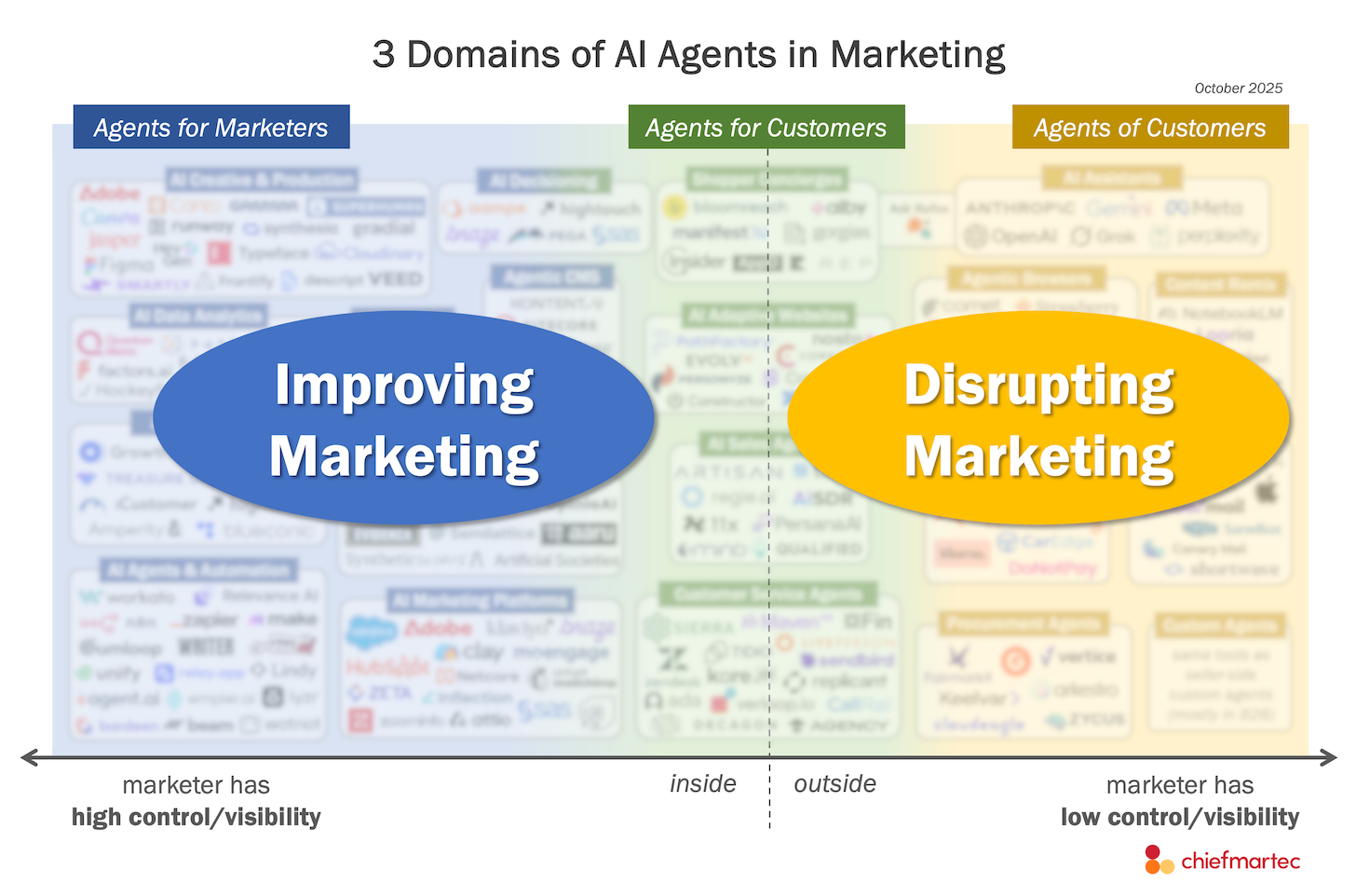
We categorize these agents into two distinct domains:
- Marketer-Side Agents: Tools designed to enhance internal productivity—brainstorming, content creation, campaign distribution, and data analysis.
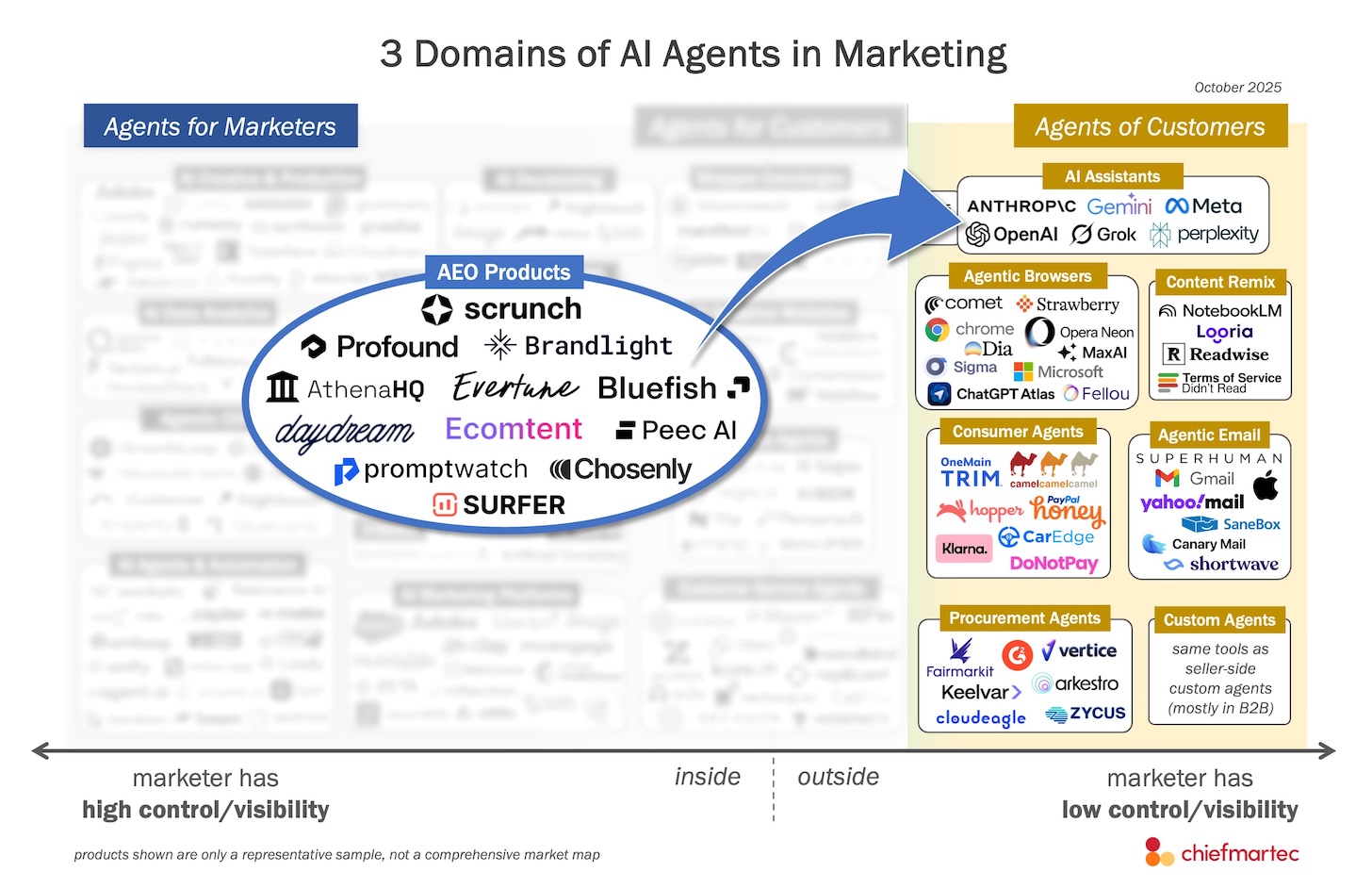
- Buyer-Side Agents: Autonomous interfaces (like ChatGPT, Claude, and Gemini) that act on behalf of the consumer, fundamentally altering the discovery and purchasing process.
While marketer-side agents aim for efficiency—the classic "do more with less"—buyer-side agents represent a paradigm shift in power. They are rewriting the rules of engagement, often bypassing the traditional marketing funnel entirely.
A Chronology of the Agentic Shift
The journey to this current state has been rapid, characterized by a move from static search to proactive intelligence:
- Pre-2023 (The SEO Era): Marketers honed strategies to dominate Google search results. Control resided with the content producer who optimized for algorithms.
- 2023–2024 (The Generative Inflection): Large Language Models (LLMs) moved from research labs to the public eye. Marketers began using AI to scale content production, leading to an explosion in volume.
- Late 2024 (The Agentic Awakening): Platforms like OpenAI and Google began integrating "Action Engines." It was no longer enough to provide information; agents began executing tasks (booking flights, checking stock, making calls).
- 2025 (The Transactional Pivot): Features like OpenAI’s "Instant Checkout" and Google’s "Agentic Checkout" moved the point of transaction into the chat interface, effectively disintermediating brand websites.
- 2026 (The Year of Instrumentation): As the upcoming report suggests, this is the year where organizations must move from passive observation of these trends to active instrumentation.
Supporting Data: The Disconnect Between Awareness and Action
The Martech for 2026 study reveals a critical "readiness gap." While marketing leaders are acutely aware of the threat posed by buyer-side AI agents, the internal infrastructure is lagging.

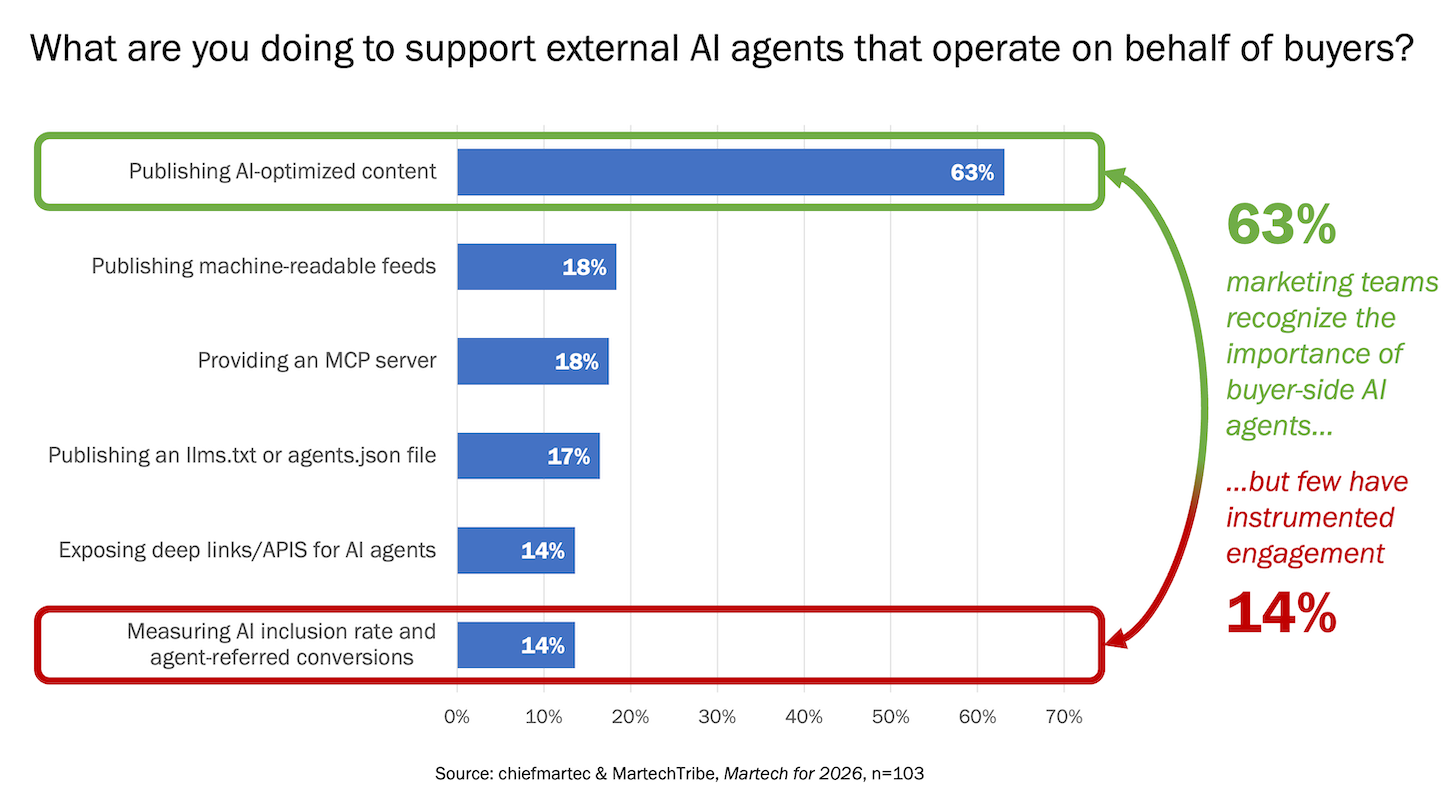
- Recognition of the Shift: 63% of marketing teams acknowledge that buyer behaviors are changing due to AI-assisted search and are intentionally modifying their content strategies.
- The Instrumentation Deficit: Despite this recognition, only 14% of teams have successfully "instrumented" their operations to engage with these buyer-side agents.
This indicates that while the "what" is understood, the "how" remains an open question. Marketers are currently chasing a bullet train on a bicycle. The technology is evolving at a rate that traditional martech stacks were never designed to accommodate.
The Implication: From "Search Engine Optimization" to "Agent Optimization"
The most profound disruption is the displacement of the traditional search engine. For 25 years, SEO was the North Star of digital marketing. Today, when a user asks a buyer-side agent for a recommendation, the agent synthesizes information and provides a definitive answer. The "ten blue links" are being replaced by a single, synthesized response.
The Death of the Traditional Funnel
As buyer-side agents gain the ability to call local stores, compare prices in real-time, and execute purchases, the traditional "website visit" is becoming an optional, rather than a necessary, step in the buyer’s journey. When Google’s Gemini calls a business to verify stock on behalf of a user, the business is no longer engaging with a human lead; it is engaging with an API.
The Paradox of Outbound Efficiency
We have seen a trend of B2B sellers deploying outbound AI Sales Development Representatives (SDRs) to flood the market with "personalized" emails. The irony is now complete: while sellers use AI to harass prospects, buyers are now using AI to screen those same sellers. The "efficiency" gained by the seller is being neutralized by the "efficiency" gained by the buyer.
Official Perspective: The Move Toward Agent-to-Agent Interactions
The current state of human-to-agent or agent-to-human communication is likely a brief intermediate phase. It is inefficient for an AI agent to call a human salesperson to check pricing.
The future is Agent-to-Agent (A2A) interaction.
In the near term, we expect to see a massive push toward standardization in how businesses expose their data to these agents. If your brand cannot communicate its availability, pricing, and value proposition in a machine-readable format that an AI agent can digest, you will effectively become invisible to a growing segment of the market.
Strategic Priorities for 2026
- Prioritize Agent-Ready Data: Brands must ensure their product and service data is structured to be consumed by AI agents.
- Redefine Content Strategy: Content must move away from "keyword stuffing" for human-like search and toward "context-rich" information that satisfies the requirements of LLMs.
- Invest in AEO (Agent Engine Optimization): Just as we optimized for Google, we must now optimize for the reasoning capabilities of agents like Claude and ChatGPT.
- Embrace the Transactional Interface: Businesses must prepare to facilitate commerce inside third-party environments rather than expecting every buyer to land on their proprietary checkout page.
Conclusion: The Path Forward
The Martech for 2026 report is not merely a forecast; it is a call to action. The era of the "do more with less" marketing cliché is being replaced by the necessity of "do things differently."
The shift is absolute. The brands that win in 2026 will be those that stop viewing AI as a tool for their own productivity and start viewing it as a new, complex, and highly influential participant in the marketplace. We invite you to join us on December 2 to explore the first pragmatic steps of this transition. The full report will be available upon registration for our upcoming webinar, providing the strategic roadmap needed to navigate this Great Rewiring.
About the Research:
The Martech for 2026 report is the culmination of extensive industry analysis. This research was made possible through the support of our partners: GrowthLoop, Hightouch, Intuit Mailchimp, MetaRouter, Progress, SAS, and Treasure Data. Their commitment to the industry allows us to provide this 100+ page analysis at no cost to the marketing community.
Join the conversation: Sign up for the webinar, catch the live findings, and prepare your organization for the agentic future.
