
The Art of the Pivot: Mastering Corporate Change Announcements to Preserve Customer Trust
In the modern business landscape, change is the only constant. Whether a company is navigating a high-stakes merger, a strategic rebrand, a name change, or a simple shift in contact infrastructure, the way an organization communicates these transitions is a critical determinant of long-term success. A poorly executed announcement can trigger customer anxiety, damage brand equity, and result in a spike in churn. Conversely, a well-crafted transition strategy can reinforce value, deepen customer loyalty, and even serve as a catalyst for growth.
The Anatomy of a Corporate Transition
A company change announcement is more than a mere notification; it is a strategic exercise in relationship management. When the "name on the door" changes, customers—who often equate brand identity with consistency—need to be reassured that the core value proposition remains intact.
At its heart, a successful announcement addresses the "Three Pillars of Clarity":

- The "What": Clearly stating the nature of the change.
- The "Why": Providing the context or motivation behind the evolution.
- The "How": Outlining exactly how the change impacts the customer’s daily interaction with the service.
Chronology of a Successful Rollout
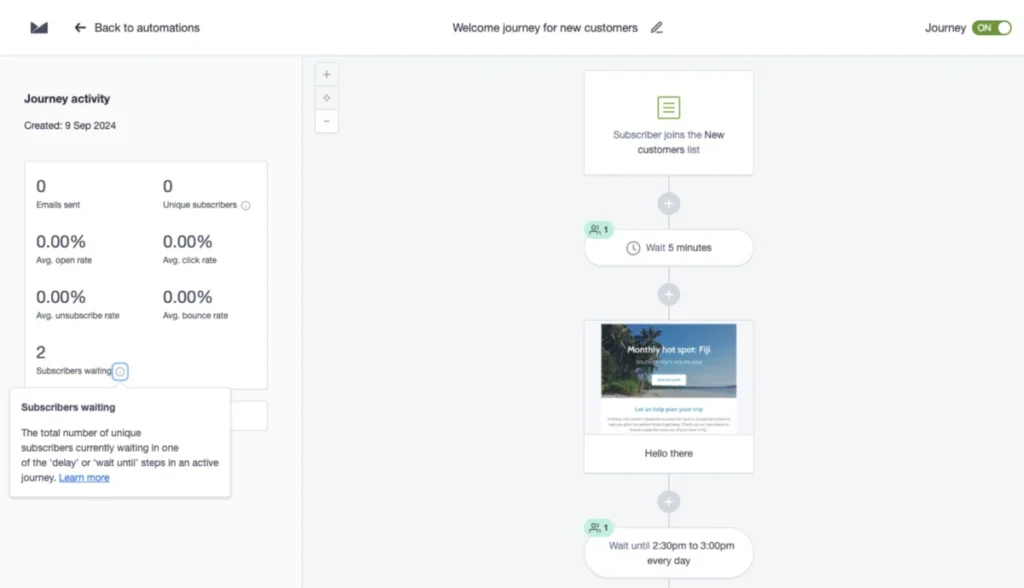
To minimize friction, businesses must view the announcement not as a single event, but as a multi-stage campaign.
Phase 1: The Pre-Announcement (4–6 Weeks Prior)
During this period, internal teams should audit all customer touchpoints. This includes automated email flows, transactional receipts, social media bios, and website FAQs. If the transition involves a new email domain, the technical team must ensure SPF, DKIM, and DMARC records are configured to prevent the new domain from being flagged by spam filters.
Phase 2: The Initial Announcement (2–4 Weeks Prior)
This is the "primary touch." It should originate from the established, recognized sender address. By using a familiar "From" name, the company signals that the announcement is legitimate, reducing the likelihood that the email will be marked as spam or deleted by cautious users.

Phase 3: The Reminder (1 Week Prior)
Not all users will open the first email. A follow-up, segmented to reach only those who did not engage with the first announcement, serves as a safety net. This ensures that the message reaches a broader cross-section of the audience without cluttering the inboxes of those already informed.
Phase 4: The Go-Live (Day of Change)
This communication should be celebratory and confirming. It marks the formal transition and provides a clear call-to-action (CTA), such as updating a bookmark, logging in, or simply acknowledging the change.
Supporting Data: Why Strategy Triggers Retention
The correlation between clear communication and retention is statistically significant. According to industry benchmarks in email marketing, announcements that provide specific context—explaining, for example, that a name change is due to a merger designed to increase service capacity—experience significantly higher engagement rates than vague, abrupt updates.

Furthermore, "sender reputation" is a quantifiable asset. When a company changes its domain without a proper warming period or a "known-sender" announcement, deliverability can drop by as much as 20–30% in the immediate aftermath. By leveraging a recognized "From" address during the transition, brands maintain the trust of inbox providers, ensuring that their messages continue to reach the primary tab rather than the junk folder.
Case Studies in Effective Transition
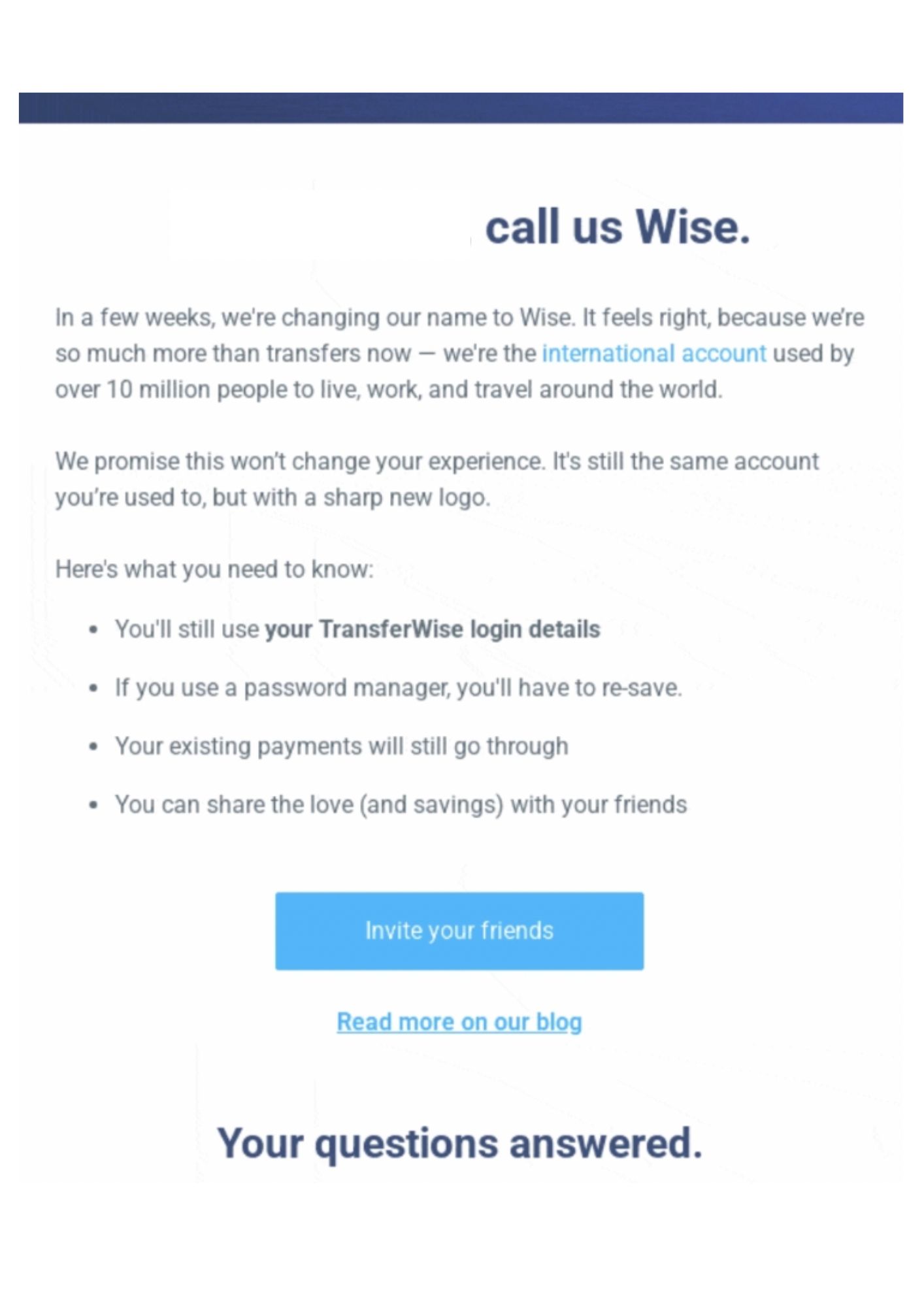
TransferWise to Wise
When the global fintech leader TransferWise rebranded to "Wise," they opted for a strategy of simplification. By acknowledging the brand’s origins while focusing on the future, they successfully shifted the user’s perception without causing confusion. Their email campaign provided a concise explanation that the service was evolving beyond just transfers, successfully aligning the brand name with their broader product roadmap.
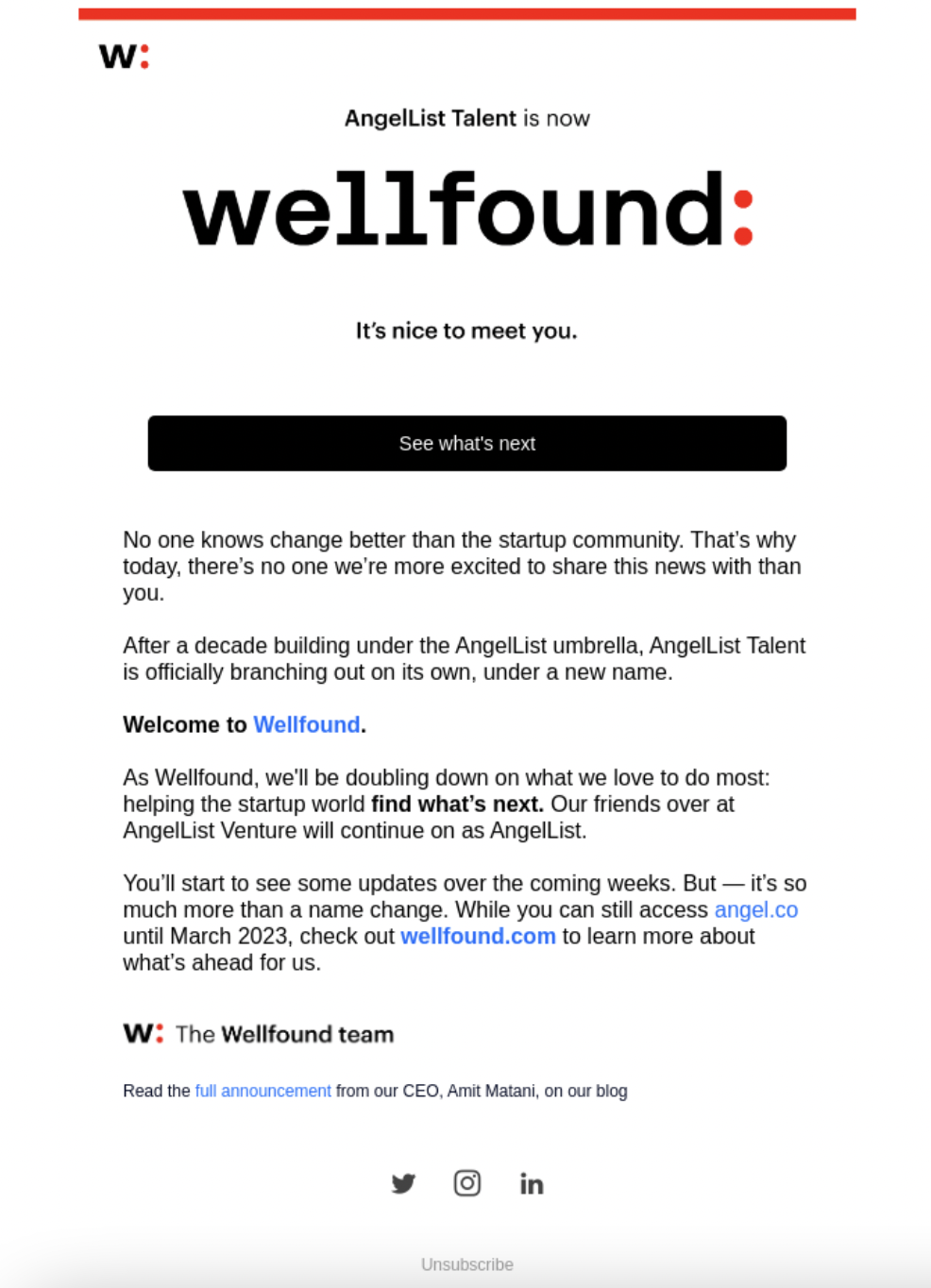
AngelList Talent to Wellfound
The transition of AngelList Talent to Wellfound serves as a masterclass in transparency. By explicitly stating that the mission remained the same—helping startups "find what’s next"—the company neutralized potential concerns regarding whether the service would be degraded by the change in ownership or branding. They used their announcement to double down on their primary value proposition, effectively turning a rebranding exercise into a marketing win.
Implications for Stakeholder Trust
The ripple effect of a corporate change extends beyond the customer base. Investors, employees, and partners are all watching. A poorly handled announcement can signal organizational instability, whereas a polished, transparent communication strategy signals growth and maturity.
Handling Customer Concerns
Anticipating the "Four Common Questions" is essential for support teams:
- "Is this a scam?" (Mitigated by using established, trusted email domains).
- "Why the change?" (Mitigated by honest, growth-oriented narratives).
- "Do I need to do anything?" (Mitigated by clear, actionable instructions).
- "Will my service change?" (Mitigated by emphasizing continuity of account status and payment methods).
By preparing pre-written responses for customer support representatives, companies can ensure that the tone of their response is consistent, empathetic, and professional.

Multi-Channel Coordination
While email serves as the primary vehicle for detailed announcements, a truly robust strategy is omni-channel:
- SMS Marketing: Effective for time-sensitive, high-value alerts. Keep it brief: "Company X is now Company Y. Same service, new look. Learn more at [Link]."
- Social Media: Use social platforms to share the visual identity changes. A pinned post acts as a "source of truth" for anyone who discovers the brand on a new channel.
- In-App/Product Messaging: For software companies, a modal or banner within the product is the most effective way to reach active users. It provides context exactly where the customer is experiencing the brand.
The Quantitative "North Star"
How do you know if your announcement was successful? Success is measured through a combination of engagement and stability metrics:
- Email Metrics: Monitor open rates and, more importantly, "spam complaint" rates. A spike in complaints is a warning sign of poor communication.
- Business Metrics: Watch the churn rate in the 30 days following the announcement. A temporary, slight increase is common, but a sustained spike indicates a fundamental failure to reassure the customer.
- Support Volume: A well-written announcement should result in a decrease in repetitive, high-volume questions. If support tickets regarding "account status" or "brand legitimacy" skyrocket, the announcement lacked sufficient clarity.
Final Best Practices: The "Do & Don’t" Checklist
To finalize your transition strategy, adhere to these fundamental principles:
| Category | Do This | Not This |
|---|---|---|
| Timing | Provide 2–4 weeks of lead time. | Never switch overnight without warning. |
| Messaging | Be transparent and specific. | Don’t bury the news in a footer. |
| Visibility | Send a series of emails. | Never rely on a "one-and-done" approach. |
| Technical | Whitelist your new domain. | Forget to update your "From" name. |
| Strategy | Segment your list for impact. | Don’t ignore the feedback loop. |
Conclusion: Change as an Opportunity
A corporate change is often viewed as a hurdle to be cleared, but it should be viewed as a milestone to be celebrated. By prioritizing the customer’s perspective—addressing their fears of service disruption, confusion, or security risks—a company can emerge from a rebrand or merger stronger than it began.
The transition process is a test of a brand’s relationship with its audience. When executed with the right blend of advance planning, technical precision, and empathetic messaging, a company change announcement ceases to be a mere administrative update and becomes a powerful affirmation of the brand’s commitment to its customers. As you prepare for your next transition, remember that while the logo or the name may be shifting, the trust you have built is the foundation upon which your future growth rests. Treat it with the care it deserves.
