
The Algorithmic Gatekeepers: Decoding Social Media Ranking in 2026
In the modern digital ecosystem, the invisible hand guiding your social media experience is no longer a simple chronological list. It is a sophisticated, AI-driven engine designed to predict, personalize, and prioritize. As we navigate 2026, social media algorithms have evolved from basic filtering tools into complex machine-learning infrastructures that determine the visibility, reach, and ultimate business impact of every piece of content published.
For brands, creators, and digital marketers, these algorithms act as the ultimate gatekeepers. Understanding the mechanics behind the "feed" is no longer an optional skill; it is a fundamental requirement for survival in an increasingly crowded digital landscape.
The Anatomy of an Algorithm: How Content Gets Seen
At its core, a social media algorithm is a collection of computational rules and ranking signals designed to solve a single problem: information overload. With users scrolling through an infinite stream of content, platforms must decide in milliseconds what is worth a user’s attention.
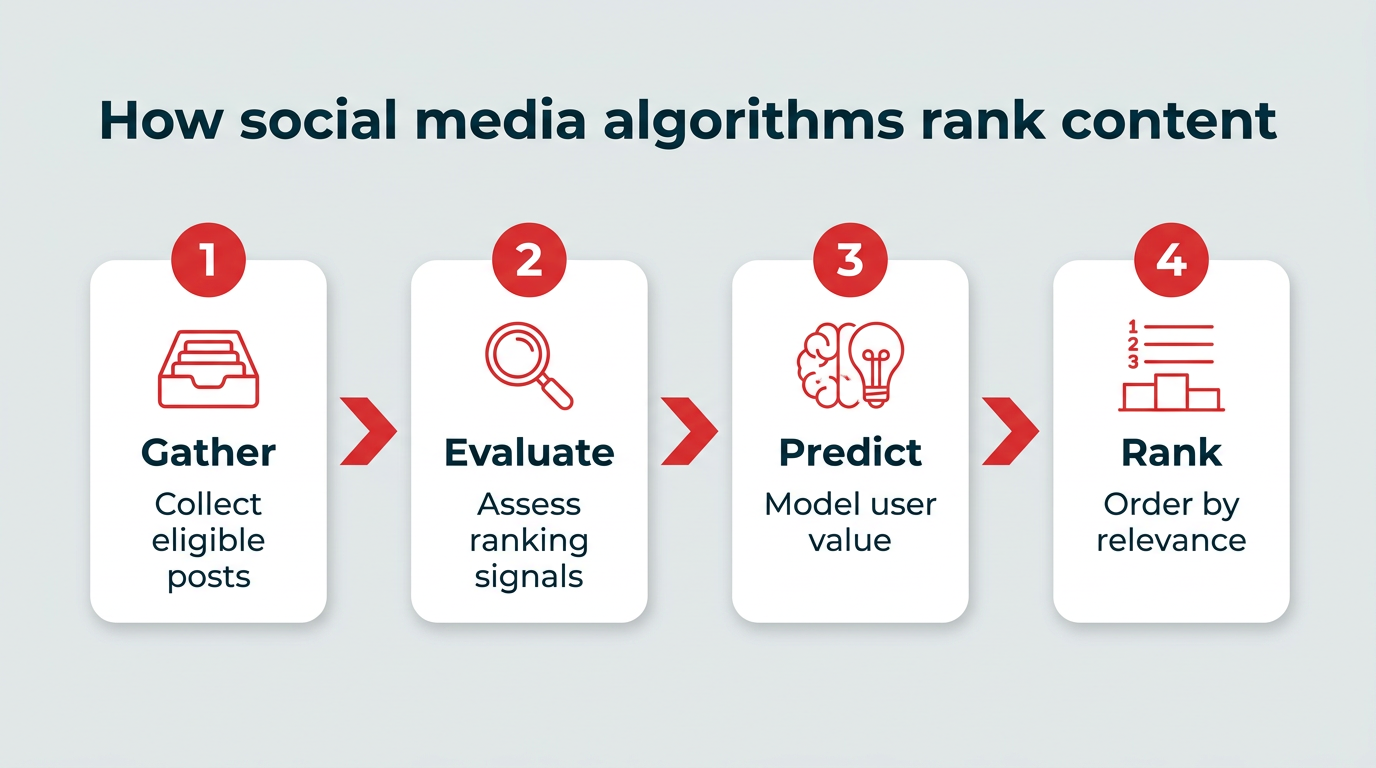
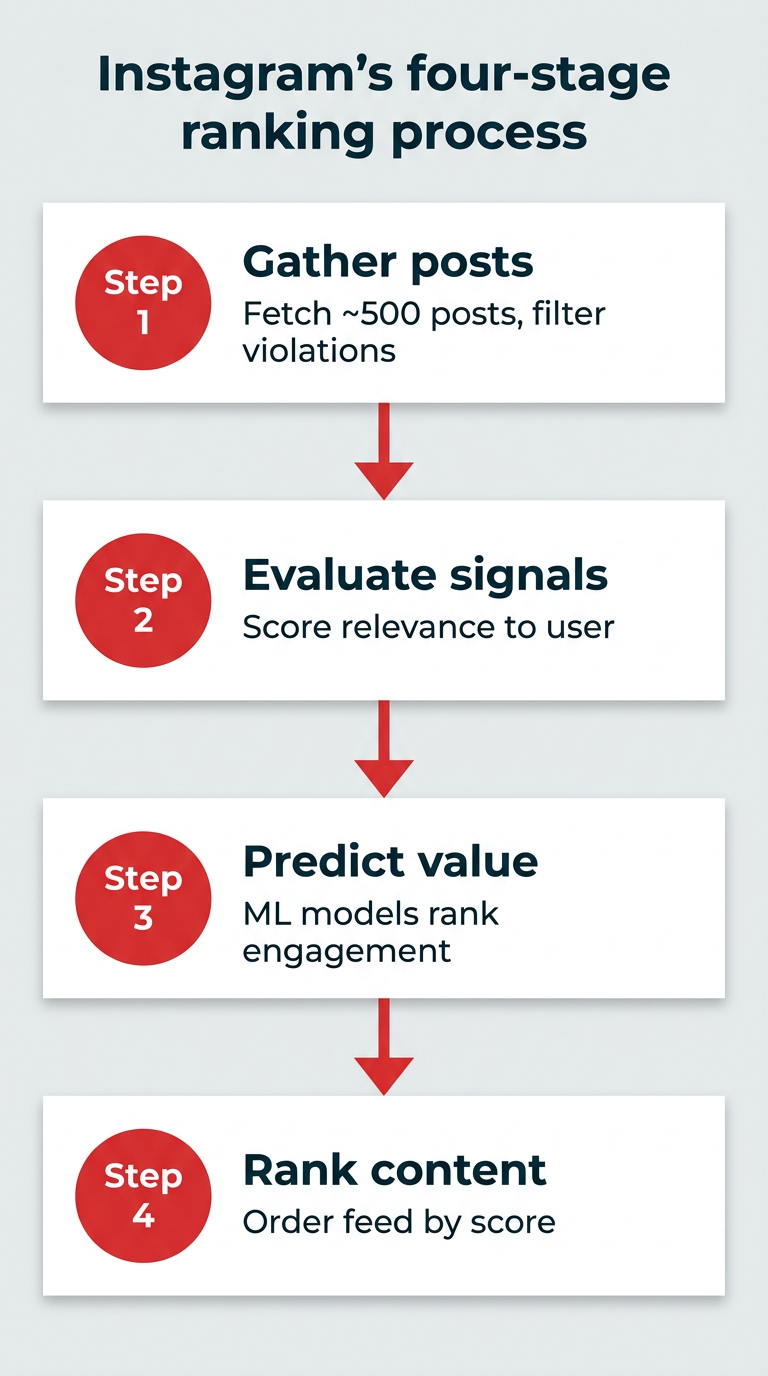
The process generally follows a four-step lifecycle:
- Inventory: The platform gathers all potential content (posts from followed accounts, suggested content, and ads).
- Signal Evaluation: The system analyzes ranking signals—ranging from user history and post format to metadata and real-time trends.
- Prediction: AI models estimate the likelihood of a user engaging with the content (e.g., will they watch for 10 seconds? Will they share it?).
- Ranking: The content is displayed in a personalized order, optimized to keep the user engaged on the platform for as long as possible.
Algorithms do not ask "What is the newest post?" They ask, "What is this specific individual most likely to value right now?"
The Chronology of Control: From Reverse-Chronological to AI-Driven
To understand the current state of social media, one must look at its evolution across four distinct eras:
- The Chronological Era (Pre-2015): The "Wild West" of social media. Feeds were simple, linear, and entirely dependent on time of posting. If you posted it, your followers saw it.
- The Engagement-Focused Era (2015–2019): Platforms introduced engagement-based ranking. Content that received the most likes and comments was pushed to the top, favoring sensationalist and high-traffic posts.
- The Personalization Era (2019–2023): Platforms began utilizing deep-learning models to tailor feeds based on individual user behavior rather than aggregate popularity.
- The Generative AI/Recommendation Era (2024–Present): Algorithms now function as "discovery engines." Platforms like TikTok and Instagram prioritize high-quality, relevant content from strangers, effectively moving away from the "social graph" (who you follow) toward the "interest graph" (what you like).
Data-Driven Reality: Why Algorithms Matter
The statistics are clear: the average global user spends approximately 141 minutes per day on social media. This finite attention span is the most valuable commodity in the digital economy.
Filtering the Noise
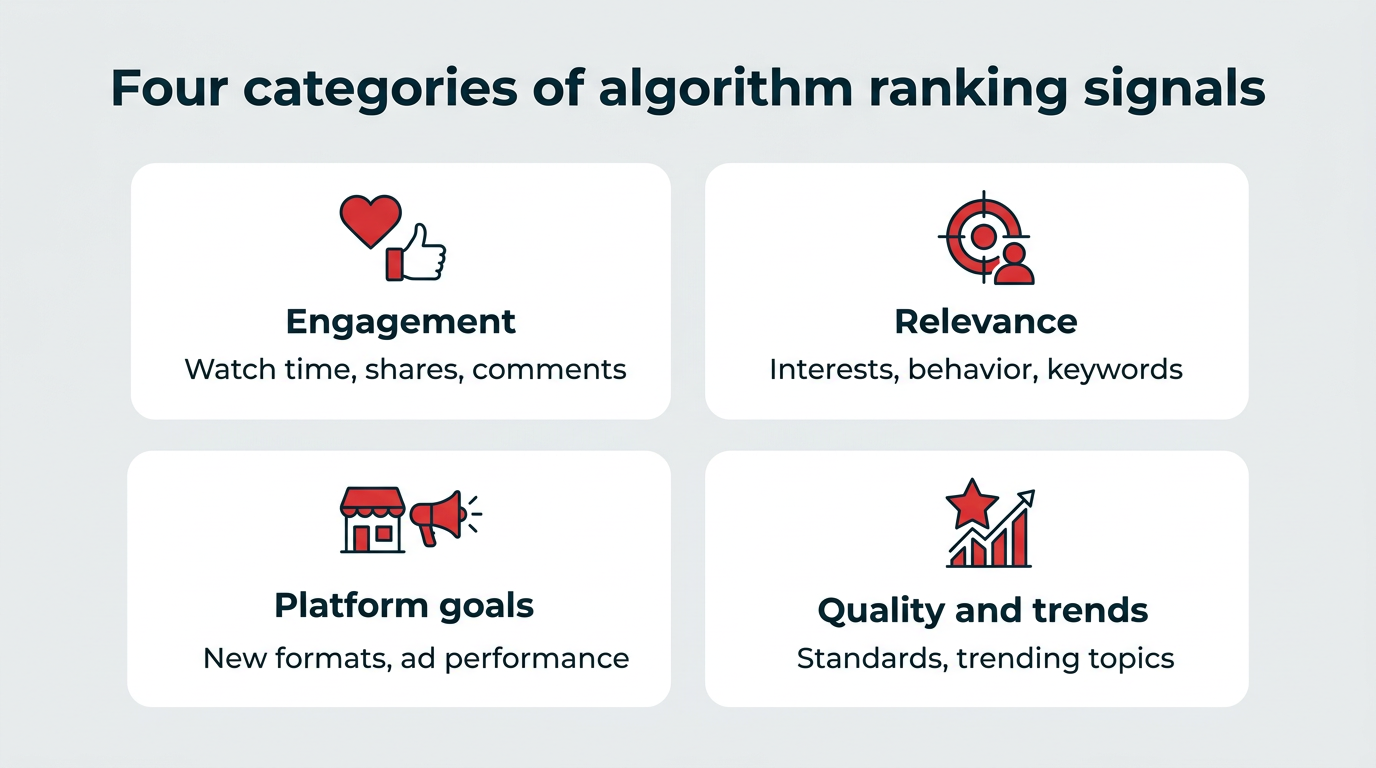
Because the volume of content far exceeds human capacity to consume it, algorithms act as essential filters. For marketers, this means your content is not just competing against direct competitors in your industry; it is competing against every piece of content a user finds interesting at that moment. Quality and relevance are now the primary drivers of reach, far outpacing the traditional strategy of "posting more often."
The Direct Line to Business Impact
Organic reach is the bedrock of brand awareness. When algorithms favor your content, your brand message scales without additional ad spend. Conversely, when content misses the mark on ranking signals, even the most expensive production quality will fail to generate ROI. This creates a direct link between algorithmic literacy and business growth.
Platform-Specific Ranking Signals in 2026
While the logic of "predicting value" remains consistent across the web, the specific weightings vary significantly by platform.
Instagram: The Visual Powerhouse
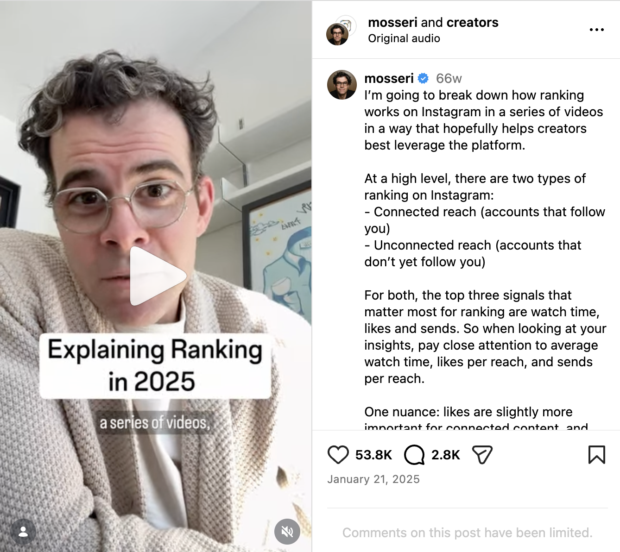
Head of Instagram, Adam Mosseri, has confirmed that watch time, likes, and sends are the primary signals for 2026.
- Feed: Prioritizes connections and past engagement.
- Reels: Heavily weighted toward entertainment value and retention (watch time).
- Stories: Favors frequent interaction and direct messaging history.
TikTok: The Discovery King
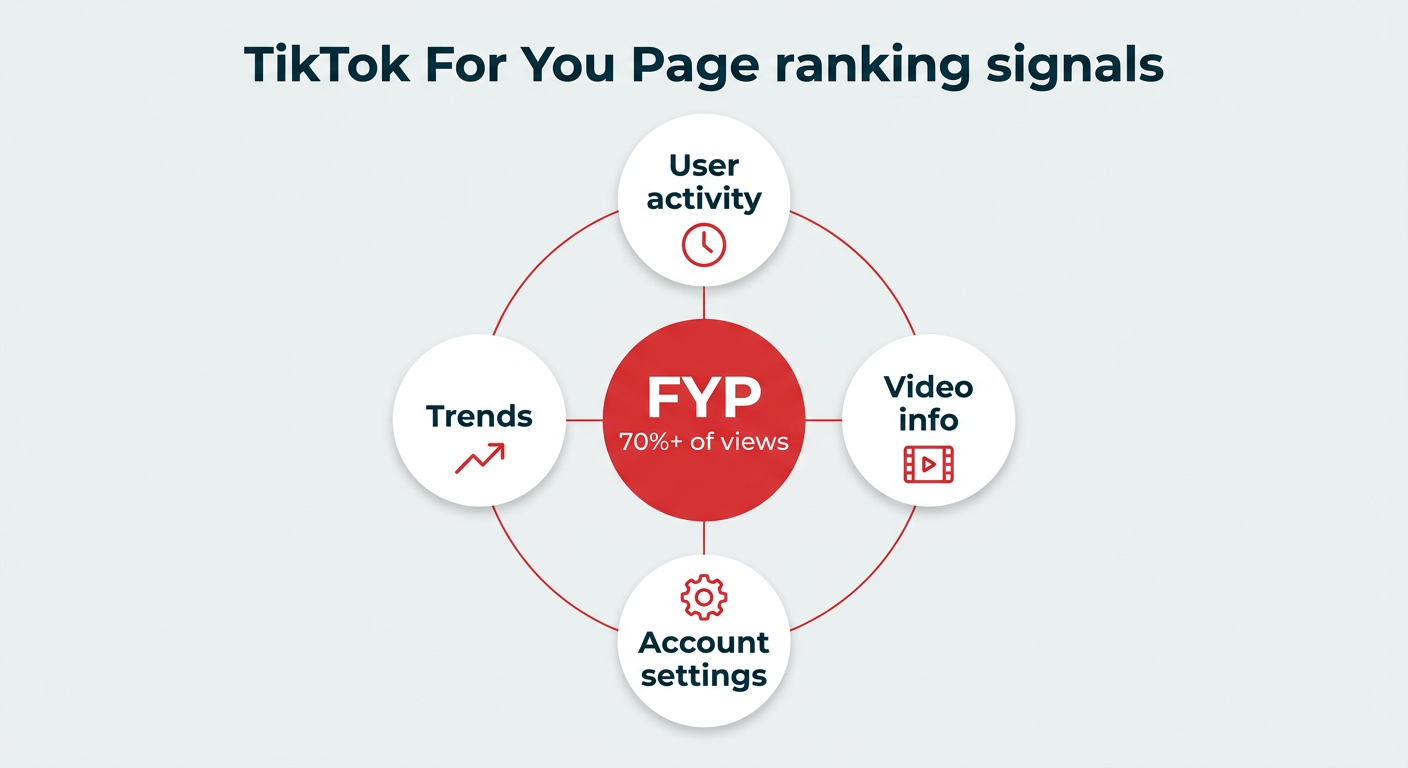
TikTok remains the benchmark for recommendation-based algorithms. Its "For You Page" (FYP) is famously agnostic to follower count. It relies on:
- Watch time: Are users finishing the video?
- Re-watch rate: Are they watching it twice?
- User interaction: Shares, saves, and comments indicate higher value than simple likes.
LinkedIn: The Professional Context
LinkedIn has pivoted toward "knowledge-sharing." It prioritizes:
- Early engagement: Responses within the first hour of posting.
- Relevance: How well the content aligns with the user’s professional industry and skills.
- Format: Documents (PDF carousels) and video content are currently receiving significant algorithmic boosts.
X (Twitter) and Threads: The Conversation Drivers
Both platforms prioritize real-time discourse. While X relies on a mix of chronological and algorithmic feeds, Threads is aggressively optimizing for "meaningful conversations," pushing content that invites replies and active debate.
Official Perspectives: What the Platforms Say
Meta, the parent company of Facebook and Instagram, has been increasingly transparent about its ranking systems. According to their transparency centers, the goal is to "facilitate meaningful social interactions." They explicitly state that they down-rank content that is identified as clickbait, engagement-bait, or content that violates community guidelines.
Similarly, TikTok’s official documentation emphasizes that the algorithm does not rely on a single factor, but rather a "compounding effect" of signals. They maintain that the system is designed to diversify content to prevent echo chambers, ensuring that even new creators have a path to virality if their content proves engaging.
Strategic Implications: How to Win
To thrive in this algorithmic environment, brands must shift from "broadcasting" to "serving."
- Prioritize Retention: If your video doesn’t hook the viewer in the first three seconds, the algorithm will bury it. Focus on high-impact openings.
- Optimize for "Sends": In 2026, the "Send/Share" button is the most powerful signal. Create content that people feel compelled to share with a specific friend or community.
- The 5-5-5 Rule: Before publishing, engage with your niche. Like five posts, comment on five posts, and follow five accounts. This signals to the algorithm that your account is an active participant in the community, not just a content dump.
- Track the "Big Five": Measure Reach, Engagement Rate, Watch Time, Share Rate, and Follower Growth. A sudden drop in reach across all metrics usually signals that your content has drifted out of alignment with the platform’s current priorities.
- Platform-Specific Playbooks: Never use a "one-size-fits-all" strategy. A video that performs well on YouTube (which prizes long-term retention) may fail on TikTok (which prizes immediate, punchy entertainment).
Conclusion: The Future is Adaptive
As AI models continue to advance, the "black box" of social media algorithms will become even more personalized. For enterprises and creators, the takeaway is constant: do not try to "game" the algorithm with hacks. Instead, focus on the fundamental goal of the platforms—providing value, entertainment, and connection to their users.
Those who adapt their strategy to match the algorithm’s core mission—keeping the user engaged—will find their content consistently favored, while those who ignore these signals will find their reach increasingly diminished. In 2026, the best content strategy is one that is as dynamic and data-driven as the algorithms themselves.
