
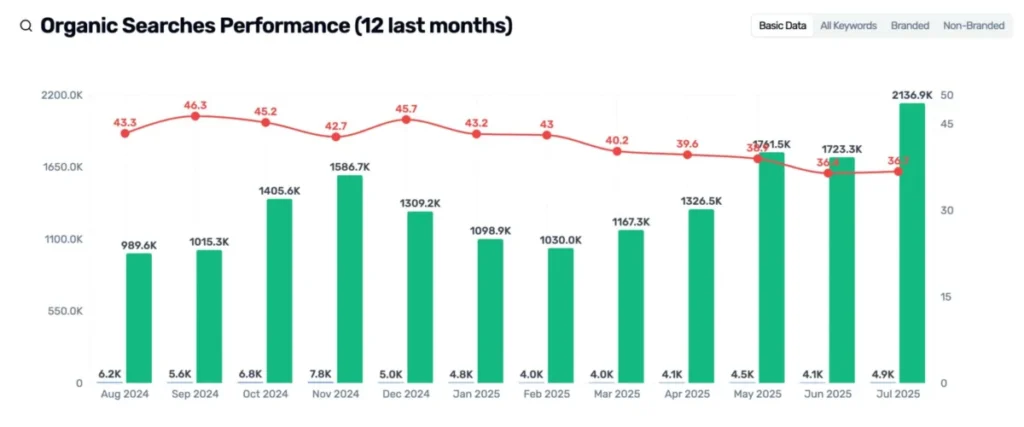
The Search Paradigm Shift: Why Brand Authority Is the New SEO Currency
Originally published in the Growthrocks blog by our Chief Strategist.
In the digital marketing landscape, not all search terms are created equal. For years, the industry has operated under the assumption that search volume is a monolithic metric of success. However, to truly understand the pulse of a business, one must decouple search intent into two distinct buckets: branded and non-branded keywords.
As the search engine landscape pivots toward AI-driven interfaces and large language model (LLM) integration, the importance of this distinction has evolved from a simple reporting preference into a survival strategy.
The Google Curiosity Index: Measuring Brand Gravity
Before dissecting the dichotomy of search, we must revisit the Google Curiosity Index. While not an official Google metric, this concept serves as a vital barometer for brand health. It tracks the frequency with which users search for a brand name over time.
The Curiosity Index is the missing link between SEO performance and broader brand impact. It is one of the few analytical tools that reveals how offline or non-digital initiatives—such as public relations, physical events, and strategic partnerships—actually permeate the digital consciousness. It transforms "brand awareness" from a fuzzy marketing buzzword into a quantifiable data point.
Defining the Battlefield: Branded vs. Non-Branded
To optimize effectively, teams must categorize their traffic sources with precision.
Branded Keywords: The High-Intent Cohort
Branded keywords consist of queries containing your company name, product names, or specific branded terminology. These users are rarely "browsing"; they are searching with high intent. They are either existing customers, individuals referred by word-of-mouth, or prospects currently being influenced by your wider marketing ecosystem. When a user searches for your brand, they have already traveled a portion of the buyer’s journey outside of the SERP (Search Engine Results Page).
Non-Branded Keywords: The SEO Arena
Non-branded keywords are generic, category-level terms. For example, if you sell project management software, terms like "best project management tools" or "agile task tracking software" are your non-branded targets. This is where the true "SEO battle" is fought. These keywords capture demand in the early, exploratory stages of the buyer journey. They represent net-new discovery and are the primary indicator of how well your content marketing addresses the pain points of your target audience.
Attribution: Who "Owns" the Data?
Attribution is the bedrock of accountability. In many organizations, SEO teams conflate branded traffic with their own performance, leading to a distorted reality.
- Brand, PR, and Communications Teams: These departments are responsible for driving branded searches. Their mandate is to create "brand gravity" through awareness campaigns, media coverage, and community building.
- SEO Teams: Their success should be measured by their ability to capture net new traffic via non-branded, intent-based keywords.
When an SEO team reports a spike in traffic that is actually driven by a viral PR campaign, they are effectively claiming credit for work they did not do. By segmenting these metrics, companies can hold the correct teams accountable for the correct outcomes.
Why Branded Keywords Matter in the AI Era
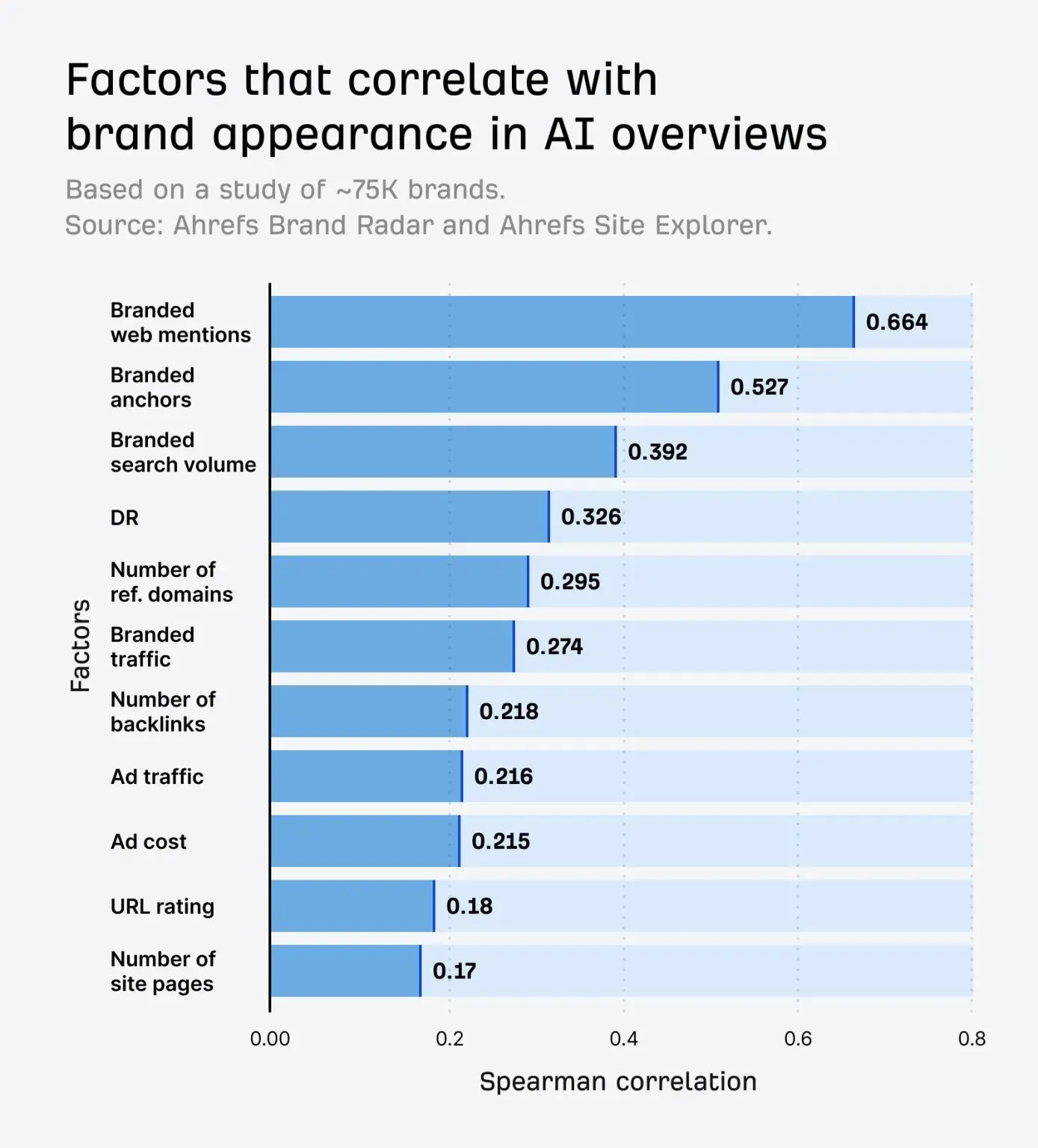
The rise of Large Language Models (LLMs)—including Google’s AI Overviews, Perplexity, and ChatGPT—has fundamentally altered the SEO landscape. A recent study by Ahrefs highlights a paradigm shift: Brand signals are now outperforming traditional, raw SEO signals.
The Popularity Contest
When LLMs generate summaries, they prioritize "familiarity." Much like a human curator, an AI model is trained to trust sources that have a consistent, high-volume presence in the digital discourse.
The top three factors correlating with a brand’s presence in AI Overviews are:
- Brand Authority: The overall reputation and recognition of the domain.
- Branded Search Volume: The frequency of users actively seeking out the brand by name.
- Consistent Context: The presence of the brand name in a variety of high-authority, relevant contexts across the web.
Traditional metrics—such as backlink counts, keyword density, or even meta-tag optimization—are taking a backseat. AI models essentially function as "popularity contests." They gravitate toward familiar names because those names act as a proxy for trust. If you are not a "known entity" in the eyes of the LLM, you are unlikely to be cited in its synthesized answers.
The Implications for SEO Strategy
This shift suggests three major implications:
- Brand is the New Link Building: Investing in PR and brand awareness is now a direct SEO tactic.
- Semantic Tie-ins: There is a growing necessity for a strong semantic link between your branded keywords and your domain name.
- The "Google-as-a-URL-Bar" Phenomenon: If you notice users typing your brand name into the search bar instead of the browser’s URL bar, you are seeing brand interest masquerading as SEO traffic. This is a positive indicator of "AI-ready" authority.
Practical Application: How to Monitor Your Success
Monitoring this split is notoriously difficult because Google Search Console (GSC) does not provide a native dashboard to visualize branded versus non-branded traffic. Most marketers are forced to perform manual labor: exporting data, filtering by query, and re-visualizing it in spreadsheets.
To streamline this, we recommend:
- Regular Audits: Monthly reviews of your GSC data, manually tagging queries as branded or non-branded.
- Leveraging Specialized Tools: Platforms like
os.growthrocks.comhave automated this process, allowing for real-time segmentation. By visualizing the two metrics side-by-side, you can observe whether your SEO strategy is truly growing your reach or if you are simply riding the coattails of your brand’s existing reputation.
Conclusion: The Era of Brand Gravity
The most dangerous misconception in modern marketing is that SEO is merely a technical challenge of ranking higher. True, sustainable growth is about being remembered.
When a user types your name into Google, that is not "SEO success"—that is brand gravity. It is the force that pulls the user toward you regardless of the algorithm. In the post-AI era, your search strategy must pivot. While you should continue to fight the battle for non-branded discovery, your long-term dominance will be secured by the strength of your brand.
If you are not building a brand that people look for by name, you are leaving your digital future to the whims of an algorithm that only trusts the familiar. Start measuring your brand, build your authority, and ensure that when the AI summarizes your industry, your name is the first one it chooses to cite.
