
The New Search Paradigm: Why LLM Ranking Is the Next Frontier of Digital Marketing
The digital landscape is undergoing a tectonic shift. For over two decades, search engine optimization (SEO) has been the cornerstone of online visibility. Businesses poured billions into securing the top spot on Google’s results pages, treating the search giant as the definitive gatekeeper of information. However, the rise of Large Language Models (LLMs)—including ChatGPT, Claude, Gemini, and Perplexity—has fundamentally altered the customer journey.
Today, consumers are increasingly bypassing traditional search links in favor of direct, synthesized answers provided by AI assistants. If Google Search was the map, LLMs are the tour guide. For modern brands, "LLM Rankings"—the visibility of your brand within these AI-generated responses—have become the new, critical battleground. Ignoring this shift is no longer just a strategic oversight; it is a direct path to digital obsolescence.
The Evolution of Search: From Blue Links to Conversational Intelligence
The shift toward AI-driven discovery did not happen overnight, but its acceleration has been breathtaking.
- 2000–2015: The Era of Keywords. Businesses focused on keyword density, backlinks, and domain authority to appease Google’s algorithm.
- 2016–2022: The Semantic Shift. Google began prioritizing user intent and natural language processing (NLP), leading to the rise of featured snippets.
- 2023–Present: The Conversational Pivot. The release of ChatGPT and subsequent integration of generative AI into mainstream search tools has moved the goalposts entirely. Users no longer want to browse; they want to be told.
When a user asks an AI assistant, "What is the best project management software for a remote team of fifty?" they are looking for a curated recommendation, not a list of ten blue links. If your brand does not appear in that synthesized response, you have effectively lost a highly qualified lead before they even began their formal research.
Why LLM Rankings Demand Immediate Attention
The implications for brand visibility are profound. Unlike traditional SEO, where ranking is a matter of technical audits and content volume, LLM ranking is about brand presence and authority within an AI’s knowledge graph.
- High-Intent Conversion: Traffic driven by AI recommendations is typically higher quality. Because the user has engaged in a dialogue with an AI to narrow down their needs, the resulting suggestion acts as a high-trust endorsement.
- The "Black Box" Challenge: Traditional SEO tools allow you to track keyword rankings with precision. In the world of LLMs, there is no "Search Console." The answers provided by models are dynamic, context-dependent, and sometimes stochastic, making tracking a complex, technical endeavor.
- The First-Mover Advantage: Just as early adopters of SEO captured market share in the mid-2000s, brands that optimize for AI visibility today will establish dominance in the AI-assisted decision-making processes of tomorrow.
The "Big Four" Ecosystem
While there are numerous models, the market is currently dominated by four primary players, each with unique indexing behaviors:
- OpenAI (ChatGPT): The market leader in consumer mindshare. Its integration into the broader OpenAI ecosystem makes it a primary source for tech-savvy users and professional researchers.
- Google Gemini: Positioned as a direct successor to traditional search, Gemini’s tight integration into the Google workspace and search ecosystem gives it an unparalleled advantage in accessing real-time, localized data.
- Anthropic (Claude): Renowned for its nuanced, human-like reasoning and ability to handle large context windows, Claude is increasingly the preferred tool for complex professional and creative tasks.
- Perplexity: The "answer engine." Perplexity is explicitly designed to bridge the gap between real-time search and AI synthesis, making it perhaps the most critical platform for brands concerned with current events and product reviews.
The Technical Reality: Why API Access Matters
Tracking how a brand appears in these models cannot be done by simply chatting with the interface. To gain an accurate, actionable snapshot of performance, brands must utilize API-based testing.
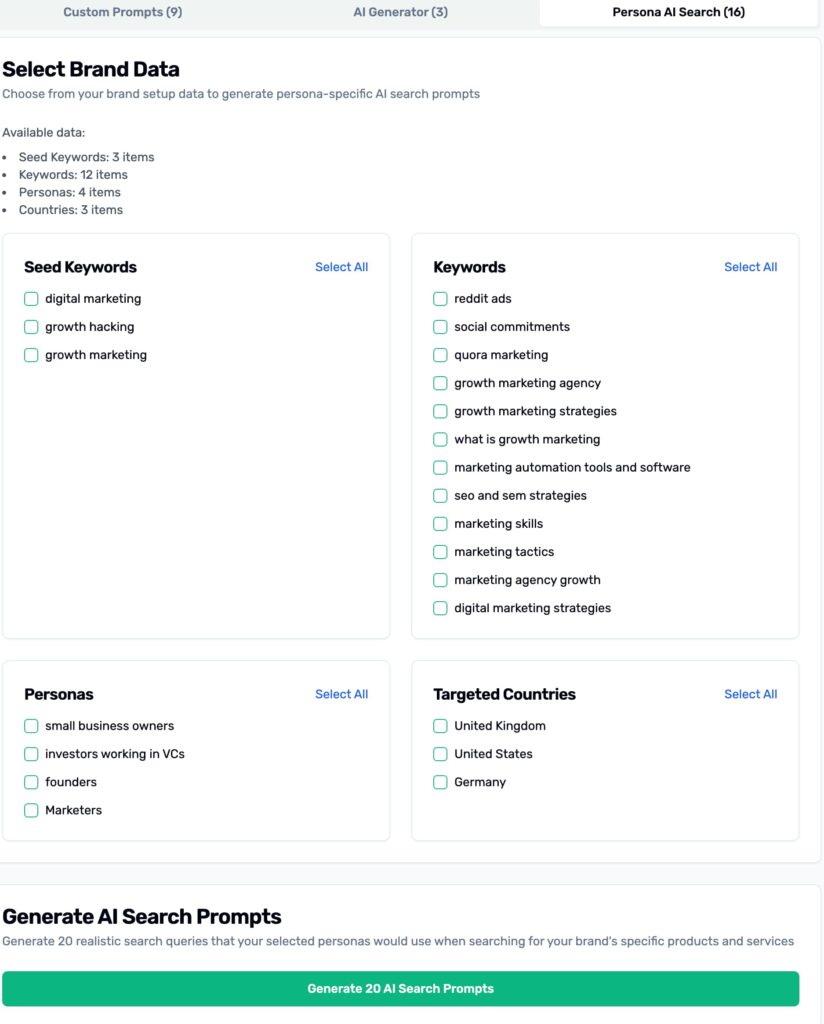
Using models via API allows for:
- Consistency: Standardized prompts ensure that testing conditions remain controlled.
- Scale: Automating thousands of queries across different models to identify trends.
- Analytical Depth: Extracting raw JSON or text output to feed into sentiment analysis tools.
Without this level of rigor, you are merely guessing at your visibility. A single successful prompt test is anecdotal; a systematic, automated tracking loop is a data-driven strategy.
Constructing a Robust Prompt Strategy
Your LLM ranking results are only as valid as the prompts used to retrieve them. A "prompt set" must account for the diverse ways users search. These include:
- Direct Feature Queries: "What software has [X] feature?"
- Comparative Analysis: "Compare [Brand A] and [Brand B] for [Use Case]."
- Social Proof/Sentiment: "What are the most common complaints about [Brand]?"
- Problem-Solution Searches: "I have [Problem], what are the best ways to solve it?"
Pro Tip: Never ignore "low-volume" prompts. Even if you believe no one searches for a specific long-tail query, if an AI assistant associates your brand with that term in a recommendation, you may capture an audience segment you hadn’t previously considered.
Analyzing the Data: Moving Beyond the Mention
Visibility is just the start. When analyzing your LLM rankings, you must categorize the output:
- Inclusion: Are you mentioned at all?
- Sentiment: Is the description of your brand neutral, positive, or negative?
- Positioning: Are you the first recommendation, or are you buried in a list of competitors?
- Context: In what capacity are you mentioned? (e.g., "The budget option" vs. "The enterprise leader").
If you are consistently being described as "too expensive," you have a messaging problem that no amount of SEO can fix. You need to adjust your digital footprint so that the AI interprets your brand value correctly.
The Financials: The Cost of Ignoring the AI Shift
The cost of inaction is cumulative. As AI adoption grows, the percentage of traffic originating from direct search engines is expected to decline. Currently, LLM-driven traffic already accounts for an estimated 10–13% of inbound visits for leading brands.
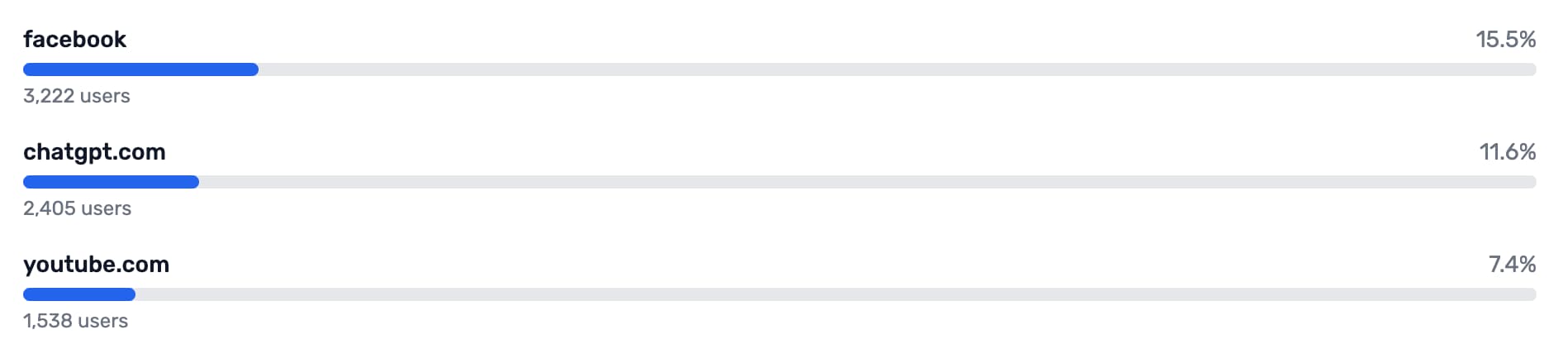
This is not just "lost traffic"; it is lost revenue. Consider the math: if you lose 10% of your top-of-funnel leads and your average deal size is $5,000 with a 20% close rate, the cost of "being invisible" to AI is substantial. When you factor in the labor of manual review and the cost of API credits for tracking, the investment in a dedicated AI optimization strategy becomes one of the most efficient expenditures a marketing department can make.
From SEO to AIO: The Future of Marketing
We are witnessing the transition from SEO (Search Engine Optimization) to AIO (AI Optimization).
Once your analysis is complete, the work begins. Optimization strategies include:
- Structured Data Enrichment: Ensuring your brand’s technical documentation, pricing, and features are clearly and consistently articulated across your web properties.
- Thought Leadership & Brand Authority: Increasing your brand’s presence in high-authority journals and industry reports, which LLMs use as training and retrieval data.
- Correcting Hallucinations: Actively monitoring and, where possible, providing feedback to AI developers when your brand data is misrepresented.
Conclusion: The New Battleground
The era of relying solely on blue links is fading. LLM rankings are not a transient tech fad; they are the new infrastructure of the internet. As consumers turn to AI assistants to simplify their decision-making, brands must ensure they are the primary recommendation.
Those who invest in tracking, analyzing, and optimizing for these models today will secure their place as the "go-to" answers for their customers. Those who remain passive will eventually find themselves excluded from the conversation, wondering why their digital visibility has quietly evaporated. The future of search is here, and it is time for your brand to be part of the answer.
