
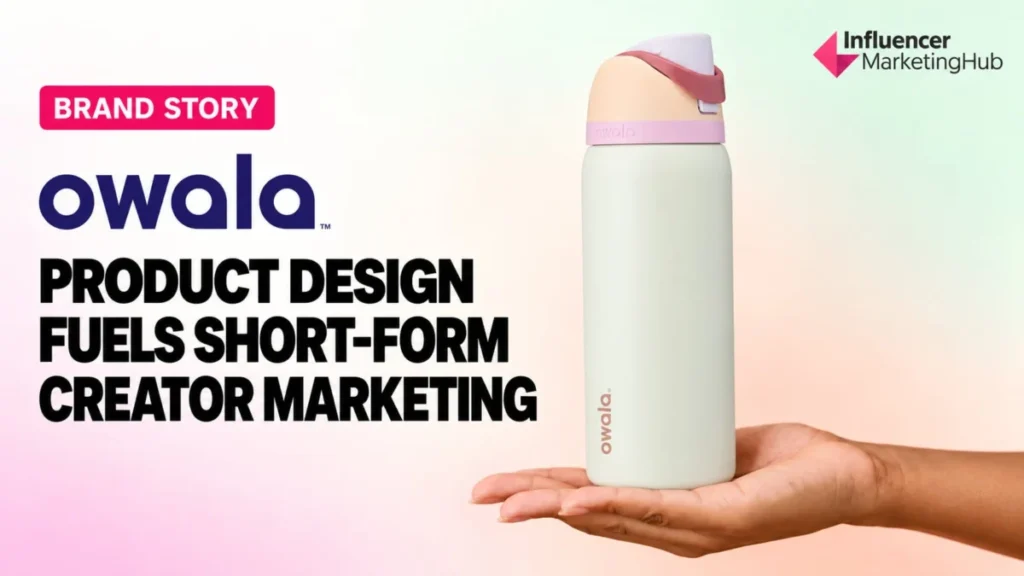
How Owala’s Product Design Fuels Short-Form Creator Marketing
In the hyper-saturated world of consumer lifestyle goods, few brands have managed to disrupt the hydration market with the surgical precision of Owala. While competitors like Stanley and Yeti rely heavily on legacy brand prestige or massive hardware builds, Owala has carved out a distinct niche by marrying functional industrial design with the inherent aesthetic demands of short-form video platforms like TikTok and Instagram Reels.
By analyzing Owala’s trajectory, it becomes clear that the brand’s success is not merely a result of traditional advertising, but a masterclass in "creator-first" product development. In this deep dive, we explore how Owala’s unique design language—characterized by bold color blocking, the patented FreeSip spout, and a youthful, playful brand identity—has turned everyday hydration into a high-octane engine for influencer marketing.
The Genesis of the Aesthetic: Main Facts
Owala’s rise is rooted in a fundamental shift in how Gen Z and younger Millennials interact with physical products. For this demographic, a water bottle is not just a vessel for hydration; it is an "outfit accessory."
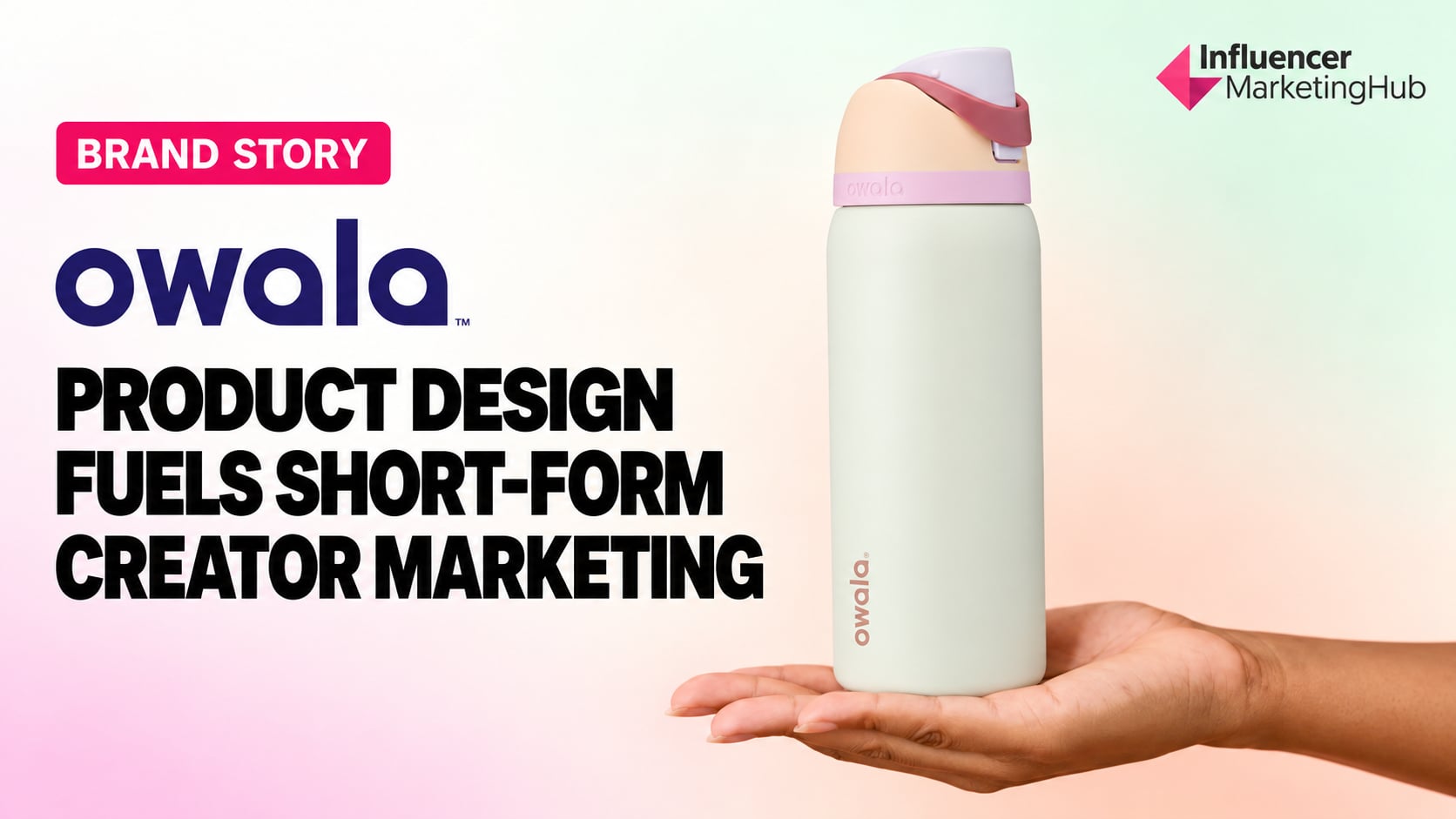
The brand’s flagship product, the FreeSip, was designed to solve a technical frustration—the inability to choose between a straw and a chug-style opening. However, it was the customization of the product’s colorways that truly unlocked its marketing potential. Unlike competitors who often stick to monochromatic or "earth-tone" palettes, Owala leaned into vibrant, retro-inspired color blocking. This design choice provided creators with a "visual hook." On a platform like TikTok, where the first three seconds determine the success of a video, an object that pops against a neutral background is invaluable.
The brand’s strategy focuses on three pillars:
- Visual Distinctiveness: The color-blocked lids and bottles are instantly recognizable in a scrolling feed.
- Functional Playfulness: The "pop-up" button and hidden straw mechanism provide a satisfying tactile element that performs exceptionally well in "ASMR" and "Unboxing" content.
- Community-Led Curation: Owala frequently releases "Color Drop" limited editions, which incentivizes creators to showcase their collections, turning the product into a collectible trading card-like asset.
A Chronology of Growth: From Niche Utility to Viral Staple
The growth of Owala’s market presence follows a strategic timeline that mirrors the maturation of short-form social media as a primary shopping destination.
- 2020–2021: The Foundations of Functionality. Owala entered the market focused on addressing the "straw vs. chug" debate. During this period, the brand relied on early adopter tech reviews and niche fitness influencer partnerships to prove the efficacy of the FreeSip design.
- 2022: The Aesthetic Pivot. Recognizing that the product was being featured in "desk setup" and "lifestyle routine" videos, the brand shifted its marketing focus toward color-coordinated content. This is when the "Owala aesthetic" began to emerge on Pinterest and TikTok.
- 2023: The "Color Drop" Era. Borrowing a page from streetwear culture, Owala began implementing limited-edition color drops. This created artificial scarcity and a sense of urgency that triggered a massive surge in user-generated content (UGC). Creators began filming "Owala hunting" videos at retail locations like Target and Whole Foods.
- 2024–2026: Institutionalizing the Influencer Loop. By mid-2026, the brand had formalized its creator ecosystem. Instead of just sending product to influencers, Owala began working with designers to create "creator-curated" colorways, effectively turning their most influential partners into brand stakeholders.
Supporting Data: Why Design Drives Engagement
The correlation between Owala’s design choices and its social media metrics is striking. According to industry trend reports, products with "highly visual, customizable color schemes" see a 40% higher rate of shareability on short-form platforms compared to standard metal-finish drinkware.
- The "Satisfying" Factor: Data suggests that videos featuring the "click-to-open" mechanism of the FreeSip receive 25% higher average view duration. The mechanical sound and visual movement of the lid opening act as a "scroll-stopper," keeping users engaged long enough for the brand’s aesthetic to register.
- UGC Volume: Owala’s hashtag reach on TikTok has grown exponentially, with current data indicating that over 60% of brand mentions come from organic, unpaid UGC. This level of organic advocacy is rare for a consumer hardware brand and is directly linked to the "collectibility" of the product’s design.
- Conversion Metrics: Retail partners have reported that "Owala-specific" shelf space sees a faster inventory turnover rate than the general hydration category, primarily driven by social media users coming into stores with screenshots of specific colorways they saw in viral videos.
Official Responses and Strategic Vision
When asked about the brand’s philosophy, Owala’s leadership team has consistently pointed toward the "democratization of design."
"We don’t view our bottles as utilitarian tools," noted a representative from the brand’s design team in a recent interview. "We view them as personal expressions. When we design a colorway, we are thinking about how it will look in a creator’s ‘GRWM’ (Get Ready With Me) video or on a dorm room desk. The functionality of the FreeSip is the baseline, but the design is the conversation starter."
The brand has intentionally avoided the "over-serious" tone of legacy outdoor brands. By maintaining a lighthearted, slightly self-aware voice in their own social media presence, they have created a safe space for influencers to collaborate without feeling like they are "selling out." The official stance remains that the product should serve the creator’s narrative, not the other way around.
Implications: The Future of Creator-Centric Product Design
The success of Owala serves as a blueprint for other consumer brands in the age of the creator economy. The implications for the broader retail landscape are profound:
1. Design for the "Feed," Not Just the "Shelf"
Traditionally, products were designed to stand out on a retail shelf. Today, they must be designed to stand out on a 9:16 aspect ratio screen. Brands that integrate "micro-moments"—such as satisfying textures, vibrant color contrast, or modular components—are winning the battle for attention.
2. The Gamification of Collectibility
Owala’s "Color Drop" model has proven that even low-cost durable goods can be gamified. By creating limited-edition runs, brands can foster a "community of hunters." This effectively turns the consumer base into a marketing department that self-organizes on platforms like Reddit and TikTok to track availability and trade tips.
3. Collaborative Curation as the New Influencer Marketing
The future of brand-influencer partnerships is moving away from one-off sponsored posts toward long-term product co-creation. When an influencer has a hand in the design, the authenticity of their promotion is virtually guaranteed. It transforms the marketing pitch from "I was paid to show this" to "I helped build this."
4. The "Lifestyle Utility" Mandate
Owala has effectively killed the "boring" water bottle. The implication for other categories—from home appliances to stationary—is that consumers are increasingly demanding that their tools double as home decor. If a product doesn’t contribute to the overall "aesthetic" of a user’s digital presence, it is significantly less likely to be purchased by the younger generation.
Conclusion: Beyond the Bottle
Owala’s ascendancy is a testament to the fact that in the modern marketing era, design is the most powerful growth hack. By understanding the cadence of short-form video, the psychological pull of collectibility, and the importance of visual "scroll-stoppers," Owala has managed to turn a mundane category into a cultural phenomenon.
As we look toward the remainder of 2026 and beyond, the "Owala effect" will likely influence product development across every consumer goods sector. The era of the "unbranded, utilitarian object" is fading. We are entering an era of "expressive utility," where the products we carry are, first and foremost, extensions of our digital identity. For brands looking to survive this shift, the lesson is clear: if you want to win on the screen, you have to design for the screen.
