
Beyond Spreadsheets: Why Python is the New Growth Marketing Superpower
In the fast-paced world of digital marketing, the barrier between "data-informed" and "data-driven" is thinning. For years, growth marketers have relied on a patchwork of Excel spreadsheets, manual data exports, and fragmented dashboards to make decisions. However, as marketing ecosystems become increasingly complex—integrating omnichannel ad spend, real-time behavioral analytics, and predictive modeling—the limitations of traditional spreadsheet software have become glaring.
Enter Python: a versatile, high-level programming language that is quietly revolutionizing how growth teams operate. Once the exclusive domain of software engineers and data scientists, Python is now becoming an essential tool for the modern growth marketer. It allows professionals to automate tedious workflows, handle massive datasets that would crash a standard spreadsheet, and bridge the gap between disparate software platforms.
The Evolution of Marketing Analytics: From Manual to Automated
To understand the rise of Python in marketing, one must look at the chronology of data handling in the industry.
- The Early 2000s (The Manual Era): Marketing was largely intuition-based, with rudimentary tracking. Data was siloed, and "analysis" often meant manually copying numbers from one report to another.
- The 2010s (The Spreadsheet Era): As digital platforms like Google Ads and Facebook Ads grew, Excel and Google Sheets became the primary tools for analysis. However, as datasets grew into the millions of rows, these tools became slow, prone to errors, and incapable of sophisticated modeling.
- The Current Era (The Programmable Era): With the democratization of APIs and the availability of low-code environments like Google Colab, marketers are shifting toward programmatic workflows. Python allows teams to move beyond static reporting toward dynamic, automated experimentation pipelines.
Why Python Stands Above the Rest
While languages like R or SQL are also popular in data science, Python has emerged as the clear winner for marketing teams. Its dominance is rooted in three key factors:
1. Unrivaled Flexibility
Python is a general-purpose language. A marketer can use it to build a web scraper to monitor competitor pricing, automate a weekly email report, or build a machine-learning model to predict churn. Because Python is the lingua franca of data science, marketing teams that use it can seamlessly collaborate with their engineering departments, sharing codebases and methodologies.
2. A Massive, Supportive Ecosystem
Python’s greatest strength is its community. For virtually any problem a marketer faces—be it connecting to the TikTok Ads API or cleaning a messy CSV file—there is already an open-source library or a tutorial available. This reduces the "time-to-insight" significantly, as marketers don’t have to reinvent the wheel.
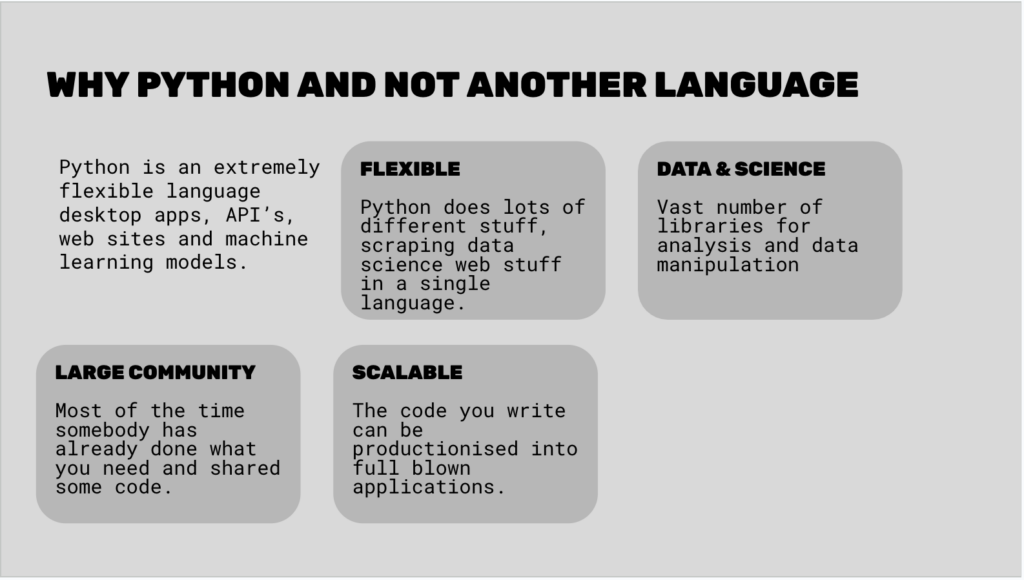
3. Scalability
When a strategy works, you want to scale it. Python scripts are inherently modular. A script used to optimize ad spend for a single campaign can be easily expanded to handle hundreds of campaigns across multiple regions without manual oversight.
The Growth Marketer’s Toolkit: Key Capabilities
Alistair Allan, a prominent voice in the growth space, notes that the true crossover of growth lies at the intersection of data, analytics, and rapid testing. "You can do all of that stuff manually, or you can try and figure out how to automate it—how to make decisions without having a human in the loop," Allan explains.
By leveraging Python, growth marketers can unlock several core functionalities:
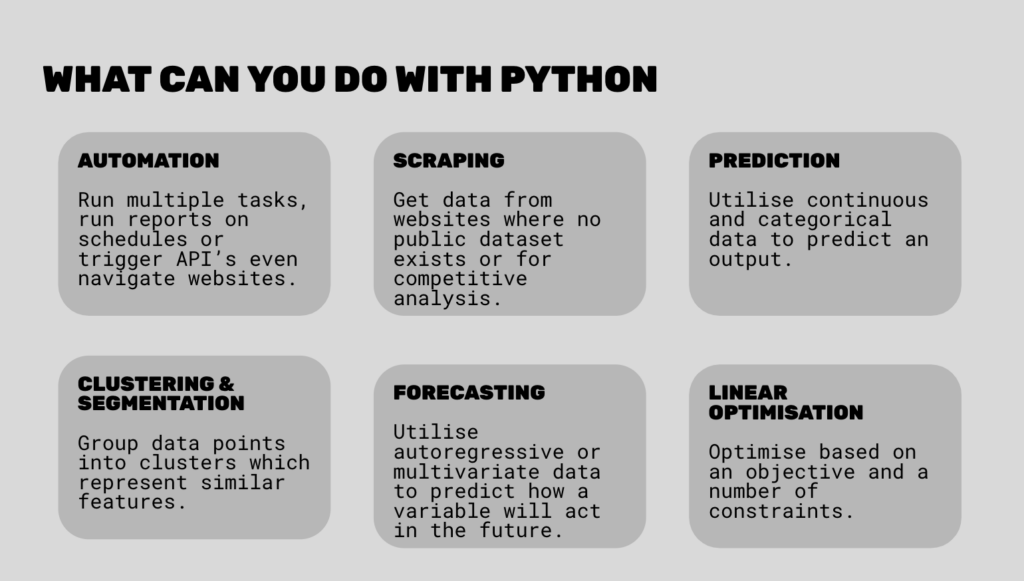
Automated Data Extraction (Scraping & APIs)
Marketers no longer need to manually download reports. Python scripts can interact with APIs (Application Programming Interfaces) to pull data directly from platforms like Google Analytics, Meta, LinkedIn, and CRM systems. Furthermore, web scraping allows marketers to gather public data from competitor websites or market trends, providing a unique edge in competitive analysis.
Predictive Modeling and Forecasting
Using libraries like Prophet, marketers can move beyond historical observation to predictive forecasting. By training models on past performance, teams can predict seasonal trends, customer behavior, and future ad performance with higher accuracy than simple moving averages.
Audience Clustering and Segmentation
Rather than relying on broad demographic buckets, Python allows for advanced clustering. By running algorithms on user behavior data, marketers can identify hidden segments—such as "high-intent repeat purchasers" versus "casual window shoppers"—allowing for hyper-personalized ad campaigns that maximize ROI.
Linear Optimization and Spend Allocation
Budget optimization is often an exercise in guesswork. With linear optimization libraries (like PuLP or SciPy), marketers can define their objectives (e.g., maximize conversions) and their constraints (e.g., maximum budget, minimum ROAS per channel). Python then calculates the mathematically optimal way to distribute spend, ensuring that every dollar is deployed where it is most effective.
Data Visualization: Turning Complexity into Strategy
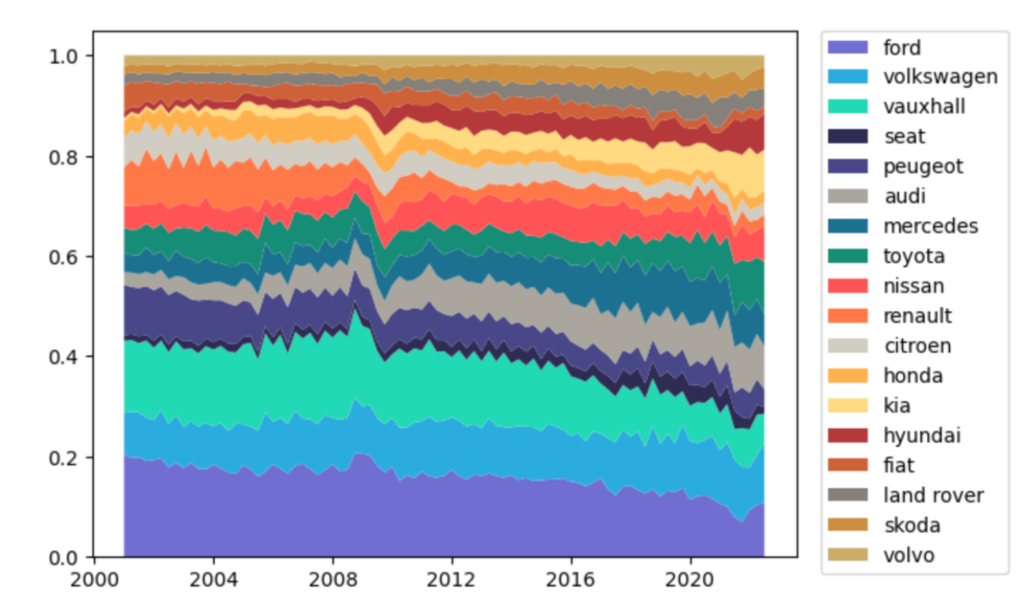
Even the most sophisticated model is useless if the findings cannot be communicated to stakeholders. Python provides powerful visualization libraries such as Matplotlib and Seaborn. Unlike the rigid charts in Excel, these libraries allow for the creation of complex, custom visualizations that highlight trends in high-dimensional data, making it easier to convince management to pivot strategies or double down on a winning campaign.
Practical Steps: How to Start Your Python Journey
The most common mistake beginners make is trying to learn "everything." For a growth marketer, the goal is not to become a software engineer, but to become a proficient data analyst.
1. Use Google Colab
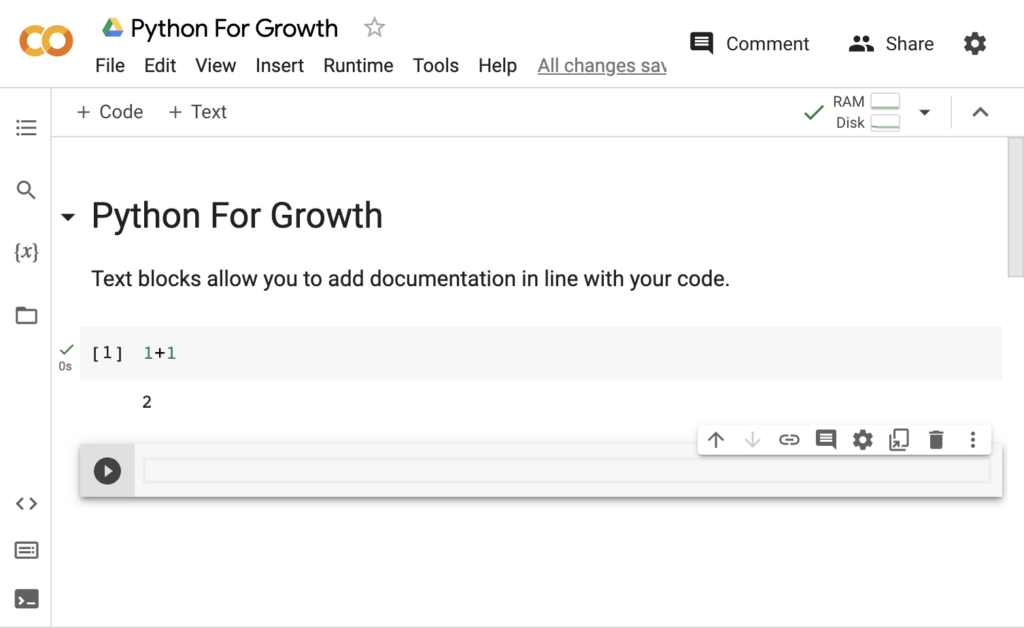
Don’t worry about local environments, complex installations, or version control just yet. Google Colab is an online environment that requires zero setup. It functions like a Google Doc but for code. You can mix "Text" blocks (for your notes and logic) with "Code" blocks (for execution), creating a perfect document that acts as both a report and an engine.
2. Leverage Code Generation
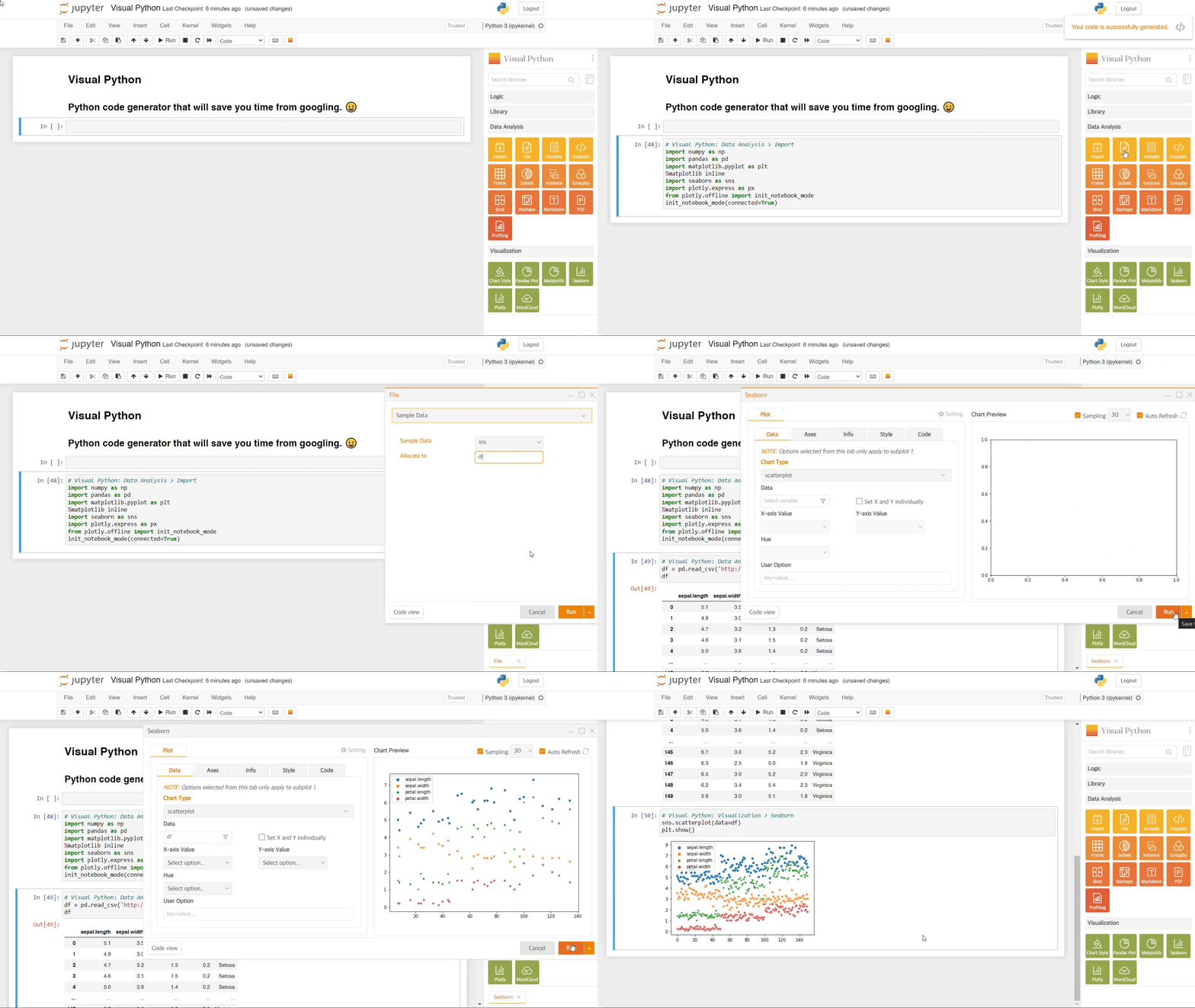
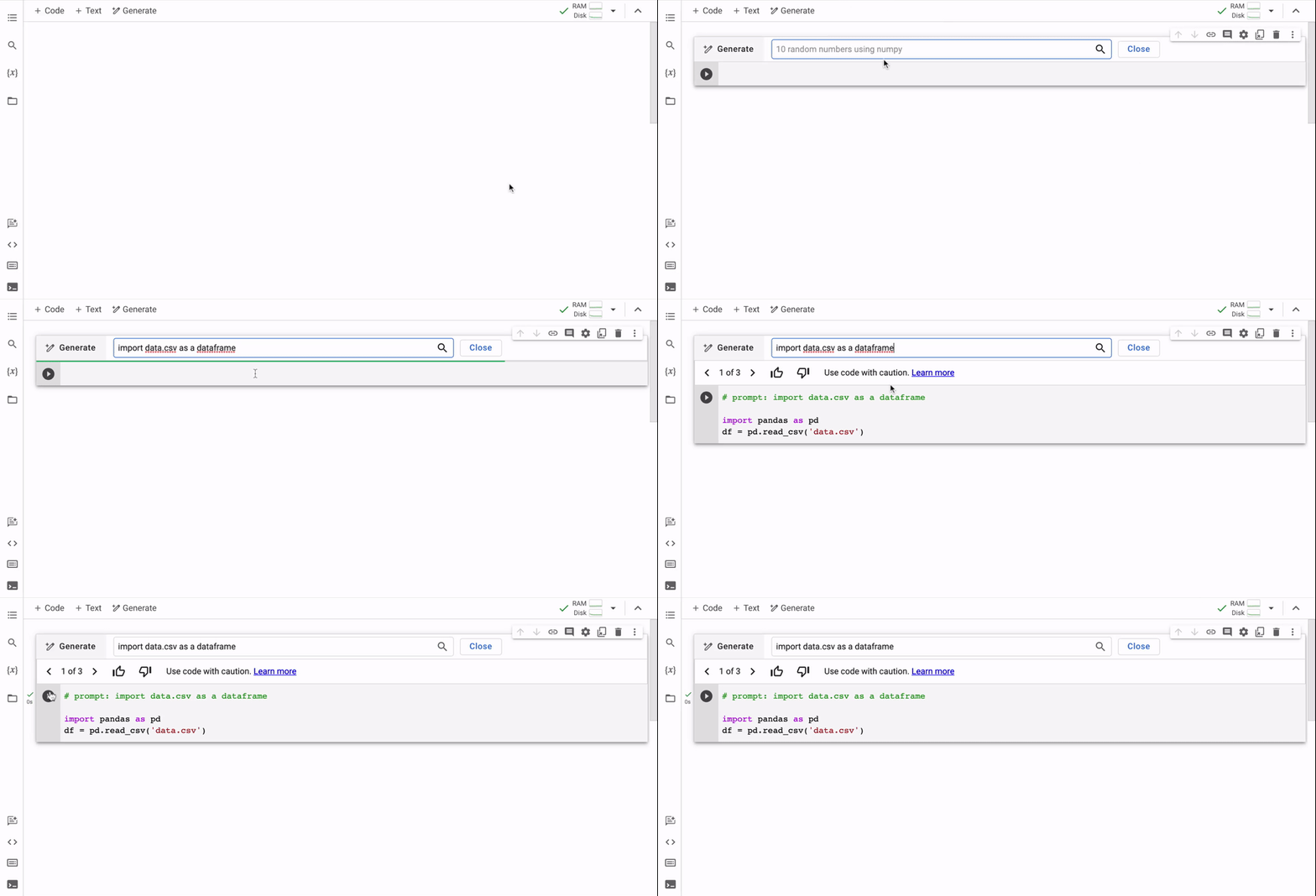
If you are intimidated by syntax, use AI-assisted tools. Google Colab’s evolving integration with advanced AI code models helps you generate scripts using natural language prompts. Additionally, tools like Visual Python act as an add-on to help you quickly insert common code blocks without having to memorize syntax.
3. Explore "No-Code" to "Code" Bridges
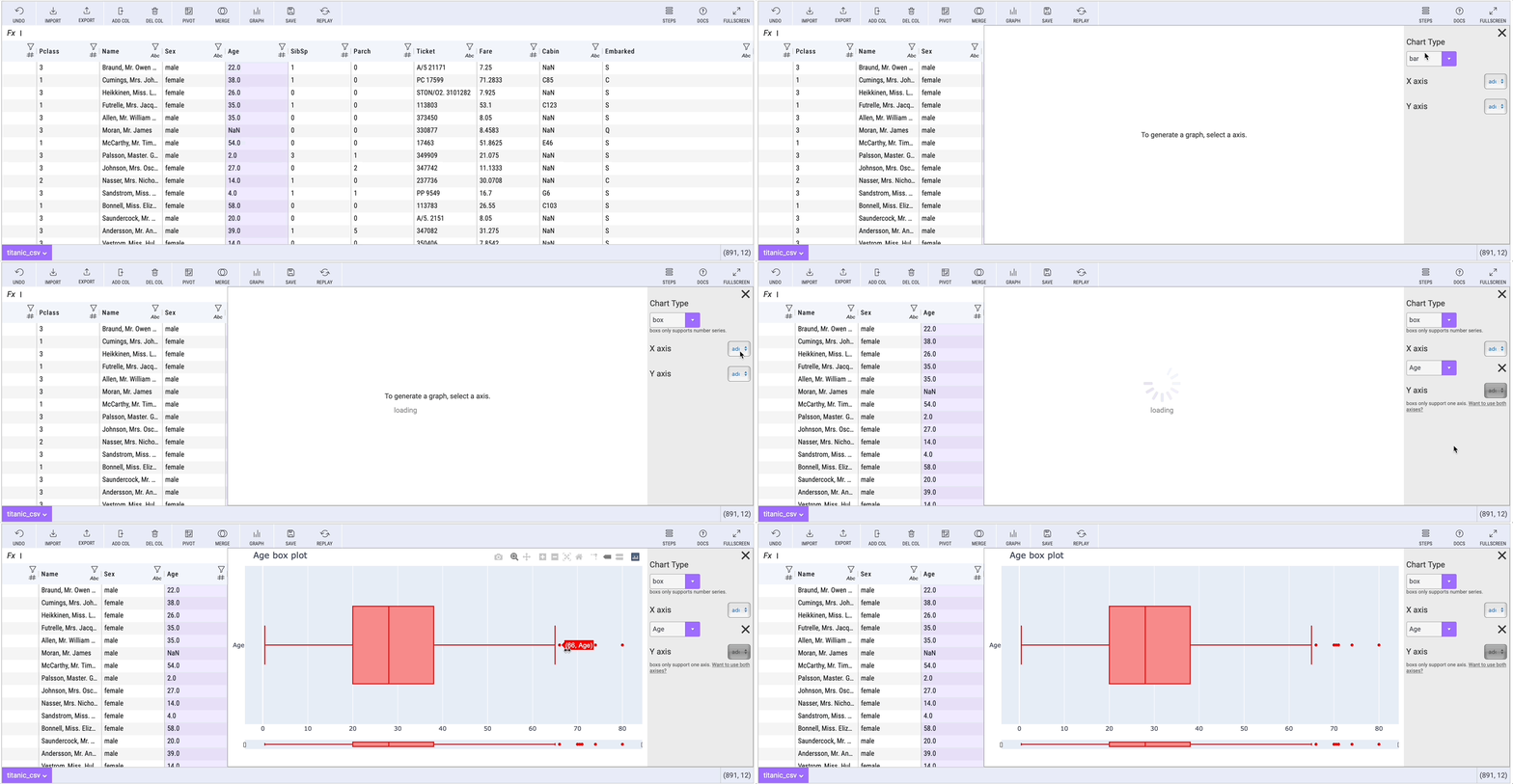
Tools like Mito are excellent for marketers transitioning from spreadsheets. Mito allows you to perform data transformations in a spreadsheet-like interface, but as you make changes, it automatically writes the Python code for you. This is an invaluable learning tool for understanding how to manipulate data frames in the pandas library.
Implications for the Future of Marketing Teams
The shift toward Python-based marketing signals a fundamental change in hiring and team structure. Marketing departments are increasingly looking for "T-shaped" marketers—professionals who have a deep understanding of marketing strategy but also possess the technical literacy to manipulate data.
For organizations, the implication is clear: the businesses that invest in the technical upskilling of their marketing teams will gain a massive competitive advantage. They will be able to react to market changes in minutes rather than days, identify patterns that their competitors miss, and optimize their budgets with mathematical precision.
Conclusion: The Path Ahead
Python is not just a programming language; it is a mindset. It represents a move away from the "black box" of manual spreadsheet work toward a transparent, reproducible, and scalable methodology.
For the modern growth marketer, the ability to write even basic Python code is becoming the equivalent of basic spreadsheet literacy a decade ago. It is the tool that turns data from a stagnant record of the past into a roadmap for the future. Whether you start by automating a single monthly report or by building a sophisticated spend-optimization model, the journey into Python is a critical investment in your professional longevity.
The data is there, waiting to be unlocked. With Python, you have the key. Now, it is your turn to start building.
