

Beyond Sprout Social: The Definitive Guide to Social Media Management Platforms in 2026
As the global social media management software market surges toward a projected valuation of $33.46 billion, marketing leaders are increasingly scrutinizing their existing tech stacks. For many, Sprout Social has long been a staple; however, as organizational needs evolve, many teams are hitting a ceiling.

Common friction points—such as restrictive per-seat pricing, premium-gated social listening, and gaps in enterprise-grade governance—are driving a significant migration toward alternative solutions. With global social media advertising spend forecasted to reach $338.75 billion by the end of 2026, the stakes for selecting the right platform have never been higher.

The State of the Market: Why Brands Are Re-evaluating
The shift away from legacy setups is rarely arbitrary. It is usually triggered by the "scaling trap": when a platform that was efficient for a team of five becomes a financial and operational burden for a team of fifty.
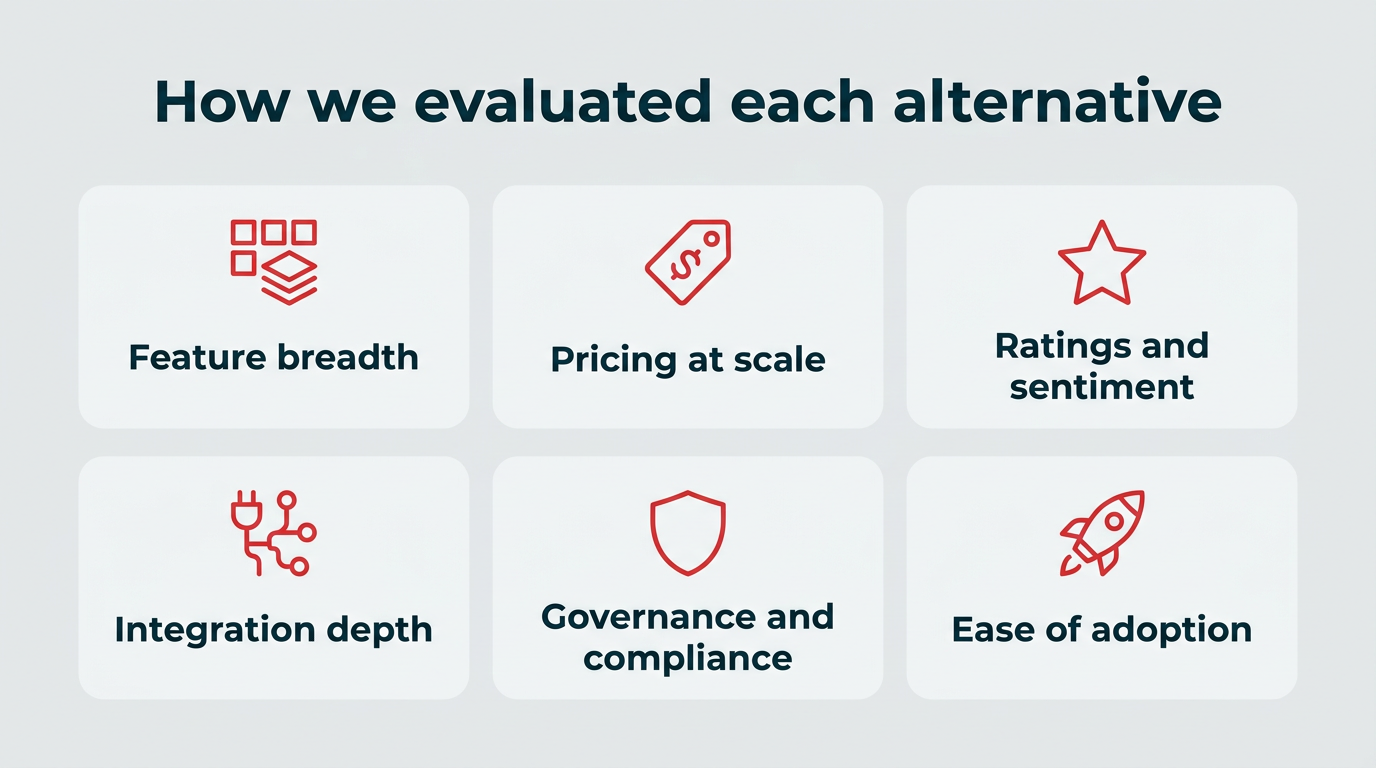
Sprout Social’s pricing model, which starts at $199 per seat per month (billed annually) for the Standard plan and jumps to $299 for the Professional tier, creates a cost-scaling issue that often outpaces the value delivered. Furthermore, as businesses move into highly regulated industries—such as finance, healthcare, or government—they require robust, native governance features that many mid-market tools simply cannot provide.
Chronology of the Modern Social Stack
The evolution of these tools can be categorized into three distinct eras:
- The Scheduling Era (2010–2016): Tools were primarily designed for post-queueing and basic analytics. The focus was on "content distribution."
- The Engagement Era (2017–2022): The rise of the "Unified Inbox." Platforms began emphasizing community management, requiring tools to bridge the gap between customer service and marketing.
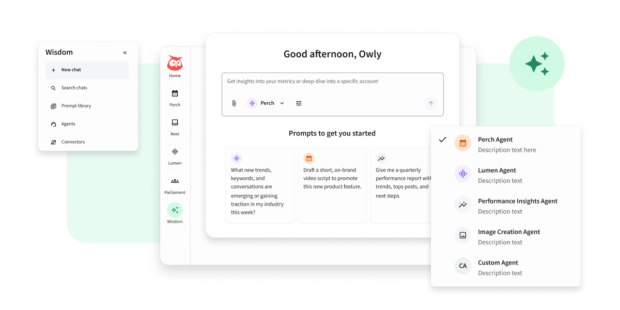
- The Intelligence Era (2023–2026): We are now in the age of AI orchestration. Modern platforms, led by Hootsuite’s "Social OS" model, don’t just schedule posts; they use AI to synthesize listening data, sentiment analysis, and predictive modeling to inform the entire customer experience (CX).
Top-Tier Alternatives: A Comparative Analysis
1. Hootsuite: The Enterprise Gold Standard
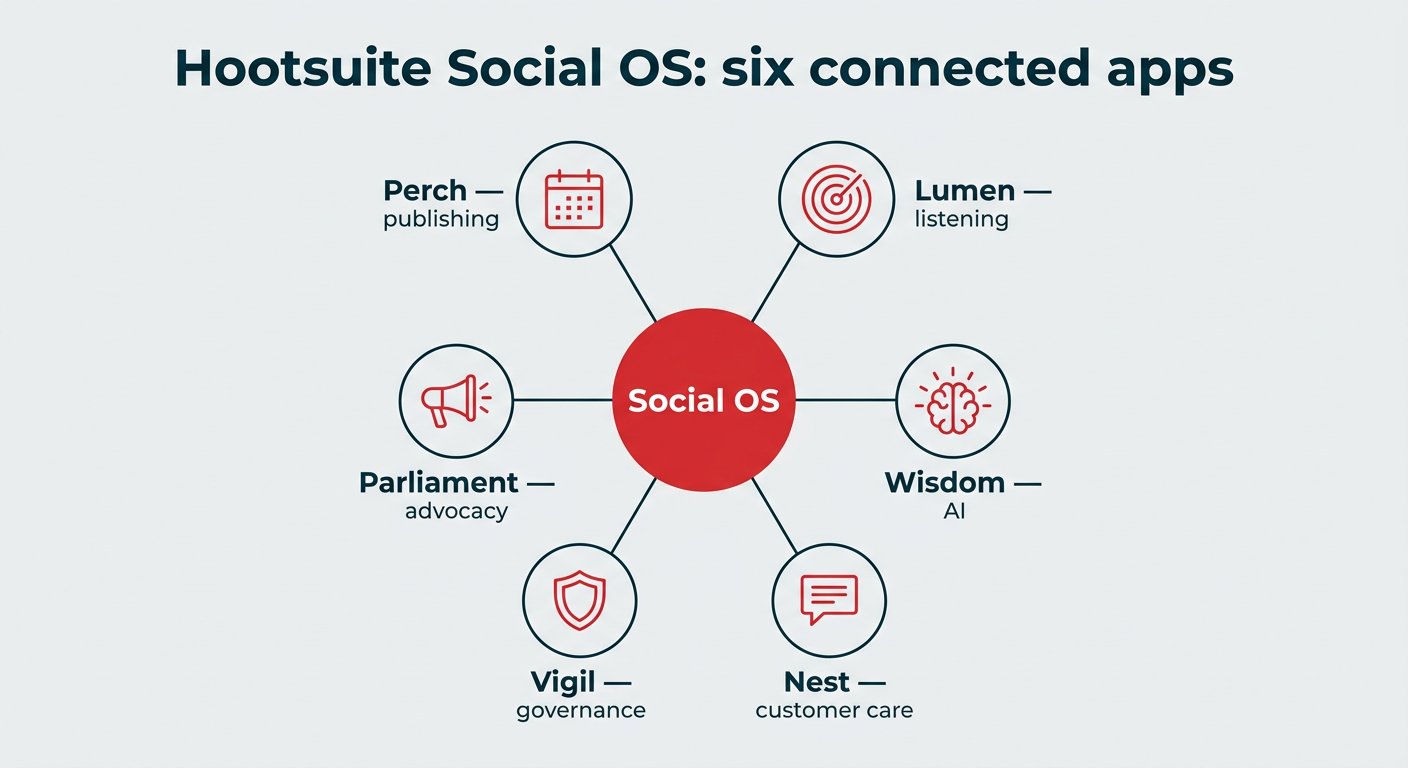
Hootsuite remains the most comprehensive alternative for teams requiring a fully connected ecosystem. Unlike platforms that offer disconnected modules, Hootsuite’s Social OS integrates publishing (Perch), listening (Lumen), and care (Nest) under a single AI-driven layer (Wisdom).

Why it wins: For organizations in regulated sectors, Hootsuite’s "Vigil" governance suite provides the audit trails and compliance controls necessary to avoid catastrophic PR or regulatory failures. Its pricing ($99/user/month) is significantly more transparent and accessible than Sprout Social’s tier-based model.

2. Agorapulse: The Mid-Market Powerhouse
Agorapulse is the premier choice for marketing teams that prioritize UX and simplicity. While it lacks the deep enterprise-grade governance of Hootsuite, it excels at providing a clean, unified inbox. Its strength lies in its ROI tracking, which is arguably more intuitive for social media managers who need to report directly to stakeholders without navigating complex enterprise dashboards.

3. Sprinklr: The Enterprise CX Giant
For massive, global organizations, Sprinklr offers a unified Customer Experience Management (CXM) platform that touches more than 30 channels. It is not just a social tool; it is a CRM-adjacent infrastructure.
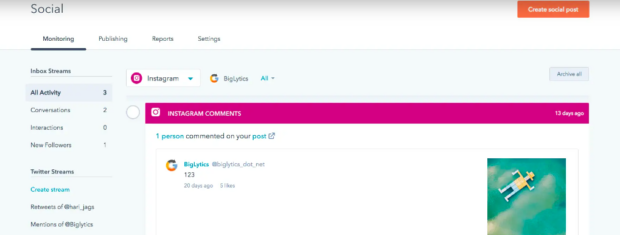
- The Caveat: The learning curve is steep. Sprinklr is not a "plug-and-play" solution; it requires dedicated resources and months of implementation.
4. Brandwatch: The Insights Specialist
If your organization’s primary pain point is "listening depth," Brandwatch is the logical migration target. Built first as a research and intelligence engine, it provides unparalleled consumer insights. However, it is important to note that its execution and publishing features are less robust than those found in Hootsuite or Sprout Social.
5. Niche and Specialized Contenders
- Emplifi: Best for e-commerce and retail brands that need to tie social media activity directly to commerce revenue.
- Khoros: Ideal for companies focused on community management and heavy-duty customer support workflows.
- SocialBee & Buffer: These platforms dominate the small-team and solopreneur space, offering evergreen recycling and simple scheduling for a fraction of the cost of enterprise tools.
Supporting Data: Cost Comparison at Scale
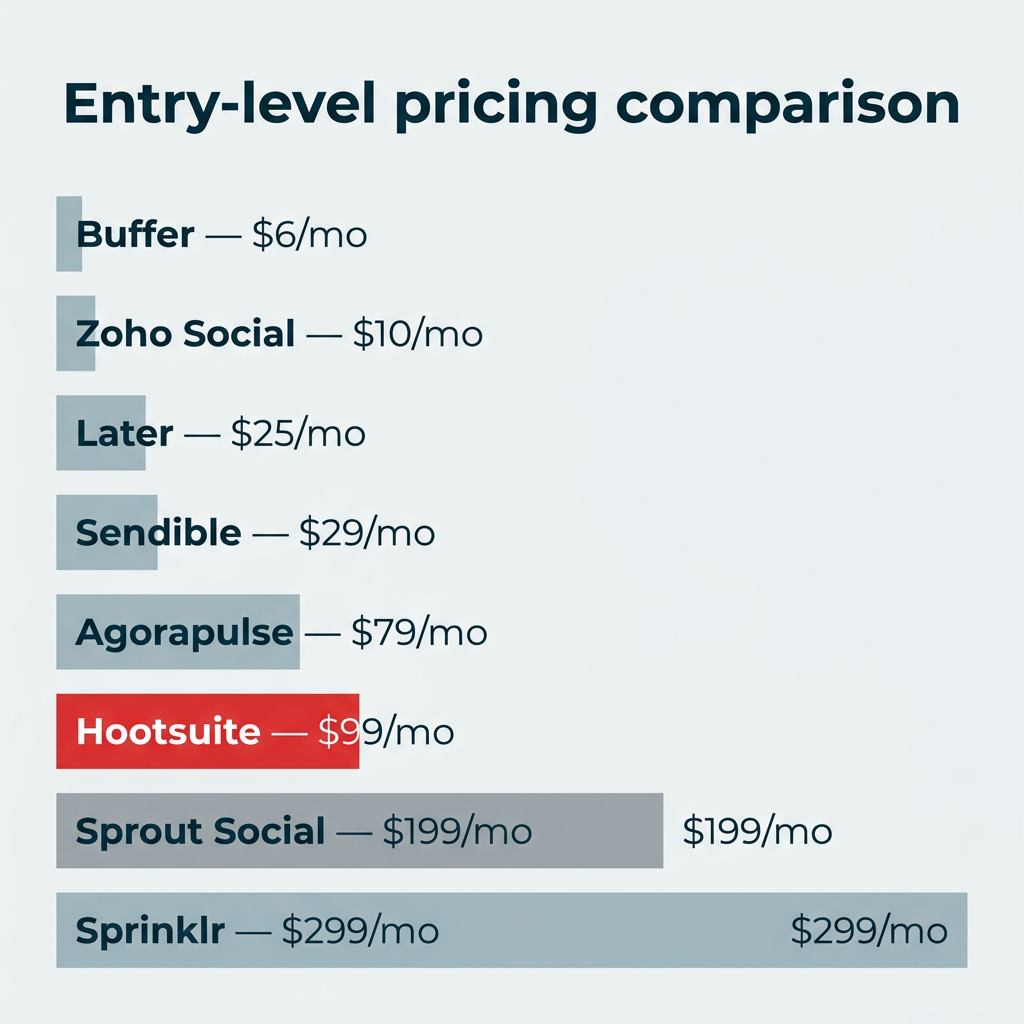
When evaluating these tools, entry-level pricing is often misleading. The true cost of a platform is revealed when you project the needs of a 10-person team over 18 months.

| Tool | Starting Price (Approx.) | Best For |
|---|---|---|
| Hootsuite | $99/user/month | Enterprise/Regulated |
| Agorapulse | $79/user/month | Mid-size Teams |
| Sprinklr | $299/month | Global Enterprise |
| Buffer | $6/channel/month | Creators/Small Biz |
As the data shows, a team of 10 would pay roughly $1,990/month with Sprout Social, whereas the same team could utilize Hootsuite for approximately $990/month, saving nearly $12,000 annually without sacrificing enterprise-grade features.

Official Perspectives and Market Implications
Industry analysts at Gartner and G2 have noted a distinct trend: brands are moving away from "all-in-one" platforms that do many things "okay" in favor of "best-of-breed" platforms that provide deep, connected intelligence.
"The shift we are seeing," says one industry analyst, "is that CMOs are tired of paying for ‘bloatware.’ They want tools that integrate with their existing Salesforce or Adobe environments. If a social tool doesn’t talk to the rest of the tech stack, it’s becoming an island that is eventually destined for the chopping block."
Strategic Implications: How to Choose
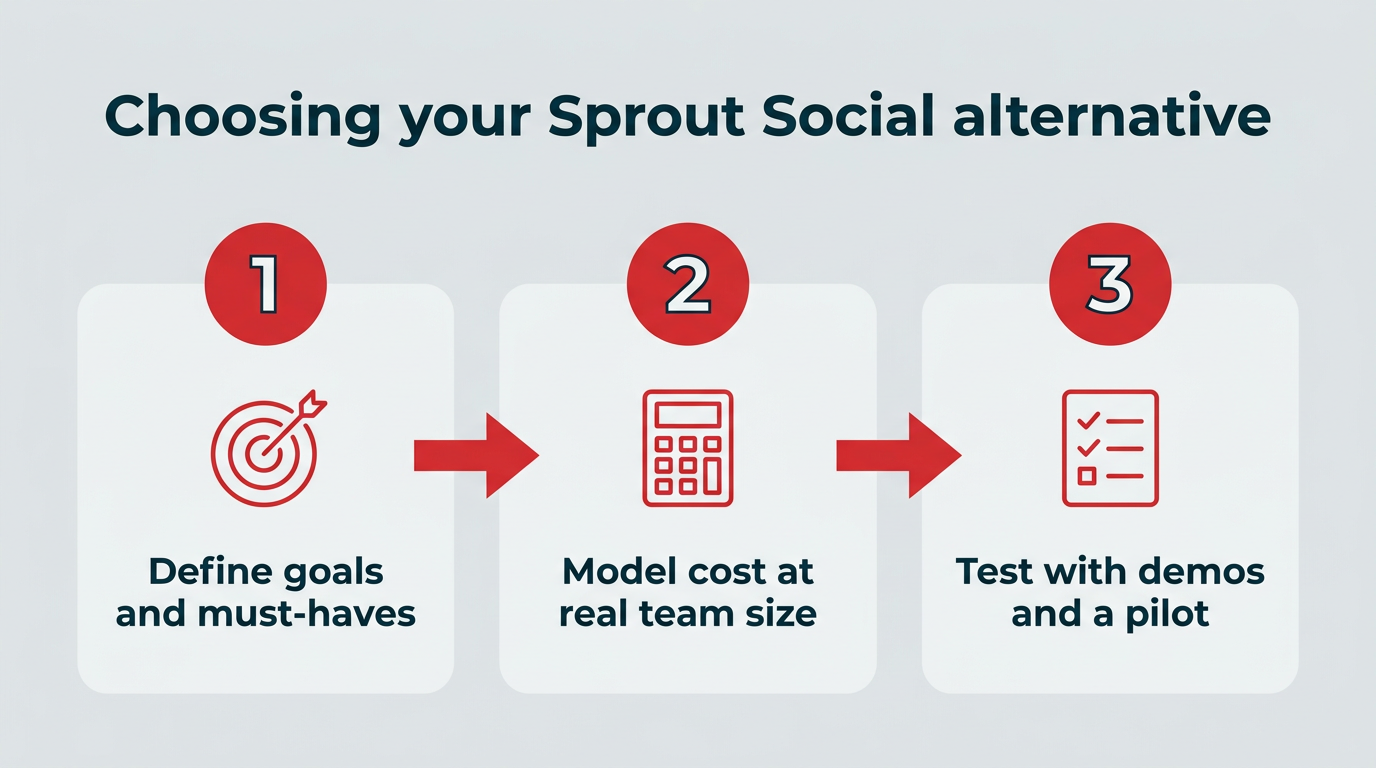
Selecting a successor to Sprout Social requires a three-phase audit:
- Define Your "Must-Haves": Are you looking for better social listening, or is your current team struggling with complex approval workflows? Identify your single greatest pain point.
- Model the Growth: Do not just look at your current user count. Look at your projected growth for the next two years. If your team will double, the platform’s pricing structure must remain sustainable.
- Run a Pilot: Never commit to an enterprise contract without a 30-day pilot. Test the "time-to-publish" and the "ease-of-reporting." If the tool adds more time to your day rather than saving it, it is not the right fit.
Conclusion
The decision to leave a platform as established as Sprout Social is significant, but it is a necessary step for organizations that have outgrown their tools. Whether your priority is the compliance and AI-orchestration of Hootsuite, the user-friendly interface of Agorapulse, or the raw intelligence of Brandwatch, the market in 2026 offers more specialized, efficient, and cost-effective solutions than ever before.

By focusing on your specific operational goals—governance, intelligence, or speed—you can turn your social media management platform from a cost center into a true engine for growth.
