
Beyond the Noise: The 7 Essential Social Listening Metrics Every Brand Needs to Master
In the modern digital landscape, the internet is a vast, unending conversation. Every second, millions of users share opinions, frustrations, brand preferences, and industry trends across platforms. For businesses, "social listening" has evolved from a luxury into a fundamental necessity—it is the act of putting an ear to the ground of the digital world to understand what is being said about your brand, your competitors, and the broader industry.
However, simply listening is not enough. The sheer volume of data can be overwhelming, leading many teams to fall into the trap of tracking "vanity metrics" that look good on paper but offer no actionable value. To transform raw data into a strategic advantage, marketers must focus on the seven metrics that truly matter.

The Foundation: Understanding Social Listening vs. KPIs
To leverage social data, one must first distinguish between a metric and a Key Performance Indicator (KPI). A metric is merely a measurement—a data point reflecting activity. A KPI, by contrast, is a metric that has been tethered to a specific business objective.
For example, "mention volume" is a metric. In isolation, it tells you how many people are talking about you. However, when you set a goal to increase brand awareness by 15% this quarter, "mention volume" becomes a KPI. By aligning these metrics with business outcomes, organizations can move from reactive observation to proactive strategy.

1. The Essential Seven: Metrics That Drive Strategy
While there are dozens of data points available, these seven metrics provide the most significant insight into brand health and market positioning.
Mention Volume
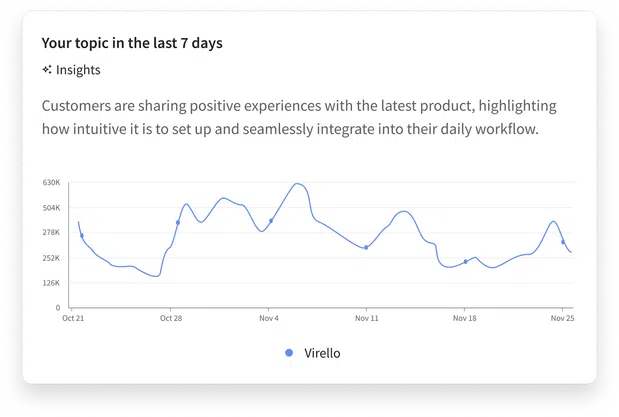
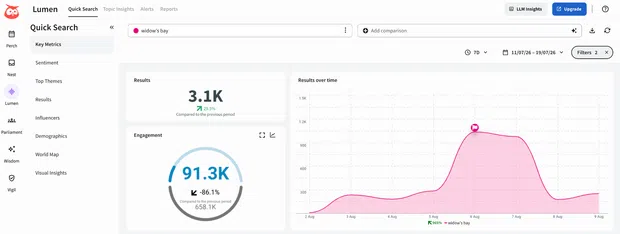
Mention volume tracks the frequency of references to your brand, product, or competitor. A sudden spike in volume is a diagnostic signal. It may indicate a successful viral campaign or a PR crisis in the making. By monitoring volume trends, teams can identify the exact moment a narrative begins to shift.
Sentiment Analysis
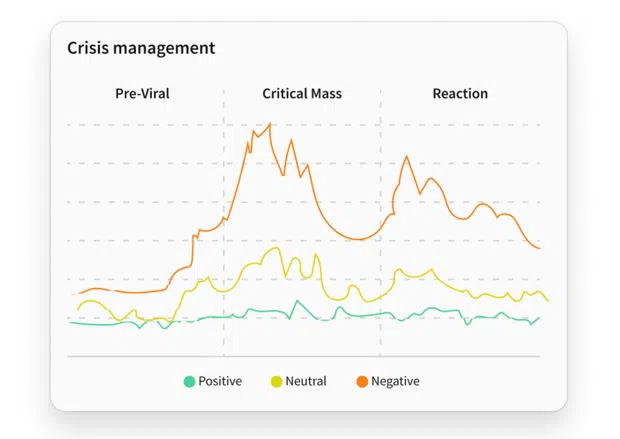
Mentions are neutral by nature; sentiment provides the necessary context. By categorizing conversations as positive, negative, or neutral, brands can gauge the emotional temperature of their audience. This is vital for crisis management—a high volume of mentions is meaningless if the sentiment behind them is overwhelmingly negative.
Share of Voice (SOV)
Share of Voice measures your brand’s presence relative to your competitors. It answers the question: "How much of the total industry conversation do we own?" If your SOV is declining while a competitor’s is rising, it is a clear indicator that their marketing, pricing, or product messaging is outperforming yours.
Reach
Reach estimates the potential audience size for a conversation. While it is not a perfect indicator of impact, it helps businesses understand the scale of a discussion. A mention from a high-authority industry influencer carries significantly more weight than a post from an account with zero engagement, and reach metrics help quantify that potential.
Engagement Rate
Engagement rate tracks how deeply users interact with the content—likes, comments, shares, and saves. High engagement signals that a topic is resonating, providing a roadmap for future content strategy. If a specific theme generates high engagement, it should be prioritized in your editorial calendar.
Trend and Topic Volume
This metric tracks the velocity of specific keywords or themes. The primary advantage of monitoring topic volume is the ability to identify trends before they hit the mainstream. Being "first to market" with an opinion on a emerging trend is a significant competitive advantage.
Conversation Themes
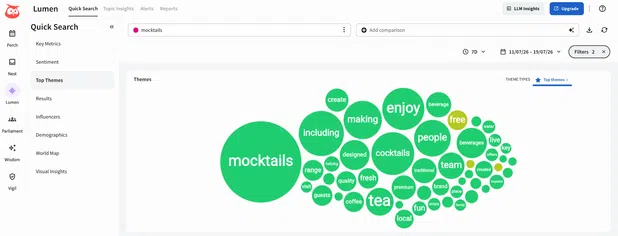
Themes move beyond keywords to uncover the why behind the noise. This involves identifying recurring complaints, questions, or ideas. If customers consistently associate your brand with a specific phrase—even if it differs from your official messaging—it provides an opportunity to either refine your marketing or acknowledge the customer’s perspective.

The Chronology of Data: From Collection to Action
Effective social listening follows a distinct operational cycle:
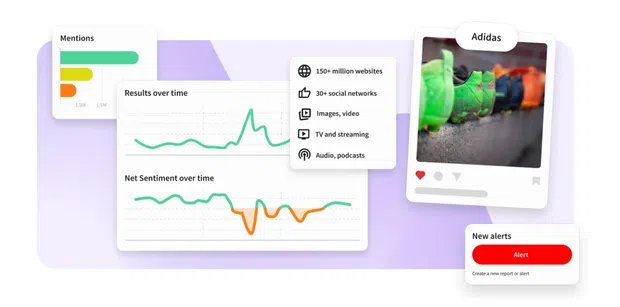
- Monitoring (Real-Time Collection): Using tools like Hootsuite’s Lumen, brands aggregate data from over 150 million sources. This phase ensures that nothing happens in a vacuum; you are alerted to developments as they unfold.
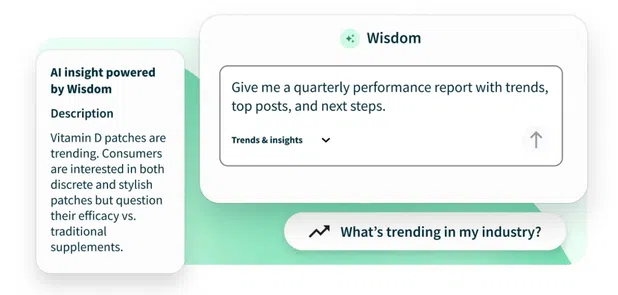
- Contextualization (The "Why"): Once the data is gathered, teams use analytics to filter out the noise. This is where AI-driven tools, such as Wisdom, play a critical role, turning thousands of raw mentions into plain-language summaries that explain the intent behind the data.
- Strategy Formulation: With insights in hand, the marketing team pivots. If the data shows a misconception about product pricing, the messaging is adjusted to prioritize value-based comparisons. If sentiment is dipping, the customer service team is alerted to address potential pain points.
- Amplification and Adjustment: Finally, performance is measured against the original KPIs. Did the response change the sentiment? Did the SOV increase? This creates a feedback loop that informs the next cycle of the campaign.
Supporting Data: Why Listening Matters
The impact of social listening extends far beyond the marketing department. Data suggests that organizations that integrate social listening into their broader business strategy see improvements across several KPIs:
- Product Development: By identifying recurring feature requests or common complaints in social discourse, product teams can prioritize their roadmaps based on genuine user demand rather than internal assumptions.
- Sales Enablement: When competitors adjust their pricing, social sentiment on platforms like Reddit often shifts instantly. Sales teams equipped with this real-time data can proactively address these changes in their sales decks, neutralizing competitor advantages before a prospect even raises the concern.
- Customer Retention: Proactive monitoring allows for "service recovery." Addressing an issue before it escalates to a public viral complaint can turn a frustrated customer into a brand advocate.
Industry Perspectives: The Strategic Shift
Tom Bukevicius, CEO and Founder of Scube Marketing, emphasizes that the true value of social listening is not in the collection of data, but in the speed of the response. "In one campaign, we noticed that people weren’t really questioning the product itself—they were confused about what made it different from cheaper alternatives," Bukevicius says. "We changed the campaign from feature-focused messaging to clearer comparison and positioning."
This anecdote underscores a critical truth: the gap between a brand and its audience is often a failure of communication, not a failure of the product. Social listening identifies these gaps, providing the evidence needed to pivot messaging in real-time.
Implications for the Modern Enterprise
The implications of failing to implement a robust social listening strategy are severe. In an age where a single tweet can trigger a brand crisis, "wait and see" is no longer a viable policy.
1. Reputation Management
Social listening acts as an early warning system. By tracking sentiment velocity, companies can identify negative trends during their incubation period. This gives the brand the luxury of time—time to draft a thoughtful response, verify facts, and prepare a strategy, rather than scrambling in a state of crisis.
2. Market Intelligence
Traditional market research—such as focus groups and surveys—is often slow and expensive. Social listening provides a "live" version of this research, allowing brands to see how products are used in the real world without the bias inherent in a controlled study.
3. Messaging Alignment
The most effective brands are those that speak the language of their customers. If your customers describe your product as "dynamic" while your marketing materials insist on "efficient," you are creating unnecessary friction. Social listening reveals the vocabulary your customers actually use, allowing for more authentic and effective communication.
Conclusion: The Path Forward
The goal of social listening is not to accumulate the biggest numbers, but to spot patterns early enough to act. By focusing on mention volume, sentiment, share of voice, reach, engagement, topic trends, and conversation themes, organizations can move from guessing what their audience wants to knowing exactly how to serve them.
In an increasingly crowded digital marketplace, the winners will be those who can hear the signal through the noise. Whether you are using tools like Lumen to monitor, Perch to report, or Wisdom to derive strategic insights, the methodology remains the same: listen, analyze, adapt, and repeat.
For the modern marketer, the internet is no longer just a broadcast channel—it is a conversation. It is time to join in.
