

Shopify vs. Pirate Ship: The Definitive Guide to E-commerce Logistics
In the rapidly evolving world of e-commerce, few comparisons generate as much confusion as the one between Shopify and Pirate Ship. New merchants often frame the debate as a "versus" scenario, assuming they must choose one platform to manage their shipping operations. However, the reality of modern retail is far more nuanced.
Shopify is the infrastructure of your business—a comprehensive, hosted ecosystem designed to build, run, and scale an online store. Pirate Ship is a specialized, high-efficiency utility designed to optimize one specific operational task: purchasing discounted postage. Understanding the distinction is not just an academic exercise; it is a critical strategy for managing your profit margins and operational workflow.
The Core Distinction: Infrastructure vs. Optimization
To understand how these tools interact, one must first categorize their primary functions.
Shopify: The Digital Storefront
Shopify is an all-encompassing e-commerce engine. It provides the front-end (your website theme and product pages), the back-end (inventory management, order tracking, and analytics), and the critical bridge between customer and product (the checkout and payment gateway). When you subscribe to Shopify, you are paying for the capability to operate a storefront that is accessible 24/7 to global consumers.
Pirate Ship: The Shipping Utility
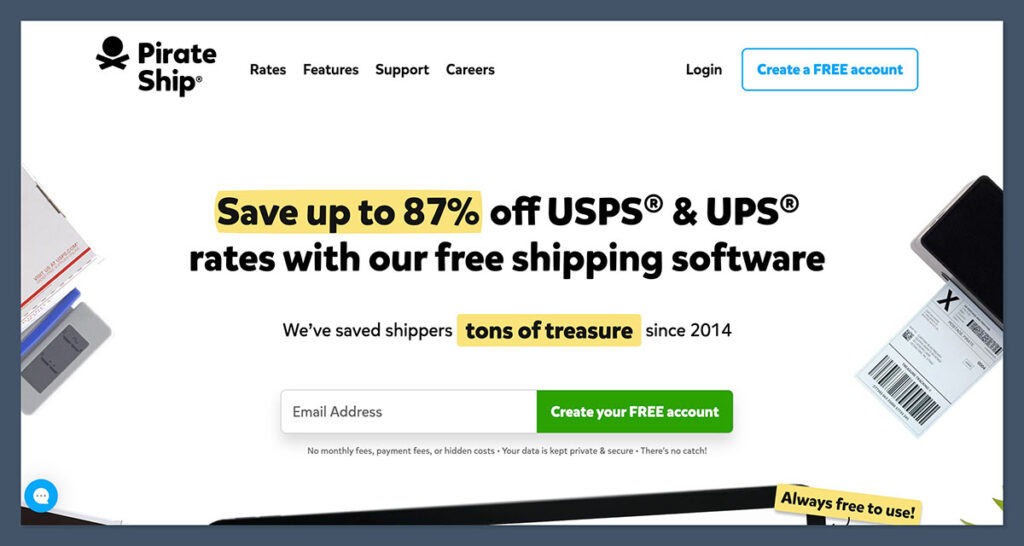
Pirate Ship, by contrast, is a specialized shipping software. It does not provide a website, a shopping cart, or a payment processor. Instead, it acts as a high-volume purchasing interface for postage. By leveraging massive aggregated shipping volumes, Pirate Ship offers deeply discounted USPS and UPS rates directly to small and medium-sized business owners who might otherwise lack the volume to negotiate such terms.
Chronology of Evolution: How We Got Here
The rise of both platforms follows the broader arc of the "democratization of e-commerce."

- Early 2000s: Shipping was a manual, often expensive burden for small businesses. Merchants had to visit physical post offices or pay full retail rates at carrier websites.
- The Mid-2010s: As Shopify matured, it introduced "Shopify Shipping" to simplify the process, allowing merchants to buy labels within the dashboard. This reduced the friction of shipping but kept the merchant inside a single, closed ecosystem.
- The Pirate Ship Disruption: Pirate Ship entered the market with a focus on "no-frills, low-cost." By removing the overhead of monthly subscription fees and focusing purely on rate optimization—specifically for USPS Priority Mail Cubic and UPS Ground—they carved out a niche as the "power user’s" choice for logistics.
- The Integration Era (Present Day): Today, the two tools are no longer rivals; they are integrated partners. Through the Shopify App Store, merchants can link their stores to Pirate Ship, effectively creating a hybrid system that uses Shopify for the storefront and Pirate Ship for the fulfillment engine.
Supporting Data: Why Costs Diverge
The financial implications of your shipping strategy are significant. While Shopify’s native shipping tools are convenient, they are part of a broader, feature-rich service. Pirate Ship is a "pure-play" tool, which changes how costs are structured.
The Cost Structure Comparison
| Feature | Shopify Shipping | Pirate Ship |
|---|---|---|
| Monthly Subscription | Included in your Shopify plan | $0 (Free) |
| Label Markups | None (Rates vary by plan) | None (Pure carrier rates) |
| Carrier Focus | USPS, UPS, DHL, FedEx | USPS, UPS |
| Best For | Convenience & Integration | Maximum Rate Savings |
Data from merchant forums and industry reports consistently show that for high-volume shipping, Pirate Ship’s access to USPS Priority Mail Cubic and UPS Ground Saver often yields a 10–25% reduction in shipping costs compared to standard retail or mid-tier business rates.
For a store shipping 500 orders a month, that savings can amount to thousands of dollars annually—a sum that directly impacts the bottom line of a lean, bootstrapped business.
Official Stance and Strategic Implications
The Case for Shopify’s Native Tools
Shopify’s internal shipping dashboard is optimized for the "All-in-One" experience. If you are a boutique store or a merchant who values simplicity, the time saved by not having to switch between apps is valuable. Shopify provides:
- Real-time checkout rates: Your customers see accurate shipping costs at the point of sale.
- Integrated tracking: Customers receive updates directly from the Shopify ecosystem.
- One-stop management: Everything from inventory counts to return labels happens in one browser tab.
The Case for the "Hybrid" Approach
For businesses that have graduated from "hobby" status to "enterprise," the hybrid model is the industry standard. By utilizing Shopify for the front-end and integrating Pirate Ship for fulfillment, merchants gain the best of both worlds:
- Administrative Efficiency: Using an integration, your orders flow from Shopify to Pirate Ship automatically. You buy the label, and the tracking number is automatically pushed back to the customer’s Shopify order record.
- Specialized Features: Pirate Ship offers superior batch-shipping capabilities, advanced customs form automation for international trade, and specialized reporting that helps merchants analyze shipping spend by "Zone" and "Weight," which can inform future product pricing decisions.
Detailed Workflow Analysis: Which Tool Wins?
1. Checkout and Conversion
Winner: Shopify.
Shopify is the only option here. Pirate Ship does not provide a checkout flow. If you want your customers to pay for shipping at the moment of purchase, you must use a platform like Shopify.

2. Rate Negotiation and Discount Access
Winner: Pirate Ship.
While Shopify offers excellent competitive rates, Pirate Ship’s singular focus on postage allows them to pass on some of the most aggressive discounts in the industry. For heavy, small items (where "Cubic" pricing applies), Pirate Ship is frequently the undisputed champion.
3. User Experience and Workflow
Winner: Tie.
- For the beginner, the ease of using the Shopify admin is superior. You stay in one place.
- For the power user, the "Batch" feature in Pirate Ship is a massive productivity booster, allowing the printing of hundreds of labels in seconds with pre-saved package dimensions.
Frequently Asked Questions (FAQ)
Q: If I use Pirate Ship, do I still need to pay for Shopify?
A: Yes, if you want a storefront. Pirate Ship is not a replacement for a website; it is a logistics tool. If you are selling via a different channel (like an Etsy shop), you might not need Shopify, but if you are building your own brand, Shopify is essential.
Q: Is there any hidden fee in Pirate Ship?
A: No. Pirate Ship operates on a model where they receive a commission from the carriers for the volume they generate. They do not charge the user for the software, nor do they charge a markup on the labels.
Q: Does the integration between the two platforms break easily?
A: Both platforms have invested heavily in their API connections. The sync between Shopify and Pirate Ship is generally considered one of the most reliable integrations in the e-commerce space.
Final Implications for Business Growth
Choosing between these tools is a false dilemma. The true strategic decision lies in when to transition.
A brand-new store should start with Shopify Shipping. The simplicity of having your entire business in one dashboard is worth the marginal difference in postage costs during the growth phase. You need to focus on marketing, product photography, and customer acquisition.
However, once you reach a threshold where your monthly shipping spend exceeds $500–$1,000, you should evaluate the shift to Pirate Ship. At this volume, the "convenience premium" you pay for Shopify Shipping becomes a tangible drain on your margins. By integrating Pirate Ship, you maintain the robust, professional customer experience of a Shopify storefront while capturing the logistics savings required to scale your business sustainably.
Summary Checklist for Merchants:
- Low Volume (<50 orders/mo): Stick with Shopify native shipping for ease of use.
- Medium-to-High Volume (>50 orders/mo): Integrate Pirate Ship to capture deeper discounts and advanced batch processing.
- International Heavy: Evaluate both for customs form handling; Pirate Ship often offers a more granular interface for complex international shipping requirements.
In conclusion, Shopify and Pirate Ship are not rivals; they are the two pillars of a successful modern e-commerce operation. By using Shopify to manage your customers and Pirate Ship to manage your postage, you build a logistics stack that is both consumer-friendly and highly profitable.
