
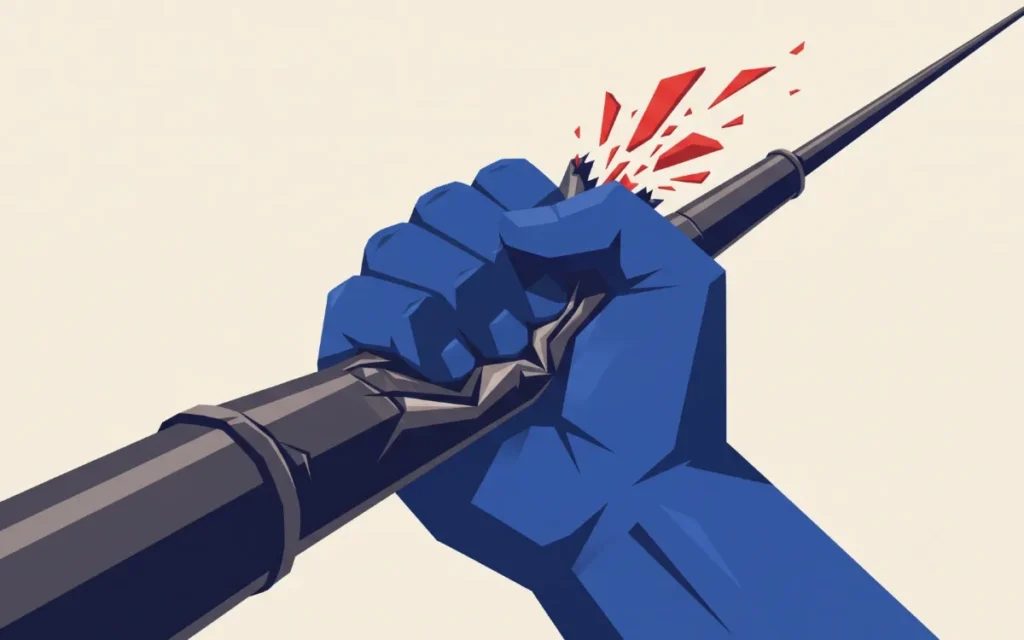
The Great Uncoupling: Why Publishers are Weighing a Total Break from Google
Executive Summary: A Premise in Ruins
For two decades, the digital economy operated on a tacit, symbiotic compact: Google acted as the internet’s librarian, indexing the world’s information and sending back audiences, while publishers monetized those visitors through programmatic advertising. This week, that premise officially collapsed.
Between July 15 and July 24, 2026, the industry witnessed a seismic shift in market structure. While Alphabet reported a staggering $63.3 billion in quarterly search advertising revenue—a 17% year-over-year increase—major news publishers, including USA Today, Reuters, and Reddit, signaled that they are no longer merely "concerned" about traffic loss. They are actively modeling a future where they cut off Google’s crawlers entirely. The supply-side of the open web has shrunk by 40% in just three months, forcing a radical recalculation of value, dependency, and the very viability of the "referral-based" publishing model.
Chronology of the Crisis (July 15–24, 2026)
- July 15: Ozone reports that publisher ad supply collapsed by up to 40% in Q2. Reddit executives admit they are internally debating whether their content-licensing deals with AI providers are cannibalizing their own advertising business.
- July 16: The EU mandates that Google must share anonymized search data with rivals and open Android features to competing AI assistants.
- July 17: Google executives tout "billions of weekly clicks" to the web, a claim met with immediate skepticism as independent data shows click-through rates (CTR) for top-ranking pages dropping by 58% where AI Overviews appear.
- July 21: The Wall Street Journal reveals that five major publishers are evaluating a total exit from Google’s index.
- July 22: Alphabet reports $119.8 billion in quarterly revenue; Reach plc reports a 55% drop in Google referrals and halves its dividend.
- July 23: The European Commission issues a €890 million fine against Google for self-preferencing and anti-steering practices.
Supporting Data: The Compression of the Open Web
The data emerging from this quarter paints a picture not of a slow decline, but of a structural "hollowing out" of the open web.
The 40% Contraction
According to Ozone’s benchmarking, which tracks roughly 20 billion impressions across premium publishers like The Guardian and The Wall Street Journal, ad request volumes fell by nearly 40% in the UK and US during Q2. This is not a "long-tail" issue; it is a collapse of premium, high-value inventory.
The Price/Volume Inversion
Paradoxically, while volume plummeted, eCPMs (effective cost-per-thousand impressions) rose by 30% in the UK and 7% in the US. This suggests the open web is not dying—it is compressing. The market is becoming smaller, more expensive, and more volatile. Publishers are increasingly culling low-value bid requests to protect their brand, a strategic retreat that turns the "collapse" into a defensive consolidation.
The AI Displacement
The "Google Zero" phenomenon—where users get their answers directly within the search interface—is now quantifiable. Research shows that 75% of sessions in "AI Mode" terminate without a single click to an external site. For publishers, this means the traffic funnel has effectively been capped.
Official Responses: From Negotiation to Ultimatum
The tone from the C-suite has shifted from collaborative to existential.
The Ultimatum: Mike Reed, CEO of USA Today Co., stated plainly that it is "time to take a stand." Similarly, People Inc. CEO Neil Vogel noted that blocking Google is "fully on the table." These are not impulsive threats; they are cold, calculated responses to the fact that Google now accounts for a significantly smaller slice of their total traffic than it did two years ago.
The "Wait and See" Approach: Others remain cautious. Reuters president Paul Bascobert is measuring economic trade-offs, and The Economist has opted to stay within the ecosystem, arguing that even declining traffic is better than zero traffic.
The Google Perspective: Google maintains that its AI features remain a net positive for the web. However, its own financial disclosures tell a different story. With free cash flow dipping into the negative and long-term debt increasing six-fold in a year to fund AI infrastructure, Google is essentially financing the machinery that is disassembling the open web’s traffic sources.
Implications: The New Rules of Engagement
The current market is undergoing a fundamental reordering that will change how brands and publishers operate for the next decade.
1. The Rise of "Walled Garden" Dominance
As the open web contracts, advertising budgets are not evaporating—they are migrating. Retail media (Amazon), gaming (EA’s in-game inventory), and out-of-home programmatic displays are absorbing the displaced spend. These environments offer something the open web increasingly cannot: closed-loop measurement, first-party data, and total control over the user experience.
2. The Death of "Infinite Supply" Strategy
For 15 years, programmatic advertising was optimized for finding the cheapest inventory at scale. That era is over. With supply finite and expensive, the competitive advantage has shifted from those who can process the most impressions to those who can verify the highest quality. Ironically, this has created an opening for "Made-for-Advertising" (MFA) sites, which often use arbitrage tactics to mimic premium inventory, potentially siphoning off budgets from legitimate publishers.
3. Regulatory Friction and the "Gatekeeper" Conflict
The EU’s €890 million fine is a warning shot, but its long-term impact remains unclear. By deferring decisions on how self-preferencing principles apply to AI-generated search results, the Commission has left the most critical area of the internet in a regulatory limbo. Publishers are now forced to build their own "Content Telemetry Frameworks" because the platforms refuse to provide the transparency required for a fair marketplace.
4. The Auditing Crisis
Perhaps the most alarming trend is the failure of the measurement layer. As evidenced by The Wall Street Journal’s need to correct its traffic data by massive margins, the industry is making multi-million dollar capital allocation decisions based on flawed analytics. When identity errors can cut campaign ROI by 70%, and when a 1% data contamination can reverse channel rankings, the entire programmatic stack is effectively running on "noise."
Conclusion: A System Under Reset
The events of mid-July 2026 mark the end of the "unspoken premise." The arrangement where content creators provided free fuel for Google’s search engine in exchange for traffic is no longer a sustainable business model for the majority of the publishing industry.
The threat to cut off crawlers is not a bluff; it is a rational response to a system that has become parasitic. As publishers like Reach plc shift their accounting to treat their mastheads as having finite economic lives, we are witnessing the formal professionalization of the decline.
Moving forward, the industry will be defined by "reduced dependency." Those who survive will be the ones who successfully pivoted to first-party relationships, subscription models, or high-value contextual niches. The open web will not disappear, but it will no longer be a playground for infinite scaling. It will be a gated, premium, and highly guarded landscape—a stark departure from the wild, open frontier that dominated the early 21st century. The question for August and beyond is not whether the web will change, but how many publishers will survive the transition.
