
The Anatomy of Influence: How to Craft a Winning Value Proposition
In the hyper-competitive landscape of modern commerce, businesses often struggle with a singular, fundamental problem: the inability to clearly articulate why a customer should choose them over a sea of alternatives. Whether you are a B2B SaaS startup or a consumer-facing retail brand, your survival depends on your value proposition—a concise, powerful statement that defines what you deliver, who you deliver it to, and why your solution is the superior choice.
A value proposition is not merely marketing fluff or a catchy tagline; it is the strategic cornerstone of your business. It is the bridge between your product’s capabilities and your customer’s deepest needs.
The Core Concept: Defining Value
At its heart, a value proposition is a succinct declaration of the value a product or service provides to a specific customer segment. It serves as an answer to the customer’s internal dialogue: “Why should I care, and why should I trust you?”
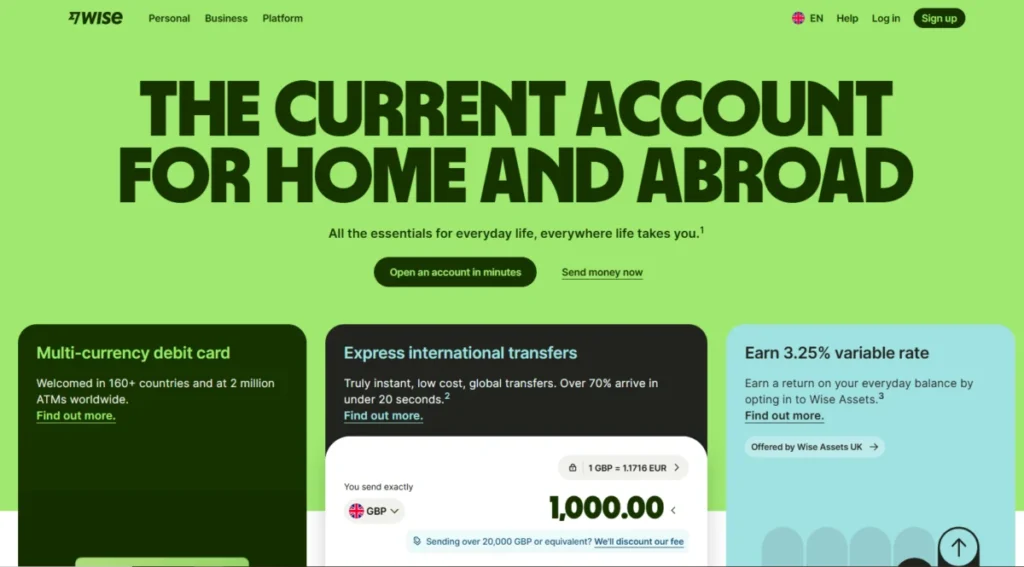
Consider the fintech giant Wise. Their value proposition is crystal clear: they provide a bank account for global citizens who need to move money across borders. They differentiate by offering near-instant transfers at costs up to 75% lower than traditional banks. By focusing on the friction of international banking and providing a tangible, cost-effective solution, Wise has captured a massive market share by simply articulating the "value" of their service in a way that resonates with their audience’s pain points.
![Value Proposition: What It Is and How to Write One [+ Examples]](https://ceblog.s3.amazonaws.com/wp-content/uploads/2026/07/15113335/The-Value-Proposition-Canvas.png)
Distinguishing the Value Proposition from Marketing Noise
Business leaders often confuse the value proposition with other branding elements. Clarifying these distinctions is vital for strategic alignment.
1. Value Proposition vs. Unique Selling Proposition (USP)
While a value proposition focuses on the holistic benefit—the "what" and "why"—a USP is laser-focused on differentiation. It highlights the specific, singular attribute that sets you apart. A robust strategy often blends the two, creating a "Unique Value Proposition" (UVP) that says, "We provide [value] and we are the only ones who do it via [uniqueness]."
2. Value Proposition vs. Mission Statement
A mission statement is internal and aspirational; it defines the company’s reason for existing in the long term. A value proposition is external and functional; it defines what the customer gets right now. A successful organization ensures these are aligned: the mission drives the vision, while the value proposition communicates the practical manifestation of that vision to the end-user.
3. Value Proposition vs. Tagline and Slogan
Taglines (like Nike’s "Just Do It") are memory devices. They are designed for brand recall and emotional connection. While a tagline might hint at a value proposition, it is rarely the full argument. A slogan, meanwhile, is often campaign-specific. Nike’s historical use of "It’s Gotta Be The Shoes" was a tactical, product-specific message that supported their broader value proposition of high-performance athletic innovation.
![Value Proposition: What It Is and How to Write One [+ Examples]](https://ceblog.s3.amazonaws.com/wp-content/uploads/2026/07/15113247/Value-Proposition-Wise.png)
The Architecture of a Strong Value Proposition
To build a compelling statement, many experts rely on the Value Proposition Canvas. This tool maps the "Customer Profile" (jobs, pains, gains) against the "Value Map" (products, pain relievers, gain creators).
A strong value proposition must answer four critical questions:
- Who is the customer? (Segmenting by role, industry, or psychographics)
- What is the job they are trying to do? (The core task)
- What is their primary pain point? (The obstacle)
- Why is your solution the winner? (The unique benefit)
The Strategic Imperative: Why It Matters
A well-defined value proposition acts as a filter for your entire business. It drives growth by:
- Reducing Customer Acquisition Cost (CAC): When your message is clear, your marketing converts more effectively.
- Aligning Internal Teams: It gives sales, marketing, and product teams a "North Star" to guide their development and messaging.
- Improving Retention: When you clearly define who you serve, you attract the right customers—those who get the most value from your product—leading to higher lifetime value (LTV).
The Six-Step Roadmap to Crafting Your Value Proposition
Step 1: Deep Dive into Customer and Competitor Analysis
Don’t guess. Define your target customer by their specific role and the situation they find themselves in. If you are selling B2B software, don’t just say "B2B companies." Say, "Enterprise RevOps teams at mid-sized SaaS firms struggling with data silos." Then, perform a gap analysis on your competitors. What are they saying? Where are they failing to deliver on their promises?
![Value Proposition: What It Is and How to Write One [+ Examples]](https://ceblog.s3.amazonaws.com/wp-content/uploads/2026/07/15113317/Value-Proposition-Shoes.png)
Step 2: Identify Jobs, Pains, and Gains
Study your customers’ language. Read their reviews on G2, Capterra, or social media. Look for "verbatim" phrases—the exact words they use to describe their frustration. If they say "it takes four hours to reconcile," that is your gold mine.
Step 3: The "So What?" Test
Take your list of features and run them through the "So what?" test.
- Feature: "We have an automated bank feed."
- So what? "You don’t have to input data manually."
- So what? "You save four hours a week."
- So what? "You can focus on growing your business instead of doing accounting."
The final statement is your value-driven message.
Step 4: Finding the Differentiation Angle
If your features are standard, look elsewhere. Differentiation can come from:
- Speed: "The fastest delivery in the industry."
- Simplicity: "The easiest interface to set up."
- Risk Mitigation: "The only tool with a 100% compliance guarantee."
- Exclusivity: "The only platform built specifically for [Niche Industry]."
Step 5: Drafting and Iterating
Use established formulas to create 5–10 variations. Whether it’s the "We help X do Y by doing Z" structure or a more conversational approach, aim for brevity. A great value proposition should be readable in under five seconds.
![Value Proposition: What It Is and How to Write One [+ Examples]](https://ceblog.s3.amazonaws.com/wp-content/uploads/2026/07/15113441/Value-Proposition-QuickFile.png)
Step 6: Empirical Validation
Never launch a value proposition based on an "executive hunch." Use A/B testing on landing pages, run surveys, or conduct customer interviews to see which message resonates most effectively with your target demographic.
Real-World Examples of Excellence
Gusto: "Payroll, HR, Benefits. Simplified."
Gusto understands that their customer—the small business owner—is overwhelmed by administrative complexity. By using the word "Simplified," they target the specific pain point of complexity, positioning themselves as the antidote to bureaucratic headaches.
DuckDuckGo: "Switch to DuckDuckGo. It’s private and free!"
In an era of data anxiety, DuckDuckGo’s value proposition is a masterclass in clarity. They identify the "job" (searching) and the "gain" (privacy), offering a clear, actionable instruction.
Zapier: "Your Tools. Your rules. Any AI."
Zapier addresses the modern knowledge worker’s frustration with disconnected apps. By emphasizing autonomy ("Your rules") and future-proofing ("Any AI"), they position themselves as an essential orchestrator in a fragmented digital workspace.
![Value Proposition: What It Is and How to Write One [+ Examples]](https://ceblog.s3.amazonaws.com/wp-content/uploads/2026/07/15113512/Value-Proposition-Gusto.png)
Implementation: Integrating Across Your Website
Your value proposition is not a static piece of text to be hidden on an "About Us" page. It should be the first thing a visitor sees. The most effective websites distribute the value proposition across the user journey:
- The Headline (Above the fold): Communicates the core benefit.
- The Sub-headline: Provides the necessary detail or proof.
- The Body Copy/Visuals: Demonstrates the "how" through specific features.
Conclusion: The Continuous Cycle
A value proposition is not a one-time project. It is a living document. Markets shift, competitors innovate, and customer needs evolve. If your competitors catch up, or if your product evolves, your value proposition must evolve with it.
By answering the four fundamental questions—who, what, why, and how—and continuously testing those answers against real-world feedback, you ensure your business remains relevant. Remember, the goal isn’t just to be heard; it’s to be understood. Use tools like heatmaps and session recordings to observe how users engage with your messaging, and don’t be afraid to pivot. In the end, a strong value proposition is the difference between a product that is merely "available" and one that is considered "essential."
