
The Ultimate Showdown: Crazy Egg vs. Mouseflow for Modern Web Optimization
In the highly competitive landscape of Conversion Rate Optimization (CRO), data is the currency of growth. Marketing teams and product managers are increasingly turning to behavioral analytics to decode the "why" behind the "what" of their traffic. Two industry titans, Crazy Egg and Mouseflow, have long dominated this space. However, as the demands of digital teams evolve—moving from simple click-tracking to advanced friction-hunting and automated A/B testing—the choice between these two platforms has become a strategic decision rather than just a feature comparison.
The Core Philosophy: Why the Choice Matters
At its most fundamental level, this choice comes down to your current technical stack and your team’s operational philosophy.
Crazy Egg operates as an all-in-one "optimizer’s workbench." It is designed for teams that want to minimize tool sprawl. By bundling heatmaps, session recordings, robust A/B testing, and AI-driven web analytics under a single subscription, it empowers a single marketer to spot a UX flaw, hypothesize a fix, and launch an experiment without ever leaving the dashboard.
Mouseflow, conversely, is built for the "specialist" workflow. It prioritizes the granular diagnostic phase of optimization. By providing a proprietary "Friction Score," advanced form analytics, and live session monitoring, it serves as a powerful microscope for teams that already possess a separate, dedicated experimentation platform (like Optimizely or VWO).
Chronology of Evolution: From Simple Click-Tracking to AI-Driven Insights
Both companies began as pioneers in the visual analytics space.
- The Early Days: Crazy Egg rose to prominence by democratizing the "heatmap," moving it out of the realm of expensive enterprise software and into the hands of small business owners. Its signature "Confetti" map, which allowed for segmenting clicks by source or browser, changed how marketers looked at landing pages.
- The Rise of Replay: Mouseflow gained ground by perfecting the "Session Recording" technology, focusing heavily on performance and the ability to watch users in real-time.
- The Current Era: Both platforms have pivoted aggressively toward AI. Crazy Egg has integrated automated insights that highlight actionable recommendations across reports. Mouseflow has focused on the "Mina" AI assistant and providing an MCP server, which allows technical teams to pipe raw behavioral data into their own LLM workflows for custom analysis.
Comparative Feature Analysis: A Deep Dive
1. Heatmapping and Visual Analytics
While both tools provide the industry-standard click and scroll maps, their methodologies differ.

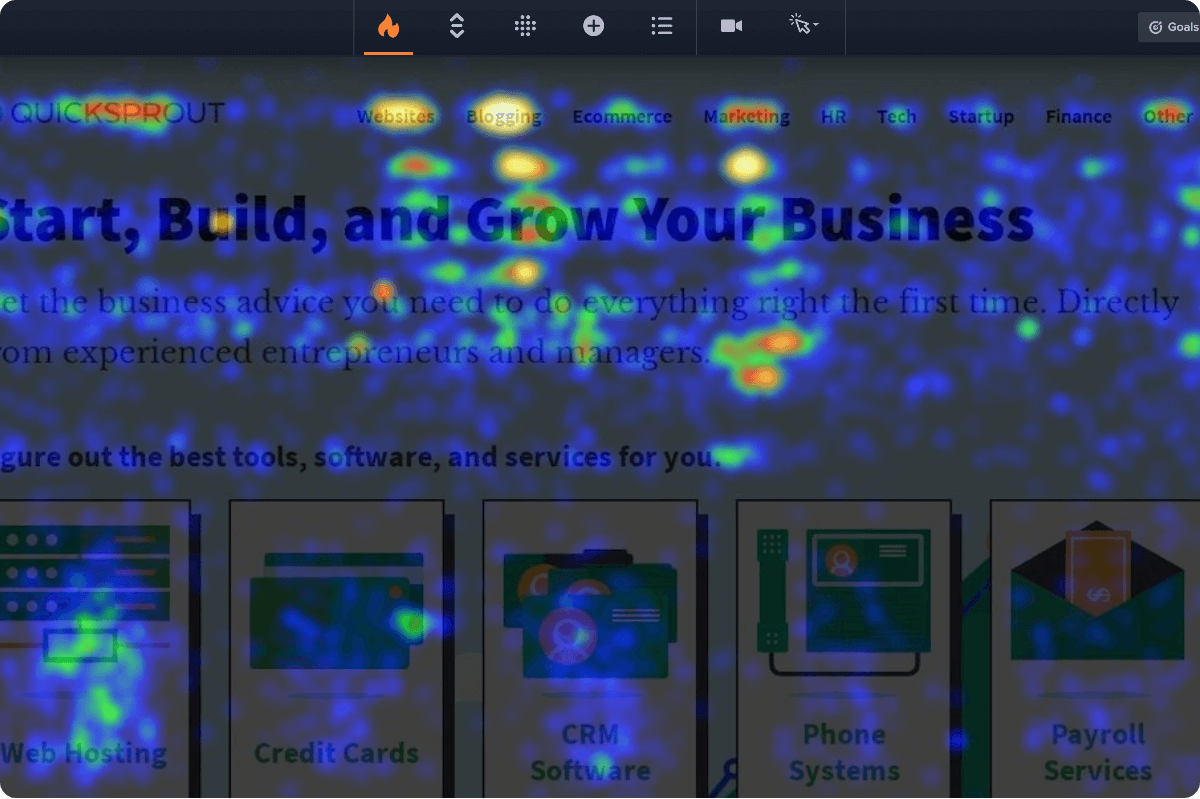
- Crazy Egg emphasizes segmentation. Its ability to compare 17+ metrics in Confetti maps allows teams to see not just where people click, but who those people are (e.g., mobile users from Google Ads vs. desktop users from organic search).
- Mouseflow provides a wider array of map types—seven in total—including specialized views like "Attention" and "Geo" maps. Its cross-type comparison feature is particularly useful for correlation analysis, such as overlaying scroll depth with click density.
2. Session Replays and Behavioral Tagging
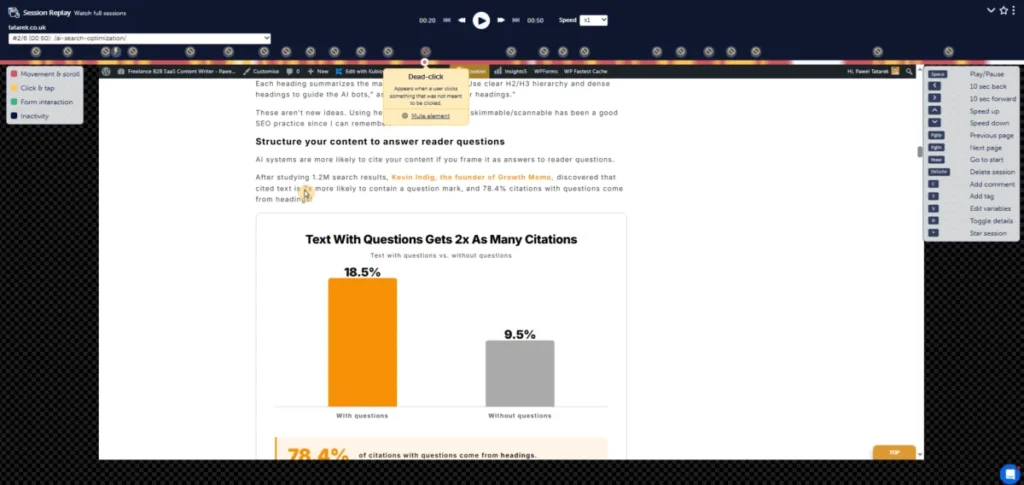
Recording a session is easy; finding the "aha" moment in that recording is hard. Both tools use auto-tagging to solve this.
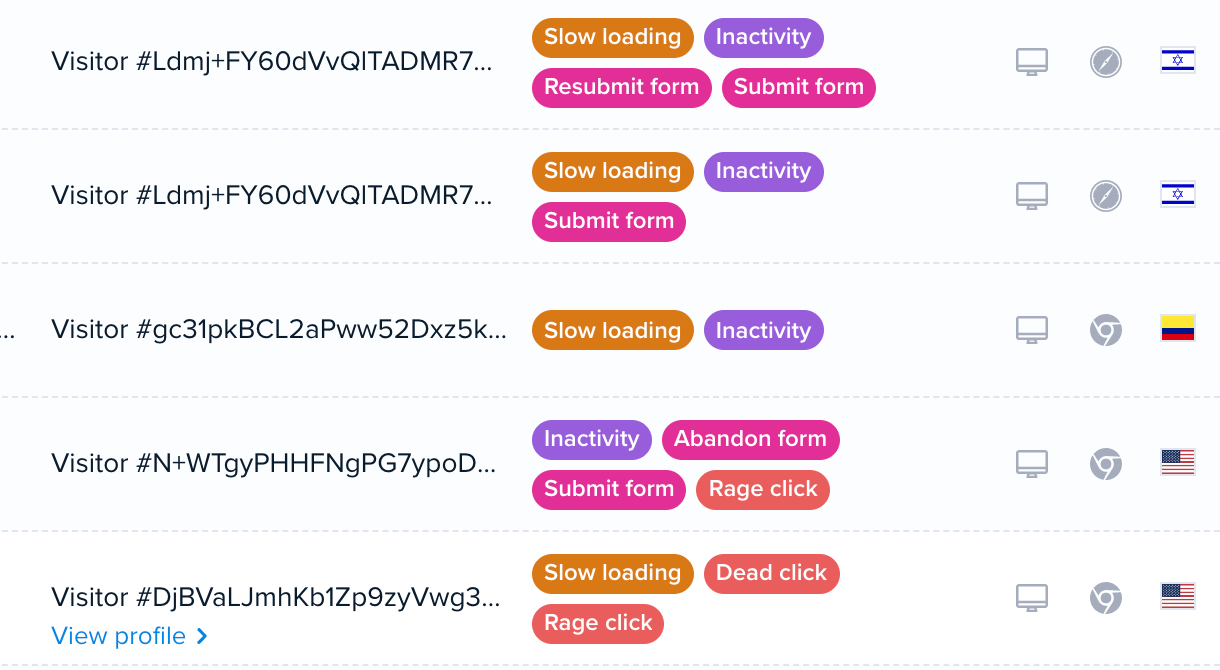
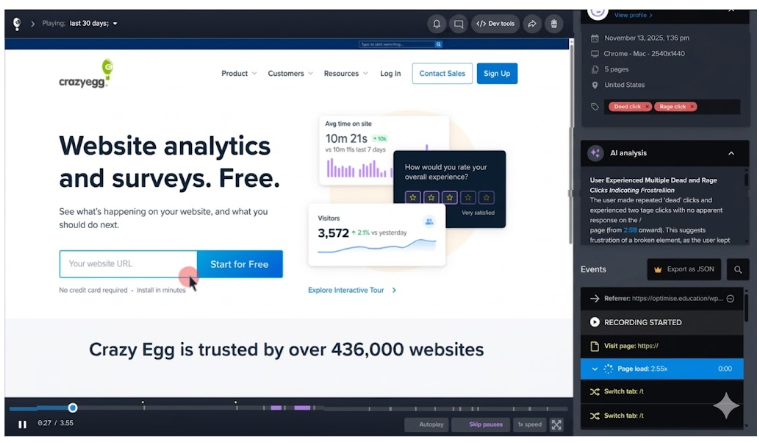
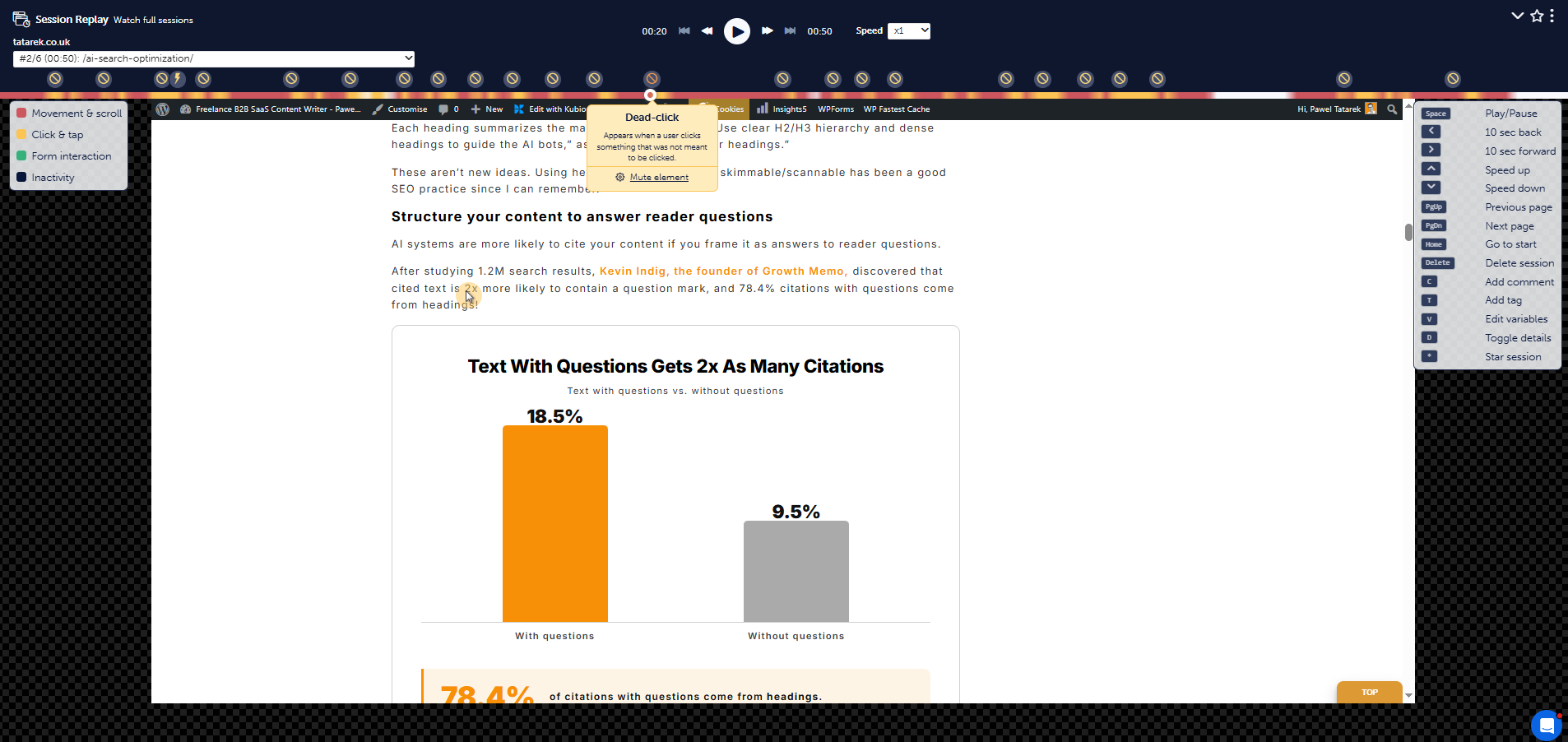
- Crazy Egg excels in automated event tagging, identifying friction signals like "rage clicks" or "JavaScript errors" without requiring manual setup. Its timeline feature gives users a snapshot of the session’s value before they even click play.
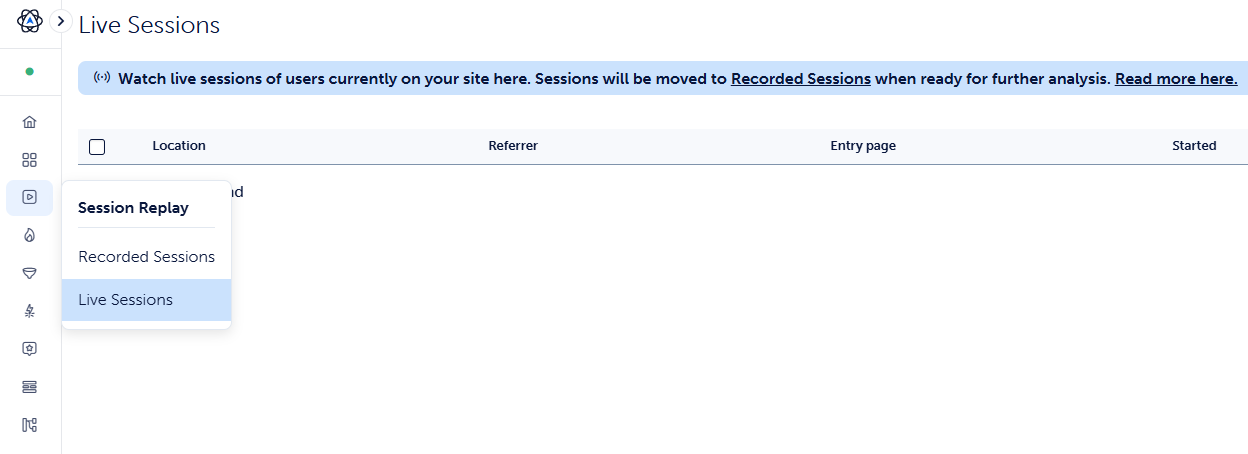
- Mouseflow stands out for its "Live Session" viewing. For support teams or high-stakes conversion moments (like a major product launch), the ability to see users in real-time is a significant advantage.
3. Conversion Funnels and Revenue Attribution
Funnels are the heartbeat of CRO.
- Crazy Egg’s funnels are famously flexible. Because they update retroactively, you can build a funnel today and instantly see how your traffic performed over the last month.
- Mouseflow offers a distinct edge for e-commerce managers through its "Revenue Insights." By attaching monetary values to conversion steps, Mouseflow can project the revenue lift of a specific funnel improvement, providing the "bottom-line" justification that stakeholders crave.
4. Surveys: The Qualitative Bridge
Feedback is the antidote to assumptions.
- Crazy Egg provides an expansive library of 50+ survey templates, making it accessible for non-designers. Its commitment to WCAG AAA accessibility standards also makes it the preferred choice for government and public-sector websites.
- Mouseflow offers more aggressive behavioral triggers. By firing a survey specifically when it detects a "click error" or "rage click," Mouseflow captures the user’s frustration at the exact moment it occurs.
Supporting Data: The Value Proposition
When analyzing the return on investment, the billing models reveal the true target audience for each tool.
| Metric | Crazy Egg | Mouseflow |
|---|---|---|
| Billing Model | Tracked Pageviews | Session-based |
| Sites/Seats | Unlimited | Capped by plan |
| A/B Testing | Native | None (Survey-only) |
Crazy Egg’s "no-overage" model—where collection pauses once you hit your cap—is designed for budget predictability. Mouseflow’s session-based rollover model allows for more flexibility during seasonal traffic spikes, provided you stay within the 2x refill limit.
Implications for Your Digital Strategy
When to choose Crazy Egg:
- You want an all-in-one solution: If you don’t have a separate A/B testing tool, Crazy Egg is the clear winner. You save the cost and the technical overhead of managing two distinct platforms.
- You manage multiple properties: With unlimited sites and seats, agencies and companies with diverse portfolios will find the pricing significantly more scalable.
- You need accessibility: For companies with strict compliance requirements, the WCAG AAA-compliant survey tools are a major differentiator.
When to choose Mouseflow:
- You are a dedicated CRO team: If you already utilize a platform like Optimizely or Adobe Target for experimentation, you don’t need Crazy Egg’s native testing. Instead, you need Mouseflow’s deep-dive friction diagnostics.
- You require granular form analysis: Mouseflow’s field-level analysis is superior for diagnosing where users abandon complex sign-up or checkout forms.
- You need "Live" monitoring: For high-traffic, mission-critical applications, the ability to watch live sessions offers a safety net that Crazy Egg currently lacks.
The Expert View: Official Perspectives
Representatives from both companies highlight different strengths. Crazy Egg’s team frequently emphasizes the "Speed to Insight"—the idea that you should be able to see a problem and launch a test within minutes. Their focus is on removing friction from the optimizer’s workflow.
Mouseflow’s messaging centers on "Diagnostic Precision." By providing metrics like the Friction Score and benchmarking, they aim to give teams the data they need to justify their projects to the C-Suite. They position themselves as the "truth layer" for website performance.
Conclusion: Making the Right Move
The landscape of web optimization has moved past simple heatmapping. Today, the choice between Crazy Egg and Mouseflow is a choice between integration and specialization.
If your goal is to consolidate your tech stack, empower a smaller team, and move quickly from discovery to testing, Crazy Egg is the optimal choice. It is a comprehensive ecosystem that removes the friction from the CRO process itself.
If you are a high-maturity organization with a specialized experimentation team, seeking to squeeze every percentage point of conversion out of complex funnels, Mouseflow provides the surgical-grade diagnostic tools required for such precision.
Ultimately, both tools are powerful enough to transform your data strategy. The winning choice is not the one with the most features, but the one that fits most seamlessly into the way your team solves problems. If you are leaning toward the all-in-one approach, a 30-day trial of Crazy Egg is the logical next step to validate these capabilities against your own live traffic.
