
The Language Gap: Why Your Product Catalog Is Sabotaging Your Influencer Campaigns
In the modern digital bazaar, the disconnect between creator-driven influence and backend product data has become a multi-million-dollar blind spot. When a content creator holds up a compact carry-on suitcase, demonstrates how a laptop fits into the front pocket, and navigates a busy airport terminal with ease, they are doing more than making a post—they are defining the product’s identity in the mind of the consumer.
However, a recurring failure in modern e-commerce is the "translation gap" that occurs when that consumer, now primed to buy, pivots to an AI shopping assistant or a search engine. If the brand’s official catalog describes that same item as a "22-inch polycarbonate spinner" in "stone" without mentioning the laptop compartment or the "beige" color the customer expects, the connection is severed. The creator did the heavy lifting of building preference, but the product data failed to carry that preference across the finish line.
The Evolution of the Consumer Search Query
The way shoppers interact with the internet is undergoing a structural shift. We are moving away from rigid, category-based browsing—where a user might search for "Category 184: Women’s Footwear"—toward natural language queries. A shopper today is more likely to ask an AI assistant: "Find me white sneakers that don’t look too sporty when worn with a dress, come in wide sizes, and can arrive by this Friday."
This query is profoundly human. It mirrors the language used by influencers who demonstrate products in real-world contexts. Creators sell through "contextual utility": they explain that a pan is easy to clean after cooking eggs, or that a specific desk lamp doesn’t glare during Zoom calls. In contrast, traditional product catalogs remain trapped in a world of SKUs, internal color labels, and marketing copy that was finalized months before the item launched.
When a brand’s digital infrastructure does not mirror the language of the creator, it creates an "invisible" product. If the AI assistant cannot find a match because the brand’s technical metadata doesn’t include terms like "non-glare," "easy-clean," or "wide-fit," the brand loses the sale to a competitor whose data is more descriptive and aligned with how people actually speak.
A Chronology of the Disconnect
The current crisis in product discoverability can be traced through the stages of a standard influencer campaign:
- The Briefing Stage: Creative teams focus on the "hook" and the "aesthetic." Product data teams are rarely in the room. Consequently, the unique selling points (USPs) discovered by the creator during testing never make it into the product feed.
- The Launch Window: The content goes live. Engagement spikes. Comments flood in with specific questions: "Does it hold a laptop?" "Is that beige or grey?" "Is it good for wide feet?"
- The Information Vacuum: The brand fails to capture this real-time intelligence. The landing page remains static, reflecting the original, clinical product description.
- The AI Pivot: Potential customers, unsatisfied by the lack of clarity on the main site, turn to AI tools like ChatGPT or Gemini to cross-reference their questions. Because the brand’s backend data is stale or overly technical, the AI fails to associate the product with the user’s specific query.
- The Abandonment: The customer concludes the product doesn’t meet their needs and chooses a competitor, unaware that the item they just saw in a video was actually perfect for them.
Supporting Data: Why Alignment Matters
According to recent industry analysis, the 2026 landscape of influencer marketing is increasingly defined by operational maturity. As noted in the Influencer Marketing Hub’s 2026 Benchmark Report, which surveyed over 600 marketing professionals, the success of a campaign is no longer just about reach and engagement—it is about "operationalizing" the influence.
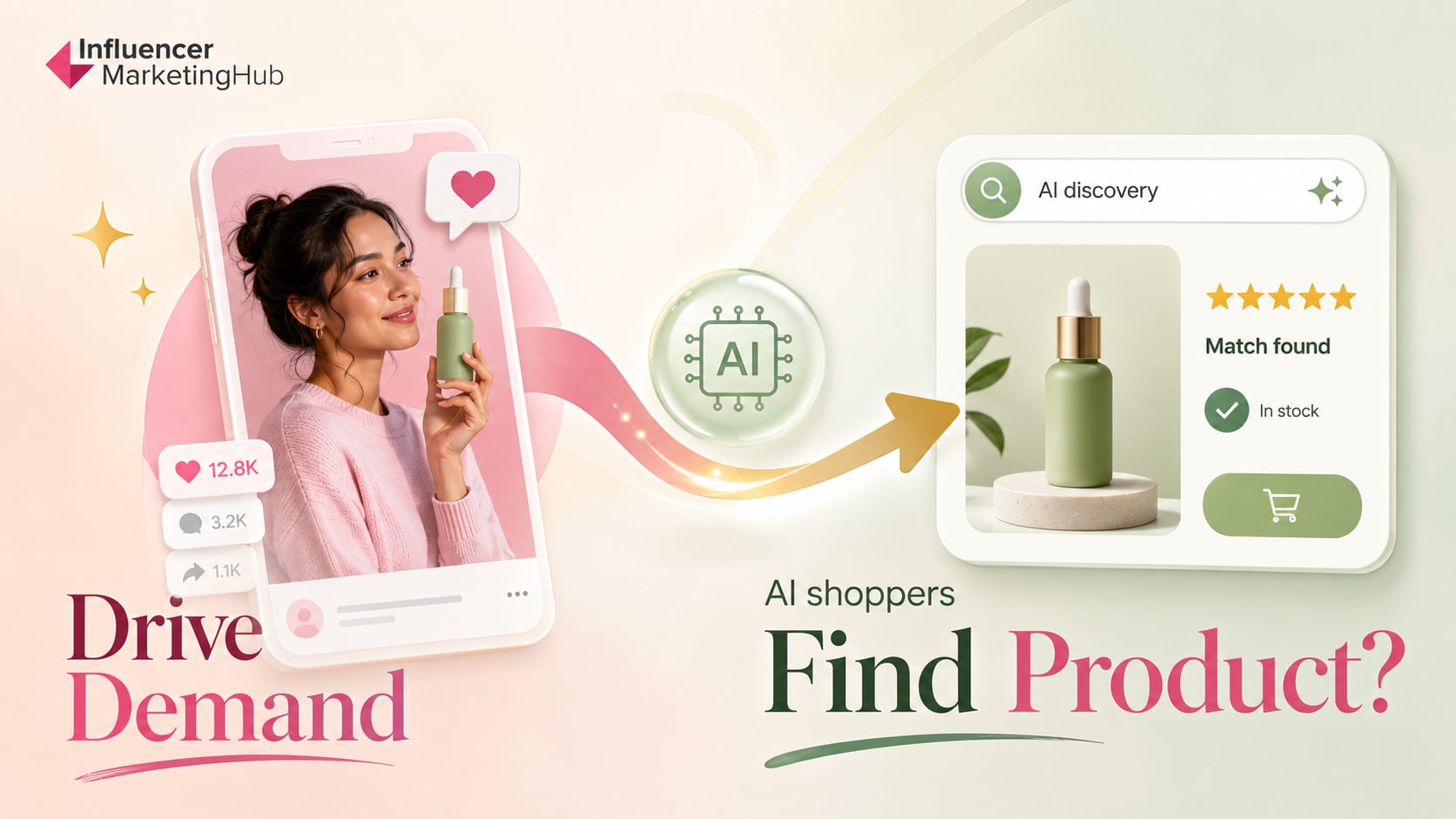
The shift toward AI-assisted shopping makes accurate structured data mandatory rather than optional. OpenAI, for instance, provides merchant portals that allow brands to feed specific product data into the ChatGPT ecosystem. However, this is useless if the data itself is poorly structured.
Google’s own developer documentation underscores this, emphasizing that "Product structured data" is the key to appearing in rich search results. Yet, many brands treat their product feeds as a technical formality rather than a marketing asset. They overlook "freshness"—the reality that a creator’s video might go viral weeks or months after a campaign ends. If the product data, price, and stock status are not dynamically updated to reflect the reality of the consumer’s current search, the "long tail" of creator-driven demand is wasted.
Official Responses and Industry Standards
Leading platforms are pushing brands toward greater granularity. Google Merchant Center, for example, has released rigorous product data specifications designed to prevent disapprovals and improve matching accuracy. The goal is to move beyond mere "listings" and toward "contextual information."
The consensus among digital architects is clear: brands need a connected product-data and storefront system. This is an integrated architecture where the marketing copy, the technical attributes, and the merchant feed are synchronized. When an influencer identifies a new use case for a product, that insight should trigger a workflow that updates the product attributes, the FAQ sections, and the structured data schema.
Strategic Implications: Bridging the Gap
To fix this, brands must treat their product catalog as a living document. The following strategies are essential for any team looking to survive in the era of AI-assisted discovery:
1. Close the Loop Between Creators and Data
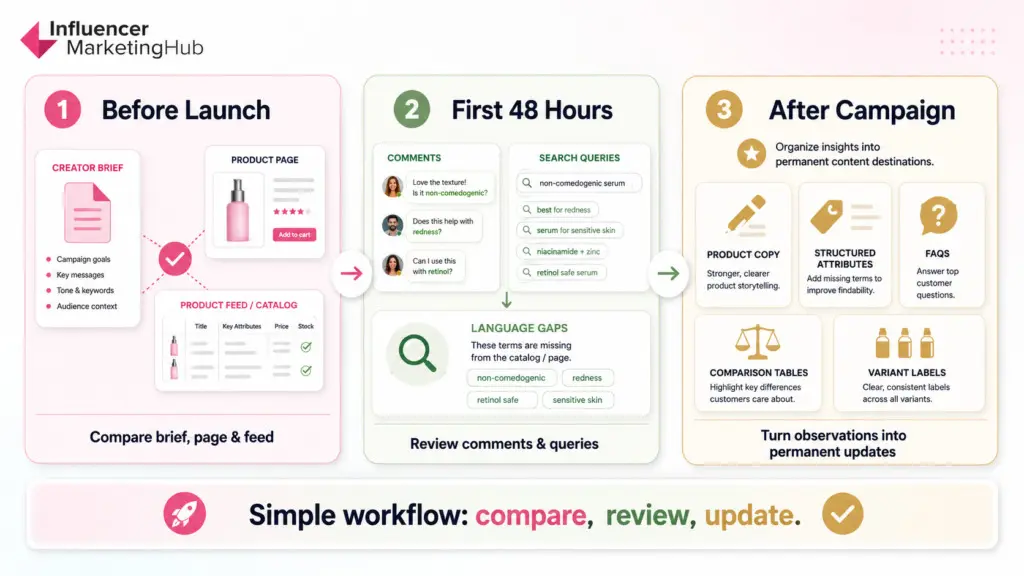
The "Creative Handoff" and the "Reporting Handoff" are currently isolated. Marketing teams must bridge these silos. Before a campaign launches, the product team should review the creator brief to ensure the catalog contains the attributes the creator intends to highlight. After the first 48 hours of a campaign, teams should conduct a "comment audit"—analyzing recurring questions to identify missing keywords that need to be added to the product page.
2. Monitor the "Correction Rate"
A critical, often-overlooked metric is the correction rate. If a brand finds itself constantly updating titles, prices, or descriptions shortly after a campaign goes live, it is a sign of a failed pre-campaign process. High correction rates indicate that the brand is driving demand before the product "identity" is ready to receive it.
3. Leverage Customer Support as a Focus Group
Customer service tickets are not just support logs; they are data points. If a flood of tickets arrives asking, "Is this the same one from the TikTok video?" or "Does this come in wide sizes?", the catalog has failed. These tickets should be viewed as an urgent mandate to update product descriptions, comparison charts, and variant labels.
4. Optimize for "Conversational Search"
Brands must stop stuffing pages with adjectives and start focusing on "useful specificity." This means including clear, accurate details: stock status, shipping timelines, precise dimensions, and, crucially, comparisons to similar items. AI systems don’t guess; they parse. The more clearly a product is distinguished from its peers in the metadata, the more likely it is to be recommended by an AI assistant.
Conclusion: The New Requirement for Success
The creator economy has changed the language of commerce. Creators have become the translators, turning sterile product features into human-centric solutions. However, their influence is fragile. If the underlying data architecture cannot support the narrative, the conversion funnel breaks at the exact moment the shopper is ready to buy.
The brands that will win in the coming years are not necessarily those with the largest budgets for content production. They will be the brands that understand that a piece of content is only the first step. To truly succeed, they must ensure that every ounce of "creator-generated preference" is codified into the product data.
As a final takeaway, pick one product from your most recent influencer campaign. Search for it on your site, then search for it as a customer would—using the phrases the creator used in their video. If the results are disjointed or inaccurate, your catalog is leaking revenue. It is time to treat your product data with the same level of creative rigor that you afford your influencer briefs. In the age of the AI shopper, if your product isn’t searchable, it doesn’t exist.
