
The New Era of Streetwear: A Comprehensive Guide to Scaling Print-on-Demand Brands
The landscape of modern streetwear has undergone a radical transformation. Gone are the days when a brand’s success was solely predicated on high-budget photoshoots and traditional retail gatekeepers. In 2026, the blueprint for a successful apparel line relies on community-led commerce, rapid social-first marketing, and—most importantly—the ability to deliver a product that feels like a premium retail drop rather than a cheap giveaway.
After 80+ hours of rigorous testing across 15 print-on-demand (POD) providers, it is clear that not all platforms are created equal. For a brand to thrive, it must move beyond basic Gildan tees and embrace the "heavyweight" standard: 240+ GSM (grams per square meter) for tees and 380+ GSM for hoodies, paired with a sophisticated branding stack that includes woven labels and custom packaging.
The Evolution of Streetwear Logistics
To understand the current market, one must look at the chronology of POD adoption. Between 2015 and 2019, the industry was dominated by Shopify-first stores that relied on Facebook ads to drive traffic to standard-weight apparel. This "volume-over-value" approach led to the oversaturation of low-quality, thin-fabric merchandise.
By 2022, consumer expectations shifted. The rise of TikTok Shop and YouTube Merch Shelves changed the discovery funnel. Today’s customers expect a "heavy-hand" feel; they want garments that hold their shape and provide the oversized, boxy aesthetic synonymous with modern streetwear. As a result, the POD industry has pivoted, with companies like Fourthwall and Tapstitch emerging to bridge the gap between "creator merch" and "legitimate streetwear label."
Supporting Data: Why GSM Matters
The industry benchmark for a premium feel is no longer subjective. Our testing confirms that the tactile experience of a garment—the "hand feel"—is the primary driver of customer retention and brand prestige.
- Tees: Anything under 200 GSM is now considered "disposable." 240 GSM is the sweet spot for the boxy, structured fit that characterizes high-end streetwear.
- Hoodies: The heavyweight threshold sits between 380 and 420 GSM. Anything below 350 GSM feels flimsy and lacks the structure required for a premium price point ($75+).
Deep Dive: Top 9 Streetwear-Ready POD Platforms
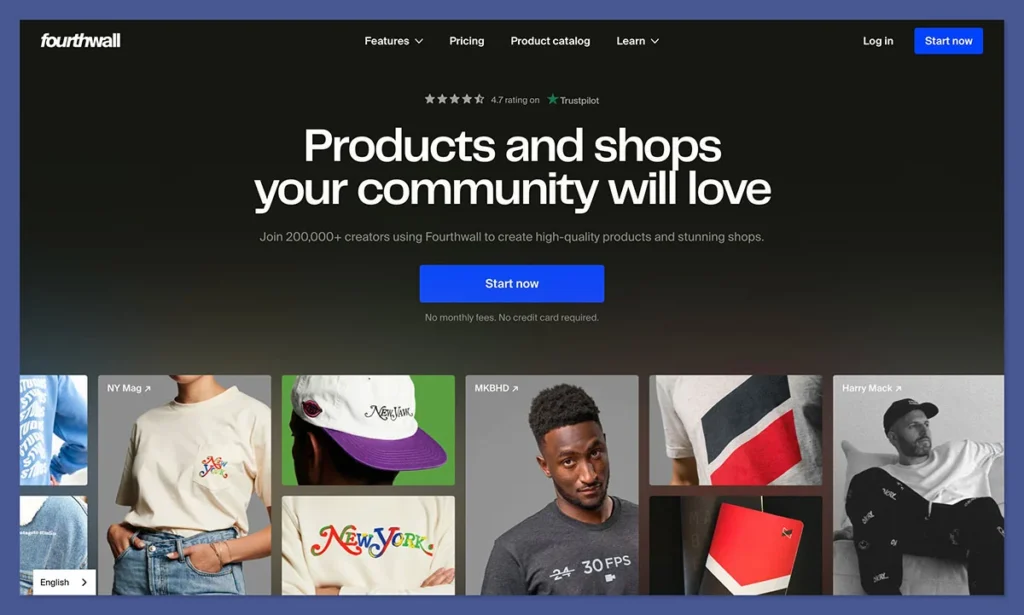
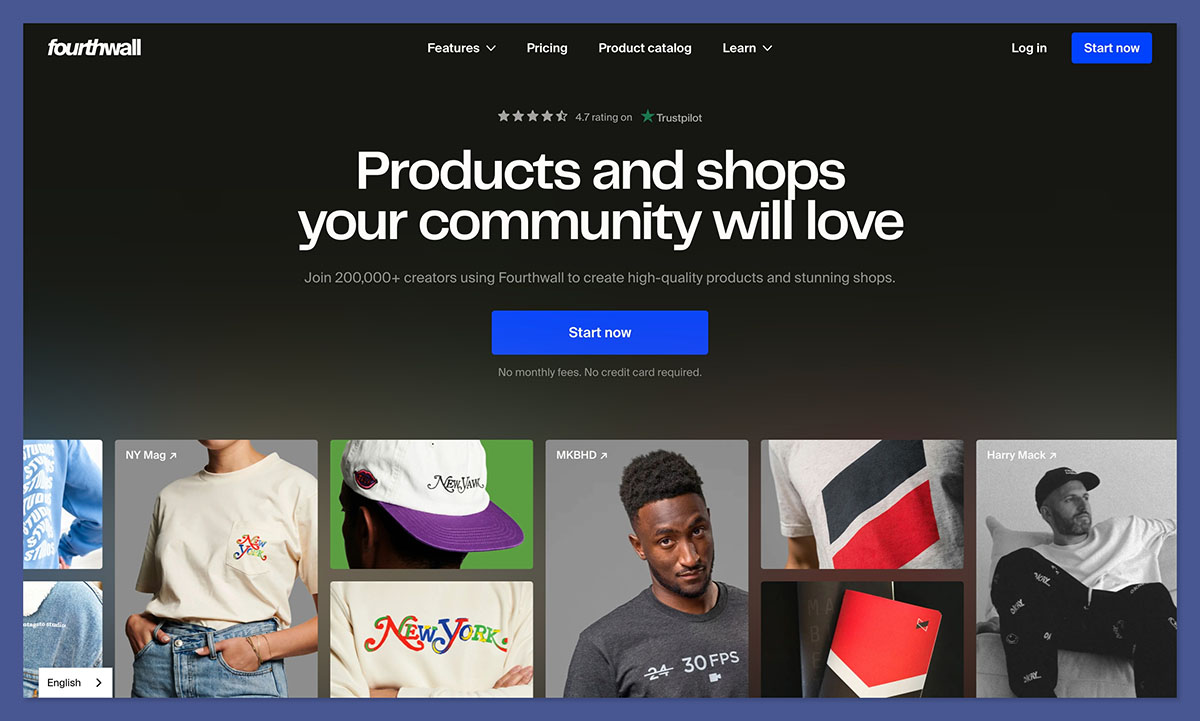
1. Fourthwall: The Creator-Led Powerhouse
Fourthwall has disrupted the market by acting as a "Merchant of Record." For a founder, this is the most critical operational advantage. By handling US sales tax, international VAT/GST, and customer support, they eliminate the logistical burden that kills many emerging brands.
- Best for: Creators who want to launch on TikTok or YouTube without hiring a support team.
- Key Strength: Integration with TikTok Shop, YouTube, Twitch, and Discord.
2. Apliiq: The Private Label King
If your priority is the "retail-ready" finish, Apliiq is the industry standard. They are currently the only major platform offering sewn-in woven labels, which are essential for true private labeling.
- Best for: Founders building a long-term brand identity.
- Key Strength: Deep customization, including faux chenille, 3D puff embroidery, and custom packaging.
3. Tapstitch: The Heavyweight Specialist
Tapstitch is the "insider’s choice" for those who prioritize the blank over the integration list. Their 250 GSM snow-washed cotton tees are currently the best-performing blanks in the POD sector.
- Best for: Brands needing a high-fashion, oversized aesthetic.
- Key Strength: Industry-leading garment weights and competitive base pricing.
4. Printful: The Operational Scale-up
Printful is the "safe" choice. While their default blanks can be lackluster, their reliability (99.5% order accuracy) is unmatched. They are the best choice for a business that needs to sync with 22+ marketplaces simultaneously.
5. Printify: The Cost-Optimization Network
Printify operates as a massive network. While this offers the lowest base pricing in the industry, it requires a high degree of "founder oversight." You must sample-test your specific provider before scaling, as quality can vary between printers.
6. NovaTomato: The All-Over-Print (AOP) Choice
For brands looking to create artistic, edge-to-edge designs, NovaTomato is the top pick. However, be warned: their process relies on polyester, making them unsuitable for those dedicated to 100% cotton streetwear.
7. Contrado: The Luxury Tier
Operating out of the UK, Contrado caters to the luxury streetwear market. With base costs upwards of $110 for a hoodie, they are not for beginners. They are, however, the only provider capable of producing "Vetements-tier" quality with satin labels and 1-3 day turnaround times.
8. Gelato: The Global Logistics Engine
Gelato is for the high-volume international brand. By routing orders to local printers in 30+ countries, they significantly reduce shipping times and carbon footprints.
9. Shirtee: The EU Specialist
Shirtee is the best option for European brands. Their ability to handle returns internally and offer a full label suite makes them the most comprehensive solution for the EU market.
Official Industry Stance and Implications
According to insights from industry analysts, the "POD-to-Brand" transition is the most significant trend of the next three years. The implication is clear: the barrier to entry has dropped, but the barrier to success has risen.
Founders can no longer afford to ignore the backend. The integration of tax management (as seen in Fourthwall) and the mastery of garment specifications (as seen in Tapstitch and Apliiq) are now the primary predictors of brand longevity. As the market matures, we expect to see more platforms adopting the "Merchant of Record" model, as the administrative burden of cross-border tax compliance remains the biggest hurdle for growing brands.
Final Verdict: Which should you choose?
- If you are a content creator: Choose Fourthwall. The operational support is unmatched.
- If you are building a pure fashion brand: Choose Apliiq. Woven labels are non-negotiable for brand equity.
- If you are obsessed with the "heavyweight" feel: Choose Tapstitch. The 250 GSM blank is the industry leader.
- If you are a high-volume multi-channel seller: Choose Printful. Their infrastructure is the most resilient.
- If you are a boutique luxury label: Choose Contrado. The quality justifies the premium cost.
Frequently Asked Questions
What is the minimum order for woven labels?
At Apliiq, you need 100 units for a custom woven label. However, they offer a 1-unit minimum for high-quality printed labels, which still provide a professional look for early-stage brands.
Can I do all-over-print on heavy cotton?
No. AOP technology requires polyester fabrics. If your design requires 100% cotton, you must use DTG or screen printing.
What is the ideal profit margin?
For a $75 streetwear hoodie, you should aim for a 50–55% gross margin. This allows you enough room to reinvest in marketing while maintaining a sustainable operation.
Does Tapstitch offer embroidery?
No. If your design aesthetic relies on heavy embroidery, you are better served by Apliiq or Printful.
The bottom line is simple: stop viewing POD as a way to "make money" and start viewing it as a way to "build a brand." The tools are now available to produce retail-quality goods at scale—the rest is up to your design and community engagement.
