
The "Vibe" Era: How Generative AI is Reshaping Coding, Marketing, and the Creative Process
In the landscape of 2025 technology, a new, somewhat nebulous, yet undeniably powerful term has emerged to define the current zeitgeist of human-AI collaboration: "Vibe."
More than just a buzzword, "vibe" has surpassed established industry jargon like "agentic" to become the shorthand for a paradigm shift in how we build, create, and iterate. Whether it is "vibe coding"—the practice of using natural language to build software through LLM-powered assistants—or the nascent concept of "vibe marketing," the term reflects a departure from rigid, structured engineering toward an era of fluid, intuition-driven production.
The Genesis: What is "Vibe Coding"?
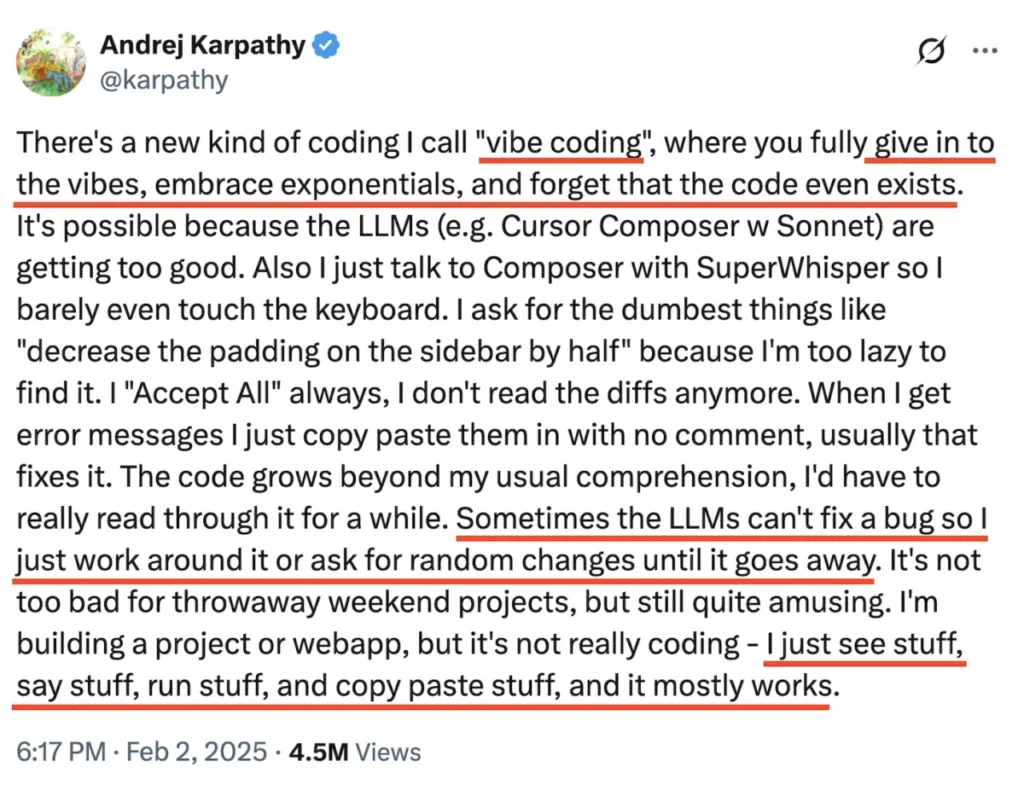
The term originated from a post by Andrej Karpathy, a founding member of OpenAI and a luminary in the field of computer science. Karpathy described "vibe coding" as a revolutionary approach to software development: "I just see stuff, say stuff, run stuff, and copy-paste stuff, and it mostly works."
At its core, vibe coding represents the logical evolution of no-code and low-code movements. Where previous iterations of these platforms provided drag-and-drop interfaces to abstract away complex syntax, vibe coding uses the conversational reasoning capabilities of Large Language Models (LLMs) to eliminate the syntax barrier entirely. Developers no longer need to translate intent into formal code; they describe the vibe of the software they want, and the AI manifests it.
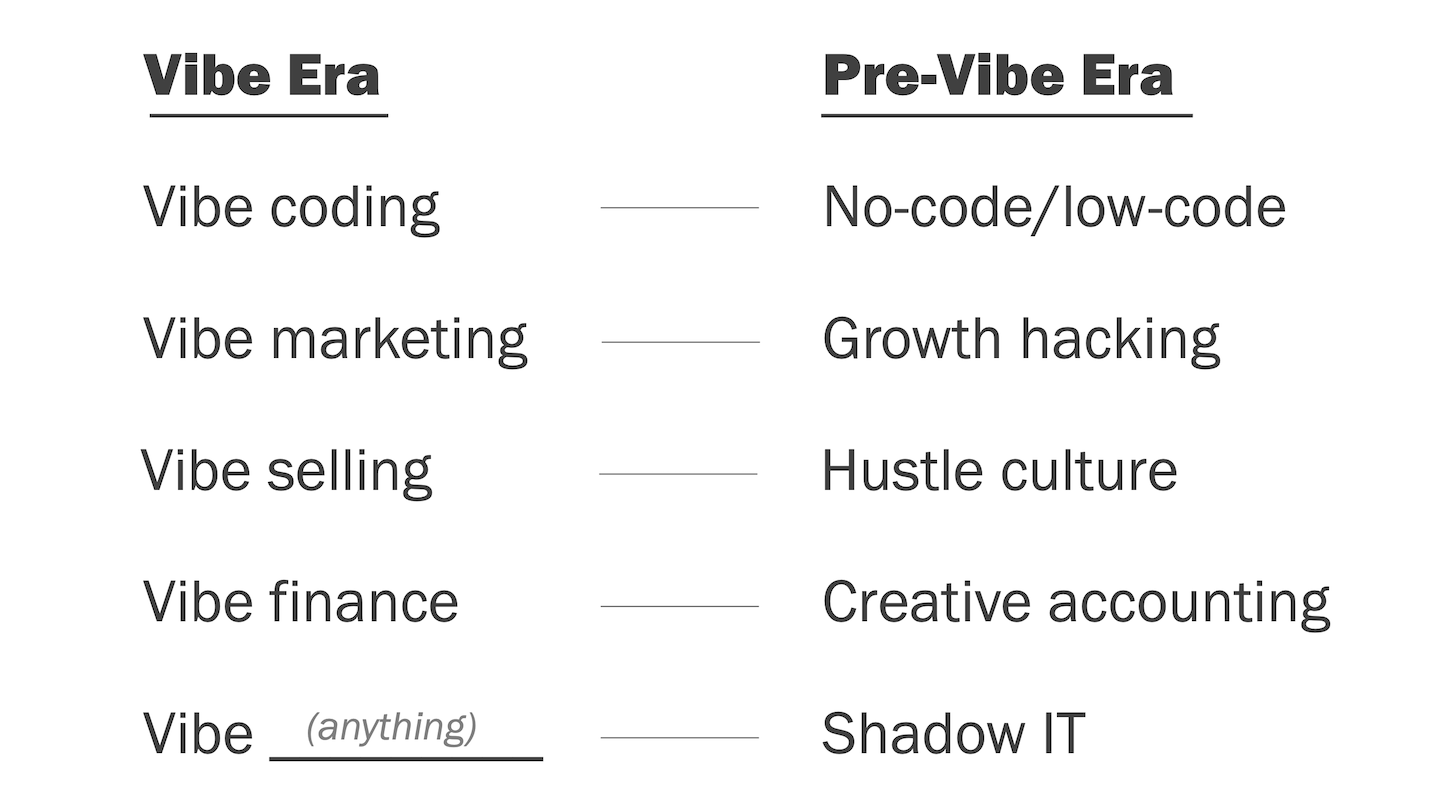
While traditionalists might shudder at the "it mostly works" caveat—which implies a lack of rigor in testing and architecture—proponents argue that we have entered an era of "exponentials." In this view, the speed at which one can deploy a functional prototype outweighs the technical debt of the underlying implementation.
Chronology of the Vibe Movement
- Early 2025: Andrej Karpathy crystallizes the concept on social media, sparking a viral discourse on the future of programming.
- Spring 2025: The "Vibe Coding" phenomenon moves from developer forums to the broader tech community. Industry veterans like Jason Lemkin of SaaStr begin experimenting with the paradigm, documenting the highs and lows of building apps from scratch as a non-engineer.
- Summer 2025: The industry witnesses the meteoric rise of platforms like Lovable, which achieves $100 million in Annual Recurring Revenue (ARR) in just eight months, proving the massive commercial appetite for AI-native, vibe-driven development.
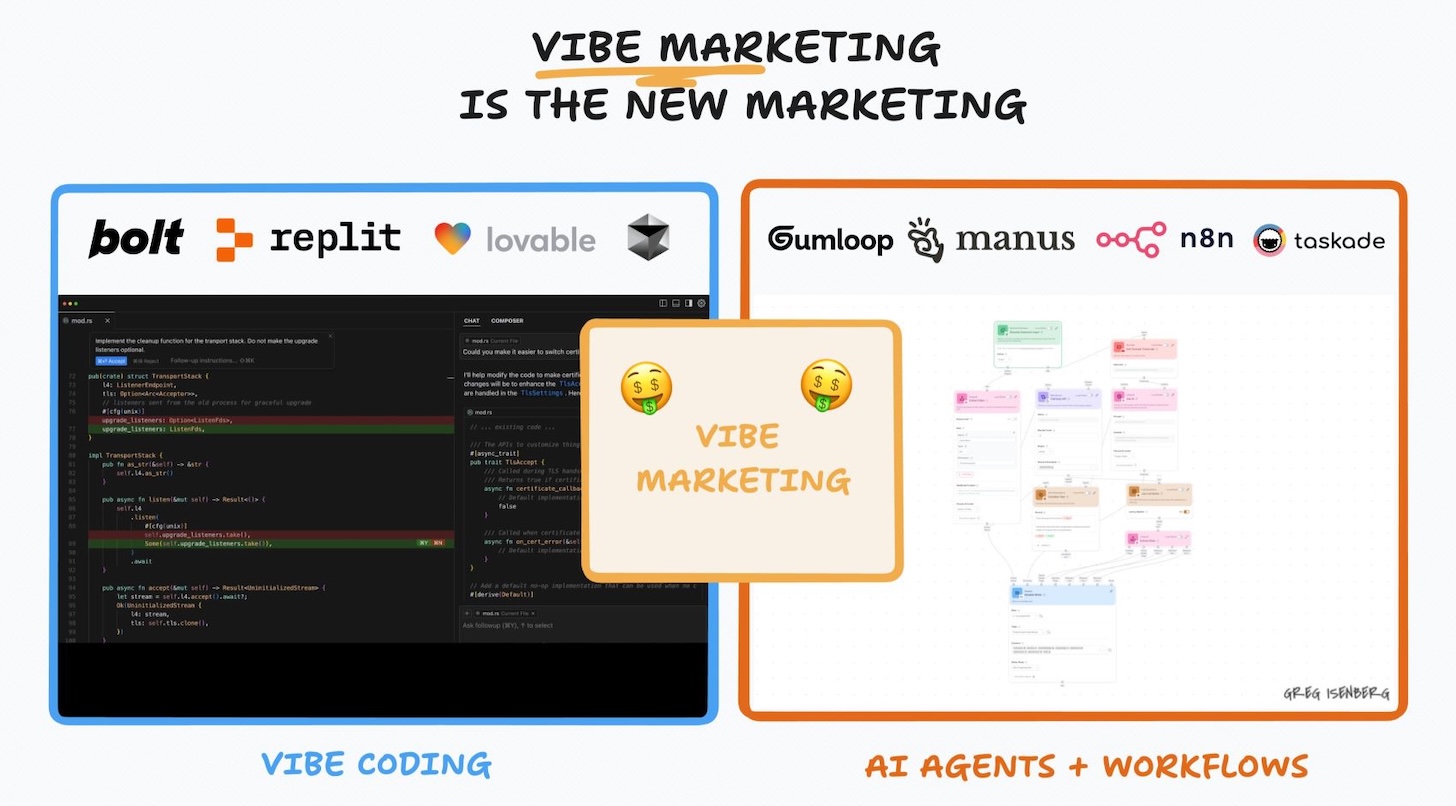
- Mid-2025: The term "vibe" bleeds into the marketing discipline, with thought leaders like Greg Isenberg applying the logic of rapid, AI-driven iteration to the GTM (Go-To-Market) function.
Supporting Data: The Lemkin Scale of Vibe Coding
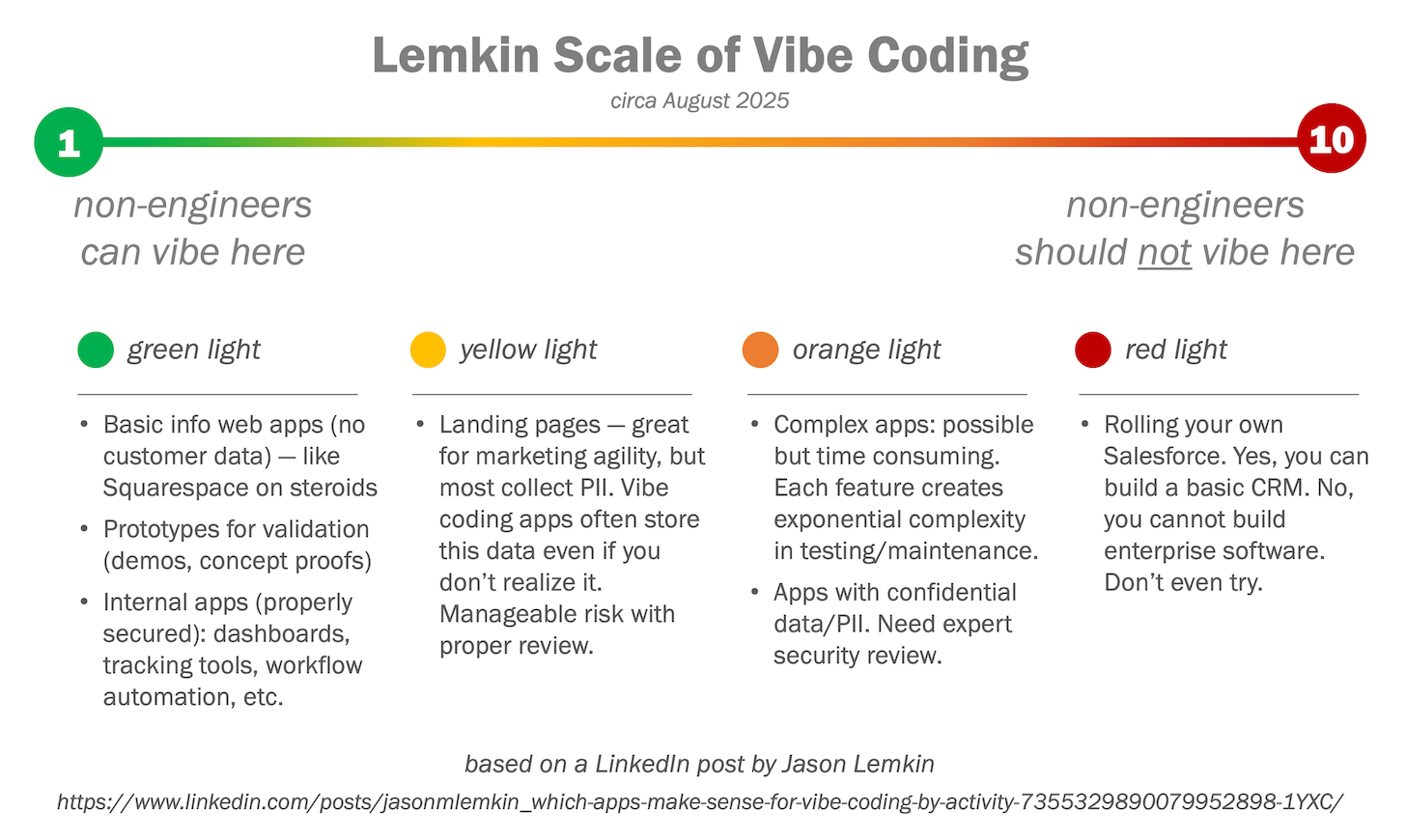
The transition to vibe coding is not uniform. Not every software project is a candidate for this "trial-and-error" methodology. To contextualize this, observers have developed the "Lemkin Scale of Vibe Coding," a subjective, 1-to-10 spectrum measuring the viability of an app for non-engineers.
- Levels 1-3 (The Green Zone): Projects such as internal dashboards, personal productivity trackers, and simple data-entry forms. These are highly compatible with AI generation because the cost of a "hallucination" or a bug is low.
- Levels 4-7 (The Yellow Zone): More complex applications requiring specific integrations, authentication, or persistent database management. Here, the "vibe" approach requires oversight and a basic understanding of how the components fit together.
- Levels 8-10 (The Red Zone/Here Be Dragons): Large-scale, mission-critical systems, such as attempting to build a competitor to Salesforce from the ground up. These projects require professional engineering rigor; attempting to "vibe" them usually results in a non-functional, unmaintainable mess.
The critical insight here is that the scale is dynamic. As AI models improve, the "Green Zone" expands. What was a "7" in difficulty six months ago may become a "3" by next year, effectively democratizing the ability to build sophisticated software.
The Evolution of "Vibe Marketing"
Following the success of vibe coding, marketers have sought to reclaim the term for their own domain. Greg Isenberg is widely credited with bringing "vibe marketing" into the mainstream conversation.
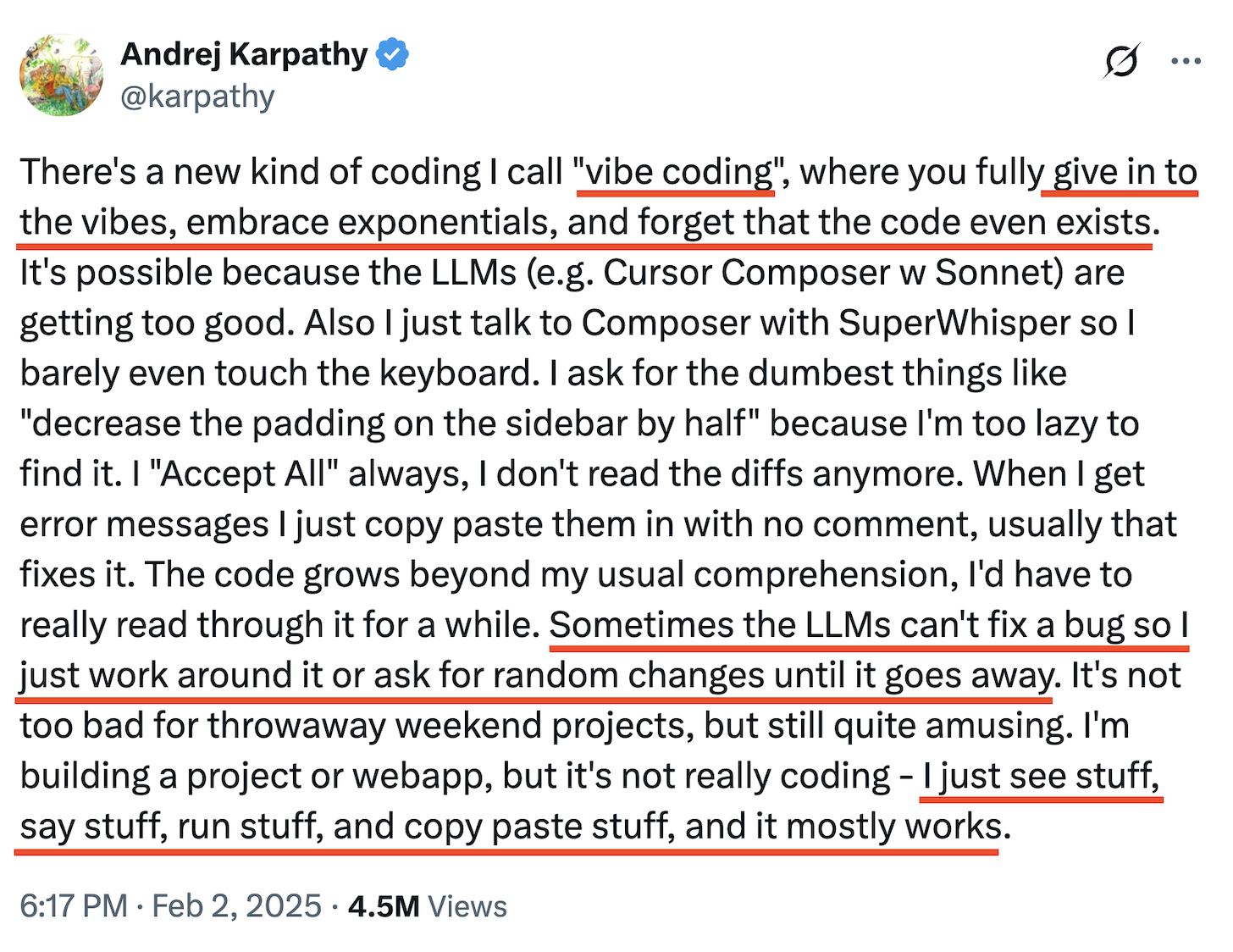
Initially, the term was framed as a way for marketers to become "über-marketers"—individuals who, by using AI agents and automated workflows, could perform the tasks previously reserved for entire departments. The focus was on speed: shipping more ideas, creating more content, and launching more campaigns at a fraction of the historical cost.
However, many industry observers, such as Scott Brinker (ChiefMartec), argue that this definition is too clinical. If "vibe" implies a human-centric, fluid, and intuitive approach, simply using AI to spam automated emails or mass-produce mediocre content is not "vibe marketing"—it is just "automated noise."
Implications: The Rise of "Big Experimentation"
True vibe marketing, when stripped of the hype, is actually about Big Experimentation.
For decades, the barriers to testing new ideas were high. Data silos, the need for data scientists to query warehouses, and the cost of creative production meant that marketers only pursued "safe" bets. The "vibe" era removes these barriers.
1. Curiosity-Led Analytics
With AI, marketers can "whisper" to their data. Instead of waiting for a quarterly report, a marketer can ask a model, "What patterns exist in our churned users?" and receive an immediate, actionable insight. This encourages a culture of curiosity where hypotheses are formed and tested in minutes, not weeks.
2. The Feedback Loop
The most effective vibe marketers are those who treat the customer experience as a continuous feedback loop. If an AI-generated micro-campaign is deployed, the "vibe" comes from how the audience responds. If the audience hums along, the campaign is scaled. If they feel like they are receiving "spam," the experiment is discarded.
3. Governance as Scaffolding
The danger of "vibing" is chaos. The role of Marketing Operations (MarOps) is shifting from "gatekeeper" to "scaffold builder." By providing the guardrails—privacy compliance, brand consistency, and data security—MarOps allows the creative team to innovate without fear of systemic failure.
Official Responses and Industry Outlook
The industry reaction remains polarized. Critics point to the inherent risks of relying on non-deterministic AI outputs for critical business functions. They argue that "vibe" is a marketing euphemism for "lack of rigor."
Conversely, the data on adoption suggests the market is not waiting for a consensus. Companies that have integrated these tools are seeing a dramatic increase in "ship velocity." The consensus among early adopters is that the "vibe" approach is not intended to replace professional engineering or strategic marketing; rather, it is intended to augment the creative potential of the individual.
Conclusion: Beyond the Buzzword
Will the term "vibe" survive the next eighteen months? Likely not. It is a colloquialism for a moment in time—a "Summer of Vibes" that reflects our collective excitement at the sudden, almost magical, utility of generative AI.
However, the underlying shift is permanent. We have moved into an era where the distance between an idea and its execution has collapsed. The ability to "vibe" an idea into reality—whether it is an application, a marketing campaign, or a data model—is the new baseline for competitive advantage.
For those in the industry, the task is clear: Stop worrying about the label and start building the scaffolding. The future of work is not about replacing the human; it is about providing the human with the tools to manifest their imagination at the speed of thought. Whether you call it "agentic," "AI-driven," or simply "the vibe," the ability to rapidly experiment and iterate is the defining skill set of the modern professional.
