
The Architecture of Innovation: How Global Giants Gamify Growth to Sustain Market Leadership
In the contemporary corporate landscape, the transition from a standard operational model to a true "growth-driven" organization is the ultimate competitive hurdle. While growth methodologies—rooted in rapid experimentation, data-backed decision-making, and iterative testing—are theoretically straightforward, their execution is often fraught with friction.
A successful growth operation functions like an inverted pyramid: the foundation of the organization, those closest to the customer, provides the raw material of ideas and hypotheses. The specialized growth team acts as the engine, operationalizing these ideas through rigorous testing. Finally, leadership provides the strategic oversight, armed not with intuition, but with the clarity of empirical data. However, bridging the gap between "implementing growth" and having "growth in the corporate DNA" requires more than just process—it requires a cultural revolution. To achieve this, industry titans are increasingly turning to gamification, transforming the intimidating prospect of failure into a structured, incentivized path toward innovation.
The Catalyst for Change: Why Culture Outweighs Process
Most successful growth transformations follow a top-down trajectory. Executives are educated on the methodology, middle management aligns strategy, and growth teams execute. Yet, the chasm between a company that merely "runs tests" and a company that "lives growth" is vast.
The secret to crossing this chasm lies in cultural alignment. When organizations incentivize the right behaviors—namely, a bias for action and a tolerance for calculated risk—they stop seeing growth as an operational task and start seeing it as a fundamental value. Below, we explore how four global giants have institutionalized this mindset.
Amazon: The "Just Do It" Award and the Bias for Action
In 1998, the Amazon customer service team faced a crushing backlog: 250 open inquiries that seemed impossible to clear. An associate proposed a radical solution: a 24-hour sprint. The incentive was a mere $200. When the team successfully cleared the queue, Jeff Bezos didn’t just reward the speed; he analyzed the mechanics of the victory.

The Mechanics of Success
Bezos identified three pillars of the win:
- Ownership: The team took personal responsibility for the customer experience.
- Resourcefulness: They found a creative way to clear the hurdle without needing top-down permission.
- Speed: They prioritized "doing" over "planning."
This observation birthed the "Just Do It" Award. Today, it is one of the most coveted honors at a company of over 600,000 employees. Bestowed only twice a year by Bezos himself, the award serves as a powerful signal that Amazon values those who bypass bureaucracy to solve systemic problems. It is not about the size of the win, but the audacity of the action.
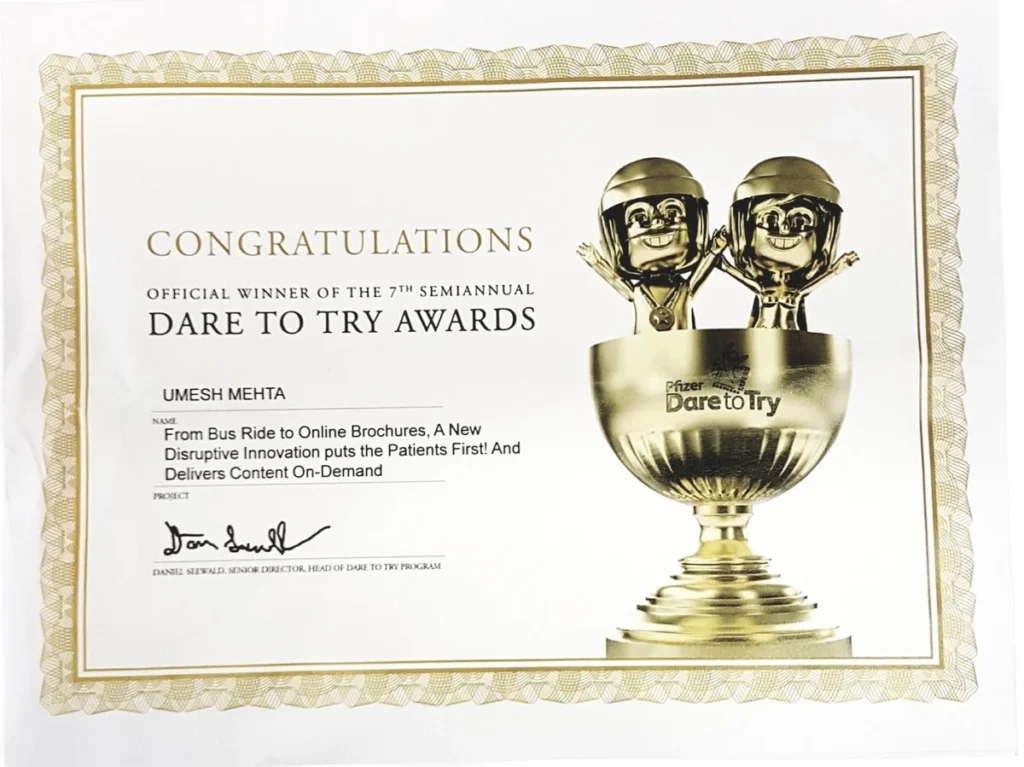
Pfizer: The "Dare to Try" Initiative
For a multinational pharmaceutical corporation, the stakes of failure are monumental, often involving regulatory hurdles and billions in R&D. Yet, Pfizer recognized that the risk of stagnation was far greater.
Ten years ago, they launched "Dare to Try," a program designed to institutionalize the act of failing. The program is not merely a training seminar; it is a movement. Pfizer utilizes a network of "Champions"—self-nominated employees who act as evangelists for experimentation.
The Philosophy of "Failing Small"
The core directive of "Dare to Try" is to fail "freely but inexpensively." By creating safe harbors for experimentation, Pfizer empowers teams to test hypotheses in clinical and operational settings. The program has evolved from a simple initiative into a cultural brand, proving that even the most heavily regulated industries can foster a startup-like appetite for discovery.
3M: The 30% Rule and the Economics of Innovation
3M is a masterclass in longevity. From adhesives to industrial coatings, their products are omnipresent. To remain relevant for over a century, 3M relies on a strict, quantitative approach to innovation: 30% of each division’s revenue must come from products introduced in the last four years.
This mandate forces a perpetual state of innovation. If a division fails to refresh its portfolio, it fails its financial targets. To support this, 3M provides:
- The 15% Rule: Employees are encouraged to spend 15% of their time on projects outside their core responsibilities.
- Internal Venture Capital: 3M’s "Genesis Grants" allow employees to apply for funding to pursue risky, unconventional ideas without the need for immediate commercial viability.
By formalizing innovation as a financial requirement, 3M removes the "optional" nature of creative thinking.
Google: The 20% Project and the Evolution of Productivity
Google took the 3M model and amplified it. The "20% Project" encouraged employees to dedicate one day a week to side projects. This wasn’t just "free time"; it was a deliberate strategy to surface bottom-up innovations that might never survive the standard corporate committee approval process.
The Legacy of the 20%
The success of this initiative is written into the history of the digital age. Products that originated from these "side projects" include:

- Gmail: Originally a developer’s personal project to organize his inbox.
- Google News: Developed to automate the aggregation of information.
- AdSense: Now a primary revenue engine for the company.
These products prove that when you give top-tier talent the autonomy to explore, the return on investment can fundamentally change the trajectory of the entire organization.
Comparative Chronology: The Evolution of Institutionalized Innovation
| Company | Initiative | Primary Goal | Cultural Impact |
|---|---|---|---|
| Amazon | Just Do It Award | Bias for Action | Validates individual initiative |
| 3M | 30% Revenue Rule | Sustained Growth | Prevents product stagnation |
| 20% Project | Creative Autonomy | Drives product diversification | |
| Pfizer | Dare to Try | Risk Mitigation | Normalizes "failing small" |
Implications for the Modern Enterprise
The transition to a growth-centric culture requires more than just a set of KPIs. As these case studies illustrate, the most successful organizations treat innovation as a human behavior rather than a mechanical output.
Key Takeaways for Leadership
- Incentivize the "Small Win": As seen with Amazon, celebrating small, bold actions creates a psychological precedent for future innovation.
- Normalize Failure: Pfizer’s "Dare to Try" demonstrates that if employees fear the repercussions of a failed experiment, they will stop experimenting entirely.
- Quantify the Creative Output: 3M’s 30% rule shows that setting clear, measurable expectations for new product revenue prevents complacency.
- Grant Autonomy: Google’s 20% project proves that some of the most valuable innovations are born from individual curiosity, not top-down directives.
The Human Element
The common thread among these companies is the recognition that people—not systems—are the primary drivers of growth. When an employee feels empowered to suggest an idea, safe enough to test it, and rewarded for the effort regardless of the outcome, the organization transforms.
The "chasm" between implementing growth and living it is closed by these gamified systems. By turning innovation into a pursuit that carries social prestige, financial reward, and professional safety, these companies have managed to maintain their dominance in an increasingly volatile market.
Ultimately, the lesson is clear: if you want to grow, you must first build a culture where the risk of trying is always viewed as less dangerous than the risk of standing still. Innovation is not a destination; it is a discipline, and these four companies serve as the definitive blueprint for any organization looking to scale their impact in the modern era.
