

The Science of Brevity: Mastering Social Media Post Length for Maximum Engagement
In the rapidly evolving digital landscape of 2026, the battle for consumer attention is more fierce than ever. As algorithms become increasingly sophisticated, the way brands package their content—specifically in terms of length—has become a primary determinant of visibility. Whether you are crafting a high-stakes advertisement or an organic community-building post, the "ideal" character count and video duration serve as the foundation of your social media strategy.
This guide explores the critical benchmarks for content length across major platforms, backed by years of data and industry research, to help you cut through the noise.

The Strategic Importance of Content Length
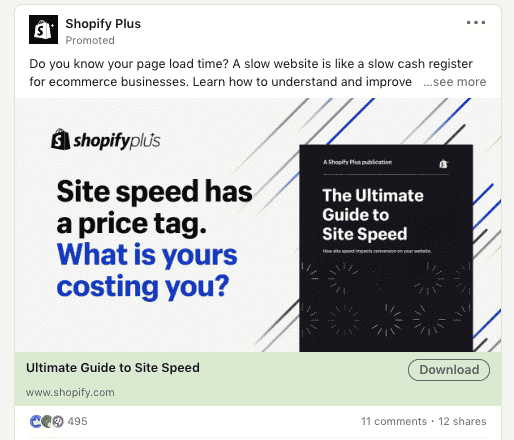
At its core, social media length is a usability issue. Most platforms utilize a "See More" button to truncate long-form text. This interface design creates a psychological barrier; every time a user is forced to tap to expand a post, you risk losing a portion of your audience. Fewer readers lead to fewer likes, comments, and shares—the very metrics that inform algorithms on whether to boost your content to a wider audience.
Keeping your messaging concise isn’t just about brevity; it’s about respect for the user’s time. By delivering your key value proposition within the "above the fold" limit, you increase the likelihood of immediate interaction, which triggers the positive feedback loops required for organic growth.

Chronology of Platform Evolution and User Behavior
The history of social media length is a pendulum. In the early 2010s, platforms like Twitter enforced strict character limits (140 characters), forcing creativity through constraints. As platforms matured, they shifted toward long-form content to capture more "time on site."
However, the rise of TikTok and short-form video has forced a market correction. Even as X (formerly Twitter) expanded its character counts to 25,000 for Premium users, the most successful content remains that which is quickly digestible. The industry has reached a consensus: while long-form content has a place, it must be earned through a strong, concise hook.
Supporting Data: Benchmarks by Platform
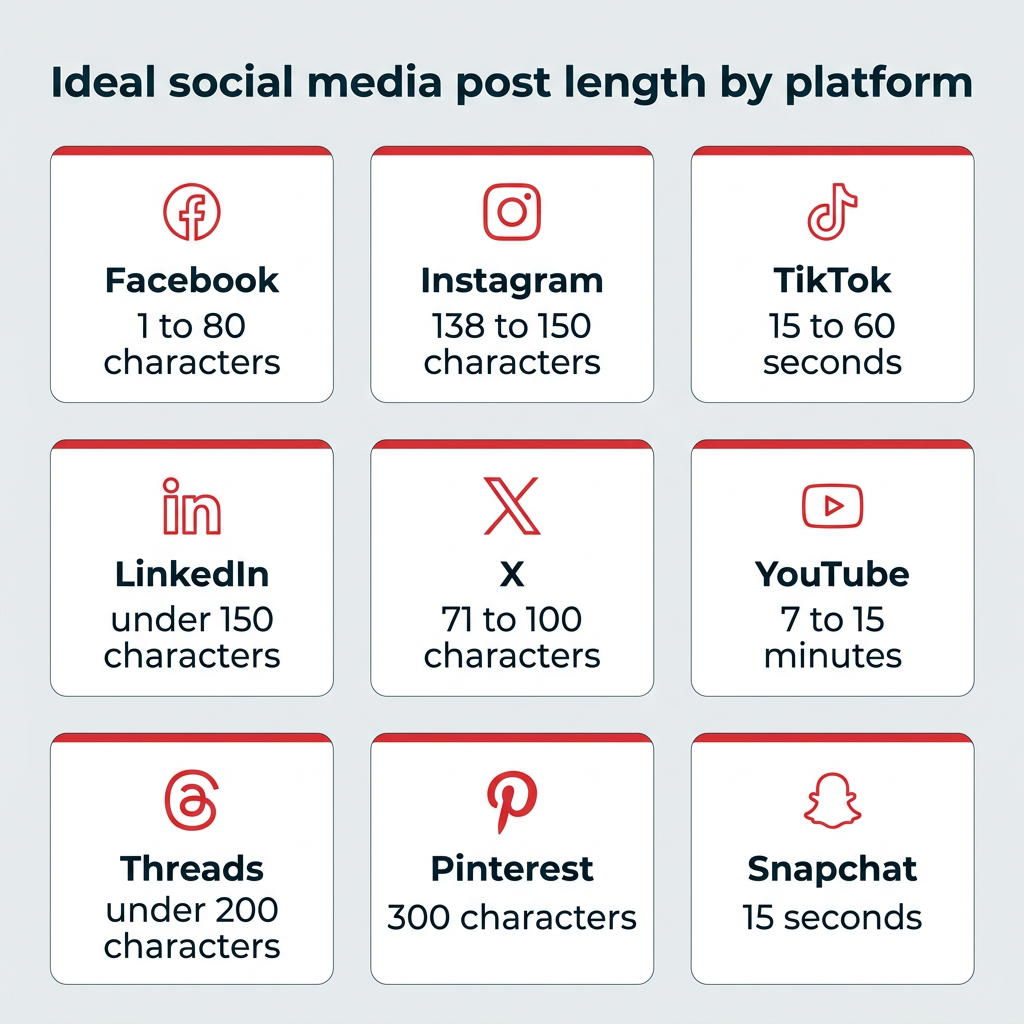
Understanding the "sweet spot" for each network is essential for any modern marketer. Below is a breakdown of industry-standard benchmarks:
| Platform | Content Type | Ideal Length |
|---|---|---|
| Organic Post | 1–80 Characters | |
| Organic Caption | 138–150 Characters | |
| Post (Above Fold) | Under 150 Characters | |
| X | Organic/Promoted | 71–100 Characters |
| TikTok | Organic Video | 15–60 Seconds |
| YouTube | Long-form Video | 7–15 Minutes |
The Facebook Strategy: Efficiency Over Volume
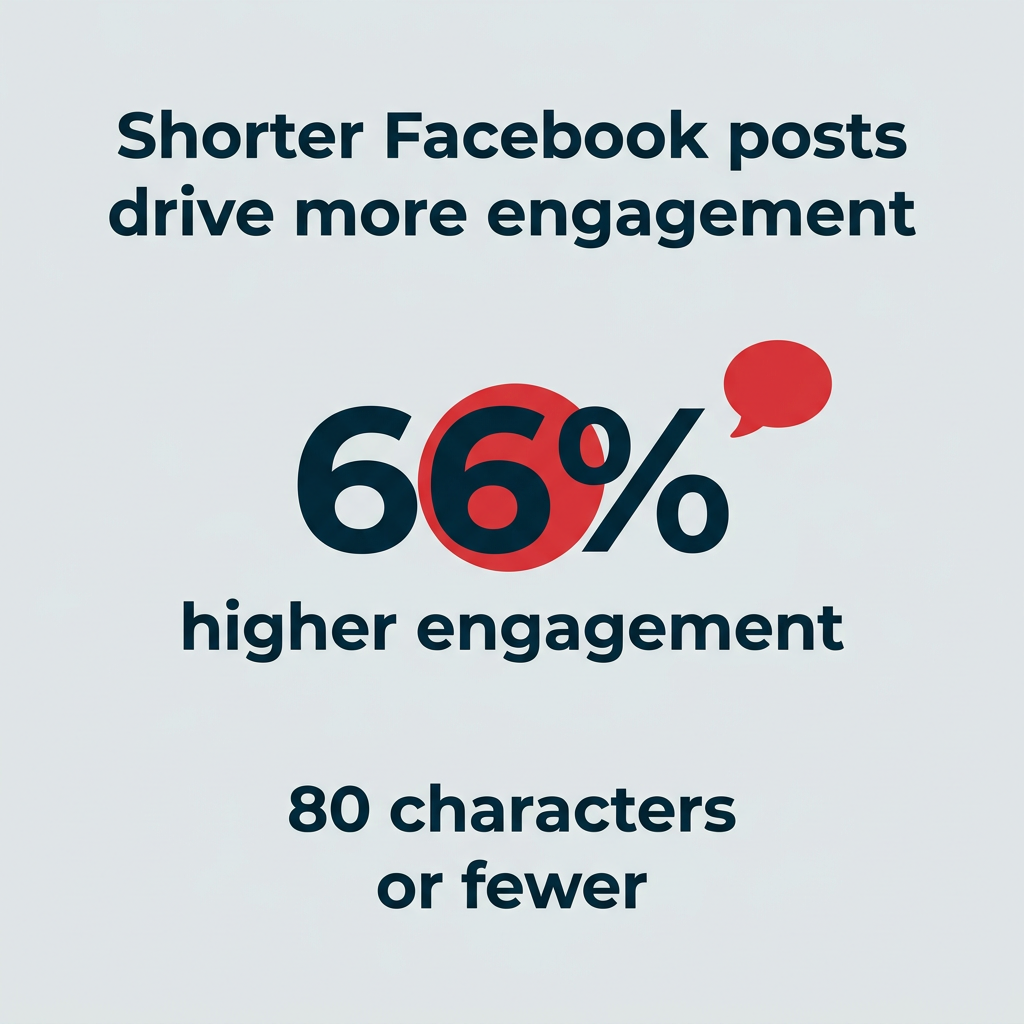
While Facebook technically allows for thousands of characters, research from Buddy Media and analysis by BuzzSumo consistently show that shorter is better. Posts under 80 characters receive approximately 66% higher engagement. For ad copy, the target is even tighter: 5 to 19 words. When writing for Facebook, strip away adverbs and jargon to ensure your point lands before the "See More" cutoff.
Instagram: Visuals First, Captions Second
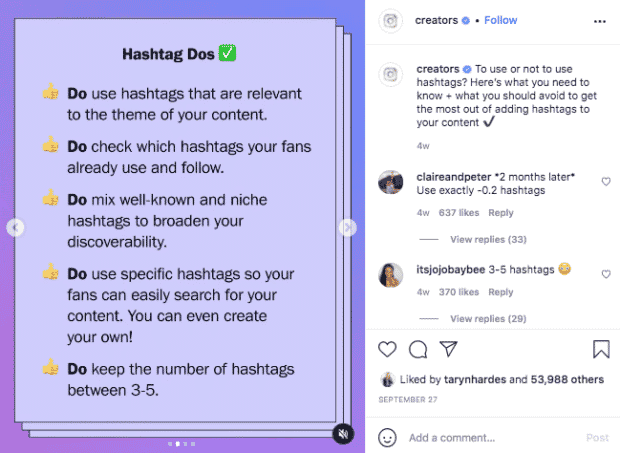
Instagram is a visual-first medium. While the 2,200-character limit exists, data shows that the most effective captions for engagement fall between 138 and 150 characters. For sponsored content, this drops to 125 characters. Furthermore, the "hashtag fatigue" of the past is over; current best practices suggest using 3–5 highly relevant tags rather than spamming the limit.
LinkedIn: The Professional Long-Game
LinkedIn is the outlier in this ecosystem. While short-form posts (under 150 characters) work best for quick updates, the platform’s publishing tools thrive on long-form content. Research by Paul Shapiro suggests that the "goldilocks zone" for LinkedIn articles is 1,900 to 2,000 words. These deep-dive pieces tend to generate the highest number of shares and professional authority.

Official Recommendations and Expert Insights
Industry leaders emphasize that length should always be subservient to value. Meta, for instance, encourages advertisers to prioritize the "hook" within the first three seconds of a video or the first sentence of a caption.
On the video front, YouTube’s algorithm heavily favors retention. While a 12-hour stream is possible, data suggests that videos between 7 and 15 minutes achieve the best balance between viewer retention and algorithmic reach. The goal is to provide enough substance to satisfy the viewer without causing them to abandon the video early, which signals to YouTube that the content is low-value.
Implications for Your Social Media Strategy
How does this information change your daily operations? It necessitates a move toward "purposeful production."
1. Optimize for the "First Scroll"
Design your content so that the most important information is visible without interaction. If you are posting a video, the first second must contain a visual or auditory hook. If you are writing a post, the first line must state the value proposition.
2. Experiment and Analyze
While these benchmarks are a starting point, they are not absolute laws. Use A/B testing to determine what your specific audience prefers. Does your audience engage more with your short, punchy updates, or do they prefer the deep-dive threads? Your own analytics dashboard is the final authority.
3. Implement the 5-5-5 Rule
To maintain a healthy feed, adopt the 5-5-5 rule: spend five minutes creating content, five minutes engaging with your community, and five minutes responding to comments. This ensures that you aren’t just "broadcasting" but are actually participating in the ecosystem that rewards consistent interaction.
4. Resist the Urge to Fill Space
Just because a platform allows 500 characters (Threads) or 3,000 (LinkedIn) does not mean you are required to use them. If your message can be delivered in 100 characters, do so. Quality and clarity will always outperform fluff in the eyes of both users and algorithms.
Conclusion: The Path Forward
The digital landscape of 2026 demands a sophisticated understanding of human attention spans. By adhering to these length benchmarks, you position your brand to benefit from the current algorithmic climate. However, the most successful social media managers understand that length is merely a tool.
The ultimate goal remains the same as it has always been: to provide content that is so valuable, engaging, or entertaining that the length becomes irrelevant to the user. Use these benchmarks to get your foot in the door, but use your creativity to keep the audience coming back for more.
As you continue to refine your strategy, remember: keep it clear, keep it concise, and always keep your audience’s experience at the forefront of your decision-making. Whether you are managing a global brand or a personal portfolio, the discipline of brevity is your most powerful asset in the crowded feed of tomorrow.
