
Unlocking Granular Insights: Crazy Egg Launches Audience Segment Breakdown for Conversion Tracking
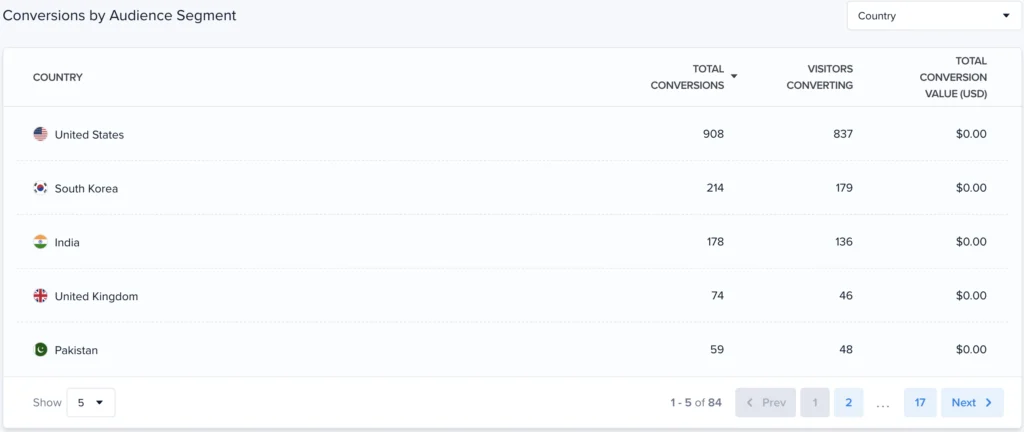
In the fast-paced world of digital marketing, the difference between a thriving e-commerce platform and a stagnant landing page often comes down to the ability to parse data. Today, Crazy Egg, a leader in website optimization and user behavior analytics, announced a significant enhancement to its reporting suite: the ability to break down conversion performance by Audience Segments.
This update represents a pivotal shift in how marketers can visualize the efficacy of their campaigns. By moving beyond aggregate conversion numbers, Crazy Egg is providing businesses with a diagnostic lens that reveals exactly which demographics and visitor types are fueling growth—and which are lagging behind.
The Core Update: Precision Analytics at Your Fingertips
At its heart, the new feature allows users to filter their existing conversion tracking data through the lens of predefined Audience Segments. For years, Crazy Egg has enabled businesses to track specific conversion goals—such as newsletter sign-ups, "Add to Cart" actions, or form submissions. However, these metrics were often viewed in a vacuum, providing a "what" without the essential "who."
With this rollout, users can now see a comprehensive breakdown of conversion rates based on visitor attributes. This integration does not require any additional tracking code, complex tagging, or implementation of new pixels. Because Crazy Egg’s architecture already captures visitor data, the platform has retroactively applied this new reporting feature to all previously tracked conversions. This means that as soon as a user logs in, they are greeted with historical insights that were previously hidden beneath the surface.
Chronology of Development: A Commitment to Data Utility
The path to this release reflects Crazy Egg’s ongoing commitment to user-centric product development. The journey began several months ago, following extensive feedback from power users who expressed a need for more nuanced segmentation.
- Q1 2026: Initial prototyping began, focusing on how to overlay Audience Segment data onto existing conversion funnels without increasing page load latency.
- April 2026: Beta testing was conducted with a select group of enterprise clients to ensure that the data visualization remained intuitive despite the increased complexity of the metrics.
- June 2026: Final performance tuning and integration into the main dashboard UI.
- Late June 2026: Official public rollout of the "Conversions by Audience Segment" reporting module.
By utilizing existing data sets rather than forcing users to start from scratch, Crazy Egg has effectively lowered the barrier to entry for high-level data analysis, allowing even non-technical marketers to access enterprise-grade insights.
Supporting Data: Why Segmentation Matters
To understand the magnitude of this update, one must look at the current state of digital conversion. According to industry benchmarks, the average conversion rate across various sectors remains stubbornly low, often hovering between 2% and 3%. When marketers look at this average, they are essentially looking at a blended metric that hides the outliers.
For example, a site might show a 2% conversion rate. However, when broken down by Audience Segments, that same data might reveal that "Returning Visitors from Organic Search" convert at 6%, while "First-time Visitors from Social Media" convert at 0.5%.
The Visibility Gap
Without the granularity provided by this update, a marketer might increase the budget for social media ads, assuming that more traffic will lead to more sales. However, if the conversion rate for that segment is fundamentally low, they are essentially burning budget on high-bounce, low-intent traffic. The new Crazy Egg reporting tool allows for:
- Identification of "High-Intent" Segments: Recognizing which groups represent the "low-hanging fruit."
- Conversion Gap Analysis: Identifying segments that have high traffic volume but disproportionately low conversion rates, signaling a need for UX adjustments.
- Resource Allocation: Enabling data-driven decisions on where to shift marketing spend to maximize ROI.
Official Perspective: Simplifying the Path to Optimization
The development team at Crazy Egg emphasized that the primary goal of this feature was "democratizing data." In an official statement, the company noted that the "Conversions by Audience Segment" feature was designed to remove the friction that often prevents marketers from taking action.
"We didn’t want to add another layer of configuration," a spokesperson for the development team remarked. "We wanted to provide immediate value. By making this retrospective, we’ve essentially gifted our users a new analytical layer on their past performance. It’s about empowering our customers to make decisions based on who is actually visiting their site, rather than just guessing based on broad, site-wide averages."
Implications for Digital Strategy
The introduction of this tool has profound implications for how businesses manage their online presence. It effectively bridges the gap between raw web analytics and actionable conversion rate optimization (CRO).
1. Tailoring Content to User Needs
If a segment, such as "Users from Specific Geographical Regions," shows a high conversion rate, businesses can now justify the creation of localized landing pages or culturally relevant content for those areas. Conversely, if a segment is underperforming, it may highlight a technical friction point—such as a mobile-responsive issue or a payment gateway that is not optimized for a specific browser type or region.
2. Enhancing Paid Media Efficiency
For teams managing PPC (Pay-Per-Click) campaigns, this data is a goldmine. By syncing the Audience Segment data from Crazy Egg with ad platforms like Google Ads or Meta Ads, marketers can refine their targeting criteria. If they see that a specific segment is consistently failing to convert, they can exclude those users from future ad spend, effectively lowering their Cost Per Acquisition (CPA).
3. A/B Testing with Intent
Instead of running site-wide A/B tests, which can be messy and provide skewed results, companies can now run targeted experiments. By identifying a segment that is underperforming, teams can create a specific variant of a page meant to address that segment’s unique pain points. This makes the testing process significantly more surgical and statistically significant.
How to Access the Data: A Step-by-Step Guide
For those currently using Crazy Egg, accessing these insights is designed to be a seamless experience. The company has integrated the new data into the existing "Conversions" tab, ensuring that the workflow remains familiar:
- Navigate to the Dashboard: Log into your Crazy Egg account and locate the Conversions tab on the left-hand sidebar.
- Select the Event: Click on the specific Conversion Name you wish to analyze. This will open the detailed report page for that event.
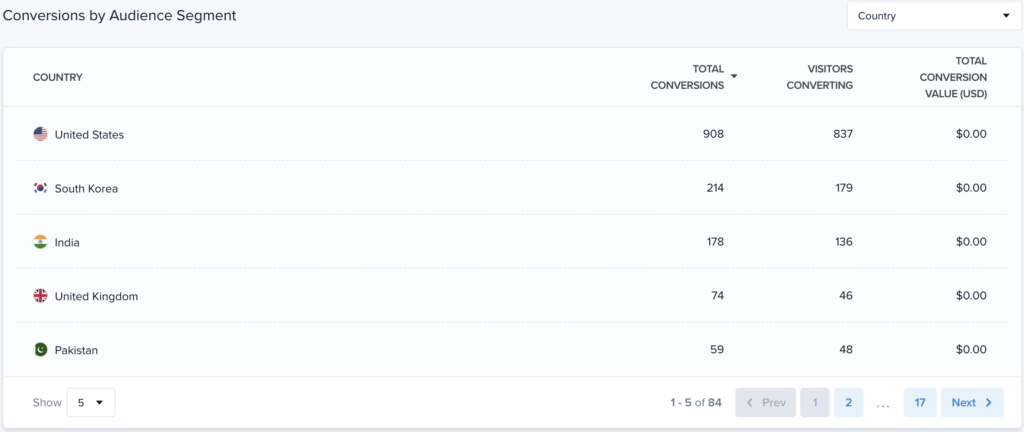
- Access the Breakdown: Scroll to the bottom of the page. You will find a new section titled Conversions by Audience Segment.
- Analyze and Iterate: Here, you will see a visual representation of how your conversions are distributed across your defined segments. Use this data to adjust your site content or marketing strategy accordingly.
The Future of Behavioral Analytics
As we look toward the future of digital marketing, the trend is clearly moving toward "hyper-personalization." Tools that allow for deep, behavioral-based segmentation are no longer a luxury; they are a necessity for survival in a crowded marketplace.
Crazy Egg’s decision to prioritize this feature suggests a future roadmap that focuses on predictive analytics. By understanding who converts today, businesses can better predict who will convert tomorrow. As the platform continues to refine these segments, it is likely that we will see even more advanced features, such as automated suggestions for optimization based on the conversion gaps identified in these segments.
In conclusion, this update is more than just a new graph or a report; it is a fundamental shift in how digital businesses should be thinking about their conversion funnels. By highlighting the differences between visitor segments, Crazy Egg has given its users a powerful, zero-effort tool to improve their bottom line. The data was always there—now, for the first time, it is finally visible. For the modern marketer, that visibility is the most valuable asset in their toolkit.
