
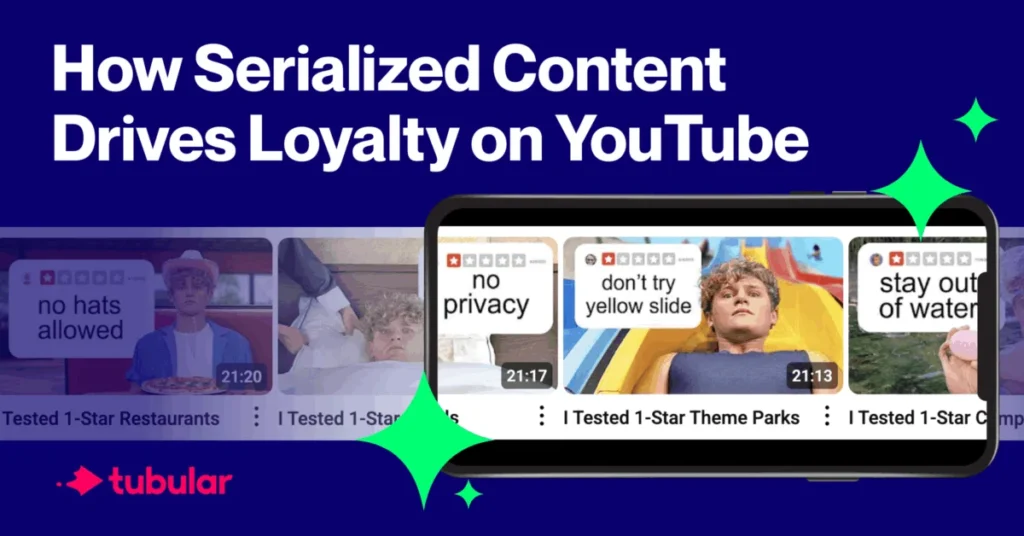
The Serialized Revolution: Why YouTube is Reclaiming the Primetime Slot
As YouTube viewership continues its steady migration from mobile devices and desktop browsers to the centerpiece of the modern living room—the smart TV—the platform is undergoing a fundamental identity shift. Creators and brands are no longer just fighting for the fleeting attention of a scrolling feed; they are now competing for the dedicated, couch-bound attention spans traditionally reserved for cable networks and premium streaming services.
The strategy fueling this shift is the return of the serialized format. By mimicking the structure of appointment-based television—complete with narrative arcs, cliffhangers, and consistent release schedules—top-tier creators are driving the kind of repeated tune-ins that digital platforms previously struggled to capture.
The Evolution of the Digital "Tune-In"
In the early days of online video, the "viral hit"—a standalone, short-form explosion of views—was the gold standard. However, the modern YouTube landscape is increasingly defined by the "series." This evolution is driven by the fact that long-form content is thriving on the big screen. When a viewer casts a video to their TV, they are rarely looking for a 60-second clip; they are looking for an experience.
Serializing content serves a dual purpose: it builds a deep, parasocial relationship with the audience, and it creates a compounding interest effect on watch-time metrics. When a viewer finishes one episode of a series, the platform’s recommendation engine—bolstered by playlist functionality—is primed to serve them the next. This creates a "binge-watch" loop that mimics the addictive nature of legacy television.
Case Study: Ryan Trahan’s 50-State Marathon
A Masterclass in Modern Pacing
In mid-2025, creator Ryan Trahan achieved a massive spike in watch-time by tackling a classic, high-stakes concept: the cross-country road trip. His series, 50 States in 50 Days, moved beyond the traditional travel vlog format by instituting a rigorous, daily release schedule.
The success of the series lies in its commitment to the "daily" aspect. By dropping 20-to-25-minute episodes consistently, Trahan transformed his channel into a reliable daily habit. This is not merely a collection of videos; it is a narrative journey that requires the viewer to return tomorrow to see the resolution of today’s challenges.
Data-Driven Impact:
Trahan’s shift to this serialized, long-form approach yielded staggering results. In June 2025 alone, his U.S. watch-time surged by 120% month-over-month, reaching 569.8 million minutes. To put this in perspective, this placed him at No. 24 among all U.S. accounts, outperforming major established media entities, including legacy television networks and mainstream news organizations. This suggests that in the new media economy, a single creator with a compelling, serialized narrative can command more loyalty than a multi-million-dollar broadcast desk.
The Corporate Pivot: State Farm’s "Gamerhood"
Leveraging Niche Communities for Brand Loyalty
While individual creators are naturally suited to serialized content, brands have historically struggled to bridge the gap between "advertisement" and "entertainment." State Farm’s Gamerhood stands as a definitive outlier in this regard.
Launched in 2022, the series is a gaming-themed competition show that integrates the brand’s core messaging into a high-production reality format. Now in its fourth season, the show has transcended its origins as a marketing tool to become a genuine viewing destination. The Season 4 premiere on August 1 drew 152,000 viewers—a figure that would make many cable pilot episodes envious.
Strategic Implications:
State Farm’s success demonstrates that brands do not need to abandon their identity to succeed on YouTube; they simply need to format it for the medium. By adopting the reality competition format, the brand provides "endemic" content—content that fits naturally into the ecosystem of the audience it seeks to capture. With episodes frequently hitting the two-hour mark and the brand generating over 5 million minutes watched in a single month, Gamerhood proves that viewers will engage with branded content for long periods if the production quality and narrative payoff are high enough.
The Reimagining of Legacy Formats: Vice’s "Naked Truths"
From Micro-Content to Docuseries
Vice Media provides a fascinating case study in how to pivot existing intellectual property to fit the modern television-style consumption model. The company recently revived Naked Truths, a former Refinery29 hit that originally focused on short, 1-to-5-minute segments featuring women discussing self-confidence.
The new iteration, however, is a departure from the original. It has been reimagined as a high-production docuseries, with episodes extending beyond 15 minutes. By diving into niche subjects—such as the lives of "findom" (financial domination) streamers—the series adopts the aesthetic and pacing of investigative journalism found on platforms like HBO or Netflix.
The Monetization Strategy:
The transition to 15-plus minute runtimes is not just a creative choice; it is a strategic business pivot. Longer videos allow for more sophisticated ad insertion points, creating a sustainable monetization model that does not rely on the unpredictable nature of linear television pick-ups. In its first two episodes, the series generated a consistent 65,000 views per upload, proving that a dedicated, engaged niche audience can sustain a professional-grade series in the digital age.
What Creators and Publishers Can Learn
The current landscape suggests that the "Wild West" era of YouTube is being replaced by a "Network" era. As creators and brands look to replicate the success of these shows, three pillars of success emerge:
- Consistency as a Product: The "tune-in" is only possible if the audience knows exactly when to expect the next installment. Whether it is daily (Trahan) or weekly (State Farm), the release schedule must be ironclad.
- The "Big Screen" Aesthetic: Content produced for mobile often feels disposable. Serialized content meant for the living room needs high production values, deliberate pacing, and storytelling that respects the viewer’s time.
- Community-Centric Niche Building: The most successful series are not trying to reach everyone; they are trying to reach the right someone. By focusing on specific subcultures—gaming, travel, or raw documentary—creators can build a level of loyalty that broad-spectrum programming can no longer replicate.
Implications for the Future of Media
The rapid migration of YouTube to the TV screen changes the calculus for every stakeholder in the entertainment industry. For traditional networks, the competition is no longer just other channels; it is the independent creator who has built a loyal, serialized audience that tunes in every evening.
Furthermore, as watch-time for long-form content continues to climb, we are likely to see an increase in "cross-pollination." We may soon see YouTube series being licensed to traditional streaming services, or conversely, streamers creating "YouTube-first" content to capture the platform’s massive, younger demographic.
The data provided in the Hidden Trends, Big Moves report underscores this reality: the audience is no longer distinguishing between "YouTube" and "Television." They are looking for high-quality, serialized storytelling, and they are happy to find it on whichever platform delivers it with the most consistency and narrative depth.
As we move forward, the winners will be those who stop viewing their YouTube presence as a "channel" for individual clips and start viewing it as a "network" of serialized experiences. The era of the single viral hit is fading; the era of the digital appointment has arrived.
