
The Digital Shift: How LATAM News Publishers Are Reimagining Strategy in the Age of Social Video
The landscape of news consumption in Latin America has undergone a seismic shift. For millions of citizens across Argentina, Chile, Colombia, Mexico, and Peru, the traditional morning paper or the 6:00 p.m. television broadcast have been largely supplanted by the scrolling feeds of social media. According to the Reuters Institute Digital News Report 2025, between 58% and 64% of respondents in these nations now identify social platforms as their primary source for news and political discourse.
This transition presents a defining challenge for legacy media institutions. As competition intensifies, the divide between publishers who have mastered the nuances of social video and those who remain tethered to traditional formats has never been more apparent. To remain relevant, news organizations must move beyond assumptions and embrace data-backed strategies that align with how audiences actually consume information.
The State of Play: A Multitrillion-View Ecosystem
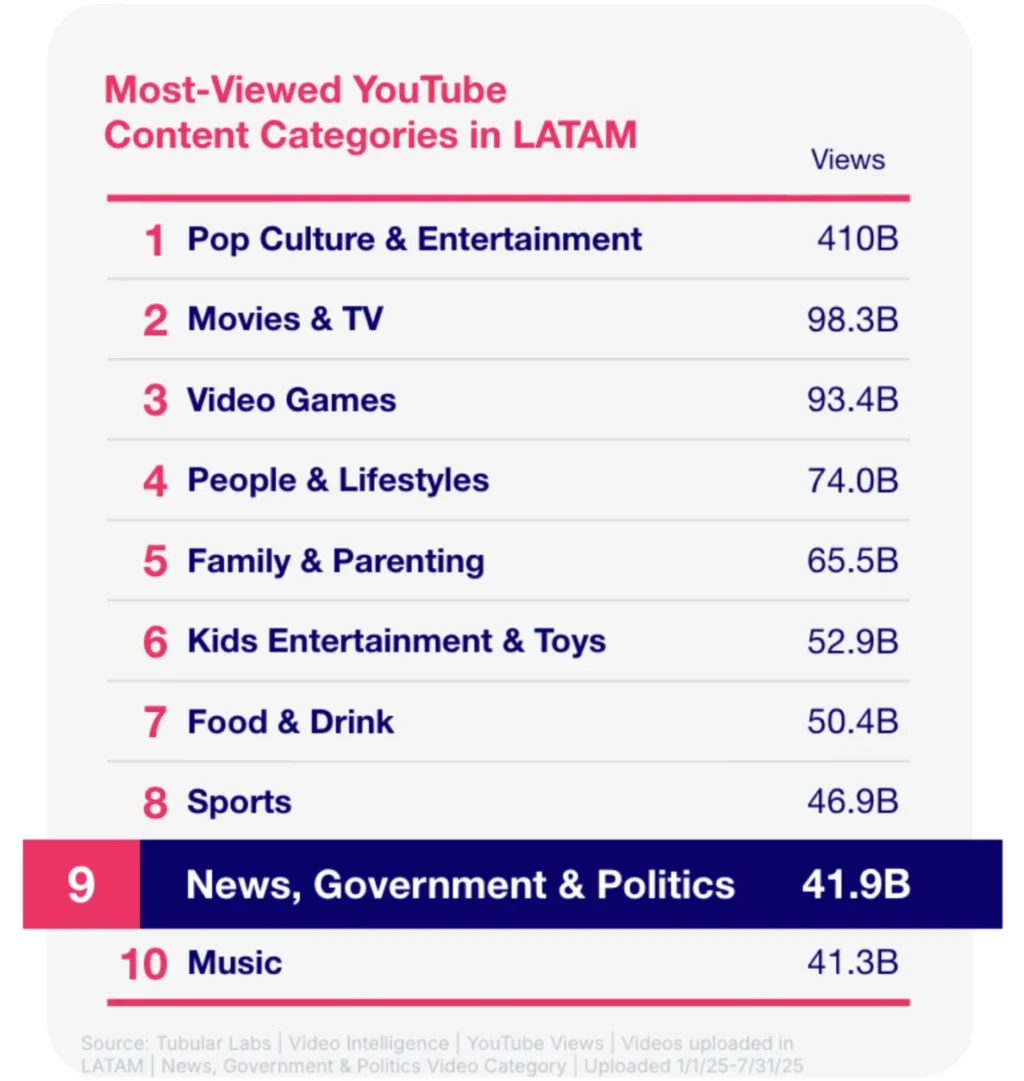
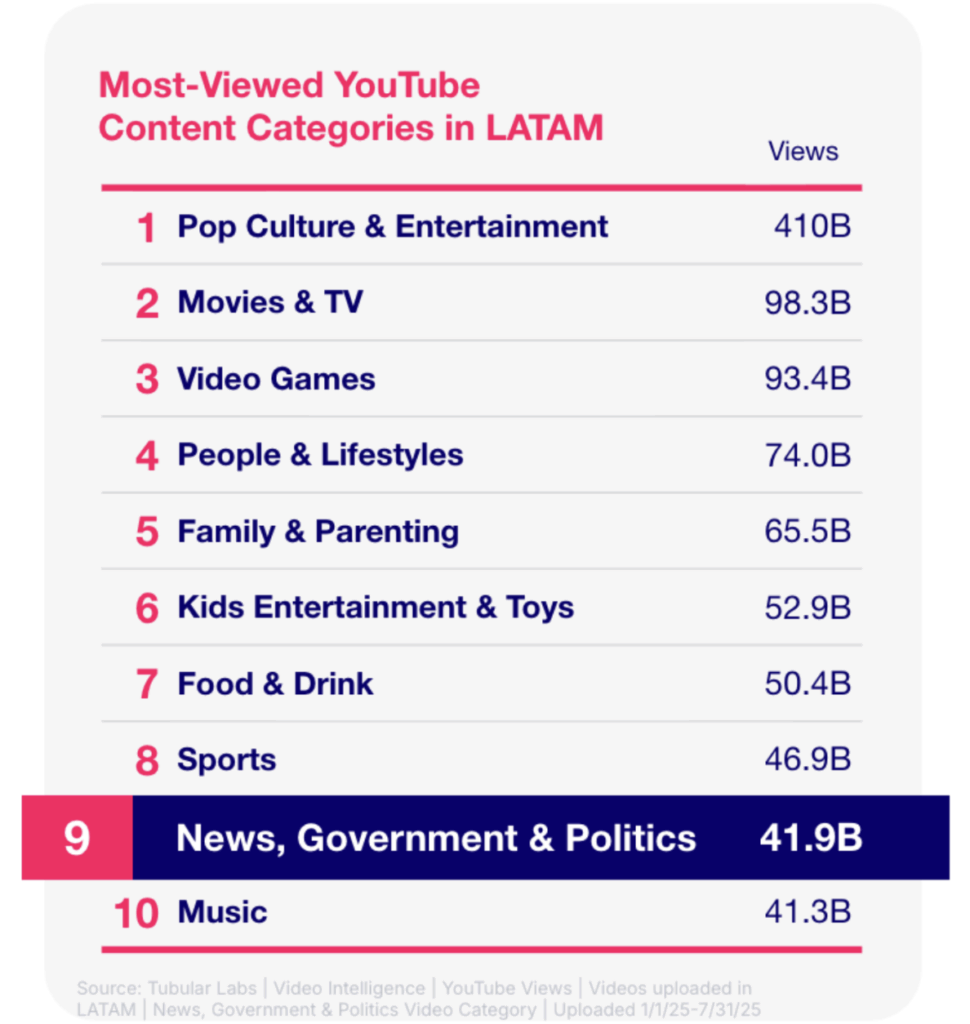
The sheer scale of video consumption in Latin America is staggering. Based on proprietary data from Tubular Labs covering the first seven months of 2025, social video content across all categories in the region generated an astronomical 4.05 trillion views.

Within this massive digital ocean, the "News & Politics" category serves as a critical, yet underdeveloped, territory. Media companies accounted for 27.1 billion views across 293,000 uploads. While these numbers are significant, they represent only 0.67% of total regional uploads. For digital strategists, this is not a sign of failure but a signal of immense "whitespace"—a vast, untapped opportunity to capture a growing demographic of news-hungry users who are currently looking for authoritative, high-quality content.
Chronology of Consumption: Understanding Audience Behavior
The shift toward social-first news is not merely a change in platform; it is a change in behavior. Data from 2025 reveals that audience engagement patterns are highly sensitive to video duration, device, and timing.
The Rise of the Micro-Report
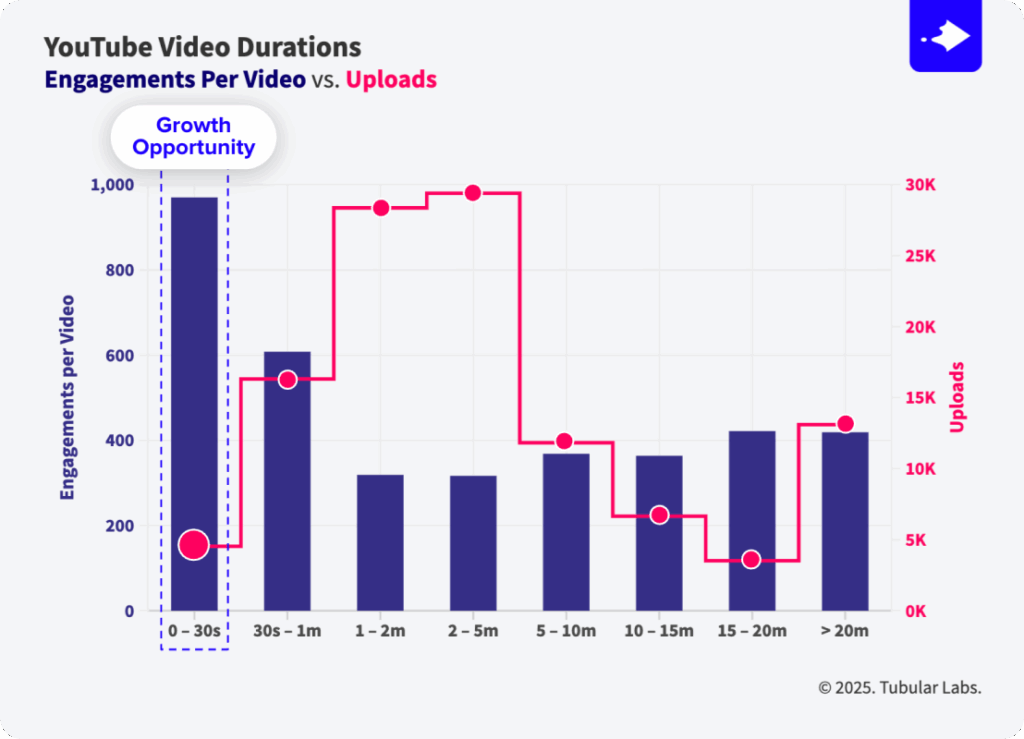
On YouTube, the industry’s reliance on 1-to-5-minute segments has proven to be a strategic misstep. Analytics show that this duration bracket actually yields the lowest engagement per video. Conversely, videos under 30 seconds are delivering the highest engagement rates. This indicates a significant disconnect between publisher habits and audience preferences. Audiences are signaling a clear desire for "snackable" news—concise, vertical, and high-impact clips that fit into the flow of their daily mobile browsing.
The Sunday Phenomenon
Timing also plays a counterintuitive role. Contrary to the traditional view that news is a weekday commodity, data indicates that content uploaded on Sundays earns the highest engagement. For media organizations, this suggests that editorial calendars must be untethered from the 9-to-5 work week. The most successful publishers are now scheduling content for peak Sunday engagement, ensuring their presence is felt when the audience is most active.
Device-Specific Strategies
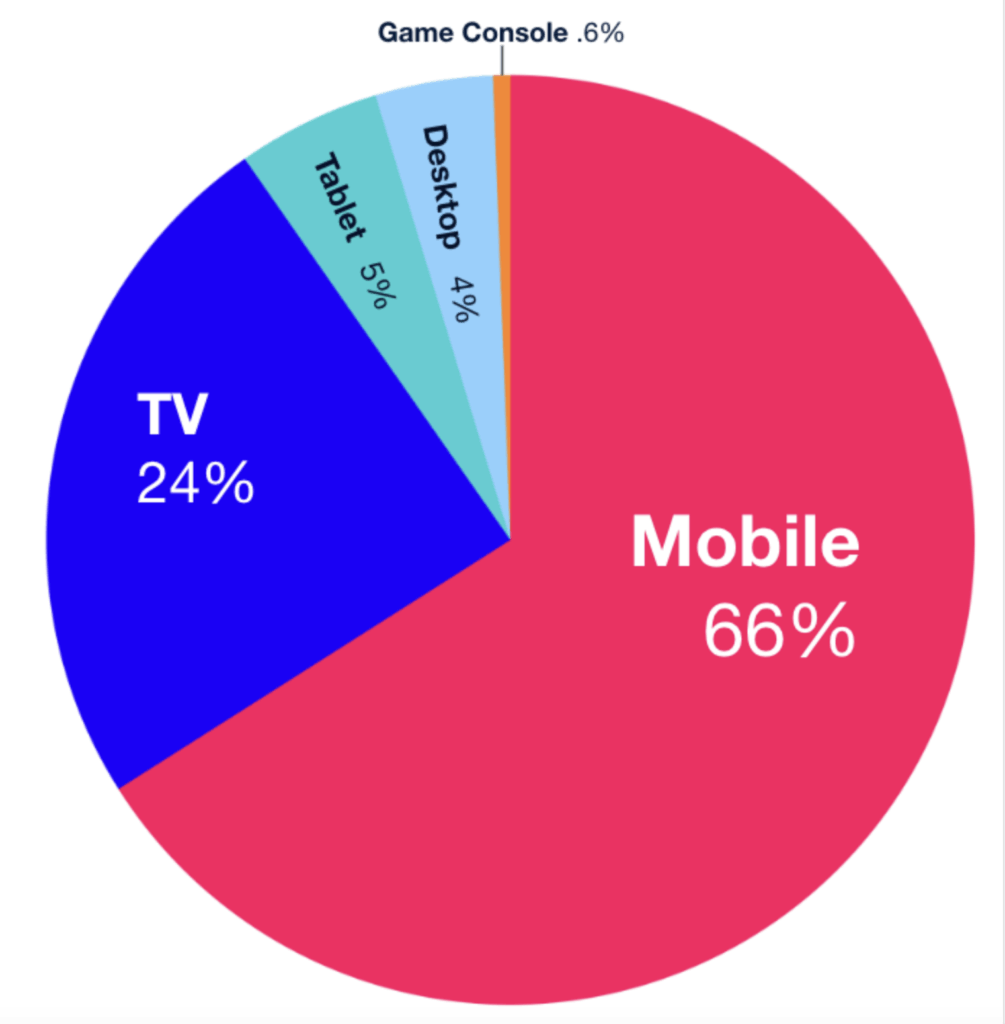
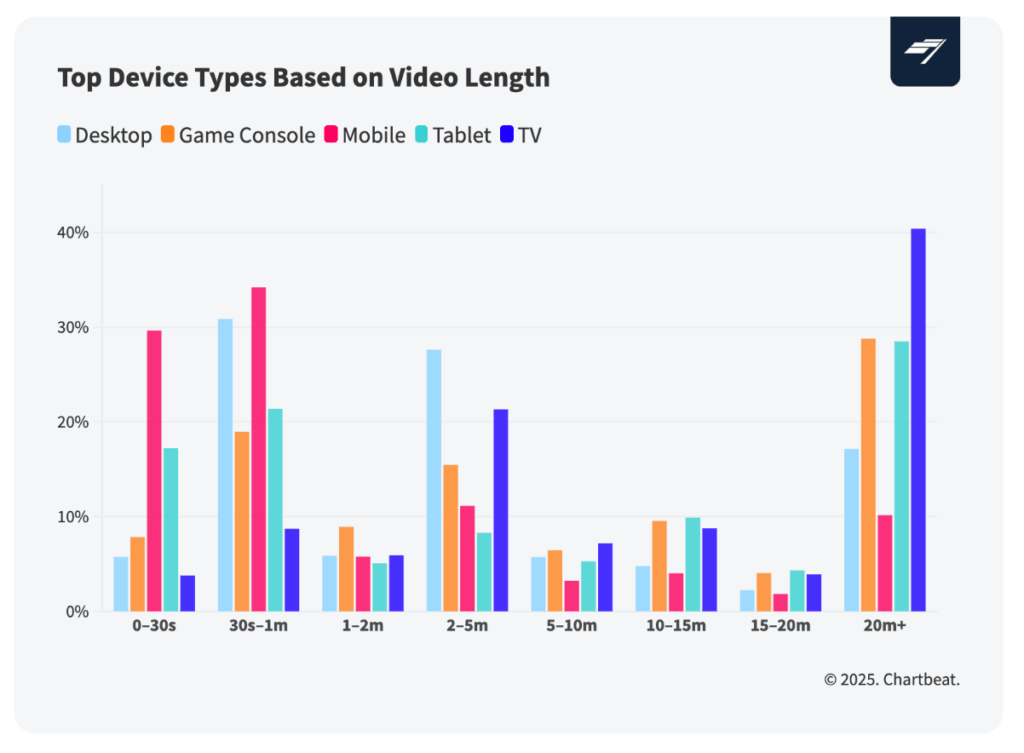
The divide between mobile and television consumption is stark. In the LATAM news sector, 66% of YouTube views occur on mobile devices, with only 24% occurring on TV. However, this is heavily influenced by content length:
- Mobile/Desktop: Audiences here prefer videos under one minute.
- TV/Gaming Consoles: Viewers on these platforms are far more likely to engage with deep-dive content exceeding 20 minutes.
Supporting Data: Lessons from Industry Leaders
To understand how these trends translate into success, one need only look at the digital performance of major regional players like Milenio and NMás.
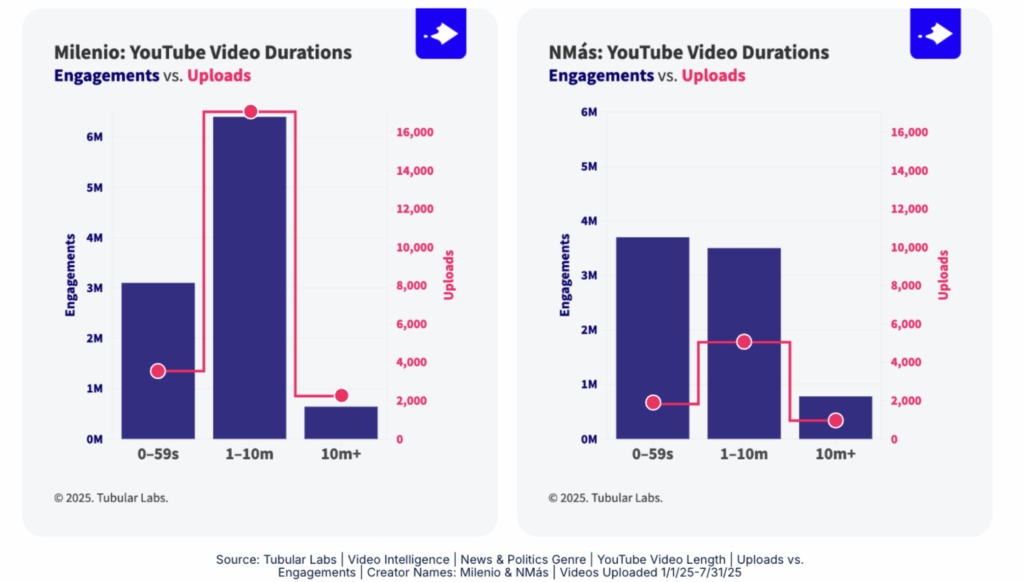
- Milenio’s Efficiency: By pivoting toward YouTube Shorts, Milenio successfully converted 15% of their total uploads into 31% of their total cross-platform engagements.
- The NMás Model: NMás provides an even more striking case study. Despite publishing 2.8 times more mid-length content, the organization found that nearly half of their total engagements were derived from Shorts.
These examples underscore a vital "pro-tip" for modern newsrooms: the "splice and repurpose" strategy. By deconstructing long-form investigative reports or studio interviews into several high-impact Shorts, publishers can maximize the reach of a single production effort, effectively feeding the algorithms of both YouTube and TikTok.
TikTok: The Engine of Modern Engagement
If YouTube is the established giant, TikTok is the accelerant. Despite accounting for a smaller share of total uploads compared to other platforms, TikTok drives 71% of all cross-platform social interactions for LATAM news media.
The growth trajectory is aggressive. The top 10 news publishers on TikTok in the region saw a 55% year-over-year increase in viewership. This growth is exemplified by C5N, which saw its TikTok uploads account for only 25% of its total cross-platform output while simultaneously generating 71% of its total engagements.
The data suggests that TikTok is no longer a platform for peripheral content; it is a primary growth engine. However, the platform requires a nuanced approach. Audiences on TikTok are actively searching for updates, treating the platform as a real-time news ticker. Publishers who fail to experiment with this medium risk losing the next generation of news consumers to independent creators and social-first influencers.
Strategic Implications: Moving Beyond Assumptions
For digital teams and media strategists, the implications of these 2025 insights are twofold:
1. Data-Driven Content Architecture
Publishers must stop treating social media as a secondary distribution channel for television content. Instead, they should adopt a "platform-first" mentality. This means creating native content that respects the user experience of each platform—vertical, sub-30-second clips for mobile-first environments, and long-form, immersive documentaries for the living room TV audience.
2. Topic-Platform Alignment
Not all news is created equal, and not all platforms treat topics the same way. Insights suggest that audiences seek out specific themes on specific platforms. For instance, content regarding law enforcement may perform exceptionally well on Facebook, whereas topics like immigration or social justice might see higher, more meaningful engagement on Instagram and TikTok. By analyzing which topics resonate on which platforms, publishers can refine their cross-posting strategies to ensure that every piece of content reaches its highest-potential audience.
Conclusion: Securing a Legacy in the Digital Age
The message from the 2025 data is clear: the era of the passive audience is over. Latin American news consumers are active participants who demand accessibility, brevity, and platform-native experiences.
The fact that the "News & Politics" category currently makes up such a small percentage of total social uploads is the ultimate call to action. There is a massive, underserved audience waiting for credible, professional journalism that meets them where they are.
For publishers, the path forward is not found in higher frequency, but in higher intelligence. By leveraging the underutilized power of short-form video, optimizing for the Sunday surge, and treating TikTok as a core component of the editorial strategy, legacy publishers can not only survive this transition—they can define the future of news in Latin America. The digital revolution is not coming; it has arrived. Those who align their strategy with the reality of audience behavior will be the ones to lead the next era of media.
