
The Institutional Architect: 617 Collective’s Bold Bet to Rewrite the Agency Roll-Up Playbook
Executive Summary: Bridging Wall Street and Main Street
The landscape of the creator economy is undergoing a structural metamorphosis. As the industry matures into a multi-hundred-billion-dollar juggernaut, the mechanisms of consolidation are shifting. 617 Collective, a New York-based holding company, has emerged as a disruptive force, positioning itself as the antithesis to the traditional "agency roll-up."
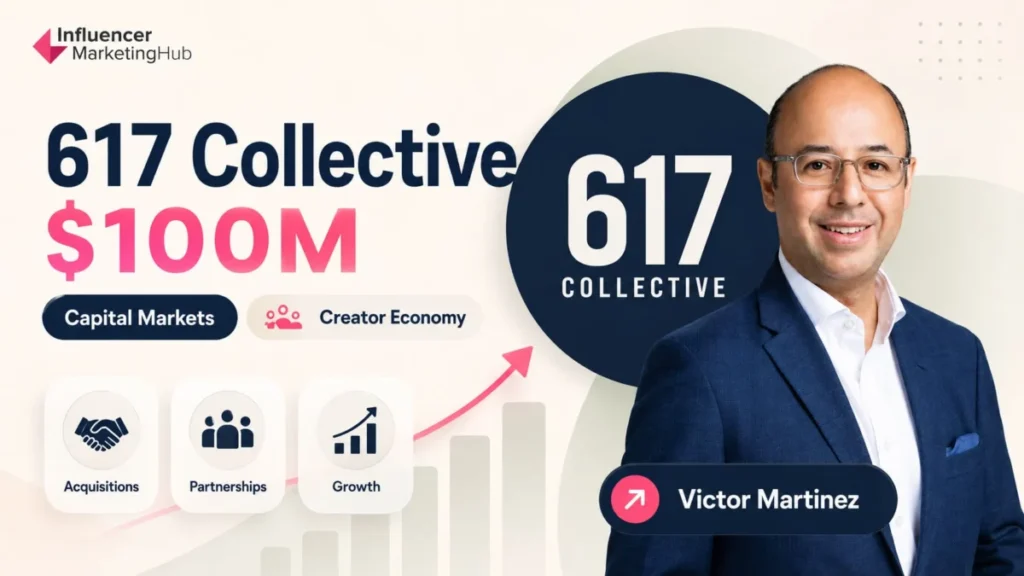
In a significant move to signal its maturation, 617 Collective has appointed Victor Martinez—a seasoned veteran of Citi and JPMorgan—as Partner and Head of Capital Markets. This hire is not merely an administrative update; it is a strategic maneuver designed to equip the firm with the financial engineering prowess required to deploy $100 million in capital across the influencer, PR, and creative services sectors. By blending "founder-friendly" autonomy with institutional-grade financial infrastructure, 617 Collective is attempting to build a sustainable holding model that defies the historical failures of industry consolidation.
Chronology of a Disruptor
617 Collective’s trajectory since its inception in August 2025 has been marked by a deliberate, measured approach to M&A. Unlike legacy holding companies that prioritize rapid, aggressive expansion at the cost of cultural integrity, 617 Collective has focused on a "partner-holdco" strategy.
- August 2025: 617 Collective launches, backed by a consortium of family offices and private investors, with an initial mandate to acquire Northeast-based agencies generating between $1 million and $5 million in annual revenue.
- January 2026: The firm makes its first major move, acquiring Nominee Design, an Oklahoma-based creative studio with a decade of brand-building pedigree. This move signaled a geographic expansion beyond the Northeast.
- January 2026: To manage the growing complexity of the platform, the firm appoints Cynthia Monroy—a seasoned CPA and former CFO at Band of Insiders—as Managing Partner to oversee day-to-day operations and cross-platform integration.
- April 2026: The firm expands into the U.S. Hispanic and Latin American markets through the acquisition of Zanahoria Azul, a specialist influencer talent management agency.
- June 2026: The appointment of Victor Martinez as Head of Capital Markets signals the firm’s transition from a boutique buyer to a significant institutional player capable of navigating complex debt and equity structures.
Supporting Data: The Macro-Economic Tailwinds
The timing of 617 Collective’s institutional push is supported by a robust set of market metrics. The creator economy is no longer a niche digital playground; it is a foundational pillar of modern marketing.
According to recent projections, the creator economy is estimated to be worth between $250 billion and $320 billion as of 2026, with the Influencer Marketing Hub projecting an addressable market of $480 billion by 2027. This growth is compounding at a rate exceeding 20% annually.
However, the sector remains hyper-fragmented. The 2026 Creator Economy M&A report by Quartermast Advisors highlights this, noting 81 creator-economy transactions in 2025—a 17.4% increase over the previous year. Within this landscape, marketing services M&A saw a 14% year-to-date rise in 2025, a notable outlier during a period when broader U.S. deal activity saw a significant contraction.
For 617 Collective, these figures represent a clear opportunity: a vast, fragmented ecosystem of small, high-quality agencies that are currently underserved by the standard private equity playbook. By bringing in a former Wall Street banker to build out its lender relationships, 617 Collective is ensuring it has the "dry powder" to compete with titans like Omnicom and Publicis, which have been aggressively snapping up creator-focused assets in multi-million-dollar deals.
Official Responses and Strategic Philosophy
The "partner-holdco" model advocated by 617 Collective rests on the premise that culture is the primary driver of value in creative agencies.
"We built 617 Collective to be the opposite of a roll-up," noted Managing Partner Cynthia Monroy during the Nominee Design acquisition. This sentiment is central to their pitch to founders: 617 Collective provides the financial stability and operational support of a holding company without stripping away the agency’s brand identity, leadership autonomy, or internal culture.
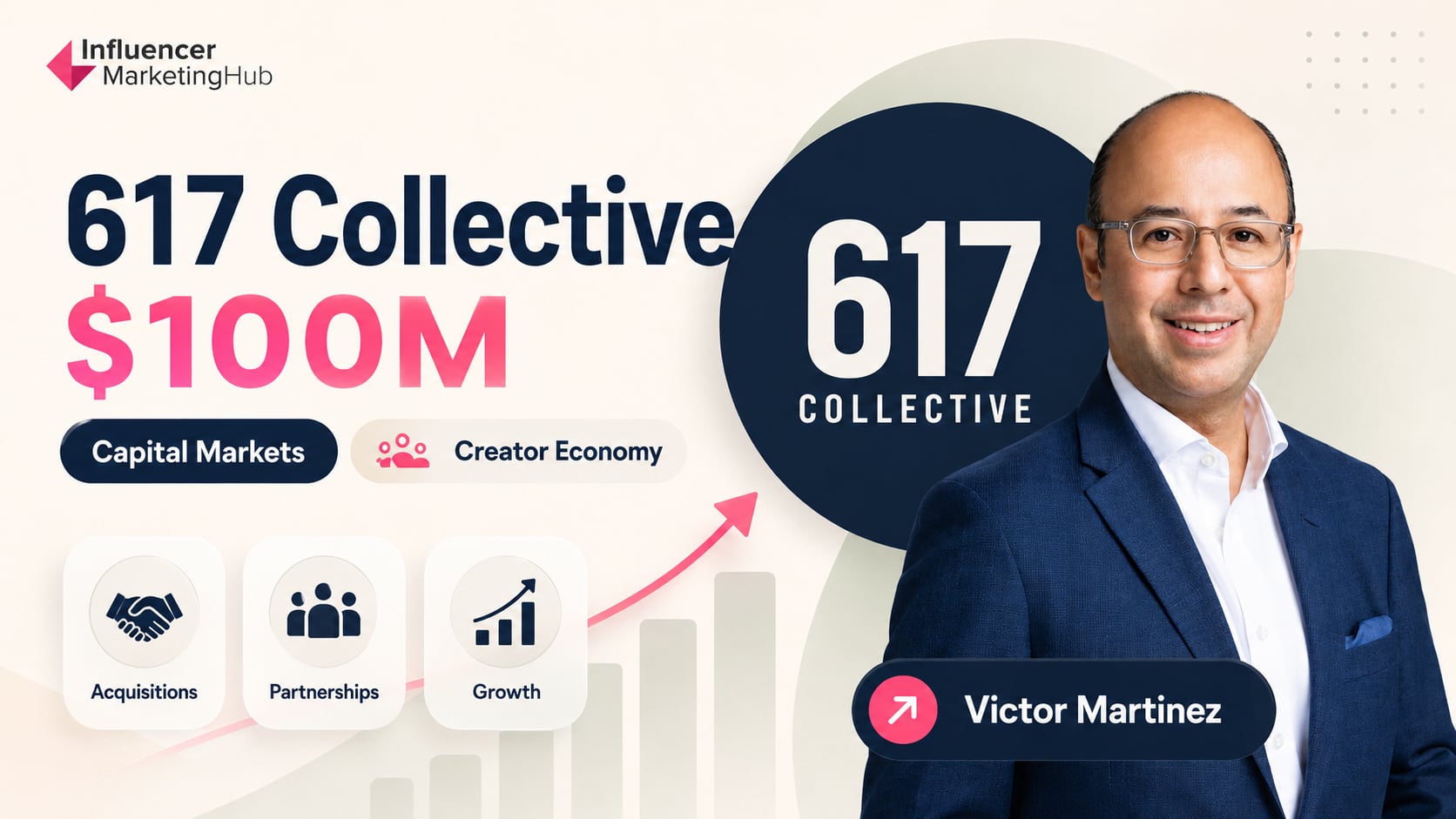
The addition of Victor Martinez is described by the firm as the "continued institutionalization of 617 Collective." This phrasing is a candid acknowledgement that the firm is operating in a dual-track reality: maintaining the agility and human-centric focus of a startup while building the rigorous, sophisticated financial infrastructure of a global holding firm. Martinez’s mandate is to secure the financing structures—corporate development pipelines and lender networks—that will allow the firm to execute its $100 million deployment goal without diluting the independence of its partners.
Implications: Can the "Long-Term" Model Scale?
The central question facing 617 Collective is whether its founder-friendly, permanent-capital approach can survive the friction of scale. The firm’s strategy draws inspiration from the "permanent capital" models perfected by companies like Constellation Software and Tiny. These firms succeed by acquiring niche, profitable entities and allowing them to operate with near-total autonomy, focusing on long-term cash flow rather than short-term flipping.
However, the application of this model to the agency world faces unique headwinds. Marketing consultancies, such as Ebiquity, have raised valid concerns regarding the inevitable trade-offs of consolidation:
- Conflict of Interest: As a holding company accumulates agencies, it inevitably risks housing competing client interests under the same parent umbrella.
- Operational Creep: Even if a firm promises autonomy, the reality of "shared services" often leads to a gradual centralization of back-office, HR, and accounting functions, which can erode the unique culture of a boutique agency.
- Data Exposure: In an era where data is the most valuable currency, sharing insights across a network of agencies poses significant security and competitive risks for brand clients.
617 Collective insists it can navigate these pitfalls. By keeping leadership and client relationships at the agency level, they aim to preserve the "boutique" feel that makes these firms attractive in the first place. Yet, as the firm grows from two acquisitions to twenty, the administrative burden of maintaining that independence will become increasingly difficult to balance against the efficiency demands of institutional investors.
The Path Forward
For 617 Collective, the next eighteen months will serve as a stress test for its business model. With $100 million in capital earmarked for deployment, the firm is moving beyond the "proof of concept" phase.
The hiring of Victor Martinez serves as a definitive statement: the firm is no longer interested in competing for the scraps left behind by the industry giants. They are positioning themselves to play in the big leagues of financial structuring, providing founders with an exit path that doesn’t feel like a surrender.
Whether this "institutionalized independence" remains a viable long-term strategy depends on execution. As 617 Collective continues to scout for agencies that balance creative excellence with the scalability required by institutional partners, the industry will be watching closely. If they can successfully deploy their capital without triggering the standard "roll-up rot" that has plagued agency holding companies for decades, they may well have discovered the blueprint for the next generation of marketing services.
If, however, the gravity of consolidation proves too strong, 617 Collective may find that even the most "founder-friendly" model eventually bends toward the efficiency-first, centralized nature of the networks they once set out to challenge. For now, they remain the most closely watched experiment in the creative M&A market—a firm betting that the best way to scale is to ensure the people who built the business never feel like they’ve lost it.
