

Fine Art America: The Definitive Review for 2026
Fine Art America (FAA) has long stood as a titan in the print-on-demand (POD) ecosystem. Built specifically for artists, photographers, and illustrators, it occupies a unique space between a high-end gallery and a high-volume manufacturing plant. Unlike competitors that operate on a "royalty percentage" model, FAA empowers creators by allowing them to dictate their own profit margins on every single item sold.
However, in an increasingly crowded digital landscape, does the platform still hold its weight? After dedicating dozens of hours to testing its infrastructure, analyzing market data, and synthesizing feedback from the artist community, this comprehensive review explores whether Fine Art America is the engine your art business needs or a relic of a bygone digital era.
The Core Facts: What Is Fine Art America?
At its heart, Fine Art America is a print-on-demand marketplace and production facility. It allows creators to upload digital files—typically high-resolution images of their artwork—and sell them as physical products. When a customer places an order, FAA handles the printing, packaging, and shipping.
The "Fine Art" in its name is not just marketing fluff; the company prides itself on gallery-quality reproductions, specifically canvas, metal, and archival paper prints. With a global network of 14–16 manufacturing facilities, the platform maintains a level of vertical integration that few competitors can match.
The Financial Model
The platform operates on a simple, transparent fee structure:

- The Base Price: Set by Fine Art America to cover the cost of materials, labor, and fulfillment.
- The Markup: Set by the artist. This is 100% pure profit.
- The Transaction: When a customer buys a product, FAA keeps the base price and sends the artist the entire markup amount.
A Chronology of the Platform’s Evolution
Fine Art America launched in 2006, positioning itself as a solution for artists who were tired of the "starving artist" trope. Over the last two decades, the platform has seen several distinct phases:
- 2006–2012: The Foundation Years. FAA established its reputation by focusing on high-quality printing, gaining traction with professional photographers who demanded color accuracy.
- 2013–2019: Expansion and Diversification. The platform expanded its catalog from simple wall art to lifestyle merchandise, including apparel, tote bags, and home decor, attempting to capture a broader consumer base.
- 2020–2024: The E-commerce Boom. The pandemic forced a massive migration toward online art sales. FAA saw record traffic, though this period also introduced new challenges regarding site navigation and competitive saturation.
- 2025–2026: The Strategic Pivot. Recent data indicates a cooling period, with a slight decline in annual revenue. The platform is now shifting its focus toward optimizing its existing user base and competing with specialized platforms like Saatchi Art and broader marketplaces like Redbubble.
Supporting Data: Market Positioning and Performance
The current state of Fine Art America is defined by a paradoxical mix of massive scale and diminishing growth. According to 2026 analytics:
- Annual Revenue: Approximately $144.8 million.
- Monthly Sessions: Roughly 3.3 million visits per month.
- Conversion Rate: Between 2.5% and 3.0%, which is considered robust for the art industry.
- Average Order Value (AOV): $100–$125.
Competitive Benchmarking
| Platform | Target Audience | AOV |
|---|---|---|
| Fine Art America | Pro Photographers/Artists | $100–$125 |
| Redbubble | Casual/Gen-Z Merch | $50–$75 |
| Saatchi Art | High-end Collectors | $275–$300 |
| Society6 | Interior Design/Decor | $75–$100 |
The data shows that FAA sits in a "Goldilocks" zone. It is significantly more professional than Redbubble, but lacks the high-ticket exclusivity of Saatchi Art. This makes it an ideal landing spot for artists who have outgrown entry-level marketplaces but are not yet selling original canvases for thousands of dollars.
The User Experience: Behind the Scenes
The Setup and Onboarding
Signing up for Fine Art America is frictionless. There is no credit card requirement for the Standard account. You are provided with a personalized dashboard where you can upload files and configure products. However, users migrating from modern platforms like Shopify or Squarespace will find the UI dated. The "Behind the Scenes" menu is dense and occasionally cluttered, reflecting a platform that has added features over two decades without a major design overhaul.
The "Product-First" Workflow
The strength of the platform lies in its automated mockup generator. Once an artist uploads a high-resolution JPEG, the platform automatically renders it across the entire catalog. This is a massive time-saver. You can apply a blanket markup percentage to your entire portfolio, or fine-tune pricing for specific premium items like large-format metal prints.
The Storefront Limitations
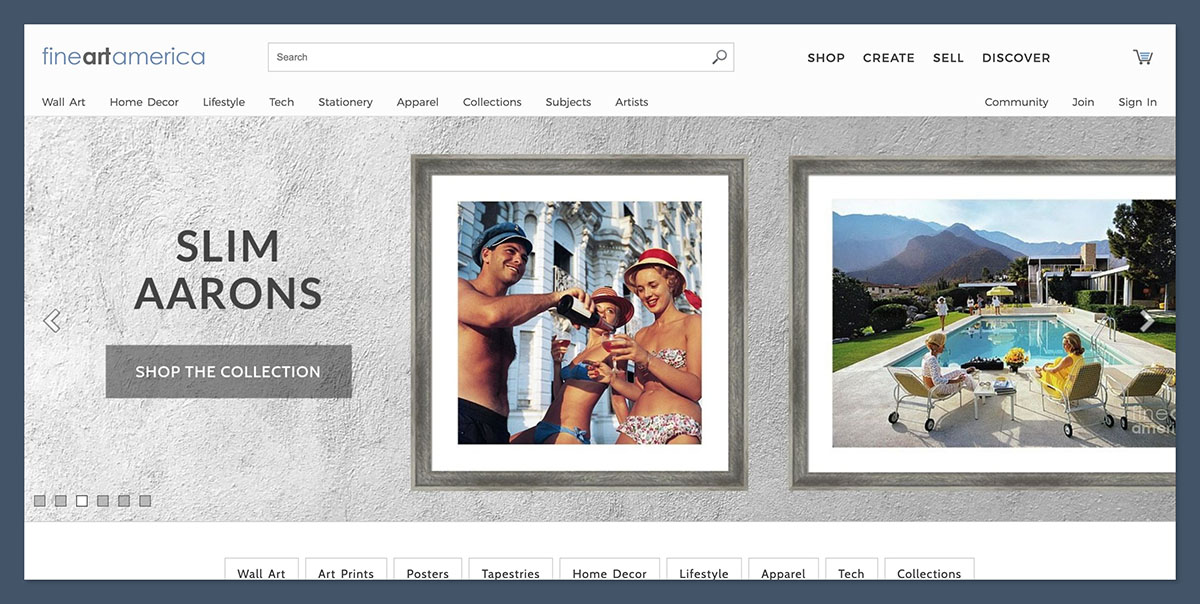
If you are looking for a highly branded, bespoke website builder, look elsewhere. Your storefront is essentially a templated profile page. While you can customize your bio and rearrange collections, you are operating within the constraints of the FAA ecosystem. The Premium plan ($30/year) offers a "white-label" site, but even this is limited compared to the drag-and-drop freedom offered by dedicated web builders.
Implications: The Risks and Rewards of the FAA Model
The Good: Why Artists Stay
- Ownership of Pricing: This is the platform’s greatest strength. In a market where others dictate your commission, having the power to set your own margins is empowering.
- Manufacturing Consistency: Because FAA owns their manufacturing facilities rather than outsourcing to random third-party print shops, the quality control is markedly better than competitors like Printful or Gelato.
- Low Risk: With no monthly fees for the Standard account, it is the lowest-barrier-to-entry platform for testing market viability.
The Bad: Where the Platform Falls Short
- Customer Data Ownership: When a customer buys from you, they are a customer of Fine Art America, not you. You do not get access to their email address or purchase history for your own marketing efforts.
- Discoverability Challenges: With over 700,000 artists, you are effectively a needle in a haystack. Relying on organic search within the marketplace is a losing strategy. Success on FAA requires you to be an aggressive marketer of your own brand off-platform.
- Support Concerns: Recent artist reports have highlighted frustrations with support response times. When account issues arise, the lack of a dedicated, human-first support channel can be a significant bottleneck for a growing business.
Official Responses and Industry Outlook
While Fine Art America has not issued a public manifesto regarding their 2026 revenue trends, their moves toward integrating better licensing programs and partner retail placements suggest a desire to pivot toward B2B opportunities. By placing artwork in brick-and-mortar chains like "Deck the Walls," they are attempting to move beyond the digital marketplace and into the physical retail space.
For the artist, the implication is clear: Fine Art America is a tool, not a partner. It is an efficient, high-quality fulfillment partner that will handle the logistics of printing and shipping so you can focus on the creative process. It will not, however, grow your business for you.
Final Verdict: Is It Right for You?
Who should use it:
- The Serious Photographer: If you want your images reproduced with gallery-grade precision, this is the industry standard.
- The Testing Artist: If you are unsure if your work has commercial appeal, the free account is the perfect sandbox.
- The "Hybrid" Seller: If you already have a website but need a reliable backend to handle the production of wall art, the embeddable cart widget is a powerful tool.
Who should look elsewhere:
- The Brand Builder: If you want total control over your customer relationship, email lists, and site design, Shopify or a self-hosted WooCommerce store is essential.
- The Casual Designer: If you are just looking to sell stickers or casual apparel to a social media following, platforms like Printful or Redbubble are likely better suited for those product types.
Final Thought: Fine Art America is a mature, stable, and highly effective platform for the right artist. While it isn’t the most modern or flashy interface on the market, it remains the gold standard for print quality and pricing control. Approach it as a production partner, drive your own traffic, and treat your storefront as a catalog rather than a digital home, and you will find it to be a valuable asset in your creative business.
