

Navigating the Future: How Forrester is Redefining Strategic Leadership in the Age of AI
In an era defined by rapid technological disruption and shifting consumer paradigms, the traditional playbook for business success has become increasingly obsolete. Modern executives are tasked with navigating a landscape where the velocity of change often outpaces the ability of internal teams to adapt. It is within this crucible of uncertainty that Forrester, a global leader in research and advisory services, has emerged as a critical partner for organizations aiming to do more than just survive—they are aiming to lead.
Forrester’s approach is not merely about providing static data; it is about fostering a dynamic, continuous guidance model that integrates deep research, expert consulting, and high-impact live events. By synthesizing insights from over 500,000 annual survey respondents—including consumers, technology decision-makers, and business executives—Forrester provides a unique, evidence-based compass for leaders facing the most complex challenges of the 21st century.
The Evolution of Strategic Guidance
The history of Forrester is rooted in the recognition that high-level strategy requires high-level data. Over the past several decades, the firm has transitioned from a traditional research house into a holistic ecosystem of support. This evolution was born out of the necessity to move beyond the "report-and-forget" model that plagued early consulting firms.
The firm’s current operational philosophy, "Forrester Decisions," represents a departure from traditional consulting. It is a comprehensive framework designed to align entire enterprises, accelerate specific business functions, and nurture individual professional development. This model acknowledges that a company’s success is not just dependent on its technology, but on the alignment of its people, processes, and strategy.

The Integration of Artificial Intelligence: A New Paradigm
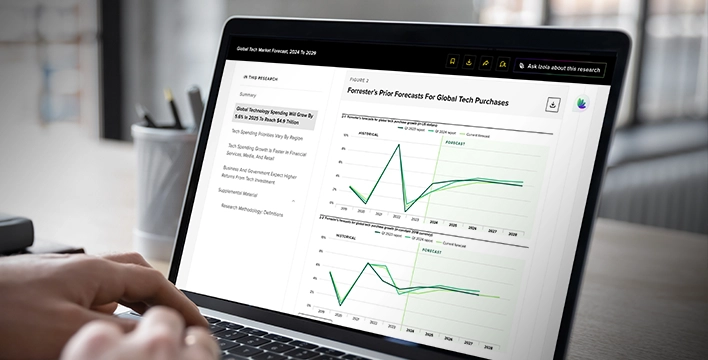
Perhaps the most significant development in Forrester’s recent history is its aggressive, responsible integration of generative AI into its service offerings. Formerly recognized under the internal project name "Izola," the new Forrester AI platform marks a turning point in how research is consumed and applied within the corporate environment.
Unlike general-purpose AI tools, Forrester AI is built on a foundation of proprietary, research-grounded data. By embedding this capability directly into Microsoft Teams, Forrester has effectively brought its vast repository of intellectual property into the daily workflow of its clients. This "in-the-flow-of-work" approach ensures that executives are not pausing their operations to seek advice; rather, they are receiving trusted, data-backed guidance precisely at the moment of decision-making.
The implications of this are profound. By automating the synthesis of complex reports and data, Forrester AI allows leaders to move with greater speed and alignment. It bridges the gap between raw data and actionable intelligence, governed by a strict mandate for transparency and accuracy—a critical necessity in an age of "hallucinating" AI models.
Supporting Data and the Power of Insight
Forrester’s authority is built on the sheer scale of its data collection. Surveying half a million stakeholders annually provides a level of granular visibility into market trends that few other organizations can replicate. This data serves as the backbone for the firm’s three primary pillars of value:

1. Enterprise Alignment
In many large organizations, departments operate in silos, leading to friction in decision-making. Forrester’s guidance helps leadership teams harmonize their priorities—whether the focus is on AI implementation, sustainability initiatives, or establishing organizational trust. By providing a shared language and a unified set of benchmarks, the firm enables cross-functional collaboration.
2. Functional Acceleration
For teams tasked with execution, the barrier is rarely a lack of effort but a lack of clarity. Through specialized research, tools, and direct expert guidance, Forrester accelerates the delivery of initiatives. Whether it is a marketing team looking to optimize their demand generation or a tech team navigating the complexities of digital transformation, the goal remains the same: faster, more confident outcomes.
3. Individual Advancement
Recognizing that the strength of an organization is the sum of its people, Forrester invests heavily in individual professional development. Through industry-recognized certifications, tailored events, and executive mentorship, the firm helps professionals at every career stage sharpen their skills and broaden their strategic perspective.
Voices from the Field: The Client Perspective
The true measure of a consulting firm lies in the success of its clients. Industry leaders frequently cite the "integration" aspect of the Forrester model as the key differentiator.

Jen Burns, SVP of Commercial Operations & Marketing at Dun & Bradstreet, notes, "It’s not just about the stats and the benchmarks and the research. Forrester integrates themselves into our organization. We’re one team trying to understand how we drive our initiatives forward together."
Similarly, Majed Al-Ghanemi, CIO and Deputy COO at Saudi Awwal Bank, emphasizes the reliability of the firm’s consulting arm: "Forrester’s consultants are knowledgeable and very much dedicated to delivering on what they promised in a timely manner."
These testimonials underscore a crucial reality: modern business leaders are no longer looking for an external vendor to hand them a document. They are looking for a partner who acts as an extension of their team—an entity that possesses both the external market perspective and the internal organizational context to solve problems effectively.
Consulting and the Art of Measurable Outcomes
Beyond research, Forrester’s consulting practice provides the customized support necessary for high-stakes business challenges. As the buyer’s journey becomes increasingly influenced by content and AI-driven interactions, credibility has become the primary currency of business.
Forrester provides specialized services, such as the Total Economic Impact™ (TEI) methodology, which enables companies to quantify the value of their investments. These studies go beyond vanity metrics, providing rigorous, data-driven proofs of ROI that help organizations build trust with their own customers. These engagements are meticulously kept distinct from the firm’s research arms, ensuring that the integrity and objectivity for which Forrester is known remain untarnished.
The Power of Face-to-Face Collaboration
Despite the digital revolution, Forrester maintains a robust schedule of live events. These gatherings serve as the connective tissue of the industry, bringing together analysts, thought leaders, and peers in curated environments. From the B2B Summit in North America to the Technology & Innovation Forums in London and Austin, these events are designed to catalyze innovation through the exchange of ideas that can only happen in person.
The 2026-2027 calendar reflects a global footprint, focusing on critical themes such as AI strategy, customer experience (CX), and security. These events are not just about lectures; they are about fostering the authentic connections that form the basis of a resilient professional network.
Implications for the Future
The path forward for business is undeniably linked to the successful marriage of human intuition and machine-driven intelligence. Forrester’s strategy of "reinventing research for the AI era" places them in a unique position. By maintaining a focus on research-grounded AI while simultaneously expanding their footprint in consulting and high-touch live events, they are effectively hedging against the commoditization of information.

For the modern executive, the implication is clear: the advantage no longer goes to those with the most data, but to those who can interpret that data the fastest and apply it with the greatest degree of trust. In a world that is becoming increasingly automated, the human element—the ability to provide context, to mentor, and to foster strategic alignment—remains the ultimate competitive advantage.
Forrester has positioned itself not just as a provider of information, but as an architect of decision-making. As they continue to scale their AI capabilities and refine their consulting methodologies, they provide a roadmap for other organizations to follow: stay curious, prioritize transparency, and never stop iterating on how you deliver value.
For those looking to stay ahead of the curve, the message is simple: business is a team sport, and in the current climate, having the right teammate is the difference between leading the market and being left behind. Through their integrated model of research, consulting, and events, Forrester remains committed to the mission of empowering leaders to drive results—together.
