
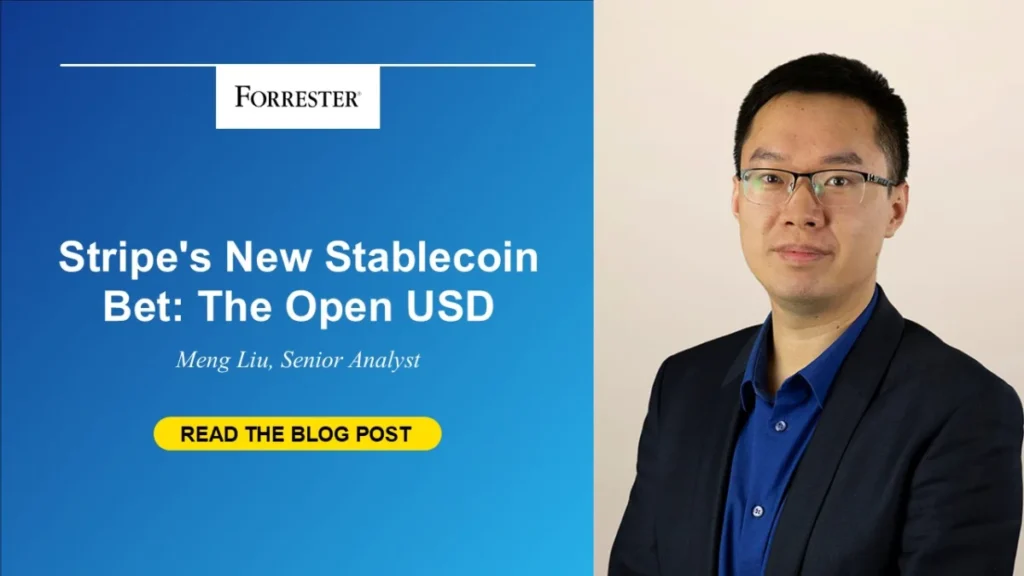
The Architecture of Money: Inside the Open USD Initiative and the Future of Global Payments
On June 30, 2026, the financial world witnessed a seismic shift in the trajectory of digital asset adoption. A coalition of more than 140 industry giants—including Stripe, Visa, Mastercard, Coinbase, BlackRock, BNY, DBS, OCBC, Standard Chartered, Google, and Shopify—officially announced their support for "Open USD," a new US dollar-backed stablecoin initiative managed by the Open Standard.
This initiative is not merely another digital token; it is an ambitious attempt to codify a universal standard for global money movement. Led by Zach Abrams, the co-founder of Bridge (acquired by Stripe in 2024), Open USD aims to dismantle the legacy friction that has historically hampered the adoption of stablecoins within mainstream enterprise finance.
As the project prepares for its live launch later in 2026, it represents a critical pivot point: the transition of stablecoins from a niche tool for crypto-native traders into a fundamental layer of the global payment infrastructure.
I. The Genesis and Core Mechanics: Why Open USD is Different
The global stablecoin market is far from vacant. Assets like USDT and USDC have already carved out significant dominance, backed by massive liquidity and deep integration into crypto-native ecosystems. However, Open USD is positioning itself not as a competitor in the retail trading arena, but as a shared network asset designed for the rigors of business-scale value transfer.
The Structural Shift
Current stablecoin models often place the issuer at the center of the economic universe. The issuer dictates the roadmap, retains the bulk of reserve-generated economics, and creates proprietary silos that require costly minting and redemption processes. Open USD seeks to invert this model through three key design pillars:
- Shared Network Economics: Unlike traditional models where reserve profits accrue solely to the issuer, Open USD is structured to distribute economic benefits among ecosystem participants, aligning incentives for banks, fintechs, and merchants.
- Enterprise-Grade Roadmap: The governance of the Open Standard allows for collective influence. Participants are not merely customers of a stablecoin; they are stakeholders in the development of the underlying protocol.
- Reduced Friction: By optimizing the technical infrastructure for high-frequency, high-volume B2B transactions, the initiative seeks to solve the "mint/burn" inefficiency that currently makes stablecoin settlement prohibitively expensive for some institutional use cases.
II. A Chronology of the Digital Asset Evolution
To understand the weight of the Open USD announcement, one must look at the timeline of events that preceded this convergence:
- 2019: The Libra Warning: Facebook’s Libra project (later Diem) attempted to create a global, consortium-backed currency. While it ultimately failed due to intense regulatory scrutiny, it established the blueprint for a "consortium-led" digital asset.
- 2024: The Stripe-Bridge Milestone: Stripe’s acquisition of Bridge marked a turning point. It signaled that the world’s largest payment processors were no longer treating crypto as an experimental side-hustle, but as a core component of future settlement layers.
- 2025: The Scaling Crisis: Throughout the year, enterprise interest in stablecoins grew, but usage was bottlenecked by regulatory fragmentation and a lack of interoperable standards between traditional banks and blockchain protocols.
- June 30, 2026: The Open USD Unveiling: The coalition of 140+ companies formalizes the initiative, setting the stage for a late-2026 launch.
III. Supporting Data: The Case for Programmable Money
The demand for a more efficient, programmable US dollar has never been higher. According to industry data, current cross-border payment systems suffer from three primary "taxes":
- Time-to-Settlement: While domestic systems are becoming near-instant, cross-border payments still take 1–3 business days, tied to the legacy SWIFT messaging protocol and correspondent banking webs.
- The Intermediary Premium: Each "hop" in a traditional correspondent banking chain introduces fees. Estimates suggest that businesses lose billions annually to transaction costs that could be bypassed by a direct, blockchain-based settlement layer.
- Capital Efficiency: The current "pre-funding" model—where companies must hold liquidity in accounts across multiple jurisdictions—is a massive drain on corporate treasury resources. Open USD promises to move capital on-demand, potentially unlocking trillions in trapped liquidity globally.
IV. The "Libra" Comparison: Learning from History
The involvement of industry giants like Visa and Mastercard inevitably invites comparisons to the ill-fated Libra project. However, industry analysts note that the circumstances surrounding Open USD are fundamentally different.
While Libra was a top-down project launched by a single tech conglomerate, Open USD is a bottom-up initiative backed by a diverse consortium of financial incumbents and infrastructure providers. The project starts with a more pragmatic, compliance-first approach, focusing on existing regulatory frameworks rather than trying to build a new monetary system from scratch.
"Libra taught the industry that technology and branding are secondary to regulatory trust and disciplined governance," says one market strategist. "Open USD is not trying to disrupt the banking system; it is trying to provide the banking system with a more efficient set of rails."
V. The Hard Part: Execution and Network Effects
A consortium does not automatically equate to a network. As the project enters the implementation phase, it faces significant headwinds. Networks are "earned" through the grueling process of integration, regulatory approval, and use-case validation.
Key Risk Factors
- Regulatory Divergence: What is legal in the United States may face hurdles in the EU or Asia. Harmonizing Open USD’s regulatory profile across 140+ participants is a Herculean task.
- Governance Gridlock: With so many competing interests, the ability to make rapid, decisive changes to the protocol will be tested. If the consortium becomes bogged down in bureaucracy, it risks losing its agility.
- Liquidity Fragmentation: If Open USD fails to attract the necessary market makers and liquidity providers in its infancy, it will fail to maintain the stable price peg that businesses require for treasury management.
VI. Implications for the Future of Payments
For CFOs, treasury leaders, and payment architects, Open USD represents a fundamental "watch item." While it is not yet an inevitable replacement for the current payment architecture, it is a significant signal that the infrastructure of the internet is becoming the infrastructure of money.
Signals to Watch (2026–2028)
- Integration Velocity: How quickly are the founding members actually integrating Open USD into their production environments? A flurry of whitepapers is no substitute for live transaction volume.
- Regulatory Endorsement: Watch for statements from the Federal Reserve, the SEC, and international bodies like the BIS. Regulatory "green lights" will be the primary catalyst for mass adoption.
- Cross-Border Utility: The first true test will be the successful execution of high-volume, cross-border B2B payments that bypass traditional correspondent banking channels without triggering compliance friction.
VII. Conclusion: A New Standard or Just Another Token?
Open USD sits at the intersection of immense promise and significant complexity. It is an attempt to solve the "Trilemma" of modern payments: speed, cost, and trust.
If the initiative succeeds, it will cement the US dollar’s role as the dominant unit of account for the digital age, regardless of the underlying blockchain technology. If it fails, it will serve as a stark reminder that in the world of global finance, technology is only as good as the network that supports it.
For now, the industry must remain cautious. The transition from a "well-backed initiative" to a "global standard" is not a sprint—it is a long, complex marathon. The participants have the capital, the influence, and the motivation. Now, they must demonstrate the execution.
Further Reading & Resources
Forrester continues to track the evolution of programmable money. For those looking to deepen their understanding of this landscape, we recommend the following research:
- Mastercard Makes Its Stablecoin Move: The BVNK Acquisition
- Predictions 2026: Payments
- How Stripe And Bridge Are Pushing Stablecoin Real-World Adoption
- The State Of Stablecoin In Japan
- Ant International’s Playbook On AI, Blockchain, And Wallet Network
- Predictions 2026: Asia Pacific
Forrester clients interested in a deeper analysis of the Open USD impact on their specific sector may contact their account representative or email [email protected] to schedule an inquiry session.
