
The Power of Advocacy: A Comprehensive Guide to Modern Employee Advocacy Tools
In the modern digital landscape, a brand’s most potent marketing asset is rarely its own corporate account. Instead, it is the collective influence of its employees. As organic reach on social media platforms continues to decline for business pages, organizations are turning toward employee advocacy programs to humanize their brand, build trust, and tap into the vast, authentic networks of their workforce.

An employee advocacy program transforms staff members into brand ambassadors, empowering them to share curated, company-approved content across their personal social networks. This strategy does more than just amplify reach; it builds genuine credibility. Because content shared by real people typically earns significantly higher engagement than the same message pushed by a faceless brand account, the ripple effect of a successful program can be transformative for everything from recruitment to social selling.

However, the challenge lies in management. How do you scale this effort without sacrificing brand consistency or burdening your team? The answer lies in the growing ecosystem of employee advocacy software.
The Evolution of Employee Advocacy: A Chronology
The concept of employee advocacy has evolved from informal “company pride” initiatives into a sophisticated, data-driven marketing discipline.
- The Early Phase (Pre-2015): Advocacy was largely manual. Marketing teams would send emails to staff with links to blog posts, hoping for a "like" or a "share." It was inefficient, difficult to track, and offered zero visibility into performance.
- The Rise of Specialized Platforms (2015–2020): As companies recognized the potential, the first generation of dedicated advocacy software emerged. These tools introduced centralized hubs, basic analytics, and rudimentary approval workflows, allowing companies to start treating advocacy as a formal channel.
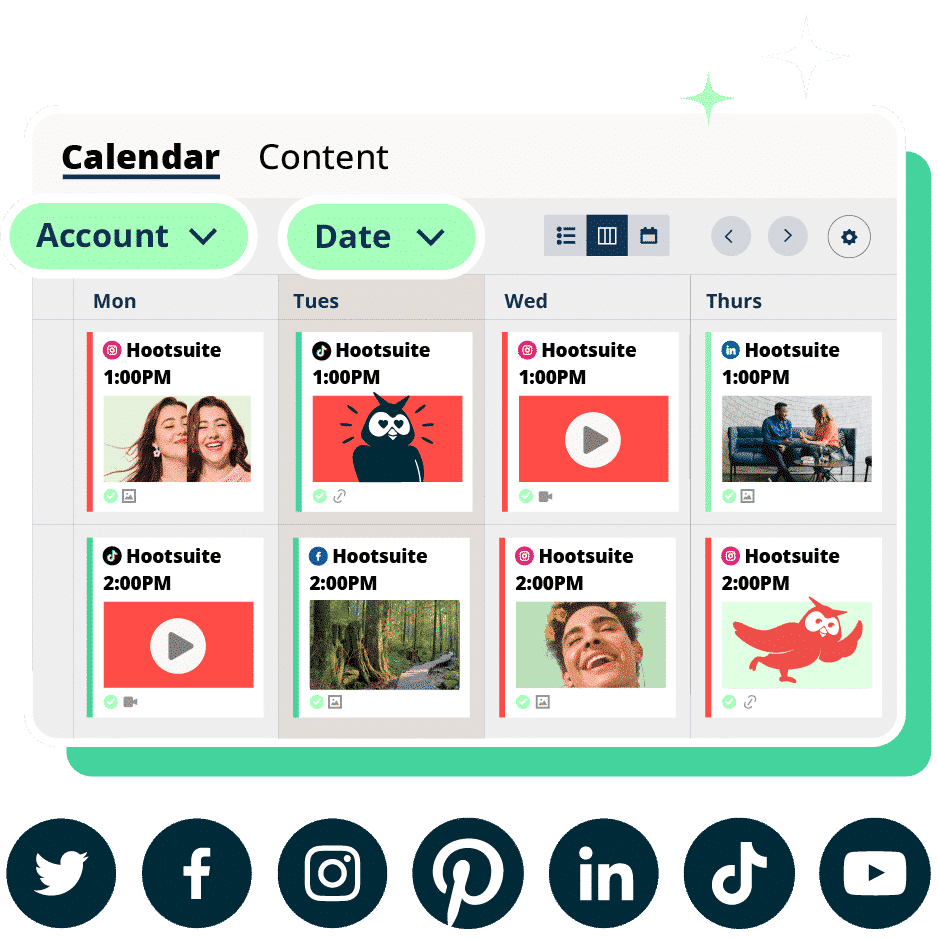
- The Integration Era (2020–Present): Today, advocacy is no longer a siloed activity. Leading platforms now integrate directly with CRM systems like Salesforce, communication tools like Slack and Microsoft Teams, and enterprise social media management suites. We have entered the era of "automated advocacy," where AI-driven content curation and gamification are used to maintain long-term employee interest.
Strategic Benefits: Why Brands Are Investing Now
The shift toward these tools is backed by compelling data. According to industry benchmarks, content shared by employees receives eight times more engagement than content shared by brand channels.
1. Enhanced Brand Credibility
Consumers are increasingly skeptical of corporate advertising. When an employee shares a company milestone or a piece of thought leadership, it acts as a "peer-to-peer" endorsement. This human-centric approach bridges the trust gap that traditional advertising often fails to overcome.
2. Talent Acquisition and Retention
For HR and recruitment teams, advocacy is a game-changer. Employees who share content about company culture, team achievements, and open roles act as magnets for top-tier talent. As demonstrated by the healthcare company DaVita, which utilized Hootsuite’s Parliament platform to drive a 136% increase in traffic to their careers site, the return on investment (ROI) in recruiting alone can justify the cost of the software.
3. Scalable Social Selling
For B2B organizations, employee advocacy is the foundation of modern social selling. By equipping sales teams with thought leadership content, companies ensure that their sellers remain top-of-mind with prospects, positioning themselves as industry experts rather than just vendors.
Top-Tier Tools: Analyzing the Market Landscape
Managing a successful program requires the right infrastructure. Below is a breakdown of the leading solutions currently available.
Enterprise-Grade Solutions
For large-scale organizations, the priority is governance, analytics, and seamless integration.
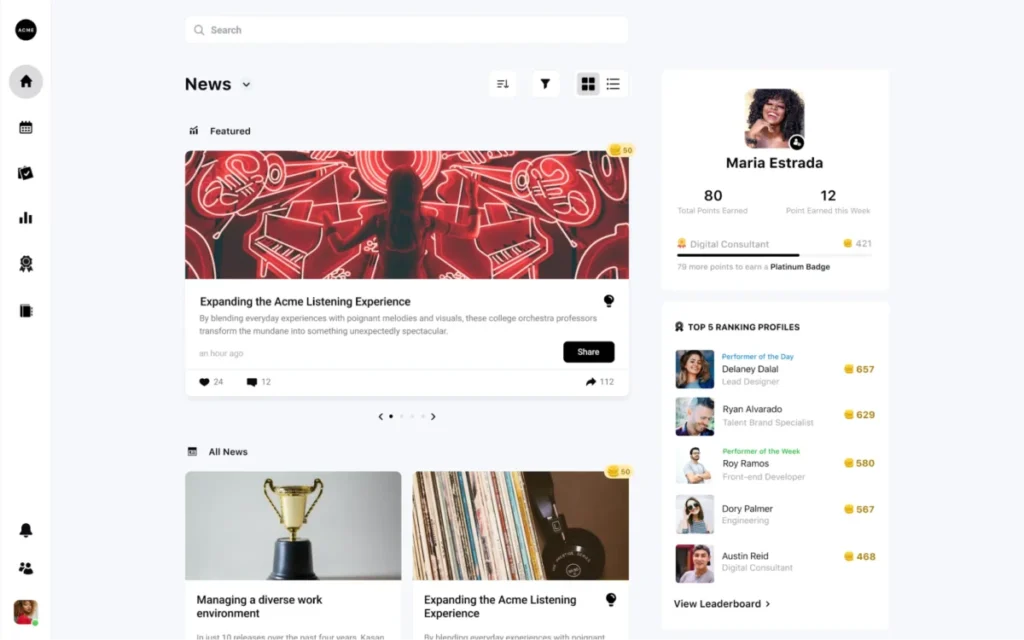
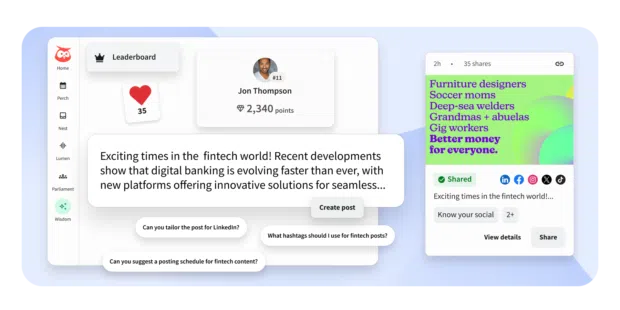
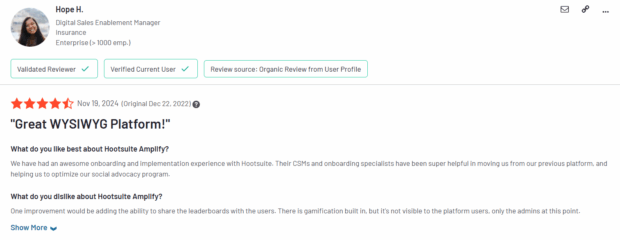
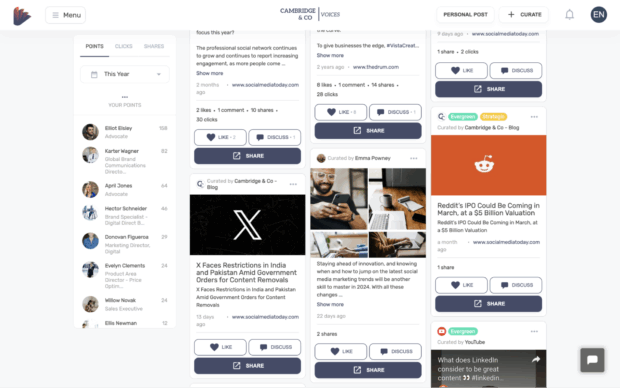
- Parliament by Hootsuite: A standout for enterprises, Parliament excels at collaboration. Its tight integration with Slack and Microsoft Teams means content is delivered exactly where employees work. Its built-in gamification features—such as leaderboards—are essential for maintaining engagement at scale.
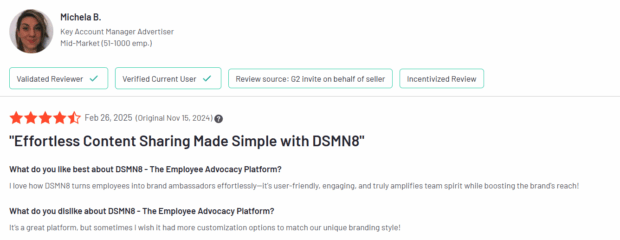
- DSMN8: Known for its sophisticated advocate segmentation, this platform is ideal for global brands with complex hierarchies. It allows administrators to target specific content to specific regions or departments, ensuring that the right message reaches the right audience.
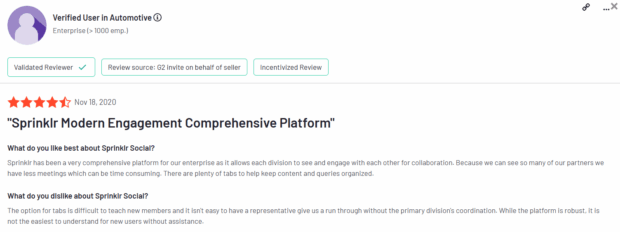
- Sprinklr: A comprehensive marketing suite that incorporates advocacy features. While it may lack the specialized, dedicated focus of a "pure-play" advocacy tool, its value lies in its ecosystem. For companies already using Sprinklr for customer service and social listening, adding advocacy is a natural extension.
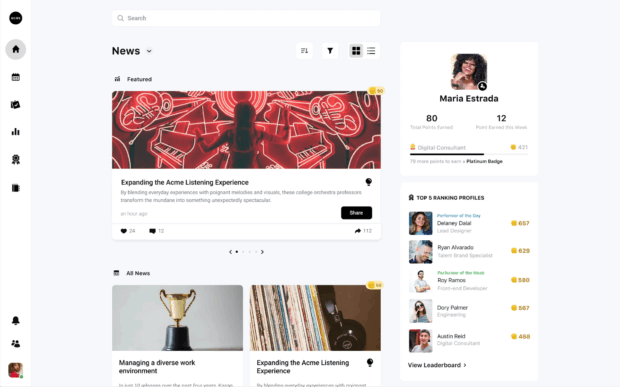
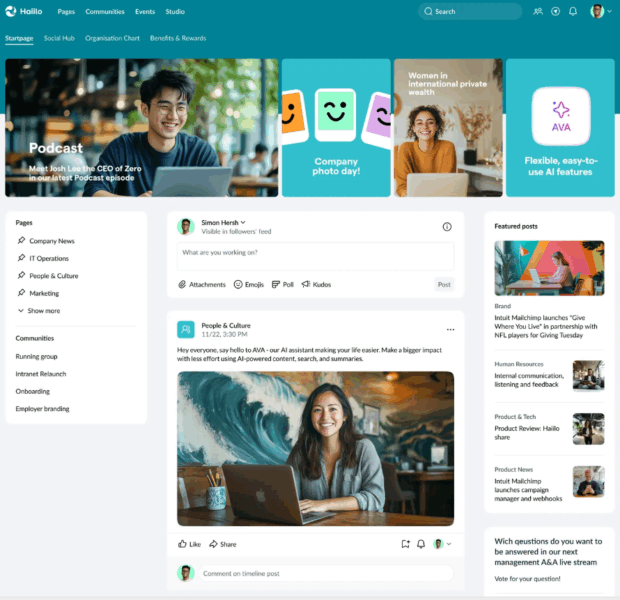
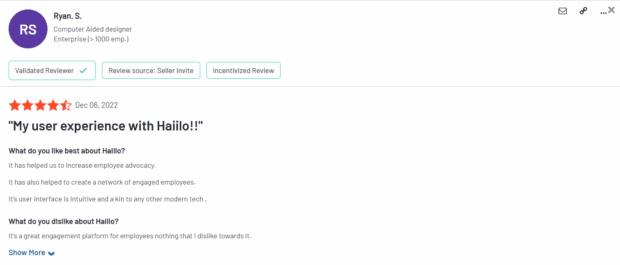
- Haiilo: Operating like an "internal social media app," Haiilo focuses on building community. It excels in environments where internal engagement is just as important as external reach.
Solutions for Small-to-Mid-Sized Teams
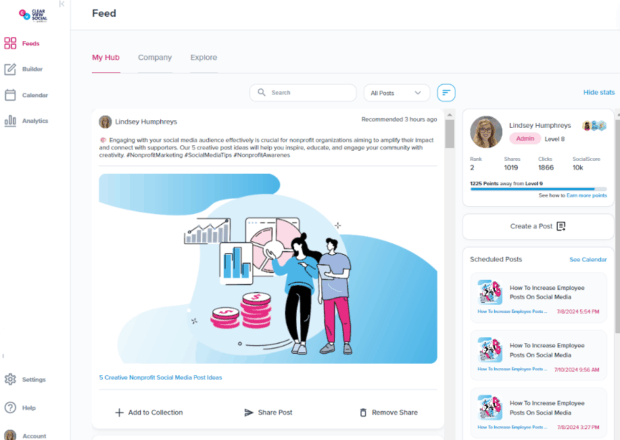
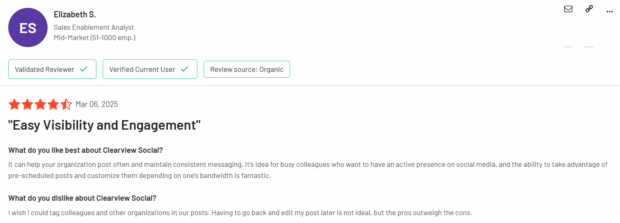
- Clearview Social: This platform is often praised for its ease of use. It offers a more accessible entry point for smaller teams who want to run a professional program without the overhead of a massive enterprise contract.
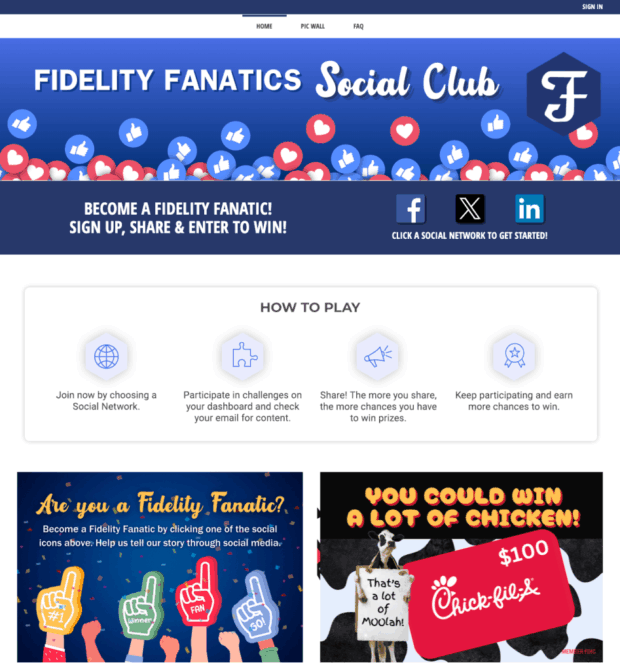
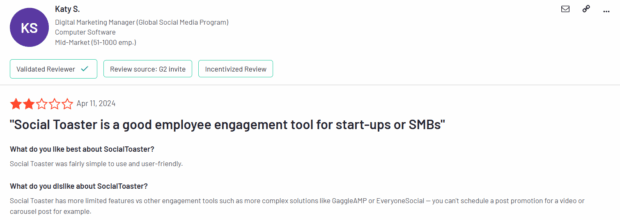
- SocialToaster: With a strong focus on gamification and rewards, this tool is designed to drive rapid adoption. It is particularly effective for brands that need to build momentum quickly through incentives.
The Agency Perspective
- GaggleAMP: For agencies looking to offer advocacy as a service to their clients, GaggleAMP is the clear leader. Its white-label reporting features and focus on helping individual employees create unique, on-brand content make it a powerful asset for agencies managing multiple client programs.
Optimizing for Engagement: Expert Insights
Technology is only half the battle. To ensure the success of an advocacy program, administrators must focus on the human element. We consulted with industry experts to identify the pillars of a successful program.
The "Why" Factor
Kim Snow, Head of Demand Generation at TeamOhana, emphasizes that the biggest mistake managers make is failing to explain the "why." Employees need to understand that their social activity is a form of personal branding. When they share company content, they are building their own professional reputation as an expert in their field.
Reducing Friction
"Make it as easy as possible," says Snow. If a task takes more than two clicks, participation will drop. Modern tools solve this by providing pre-written copy and mobile-friendly interfaces. By removing the guesswork, managers ensure that busy employees can contribute in seconds during a commute or a coffee break.
Executive Modeling
Laura Moss, a seasoned content marketer, notes that the C-suite must lead by example. "Your executives should be the most active participants. When employees see their leadership team sharing, liking, and commenting, it signals that advocacy is a company priority, not just a marketing project."
Identifying Natural Advocates
Don’t try to force every employee to post. Instead, use social listening tools to identify those who are already vocal about the company. These "natural advocates" should be your first recruits. By empowering them to lead, you create a grassroots movement that is far more sustainable than a top-down mandate.
Implications for the Future
The future of employee advocacy lies in the marriage of AI and authentic human connection. We are already seeing the emergence of "AI Paraphrase" features, which help employees put their own unique spin on corporate messaging, ensuring that the brand’s reach doesn’t come at the cost of authenticity.
As we move forward, the metric of success will shift from simple "vanity metrics" like likes and shares toward deeper business outcomes: lead generation, conversion rates, and long-term employer brand health.
Companies that treat their employees as partners rather than just another marketing channel will be the ones to win the digital attention war. By investing in the right tools and fostering a culture of genuine advocacy, businesses can turn their most valuable resource—their people—into their most powerful megaphone.
