
The Real-Time Revolution: Hootsuite Unveils “Social OS” to Redefine AI-Driven Marketing
Eighteen years after pioneering the social media management category, Hootsuite is undertaking its most radical transformation to date. As of June 2026, the company has officially retired its legacy architecture in favor of a new, unified platform: Hootsuite Social OS.
The shift marks a philosophical departure from traditional social media management. Instead of focusing on historical analytics—the "last quarter’s data" trap—Hootsuite is betting its future on real-time signal processing. Under the leadership of returning CEO and co-founder Ryan Holmes, the company has rebuilt its technological stack to prioritize live market intelligence over static reporting.
Main Facts: The Shift to a "Social-First" Operating System
The launch of Social OS is not merely a feature update; it is a fundamental architectural overhaul. For nearly two decades, Hootsuite functioned as a suite of tools designed to help brands "show up." Today, the brand is repositioning itself as an intelligence-led engine designed to help brands "act" in the moment.
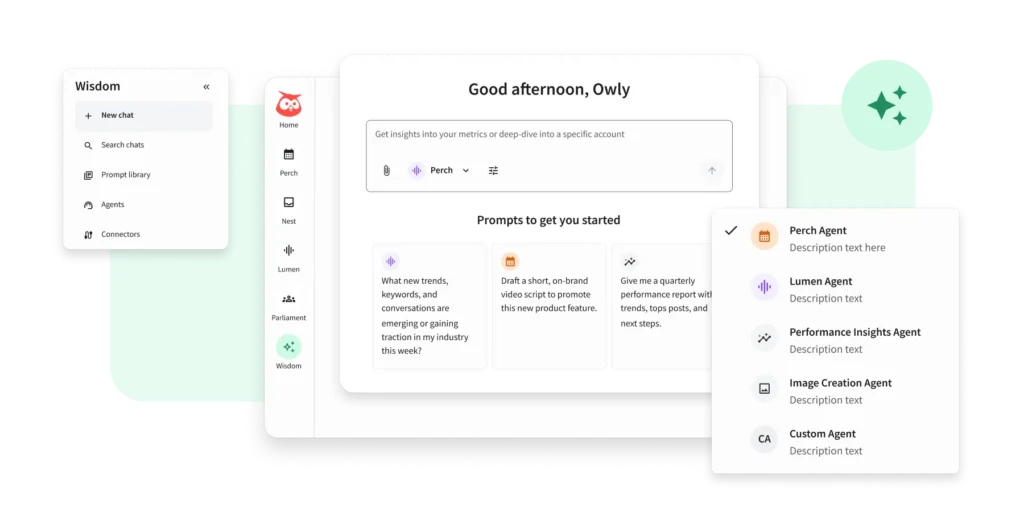
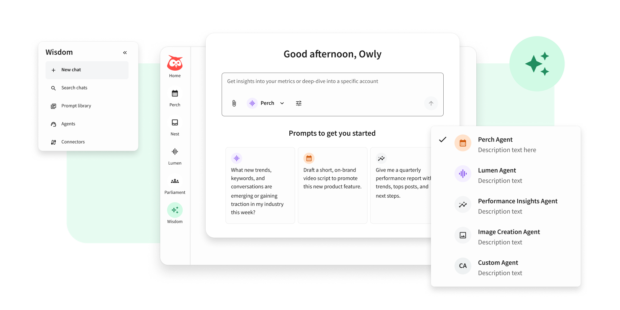
The new ecosystem consolidates four core functional areas—publishing, customer care, advocacy, and intelligence—into a single, interconnected system. At the center of this system lies Wisdom, a proprietary, social-first AI agent. Unlike general-purpose language models that are limited by training cut-off dates, Wisdom is engineered to ingest and synthesize live social data across 150 million sources and 187 languages.
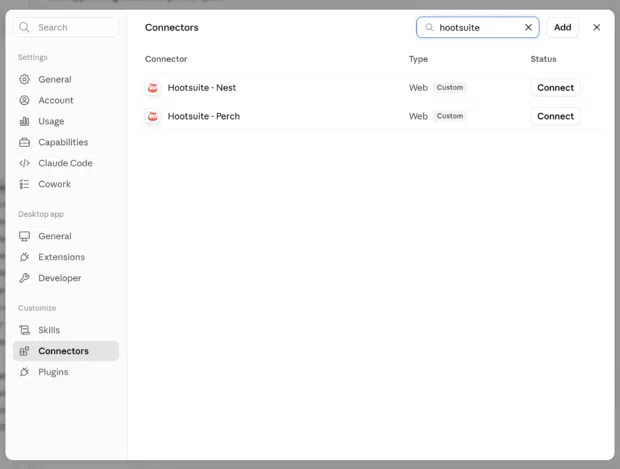
By integrating the Model Context Protocol (MCP), Hootsuite has effectively moved to a "headless" model. This allows social media data and AI-driven insights to flow directly into external workflows, such as Claude, ChatGPT, and enterprise-grade copilots, eliminating the need for teams to toggle between browser tabs to access actionable intelligence.
A Chronology of Transformation
The seeds for this pivot were sown long before the 2026 launch. To understand the gravity of this change, one must look at the timeline of the company’s evolution:
- 2008: Hootsuite is founded to solve the fragmentation of social channels, focusing on the ability to schedule and monitor posts in one place.
- 2024–2025: As the generative AI boom takes hold, Hootsuite experiments with bolt-on AI features like OwlyGPT and Yeti. The company realizes these are insufficient, as they often rely on stale data.
- Early 2026: Ryan Holmes returns to the CEO chair. Upon his arrival, a rigorous audit of the platform leads to the decision to "take apart products that worked."
- June 2026: The official launch of Hootsuite Social OS. The platform is completely re-architected to prioritize live, "signal-first" data, moving beyond the traditional dashboard model.
Supporting Data and the "Signal Gap"
The primary driver behind this overhaul is what Holmes describes as the "Signal Gap." In the current market, most AI vendors promise intelligence but deliver simple pattern recognition based on public data that is often weeks or months old.
Hootsuite’s competitive advantage lies in its eighteen-year history of social data accumulation. By leveraging this vast historical context in tandem with a live stream of global social interactions, the company is attempting to close the gap between what was and what is.
Key Components of the New Ecosystem:
- Wisdom: A centralized AI agent that moves beyond summarization to provide predictive and actionable advice. By replacing disparate tools (OwlyGPT and Yeti) with a single agent, the user experience becomes conversational rather than task-based.
- The Four Pillars of Social OS:
- Lumen: Real-time social listening.
- Perch: Centralized content history and management.
- Nest: Integrated customer conversation and care.
- Parliament: Scaled advocacy reach.
- MCP Connectors: The integration of the Model Context Protocol allows for a "headless" interaction. This is a critical development for enterprise teams that are increasingly relying on private AI agents and internal copilots to drive marketing strategy.
Official Responses and Strategic Intent
In his public statement, CEO Ryan Holmes addressed the risks of such a massive overhaul. "We took apart products that worked," Holmes noted. "Not because they were broken, but because ‘working’ wasn’t going to be enough for what’s coming. I’d rather risk confusion now than wake up irrelevant later."
The company is adopting an unusually transparent, iterative approach to this rollout. Rather than presenting the platform as a "finished" product, Holmes has invited public feedback via LinkedIn, asking users to identify which legacy features are critical to their daily operations. This strategy reflects a growing trend among SaaS leaders: acknowledging that the rapid pace of AI advancement requires a partnership between the developer and the end-user.
The Implications for the Marketing Industry
The release of Hootsuite Social OS signals a broader shift in the digital marketing landscape. We are moving away from the era of "Social Media Management" and into the era of "Social Media Intelligence."
1. The Death of the Dashboard
For years, the industry has measured success by how many tabs a social media manager can keep open. Hootsuite’s move toward MCP-based integrations implies that the future of work is not in a proprietary dashboard, but in the AI agents that assist us. By letting the "signal" flow into other platforms, Hootsuite is acknowledging that its value lies in the data, not just the interface.

2. Real-Time vs. Historical Intelligence
Marketing teams that rely on monthly reports will likely find themselves at a disadvantage against competitors utilizing real-time, signal-based platforms. The ability to identify a narrative "before anyone on your team flags it" is becoming the gold standard for brand management. In a world where trends emerge at lunch and vanish by dinner, the speed of information processing is now the primary competitive differentiator.
3. The Consolidation of Roles
By unifying publishing, care, and intelligence under a single AI layer, Hootsuite is forcing the hand of siloed marketing departments. The "Social OS" model necessitates a cross-functional approach; a customer service complaint (Nest) is no longer a separate ticket from a brand health analysis (Lumen). Everything is connected through the Wisdom AI layer.
4. The Challenge of Adoption
While the technical leap is significant, the human factor remains. For many marketing teams, the shift to a headless, agent-based workflow will require a substantial change in internal culture. Teams will need to learn how to "prompt" their social media operations rather than manually executing them.
Conclusion: A New Standard?
Whether this bold gamble pays off remains to be seen. By effectively breaking their own product to rebuild it from the ground up, Hootsuite is attempting to future-proof its relevance in an industry that has been significantly disrupted by the democratization of AI.
The success of Social OS will not be measured by the sophistication of its algorithms alone, but by how effectively it can bridge the gap between "knowing" and "doing." As Ryan Holmes noted, the company is still in the "first wave" of this evolution. For marketing leaders, the message is clear: the era of static, retrospective social media management is ending. The era of the live, AI-driven signal has begun.
For those looking to adopt the new model, Hootsuite is currently offering demos and trial access to the Social OS suite, marking the beginning of a high-stakes transition for one of the industry’s oldest and most influential players.
