
Beyond the Checkout: Why HubSpot is Becoming the Operating System for Modern Ecommerce
When entrepreneurs envision launching an ecommerce business, their minds typically drift toward the storefront—the digital shop window where products are displayed and transactions are finalized. Naturally, platforms like Shopify, BigCommerce, or WooCommerce dominate that initial thought process. However, a growing cohort of savvy business leaders is discovering that the true competitive advantage in ecommerce isn’t found in the storefront itself, but in the "customer brain" behind it: HubSpot CRM.
While many companies stumble upon HubSpot only after their business has outgrown its initial, disjointed software stack, a more strategic approach involves integrating HubSpot’s ecosystem from the outset. By acting as the central nervous system for customer interactions, HubSpot transforms ecommerce from a simple transaction-based model into a relationship-driven growth engine.
The Paradigm Shift: From Storefront to Customer Engine
In the traditional ecommerce landscape, companies often operate a "franken-stack" of disparate applications. One tool handles the inventory, another manages email marketing, a third tracks support tickets, and a fourth attempts to analyze customer behavior. This fragmentation creates data silos, preventing brands from understanding the full arc of the buyer’s journey.
HubSpot CRM disrupts this by acting as the operating system for every customer interaction that occurs outside the immediate checkout event. It logs browsing behavior, monitors deal progression, synchronizes email communications, and—most importantly—attributes chat interactions directly to revenue. This holistic visibility allows businesses to see a complete, chronological timeline of every buyer’s engagement, a feature that remains remarkably rare in the broader ecommerce software market.
Supporting Data and Case Studies
The efficacy of this integrated approach is backed by measurable results. Take, for example, the luxury watchmaker CODE41. By leveraging a unified HubSpot stack to synchronize their marketing, sales, and service efforts, the brand saw a 257% increase in sales, a 223% boost in total revenue, and a 279% growth in lead generation. These figures aren’t just vanity metrics; they represent the power of having a single source of truth for every customer touchpoint.
Chronology of Integration: How HubSpot Powers Growth
The transition to a HubSpot-centered ecommerce strategy usually follows a distinct evolutionary path.
1. The Foundation: The CRM "Brain"
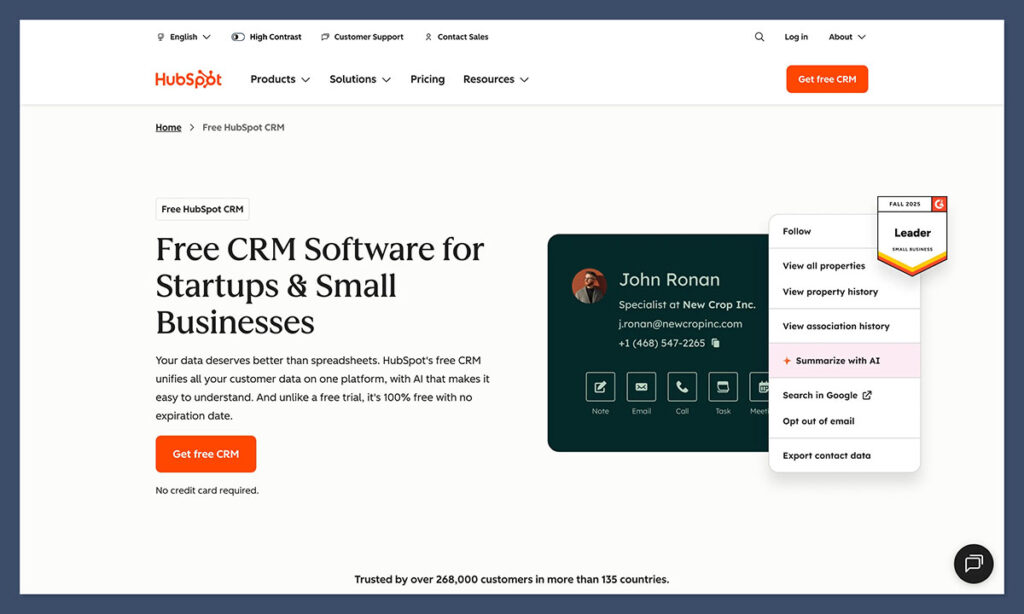
The journey begins with the CRM account. Even in its free iteration, it provides the essential architecture for contact management, list segmentation, and basic pipeline visualization. By centralizing the customer record early, businesses ensure that every subsequent interaction—whether via email, web activity, or customer support—is attached to a single, evolving profile.
2. The CMS and Commerce Layer
With the CRM as the anchor, the next step involves the CMS. HubSpot’s CMS is designed for modularity, allowing teams to build conversion-optimized pages without requiring extensive development resources. When the CMS talks to the CRM, the "eerie but useful" intelligence begins: you can track exactly which products a visitor viewed, where they abandoned their cart, and which FAQ pages they frequented before making a purchase.
3. Scaling Through Automation
Once the storefront is established, the focus shifts to automation. Real-world ecommerce is messy; customers are distracted, indecisive, and prone to abandoning carts. HubSpot’s automation tools allow brands to build complex, multi-stage workflows that recover revenue. A typical flow might involve:
- Cart Abandonment: Triggering a personalized email 30 minutes after a user exits.
- Pipeline Management: Automatically moving a customer to a "High Intent" stage in the CRM if they revisit a product page.
- Rep Follow-up: Assigning a task to a sales rep for high-ticket items.
The Benefits of a Unified Platform
The advantages of this ecosystem extend far beyond simple data tracking.
Deep Inbound Marketing Integration
Most ecommerce stores treat content marketing and sales as separate functions. HubSpot bridges this gap. By tracking how a blog post on "How to Choose the Right Product" leads to a specific purchase weeks later, teams can quantify the ROI of their content efforts. This visibility allows marketers to stop guessing and start doubling down on the content that actually moves the needle.
Frictionless Payments and Quoting
For businesses operating in the B2B or high-touch B2C space, the "send a PDF and pray" method of quoting is archaic. HubSpot Payments allows businesses to embed "buy" buttons directly into quotes, emails, and landing pages. When a customer clicks, the payment is processed, the CRM is updated, and the customer is automatically enrolled in an onboarding sequence. This transition from "quote" to "customer" happens without a single manual data entry task.
AI as an Efficiency Multiplier
HubSpot’s approach to AI is grounded in utility rather than hype. The AI tools are designed to eliminate the "blank page" problem—drafting marketing copy, generating meta descriptions, or suggesting workflow structures. By automating these repetitive, administrative burdens, lean teams can focus on high-level strategy and customer relationship building, allowing them to punch well above their weight class.
Official Perspective and Strategic Implications
From an executive standpoint, the implication of adopting HubSpot for ecommerce is a shift in organizational culture. Companies that use HubSpot effectively stop thinking about "transactions" and start thinking about "lifetimes."
The platform essentially forces a business to standardize its data. By requiring clear product naming conventions, consistent lead status tracking, and structured pipeline stages, it imposes a level of discipline that often exposes operational inefficiencies. While this can be a rigorous process initially, the long-term payoff is a scalable, data-driven organization that knows exactly why it is winning (or losing) customers.
Frequently Asked Questions
How does HubSpot compare to Shopify for ecommerce?
Think of Shopify as the "storefront engine"—it is optimized for the mechanics of selling products, managing inventory, and processing payments. HubSpot is the "customer engine." While they serve different primary purposes, they are not mutually exclusive. Many high-growth brands use Shopify for the storefront and HubSpot for the customer lifecycle management, creating a powerful, best-of-breed hybrid.
Can HubSpot run a complete store on its own?
For many businesses, yes. If your catalog is focused—such as digital products, coaching, kits, or a specialized B2B service—HubSpot’s CMS and Commerce Hub are more than capable of handling the entire transaction. However, for retail businesses with thousands of SKUs and complex physical logistics, a dedicated platform like Shopify is typically the better choice for the frontend.
Is HubSpot too expensive for small shops?
The barrier to entry is lower than many realize. By utilizing the free CRM and CMS tools, small shops can build a sophisticated foundation at zero cost. The pricing structure is designed to scale with your success; as your revenue grows, the investment in advanced automation and sales features typically pays for itself through increased conversion rates and improved customer retention.
Does HubSpot handle subscriptions and renewals?
Yes. Through Commerce Hub, HubSpot offers robust support for recurring payments. It tracks subscription status, manages renewal dates, and triggers automated workflows based on billing events, effectively removing the manual overhead that often plagues subscription-based models.
Conclusion: The Future of Ecommerce is Contextual
In an era where customer acquisition costs are rising and digital privacy regulations are making data harder to come by, the brands that win are those that leverage their first-party data most effectively.
HubSpot isn’t just a CRM; it is a repository of context. It remembers the user who clicked your ad on Monday, read your blog on Tuesday, and reached out via chat on Wednesday. When you finally nudge that user toward a purchase, you aren’t sending a generic promotion—you are providing a personalized recommendation based on their unique journey. This contextual awareness is the hallmark of modern ecommerce, and it is the primary reason why forward-thinking brands are placing HubSpot at the heart of their digital strategy.
