
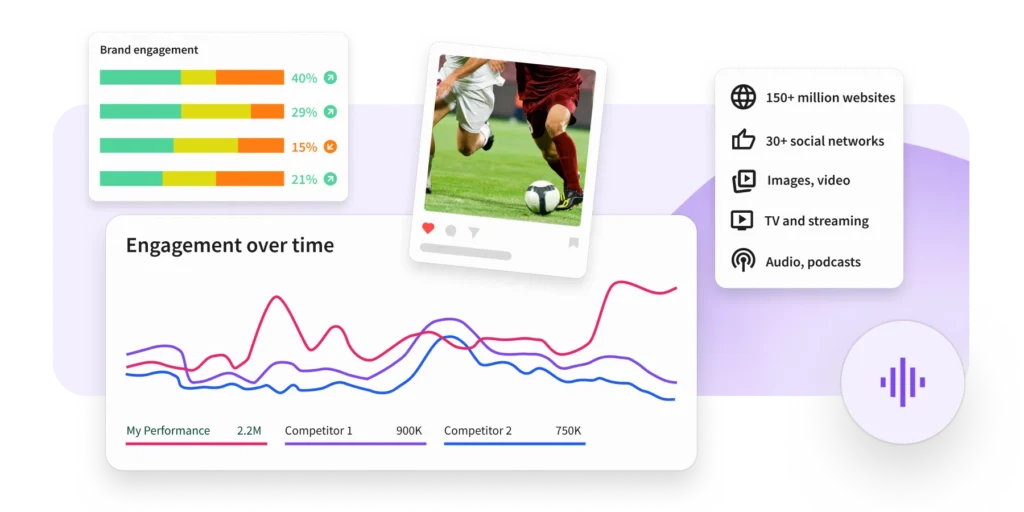
The Dawn of the AI-Native Era: Hootsuite Rebuilds Its Entire Ecosystem as "Social OS"
In a move that signals a seismic shift in the digital marketing landscape, Hootsuite has announced the total reconstruction of its platform. Moving away from the traditional dashboard model that defined the last decade of social media management, the company has unveiled "Hootsuite Social OS." This isn’t merely a feature update or a rebranding exercise; it is an architectural overhaul designed to transition social media management from a reactive, manual process into an AI-native, intelligence-driven workflow.
As social media velocity continues to outpace human capacity, Hootsuite is betting that brands can no longer rely on tools that treat AI as a secondary "add-on." Instead, the company has integrated artificial intelligence into the very foundation of its new suite, creating a cohesive operating system for the modern brand.

The Core Philosophy: AI-Native vs. AI-Augmented
To understand the magnitude of this release, one must distinguish between "AI-added" and "AI-built" platforms. Most contemporary tools rely on generative AI to summarize historical data or draft basic captions. While useful, these features remain siloed, disconnected from the real-time, chaotic pulse of social media culture.
Hootsuite’s "Social OS" operates on a different premise. By building AI-driven workflows at the kernel level, the platform ensures that data gathered in one application—such as a customer complaint in the inbox—can immediately inform a marketing strategy in the publishing tool. The "OS" framing is intentional: just as an operating system coordinates hardware and software to create a seamless user experience, Social OS connects listening, creation, engagement, and advocacy through a shared intelligence layer.

A New Taxonomy: The Five Pillars of Social OS
Hootsuite has reorganized its suite into five distinct, specialized applications, all themed around the brand’s iconic owl mascot. This naming convention is designed to reflect the functional purpose of each tool:
1. Wisdom: The Brain of the Operation
Wisdom serves as the central, social-first AI agent. Unlike a general-purpose chatbot, Wisdom is trained on live social signals, brand content history, and real-time customer conversations. It acts as the orchestrator for the entire suite, allowing users to ask plain-language questions—such as "What are the trending topics in our industry this morning?"—and receive cited, actionable answers. Wisdom effectively replaces the legacy "OwlyGPT" and "Yeti" tools, unifying them into a single, cohesive interface.
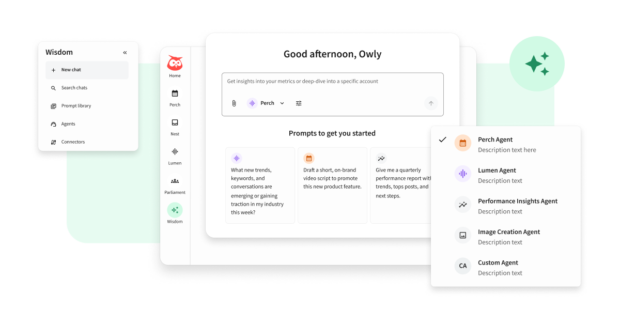
2. Perch: Intelligent Content Creation
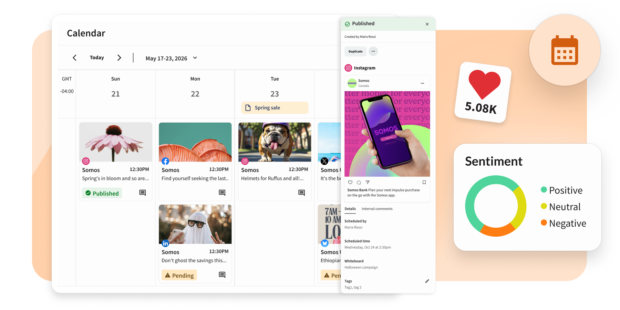
Perch is the evolution of Hootsuite’s core publishing engine. It leverages AI not just to write captions, but to infuse the creation process with intelligence derived from analytics. Users can generate posts, plan content calendars, and manage complex approval workflows across multiple platforms, all while receiving AI-driven suggestions on optimal timing and tone based on current market performance.
3. Nest: Next-Generation Social Inbox
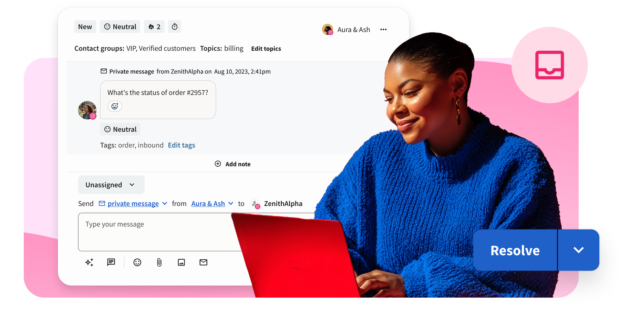
Formerly the Hootsuite Inbox, Nest is the frontline of customer care. In an era where a brand’s response time is a key differentiator, Nest uses AI triage to categorize incoming messages, suggest sentiment-appropriate responses, and automate routine interactions. This allows large-scale support teams to maintain strict Service Level Agreements (SLAs) even during periods of high message volume.
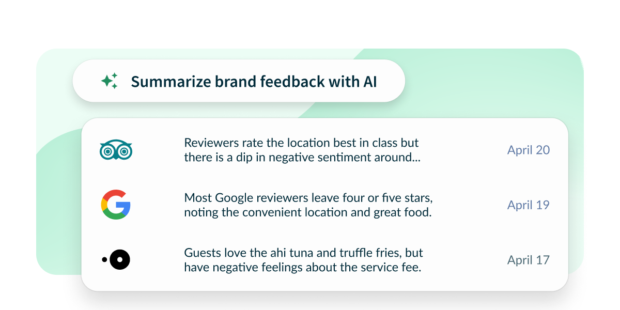
4. Lumen: Social Intelligence and Insights
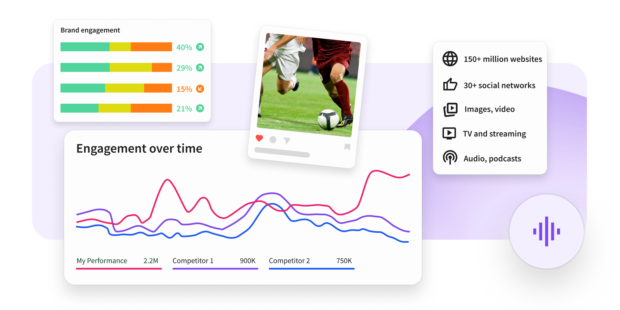
Lumen combines Hootsuite’s native analytics with the robust enterprise listening capabilities of Talkwalker. By unifying these tools, Lumen provides a 360-degree view of the brand’s market position. It processes 150 million sources in 187 languages, transforming raw social data into strategic intelligence that can be used to pivot marketing campaigns or identify emerging threats in real-time.
5. Parliament: Scalable Employee Advocacy
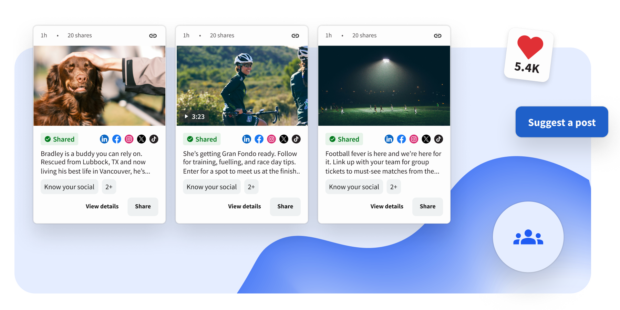
Replacing Hootsuite Amplify, Parliament is designed to turn employees into brand ambassadors. It provides a library of approved, shareable content that staff can distribute across their personal social channels. This expands a brand’s reach exponentially, bypassing the limitations of organic reach on official brand accounts.
The Power of Connectivity: MCP Connectors
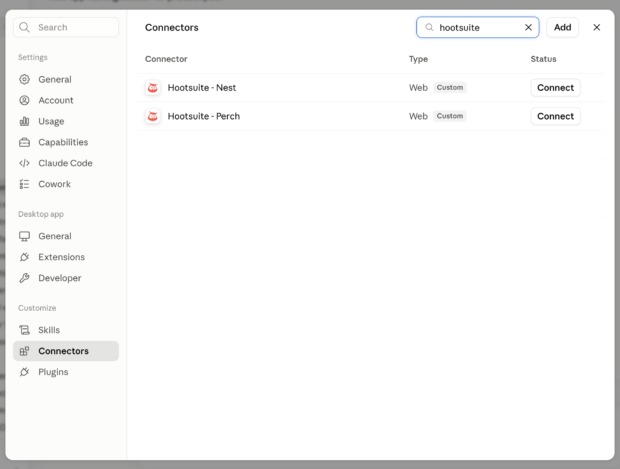
Perhaps the most innovative aspect of Social OS is the introduction of Model Context Protocol (MCP) connectors. Recognizing that modern teams often work across multiple AI tools, Hootsuite has made its social data accessible to external LLMs like ChatGPT and Claude.
For instance, a team using Claude to write a marketing strategy can now pull real-time data from Lumen or pull scheduling capabilities from Perch directly within their external AI workspace. This "open-ecosystem" approach acknowledges that the future of work is not centralized in one tool, but rather distributed across a connected web of intelligence.
Chronology of the Transformation
The transition to Social OS is the culmination of a multi-year strategic pivot.
- 2023-2024: Hootsuite begins the integration of generative AI through "OwlyGPT" and acquires the enterprise intelligence platform Talkwalker.
- Early 2025: Internal development shifts toward a unified, "AI-first" architecture, deprecating individual feature add-ons in favor of a cohesive OS model.
- Mid-2026: Official launch of the Social OS suite, the retirement of the "Amplify" and "Talkwalker" brand names in favor of the new, unified product structure.
Implications for the Industry
The shift to an AI-native operating system has profound implications for social media managers. Firstly, it effectively raises the bar for "competence" in the field. As mundane tasks like scheduling, basic triage, and simple trend-spotting are automated, the role of the social media manager shifts from "content creator" to "strategic orchestrator."
Secondly, it forces a change in the procurement process. Organizations are moving away from buying "point solutions" (one tool for listening, another for posting) toward buying integrated ecosystems. This favors larger platforms that can provide a unified data layer, potentially squeezing out niche competitors that cannot offer a holistic, AI-native experience.
Official Perspective and Future Outlook
In a statement regarding the launch, Hootsuite leadership emphasized that the rebuild was a necessity dictated by the market. "The world of 2026 is one where social media moves at a pace no human team can keep up with," a spokesperson noted. "If your tools aren’t built to detect and act on cultural signals in real-time, you aren’t just losing efficiency; you’re losing relevance."
The company has expressed confidence that the new architecture will allow for faster development cycles. Because the core OS is built on a shared intelligence layer, updates to Wisdom—the AI brain—will automatically propagate improvements to Perch, Nest, and Lumen, ensuring that the entire platform evolves in tandem.
Data-Driven Decision Making
The integration of 150 million data sources into the Lumen app is particularly significant. By bridging the gap between social listening and social monitoring, Hootsuite is attempting to capture the "intent" of the social user. Where traditional monitoring tracks mentions, the new intelligence engine seeks to understand the "why" behind those mentions, providing teams with the context necessary to make high-stakes business decisions.
Conclusion: A New Standard
Hootsuite’s transition to a Social OS marks a turning point in the software-as-a-service (SaaS) sector. By prioritizing deep, AI-native integration over superficial feature additions, the company is attempting to define the next generation of marketing technology.
For enterprise teams, the promise is clear: a reduction in operational friction, a boost in cross-functional intelligence, and the ability to scale output without linearly scaling headcount. For small-to-medium businesses, the benefit lies in the democratization of enterprise-grade intelligence, allowing solo creators to punch above their weight class by leveraging an AI engine that effectively acts as a full-time analytics and strategy department.

As the industry moves forward, the success of this "Social OS" will likely be measured by the speed at which it allows brands to move from signal to action. In the hyper-competitive landscape of 2026, those who can shorten that cycle will undoubtedly lead the market. Hootsuite has laid the tracks; now, it is up to the users to see how far the technology can take them.
