
The Architecture of Connection: Why the PRISM Model is the Future of Agentic Branding
Technology has undergone a fundamental metamorphosis. In the not-so-distant past, we operated with technology—we clicked, scrolled, and typed on static interfaces. Today, thanks to the rapid evolution of Artificial Intelligence, we operate within it. The digital landscape has become immersive, responsive, and, in many ways, eerily "alive." As interactions shift from transactional to conversational, AI is no longer just retrieving data; it is generating new context and creating content in real-time.
In this new paradigm, the communication between humans and brands has fundamentally changed. The rigid, one-way advertising of the 20th century has been replaced by fluid, AI-driven dialogue. This shift marks the dawn of the "Agentic Economy," a landscape that demands a radical rethinking of how brands establish, maintain, and project their personalities.
The Evolution of the "Lovemark" in an AI-Infused World
To understand the stakes, one must look at the concept of the "Lovemark," coined by marketing legend Kevin Roberts. Traditionally, a Lovemark was a brand that commanded loyalty beyond reason—a connection built on mystery, sensuality, and intimacy. However, the current era demands an update.
Arjan Kapteijns, former CEO of Saatchi & Saatchi Netherlands, has recently pushed this concept into the digital frontier by introducing "Agentic Lovemarks." The core premise is that in an era where AI agents act on our behalf—scheduling our meetings, recommending products, and negotiating deals—our emotional connections are no longer exclusively directed at humans. We are beginning to form emotional bonds with the digital proxies that facilitate our lives. For marketers, the challenge is no longer just human-to-human persuasion; it is about orchestrating emotional connections through the medium of the machine.
Chronology: From Archetypes to Algorithms
The history of brand personality is a history of trying to quantify the human soul.
- Early 20th Century: Psychology enters the marketing fray. Advertisers begin to realize that emotional resonance, rather than mere product features, is the true driver of long-term loyalty.
- The 2000s: The release of Margaret Mark and Carol Pearson’s The Hero and the Outlaw revolutionized the industry. Their 12-brand archetype model provided a rational framework for irrational consumer behavior. It gave marketers a vocabulary to define how a brand should look, talk, and act.
- The Present Day: The rise of Large Language Models (LLMs) and autonomous agents has rendered the traditional archetype model insufficient. While archetypes are excellent for broad positioning, they lack the granularity required for the nuance of real-time, 1-on-1 AI conversations.
The "Legible-Lovable" Paradox
The transition from static branding to agentic branding is not merely aesthetic; it is structural. Thomas Marzano, a veteran brand strategist known for his work with Philips and ASML, argues that in the agentic economy, brands must abide by the "Legible-Lovable Law."

A brand must be legible—meaning it must be structured in a way that AI can parse, interpret, and accurately represent in a conversation. Simultaneously, it must be lovable—retaining the human-centric warmth that drives consumer decision-making. If a brand is not "read" correctly by the AI, the resulting interaction will be generic, robotic, and emotionally void. To solve this, marketers need a new technical language. Enter the PRISM model.
Understanding the PRISM Model: A Deep Dive
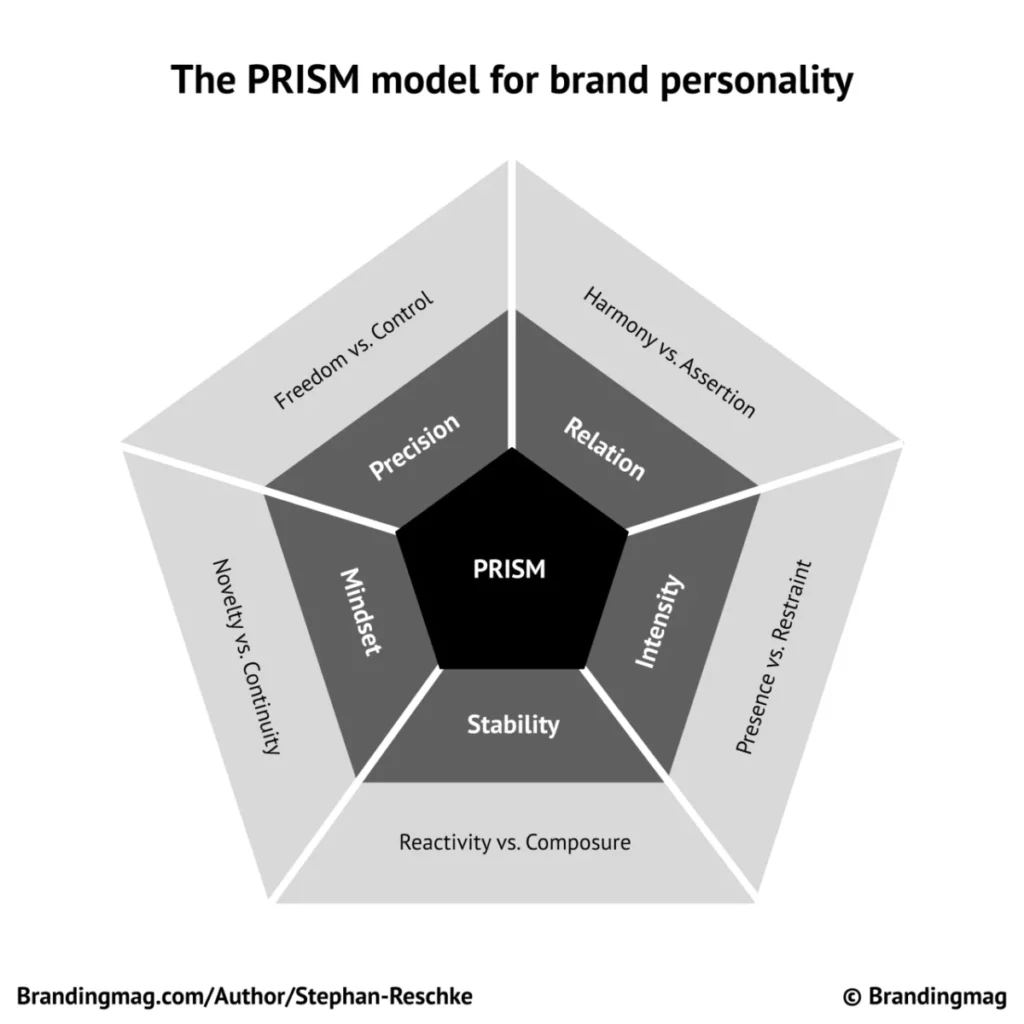
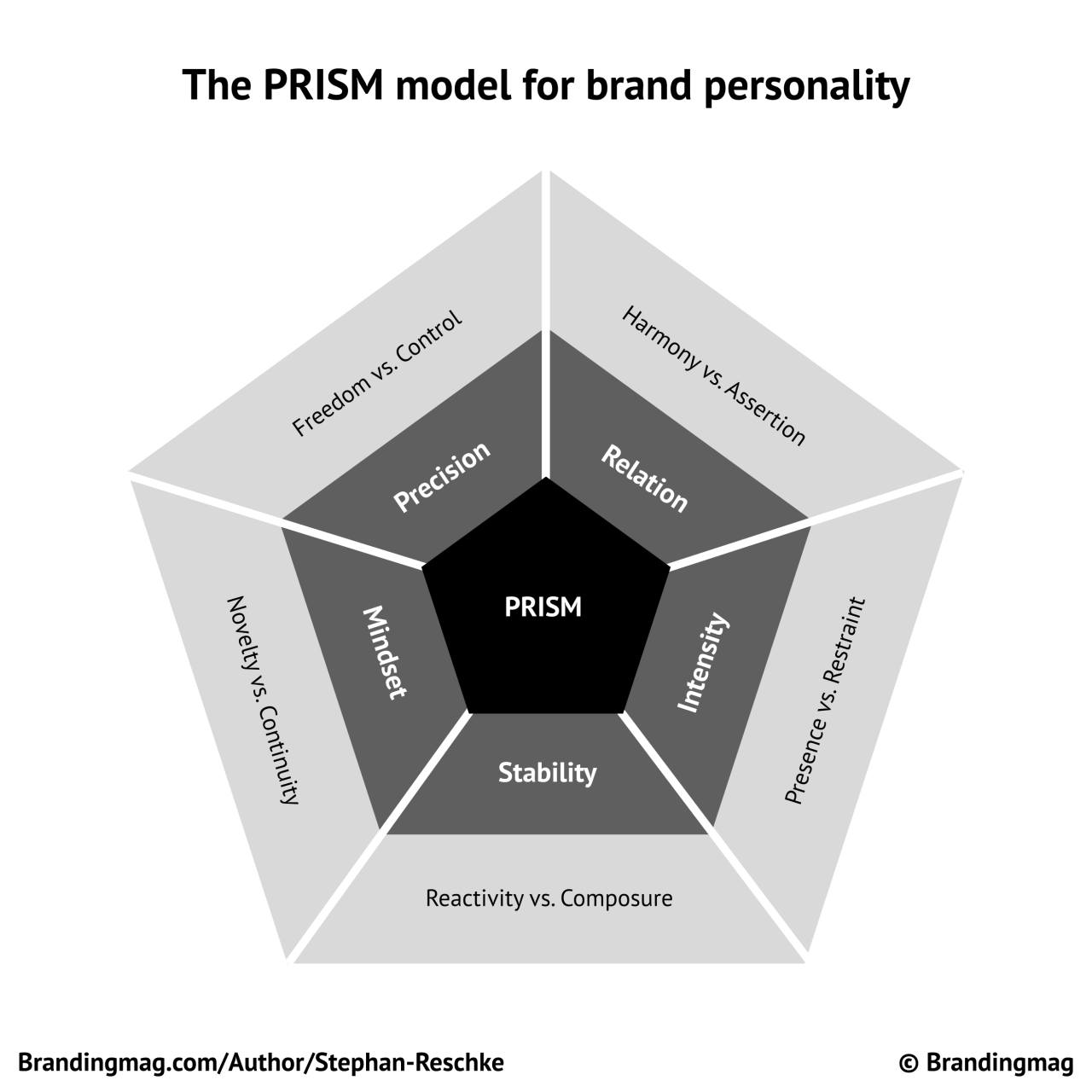
The PRISM model is designed to translate human-like personality traits into data structures that AI can process. Rather than relying on static archetypes, PRISM draws from the "Big Five" (OCEAN) personality framework, adapting it for the corporate entity.
The Five Core Domains of PRISM
- Perspective (Openness): Does the brand embrace innovation, experimentation, and complex ideas, or does it prefer consistency and traditional methods?
- Responsiveness (Conscientiousness): How does the brand manage reliability, organization, and goal-setting? This defines the "work ethic" of the digital agent.
- Interaction (Extraversion): Is the brand outgoing, energetic, and assertive, or is it reserved, thoughtful, and private?
- Sociality (Agreeableness): How does the brand handle empathy, trust, and cooperation? This determines the "kindness" of the AI’s tone.
- Maturity (Neuroticism/Stability): How does the brand handle high-pressure situations, conflict, or negative feedback? This defines the brand’s emotional resilience.
Each of these domains is composed of six distinct characteristics, evaluated on a sliding scale. This allows for a level of nuance that archetypes simply cannot provide. A brand might be "The Hero" archetype, but the PRISM model allows you to define how that hero speaks when they are tired, when they are challenged, or when they are celebrating a victory.
Implications for Future Brand Strategy
The adoption of the PRISM model signals a shift in the marketing department’s role. We are moving away from "campaign-led" marketing to "language-led" marketing.
Why Brand Language is the New Touchpoint
As voice-driven interfaces (like smart speakers, AI assistants, and wearables) become the primary interface for the internet, the visual brand is becoming secondary to the verbal brand. A brand’s "voice" is no longer just a tagline; it is a system of grammar, vocabulary, and tone that informs every interaction.
LLMs do not consume "brand campaigns" in the traditional sense. They consume context. By feeding the PRISM framework into system prompts, companies can ensure that their AI agents:
- Maintain Consistency: Whether the customer is in London or Tokyo, the brand’s "personality" remains stable because the underlying data parameters are constant.
- Adapt to Context: The AI can adjust its tone based on the user’s intent without losing the brand’s core essence.
- Scale Intimacy: By defining the "digital soul" of a brand, businesses can provide personalized, 1-on-1 experiences at a global scale.
The "Experience Engine" and the Path Forward
The PRISM model serves as the fundamental layer of the "Experience Engine." This engine is the technological infrastructure that allows a brand to manifest in real-time, on-demand. By creating a machine-readable, human-feeling personality, brands move closer to becoming true Agentic Lovemarks.
The transition to this model is not without its anxieties. The idea of ceding control of a brand’s personality to an algorithm is daunting for traditional marketers. However, the anxiety stems from the unknown. The only way to navigate this shift is through active experimentation, rigorous testing, and an open exchange of ideas across the industry.
Conclusion: Embracing the Agentic Era
The future of branding will be defined by those who can bridge the gap between technical legibility and human emotional connection. We are entering an era where our brand interactions are as complex as our human relationships.
The PRISM model is more than just a classification system; it is a roadmap for navigating this complexity. It acknowledges that while the tools of our trade have changed, the fundamental human desire for connection remains the same. The conversations have already begun. The machines are waiting for their instructions—and the brands that define their "digital souls" with clarity and precision will be the ones that thrive in the decades to come.
It is time to move beyond the archetype and start building the agents of the future.
