
Beyond the Silo: How Data-Driven Intelligence is Revolutionizing Brand Partnerships
In the modern marketing landscape, the question, "How do I identify the most effective partnerships to reach our brand goals?" is no longer answered by gut instinct or surface-level vanity metrics. For decades, the marketing playbook operated on a rigid, categorical assumption: beauty lovers only care about makeup, gamers only care about hardware, and foodies only care about recipes. However, the rise of granular social video intelligence has dismantled these silos, revealing that today’s consumers are not singular archetypes—they are multidimensional individuals with overlapping, often surprising, passions.
As brands scramble to find authentic ways to break through the digital noise, the most successful campaigns are increasingly defined by "cross-category partnerships"—collaborations that bridge seemingly disparate industries to reach audiences in high-intent, unexpected environments.
The Death of Traditional Targeting
Traditional demographic targeting is becoming a relic of the past. When marketers rely on broad, predefined audience buckets, they miss the nuanced behavioral signals that social video platforms capture daily. By leveraging sophisticated social video analytics, brands can now observe what their core audience does when they aren’t interacting with their specific category.
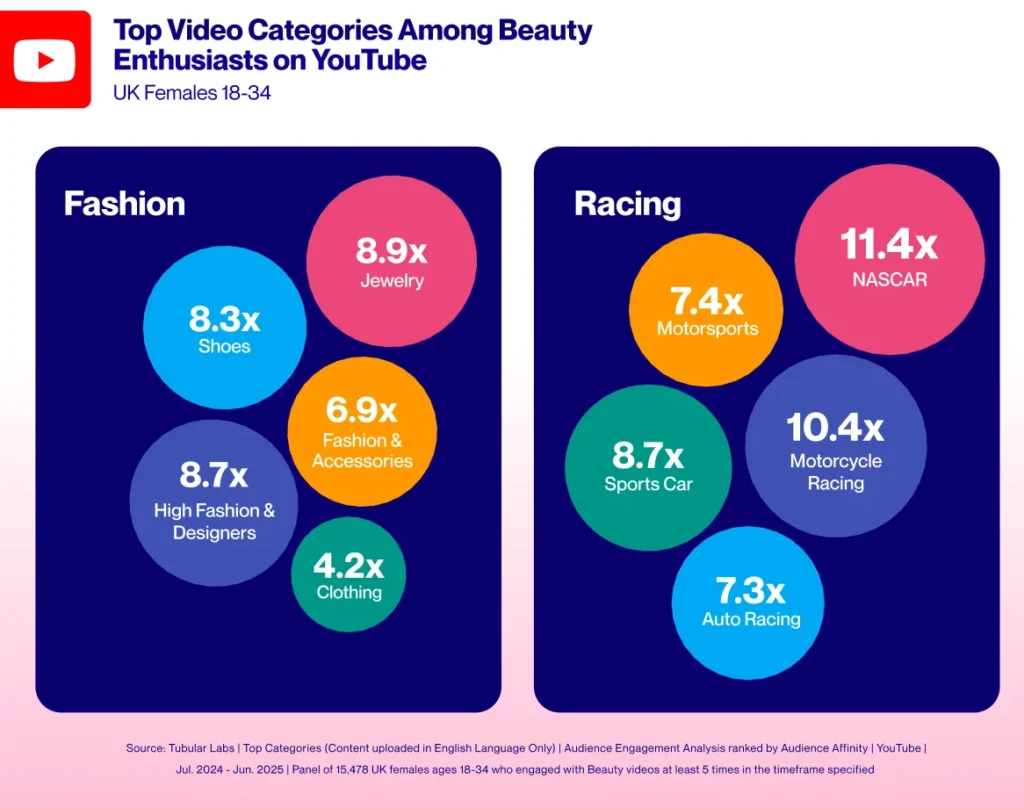
For example, when analysts examined the consumption habits of UK-based beauty viewers on YouTube, the data revealed an obvious affinity for fashion and jewelry. However, the data also illuminated a hidden, high-affinity overlap: racing and motorsports. This revelation serves as a prime example of how data-driven insights can shift a brand’s entire partnership strategy from a "guess-and-check" model to a precision-based growth engine.
Chronology of a Paradigm Shift: When Beauty Met the Track
The intersection of beauty and motorsports was not a random experiment; it was a move backed by hard intelligence. Tubular Labs’ data demonstrated that UK female beauty viewers were 11.4 times more likely to engage with motorsports content than the average viewer. This statistical anomaly signaled a massive, untapped opportunity for brands willing to step outside their comfort zones.

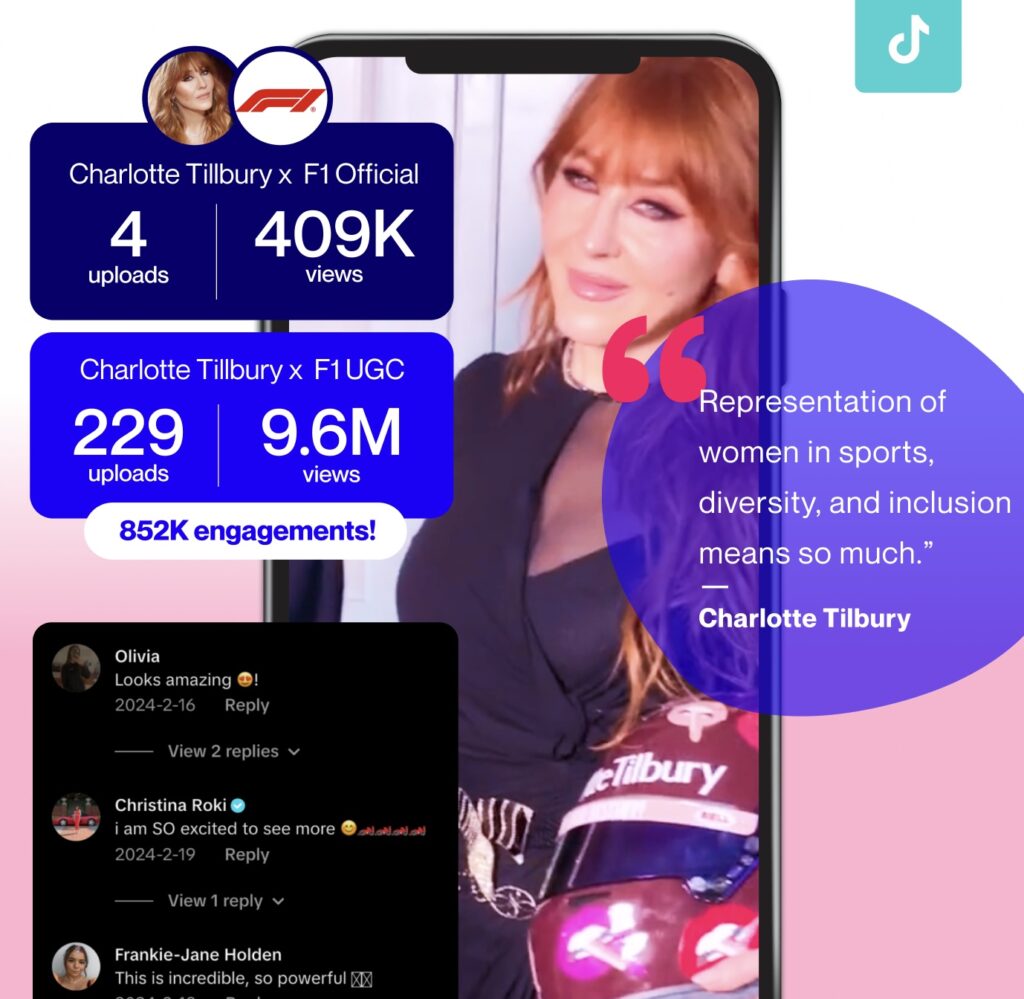
Charlotte Tilbury x Formula 1 Academy
The decision by Charlotte Tilbury to partner with the Formula 1 Academy marked a historic milestone as the first beauty brand to enter this space. The collaboration was a masterclass in aligning brand values with audience passion points. By moving away from traditional lifestyle media and into the high-octane world of competitive racing, the brand achieved:
- Massive Reach: Millions of impressions generated through unique content placements that felt organic to the racing environment.
- Cultural Relevance: By supporting the F1 Academy, the brand positioned itself as a champion of female empowerment in a male-dominated sport.
- Measurable Conversion: The partnership translated into a tangible spike in engagement, proving that beauty consumers are not just interested in aesthetics, but in performance, grit, and the thrill of the race.
Gaming Meets Glamour: The Fenty Effect
The second major shift in cross-category marketing involves the gaming sector. For years, the gaming industry was incorrectly perceived as a male-dominated sphere, leaving a significant portion of the audience underserved. Data analytics, however, told a different story: female gamers display strong, recurring affinities for luxury and mass-market beauty brands such as YSL, NYX, and L’Oréal.
The Riot Games x Fenty Beauty Collaboration
When Riot Games teamed up with Fenty Beauty to create a limited-edition makeup collection inspired by the hit Netflix series Arcane, the results were nothing short of viral. The campaign was not merely a product launch; it was a cultural event that invited the audience to participate in the storytelling of the game.
The implications for the industry were clear: partnerships thrive when they transition from passive consumption to active participation. By integrating Fenty’s artistry with the immersive world of Arcane, the collaboration effectively captured the attention of a highly engaged, "digital-native" audience that rarely responds to traditional banner ads or standard influencer marketing.
Supporting Data: The Power of Cross-Pollination
The success of these campaigns is grounded in the ability of data to identify "affinity clusters." These clusters are groups of content topics that a specific audience consumes with high frequency.
Consider the "Food and Nostalgic Entertainment" intersection. Recent research indicates that cookware brands leveraging the power of beloved, long-running pop culture franchises are seeing exponential growth in their video reach. By analyzing engagement rates, watch time, and shareability, brands can determine which nostalgic properties share the same audience demographic as their product line. The result? A content strategy that bridges the gap between a consumer’s daily chores (cooking) and their emotional safe spaces (entertainment).
Official Industry Perspectives and Strategic Frameworks
Industry leaders are increasingly adopting a standardized framework to identify these high-value partnerships. Marketing analysts suggest a four-step process for brands looking to pivot toward intelligence-led collaborations:
- Map the Audience DNA: Use video intelligence to identify the top 10 categories your current audience engages with outside of your own brand.
- Identify the "Bridge" Content: Find creators or channels that exist at the intersection of these two categories. These "bridge" creators serve as the perfect conduit for your brand to reach new, untapped segments.
- Align on Value, Not Just Reach: The best partnerships are not just about who has the most followers; they are about which partner shares the same audience mindset. If your audience values sustainability, your partner must demonstrate it.
- Measure Beyond Views: Look at long-term engagement metrics, such as repeat view rates, sentiment analysis, and social velocity, rather than focusing on fleeting, one-time view counts.
Implications for the Future of Marketing
The transition toward data-driven, cross-category partnerships has profound implications for how brands allocate their budgets. As the cost of customer acquisition (CAC) continues to rise across traditional social channels, the ability to find "unexpected" partners becomes a competitive advantage.
Brands that ignore this data risk becoming siloed in echo chambers. Conversely, brands that embrace this intelligence can build a robust ecosystem of partnerships that feel authentic to the consumer. The goal is no longer to interrupt the user experience but to become an integral part of the content that users are already seeking out.
The Bottom Line
Whether it is the high-speed world of Formula 1 or the immersive fantasy of Arcane, the data is clear: audiences are not one-dimensional. They are complex, multifaceted, and waiting for brands to meet them in the places they least expect.
As we look toward the future, the winners will be the marketers who stop relying on "traditional" targeting and start listening to what the data is actually saying. By leveraging social video intelligence, brands can move from being observers of the conversation to being active participants in the cultural moments that matter most to their audience.
For those looking to gain a competitive edge, the path is clear: start by looking at where your audience goes when they leave your category. You might be surprised by what you find—and by the massive growth potential waiting in those unexpected corners of the digital world.
