
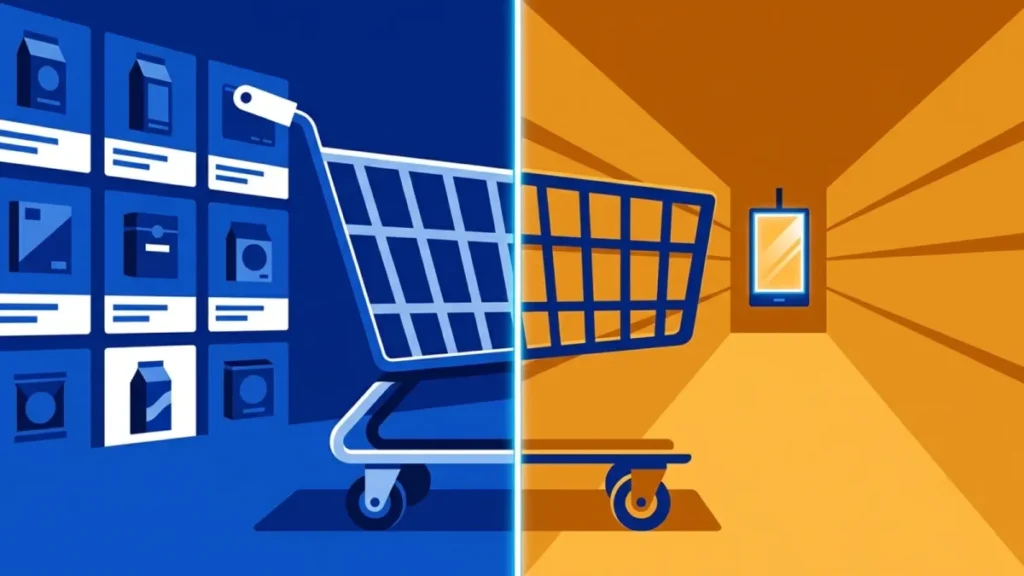
Bridging the Digital-Physical Divide: Broadsign and Mirakl Ads Unveil Omnichannel Retail Media Integration
CANNES, France — The 73rd Cannes Lions International Festival of Creativity served as the backdrop for a significant shift in the retail media landscape this week. On June 24, 2026, Broadsign and Mirakl Ads announced a strategic partnership designed to dissolve the long-standing technical and operational barriers between e-commerce advertising and in-store digital out-of-home (DOOH) campaigns.
By integrating their respective technology stacks, the companies aim to offer retailers a unified planning and reporting framework. This collaboration arrives at a critical juncture, addressing the mounting pressure from advertisers who are increasingly frustrated by the need to manage fragmented vendor relationships to reach consumers across the entirety of the shopper journey.
The Architectural Shift: Commerce Logic Meets Screen Delivery
The partnership represents a convergence of two previously distinct ecosystems. Mirakl Ads, the retail media arm of the "intelligent commerce" operating system Mirakl, brings its prowess in marketplace monetization, commerce logic, and e-commerce placements. Conversely, Broadsign, the Montreal-based powerhouse of out-of-home media, provides the technical backbone for over 2.8 million static and digital screens globally, ranging from airport displays and transit systems to grocery store end-caps and pharmacy signage.
The structural arrangement of this integration is deliberate. It avoids the pitfall of a "black box" merger, instead focusing on an API-level connection. Mirakl Ads will continue to govern the commerce and marketplace intelligence layer, while Broadsign maintains its role as the orchestration engine for physical screen delivery. For the retailer, this means the ability to offer a "single-brief" experience. Advertisers can now deploy a single campaign strategy that manifests simultaneously on a brand’s e-commerce portal and its physical, in-store displays. Crucially, the partnership respects retailer sovereignty, ensuring that businesses retain full control over their proprietary data, inventory pricing, and the specific shopper experience without ceding ground to a third-party intermediary.
Chronology of a Market Transformation
The path to this integration reflects a broader trend of consolidation in the ad-tech sector.
- September 2025: Omdia research projects retail media spending to exceed $300 billion globally by 2030, highlighting that retail media will soon account for roughly 20% of all worldwide advertising revenue.
- October 2025: IAB Europe publishes an updated Pan-European Retail and Commerce Media Landscape Map, which clearly demarcates the lines between e-commerce retail media and in-store screen providers, setting the stage for the inevitable push toward integration.
- November 25, 2025: Broadsign acquires Place Exchange, a major supply-side platform (SSP) for digital out-of-home, effectively expanding its reach to 1.8 million screens and bolstering its programmatic capabilities.
- Early 2026: Broadsign secures a landmark deal with JB Hi-Fi, Australia’s largest electronics retailer, to power a 200-store in-store media network, demonstrating the practical application of an open-architecture approach.
- April 2026: IAB Europe releases a guide on retail media change management, identifying the integration of CDPs, data clean rooms, and in-store networks as the primary hurdle for retailers.
- June 22–26, 2026: The 73rd Cannes Lions Festival brings the industry’s top decision-makers together, providing the optimal stage for the Broadsign-Mirakl announcement.
- Q3 2026 (Projected): Official commercial launch of the integrated platform following the conclusion of current beta testing phases.
Supporting Data: The Cost of Fragmentation
The business case for this partnership is rooted in cold, hard data. Retailers and advertisers have long struggled with "silo fatigue." According to research analyzed by PPC Land in June 2026, siloed retail media attribution currently misses between 36% and 53% of true campaign return on investment (ROI). This discrepancy stems from a meta-analysis of 150,000 campaigns, suggesting that when online and offline data are not unified, brands are effectively flying blind, making budgetary decisions based on an incomplete picture of consumer behavior.
Furthermore, Forrester research underscores the physical-digital disconnect: 72% of US retail sales still occur in brick-and-mortar stores. Despite this, the vast majority of digital ad spend is concentrated in environments that offer no direct line of sight to the final point of purchase. By bridging this gap, Broadsign and Mirakl Ads are not merely offering a convenience—they are attempting to capture the "missing" half of the retail media revenue pie.
Official Perspectives: Breaking Down the Silos
The leadership teams from both organizations emphasize that this is a response to a fundamental change in how consumers behave.
"Retail media has evolved rapidly, but online, offline, and in-store are often still treated as separate channels, leading to missed opportunities and revenue," said Mats Klevjer, Director of Partnerships for Retail Media at Broadsign. "Our work with Mirakl Ads breaks down those barriers, helping retailers give advertisers the ability to transact on in-store screens with the same ease and performance metrics they expect of digital campaigns."
Octavie Gosselin, Vice President of Mirakl Ads, echoed this sentiment, highlighting the demand for holistic solutions. "Retailers are asking for solutions that maximize the value of every customer touchpoint," she stated. "By partnering with Broadsign, we are setting out to build a truly unified omnichannel retail media platform. The opportunity ahead, for retailers, advertisers, and the broader ecosystem, is significant."
Strategic Implications: The Future of Retail Media
For Retailers: Unlocking Dormant Revenue
Retailers currently running Mirakl-powered marketplaces can now "switch on" their physical real estate without the heavy lift of negotiating new vendor contracts or investing in proprietary screen-management software. This effectively transforms every aisle-end screen into a high-value, programmatic advertising surface.
For Advertisers: The Holy Grail of Attribution
The primary struggle in omnichannel retail media has been the "attribution break"—the moment a consumer moves from a digital ad engagement to a physical store visit. By providing a single, consolidated reporting dashboard, the Broadsign-Mirakl integration offers a clearer path to proving the influence of an in-store screen on a digital conversion, or vice-versa.
For the Ecosystem: The End of the "Walled Garden"
Perhaps most importantly, this partnership signals a rejection of the closed, "walled garden" model. By maintaining open architectures, Broadsign and Mirakl are positioning themselves as interoperable players. This allows retailers to maintain their current tech stacks while simply "layering on" the new capabilities, rather than being forced to rip and replace their existing infrastructure.
Lingering Challenges: The Identity Resolution Hurdle
While the partnership promises a significant leap forward, industry experts note that the "holy grail" of retail media—full identity resolution—remains a complex challenge. While the platforms can unify the reporting of impressions, connecting the identity of a shopper who viewed an ad on a smartphone to that same individual standing in front of an in-store digital screen requires sophisticated data clean room environments and privacy-compliant identity matching.
The success of the Broadsign-Mirakl integration will ultimately be judged by the granularity of its reporting. If the platform can provide high-fidelity insights that allow for real-time optimization, it will likely set a new gold standard for the industry. However, if the reporting remains high-level, it may serve only as a partial solution to a deeper technical problem.
Conclusion
The Broadsign-Mirakl Ads partnership is a bellwether for the next phase of retail media maturity. As the industry moves past the "early adopter" phase, the focus is shifting from simple digital display placements to sophisticated, omnichannel orchestrations. By aligning the commerce engine of Mirakl with the physical screen network of Broadsign, the companies have provided a blueprint for how retailers can finally unify their fragmented channels. As the integration moves from beta to full launch in Q3 2026, the entire retail media ecosystem will be watching closely to see if this "human glue" is sufficient to solve the sector’s most persistent attribution and operational challenges.
