

Beyond the Shelf: How Global CPG Titans are Mastering the Social Video Revolution
The landscape of Consumer Packaged Goods (CPG) marketing has undergone a seismic shift. Gone are the days when a glossy television spot or a standard influencer endorsement was sufficient to capture market share. Today, the world’s most recognizable brands are rewriting the rules of engagement, moving away from intuition-based creative and toward a methodology defined by precision, data-backed audience insights, and a departure from traditional industry norms.
From Red Bull’s surgical approach to cross-platform video duration to Heineken’s unconventional creator partnerships, the common thread connecting these success stories is clear: they are no longer guessing. Every strategic decision—from the timing of a post to the selection of a niche partner—is deliberate, calculated, and informed by deep-dive performance data.
The Data-Driven Mandate: Why Assumptions Are Failing
For decades, CPG brands operated under the assumption that high-volume posting and broad-reach celebrity endorsements were the keys to the kingdom. However, current market intelligence suggests that this "spray and pray" approach is increasingly ineffective in a saturated digital ecosystem.
A successful social video strategy in 2026 requires prioritizing granular, data-driven insights over legacy assumptions. Brands must select distribution channels based on actual engagement metrics rather than vanity metrics like follower count. They must source creator partnerships through the lens of cultural fit rather than category fit, and they must utilize real-time performance data to pivot as audience behaviors and platform algorithms evolve.
Chronology of a Shift: Red Bull and the Short-Form Paradox
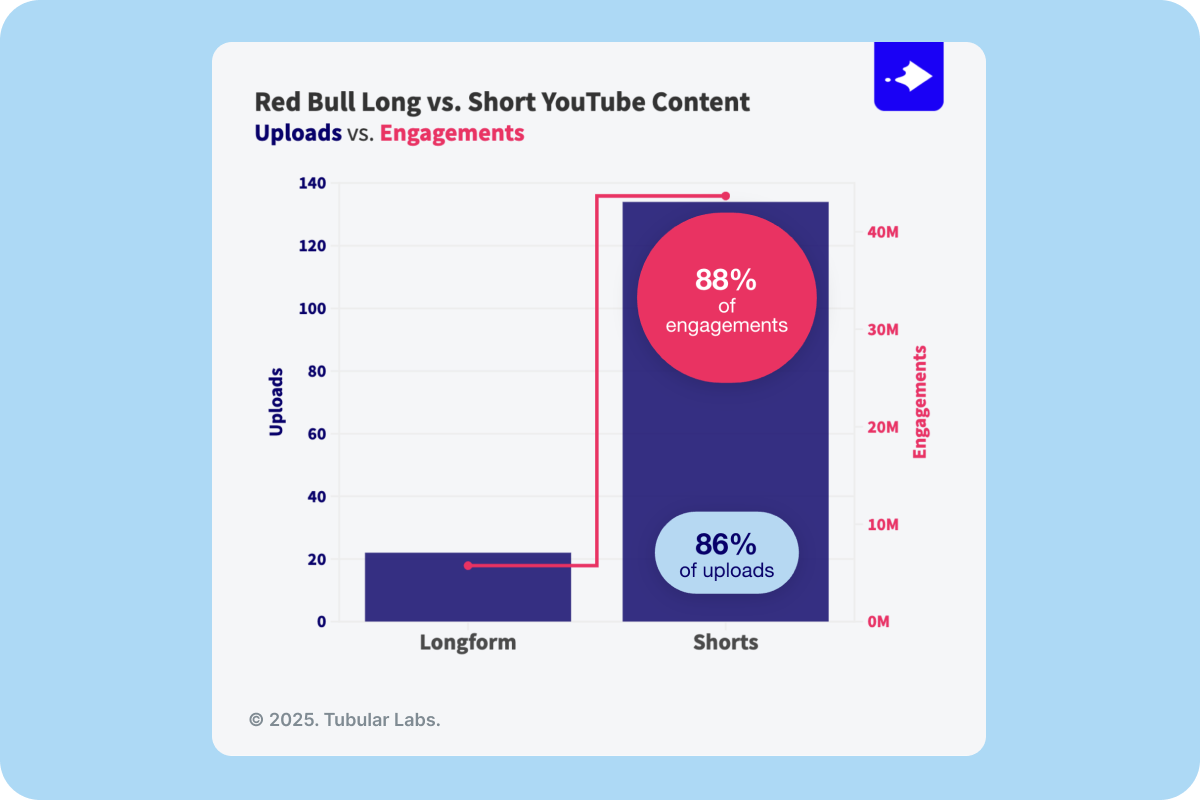
To understand how the industry is evolving, one need only look at the strategic pivot of Red Bull. In 2025, a staggering 77% of global YouTube views originated from videos under 60 seconds in length. Red Bull, a brand synonymous with high-octane content, met this trend head-on, but they did so with a level of analytical sophistication that few peers managed to match.
The Platform Disparity
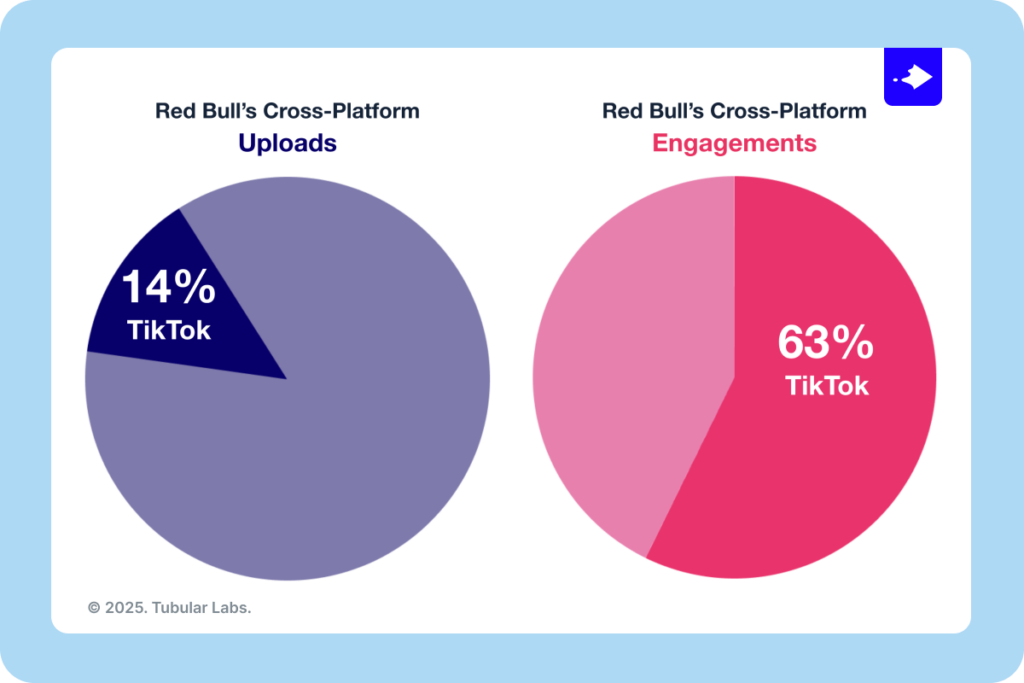
Red Bull’s data revealed a critical truth: short-form content does not perform uniformly across platforms. While the brand’s YouTube engagement remained consistent with their traditional upload strategy, the results on TikTok were anomalous. Despite TikTok accounting for only 14% of their total cross-platform uploads, those videos generated 63% of their overall engagement.
This revelation serves as a masterclass for CPG marketers: the highest-volume platform is rarely the highest-impact platform. By identifying this disparity, Red Bull was able to reallocate resources to where the audience was actually consuming—and engaging with—their content. The takeaway is stark: video duration optimization must be treated as a platform-specific science, not a blanket creative mandate.
The Rise of Cultural Fit: Heineken’s Niche Strategy
If Red Bull provided the blueprint for platform optimization, Heineken provided the masterclass in influencer relations. Traditionally, a beer brand might partner with athletes or lifestyle influencers closely aligned with the beverage industry. Heineken, however, looked at the data and chose a different path.
The Case of @mikaelgama
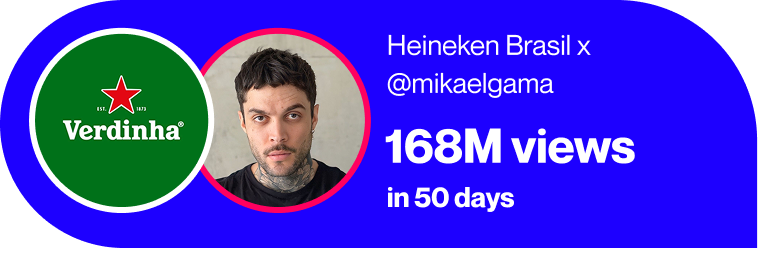
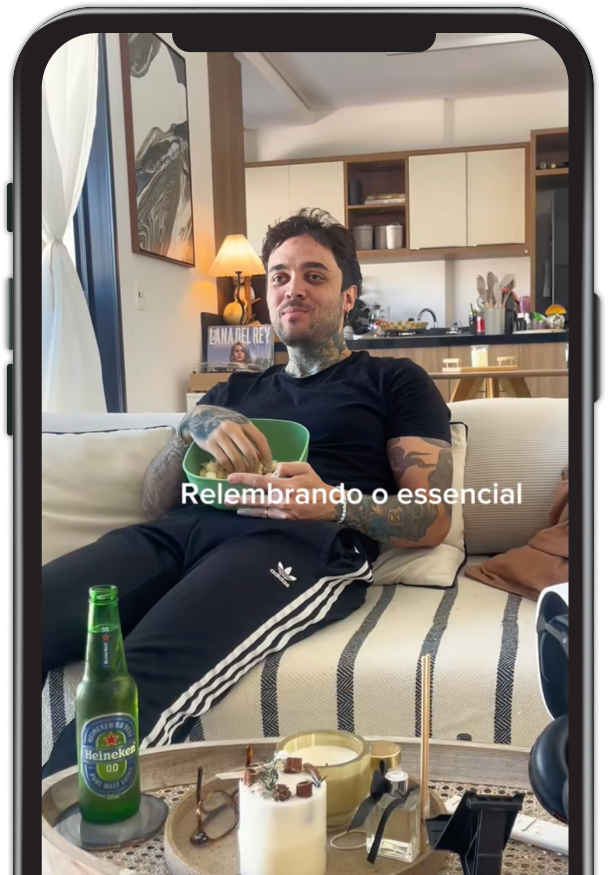
Heineken’s partnership with Brazilian men’s fashion creator Mikael Gama defied conventional wisdom. At the time of the collaboration, Gama had a relatively modest following of 136,000. In most corporate marketing departments, such a creator would be passed over in favor of a "macro-influencer" with millions of followers.
Yet, the results were staggering: 168 million views and 1 million engagements in just 50 days. By prioritizing cultural fit—Gama’s aesthetic and his audience’s implicit trust in his taste—Heineken successfully bypassed the category constraints that often limit CPG reach. This campaign proved that the creator economy now rewards brands that look past vanity metrics to focus on search affinity, shopping behavior, and audience overlap.
Strategic Overlaps: Charlotte Tilbury and the F1 Academy
Perhaps the most ambitious play in recent memory is the partnership between beauty giant Charlotte Tilbury and Formula 1’s F1 Academy. At first glance, the worlds of high-end cosmetics and high-speed motorsport appear to have little in common. However, audience overlap data told a different story.
Breaking Silos
By becoming the first female-founded beauty brand to partner with the F1 Academy, Charlotte Tilbury signaled a move to capture a growing, underserved segment of the motorsports audience. This was not a random sponsorship; it was a bold, data-backed bet on the synergy between the aesthetics of racing and the brand identity of Charlotte Tilbury.
The implication for the wider CPG sector is profound: strategic brand partnerships are the most effective tool for audience expansion. By analyzing where audience segments overlap, brands can move into "un-tapped" territories, acquiring customers who were previously outside their standard demographic reach.
Scaling Without Flooding: The Old Spice Model
While many brands believe that growing reach requires an exponential increase in video frequency, Old Spice has effectively debunked this myth. As one of YouTube’s top-performing CPG brands, their growth is not the result of a "firehose" content strategy. Instead, it is the result of disciplined, purposeful publishing.
Old Spice focused on high-impact formats—specifically YouTube Shorts—and targeted creator partnerships that were designed to resonate with specific, adjacent audience demographics. By avoiding the temptation to flood the platform with low-effort content, they maintained a higher quality-to-reach ratio, ensuring that every piece of content served a specific strategic purpose.
Implications: The New Framework for Success
As we look toward the remainder of the decade, the divide between good and great CPG marketing will be defined by the integration of intelligence into every layer of the creative process. Based on the successes of these four industry titans, we can extract a foundational framework for any CPG brand looking to excel:
1. Data-First, Creative-Second
Never enter a platform or partnership based on intuition alone. Use historical performance data to guide creative decisions. If your data shows that your audience on Platform A prefers 30-second clips, do not attempt to force a 5-minute documentary on them simply because it was expensive to produce.
2. Prioritize Cultural Affinity Over Category
The most successful influencer campaigns today are those that feel organic to the creator’s niche. If a creator’s audience trusts them for fashion, beauty, or gaming, a CPG brand can find success there, provided the brand’s visual and messaging identity fits that creator’s established "vibe."
3. Seek Out Strategic Overlaps
Stop looking for "lookalike" audiences and start looking for "adjacent" audiences. Use audience intelligence tools to discover which platforms and influencers your existing customers are already frequenting outside of your product category. This is where your next major growth opportunity lies.
4. Quality Over Quantity
The algorithm does not reward volume; it rewards retention and engagement. A single, high-performing, well-researched video is worth more than a dozen filler posts. Every upload should be treated as a data-collection exercise that informs the next one.
Conclusion: The Path Forward
The digital landscape is moving at a breakneck pace, and for CPG brands, the stakes have never been higher. The traditional marketing playbook—relying on mass-market appeal and broad-stroke demographics—is rapidly becoming obsolete.
The brands that will thrive in this environment are those that treat social video not as an advertising channel, but as a dynamic, data-responsive ecosystem. By embracing the lessons learned by Red Bull, Heineken, Charlotte Tilbury, and Old Spice, CPG companies can move from simply "being present" on social media to actively driving consumer behavior.
In the modern age, data is the compass, and the audience is the destination. The brands that successfully marry the two will not just survive the social video revolution—they will lead it. As the industry continues to evolve, the primary directive for every CMO remains the same: stop guessing, start measuring, and let the data lead the way.
