
HubSpot Service Hub vs. Zendesk: The Definitive Guide for Modern Ecommerce
In the modern digital economy, customer support is no longer a cost center—it is a competitive advantage. With the barrier to entry for ecommerce lower than ever, customer loyalty is the primary currency. Consequently, the tools businesses choose to manage that loyalty are critical. For years, two giants have dominated the landscape: HubSpot Service Hub and Zendesk.
While both platforms are industry leaders, they represent fundamentally different philosophies regarding customer experience. Choosing between them is not about identifying the "better" software in a vacuum, but rather identifying which tool aligns with your specific operational architecture.
Main Facts: The Structural Divide
At its core, the distinction between these two platforms comes down to a "Unified Engine" versus a "Specialized Powerhouse."
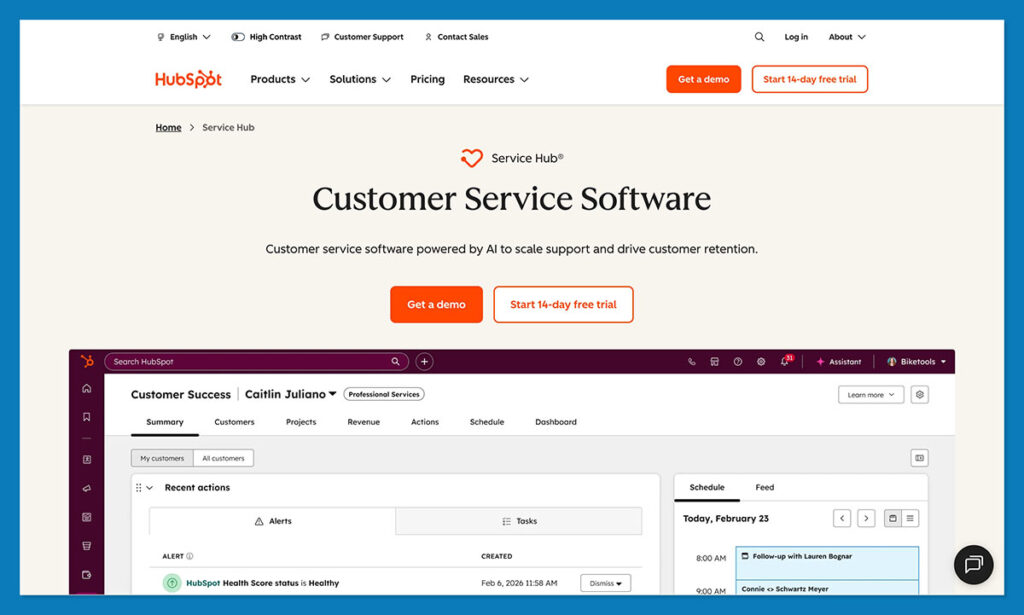
- HubSpot Service Hub is built upon the foundation of a robust, centralized CRM. It is designed for businesses that prioritize a holistic view of the customer—where marketing, sales, and support data live in one, immutable record.
- Zendesk is the quintessential "best-of-breed" support platform. It is engineered for high-volume contact centers where the primary KPIs are ticket resolution speed, agent efficiency, and omnichannel communication.
For an ecommerce team, this distinction is crucial. If your support team needs to see that a customer who is complaining about a shipping delay also just abandoned a high-value cart, HubSpot provides that context natively. If your support team is handling 5,000 tickets a day and requires advanced workforce management (WFM) and complex IVR voice routing, Zendesk remains the gold standard.
Chronology: The Evolution of Two Titans
To understand why these platforms behave the way they do, we must look at their origins.
HubSpot began as an inbound marketing pioneer. Their mantra was "delighting the customer" through content and organic reach. As the company expanded, they didn’t just add features; they built a "Hub" architecture where the CRM is the sun and all other tools—Sales, Service, Operations—are the planets. Their recent pivot toward Breeze AI confirms their commitment to this unified model, as the AI is trained on the entire breadth of the customer’s data, not just their support tickets.
Zendesk, conversely, was born in the cloud as a dedicated ticketing system. It revolutionized the help desk by moving away from clunky, on-premise software. Over the last decade, Zendesk has aggressively expanded its suite to include advanced telephony, social messaging, and AI agents. However, its CRM offering, Zendesk Sell, remains a separate entity. It was acquired rather than built from the ground up as a unified layer, which is why users often report a "seams-and-patches" feeling when trying to integrate their support data with their sales data.
Supporting Data and Performance Metrics
When we analyze the operational efficiency of these platforms, the data tells a compelling story about how each affects the bottom line.
Consolidation vs. Specialization
Case studies, such as the one involving Liquidity Services, indicate that consolidating onto HubSpot can reduce support overhead by as much as 50%. This is largely due to the reduction of "swivel-chair" time—the time agents spend switching between tabs to find order history, shipping details, or marketing engagement status.
Zendesk, however, shines in raw volume metrics. In high-stakes environments—such as a Black Friday flash sale for a global apparel brand—Zendesk’s infrastructure is battle-tested. Its ability to manage massive, concurrent ticket queues with granular Service Level Agreements (SLAs) is unmatched.
Feature Comparison Matrix
| Feature | HubSpot Service Hub | Zendesk Suite |
|---|---|---|
| Data Foundation | Native, Unified CRM | Fragmented (Requires Integration) |
| AI Focus | Predictive & Context-Aware | Queue Management & Efficiency |
| Voice Support | Basic/Essential | Advanced Enterprise-Grade |
| Onboarding | High (Educational ecosystem) | Moderate (Standardized workflows) |
| Reporting | Lifecycle & Revenue-linked | Queue & Performance-linked |
Deep Dive: AI and Automation
The current arms race in customer service is dominated by Artificial Intelligence.
HubSpot’s Breeze AI is transformative because of its contextual awareness. Because it has access to the CRM, the AI doesn’t just know a customer is asking about a refund; it knows this customer is a "VIP" member who has made four purchases this year. When the AI generates a response, it pulls from the brand’s actual product documentation and previous interactions, resulting in a tone that feels personal rather than robotic.
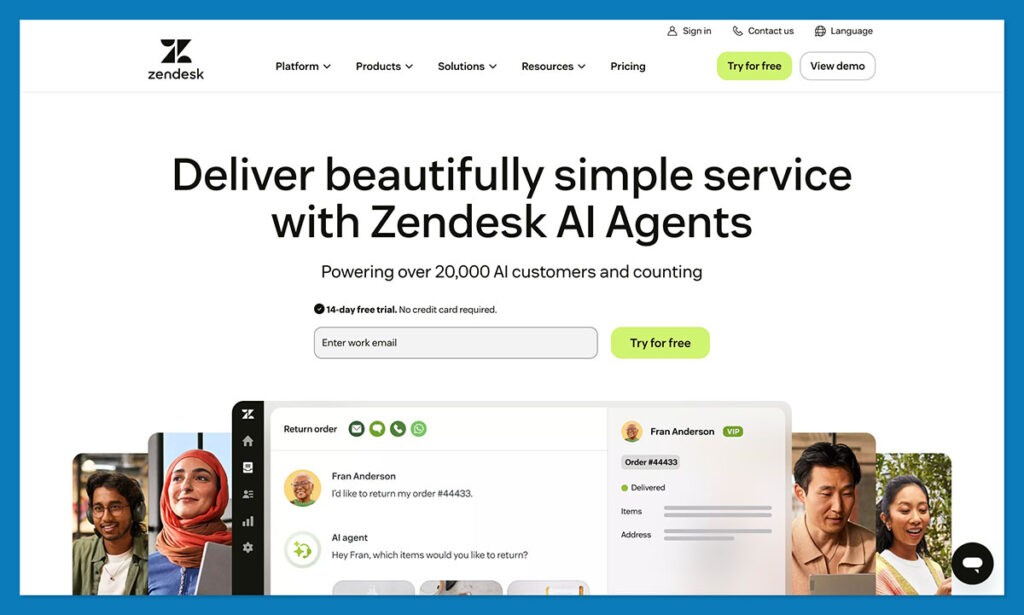
Zendesk’s Service AI is built for high-performance triage. It is exceptional at auto-tagging, summarizing long email threads, and routing tickets to the agent with the specific skill set required to solve them. For a contact center manager, Zendesk’s "Workforce Management" features are the killer app. It uses AI to predict when you will be short-staffed and automatically suggests shifts, ensuring that even during peak volume, your average handle time remains low.
Official Perspectives: Strategic Positioning
In recent briefings, HubSpot executives have emphasized their "Platform-First" strategy. They argue that in an era of fragmented software stacks, companies are losing money in the gaps between tools. By keeping support inside the CRM, they aim to turn customer service into a growth engine rather than a back-office expense.
Zendesk representatives, conversely, maintain their "Open and Flexible" positioning. They pride themselves on the ability to integrate with any tech stack. They argue that forcing a business into a single ecosystem (like HubSpot’s) can lead to vendor lock-in and a lack of specialized tools. Zendesk positions itself as the "connective tissue" that plugs into your existing CRM, your custom database, and your legacy ERP systems.
Implications for Your Ecommerce Business
Why choose HubSpot?
If your ecommerce business is mid-market or growing, and your primary goal is to increase Customer Lifetime Value (CLV), HubSpot is the superior choice. The ability for a support agent to see that a customer just received an abandoned cart email and then reached out for support allows for a level of personalized service that drives retention. You are not just closing tickets; you are managing a relationship.

Why choose Zendesk?
If your ecommerce business is high-volume or enterprise-level, and your primary goal is to maintain operational stability, Zendesk is the move. If you have a dedicated 24/7 call center, complex voice routing needs, and a team of 50+ agents who need highly structured workflows and QA scoring, HubSpot’s CRM-centric model may feel too "generalist." Zendesk gives you the precision-engineered tools required to manage complex, multi-channel service environments at scale.
The Verdict: A Strategic Decision
The choice between HubSpot and Zendesk is a reflection of your company’s maturity and focus.
- Choose HubSpot if: You want a single source of truth for your customer data. You value the seamless flow between marketing, sales, and support, and you want to use that data to drive personalized customer interactions.
- Choose Zendesk if: Your support team is a large, specialized unit that deals with heavy, high-speed ticket volume and requires deep, granular control over routing, voice support, and workforce management.
Final Recommendation
For most growing ecommerce brands, the "all-in-one" advantage of HubSpot is difficult to ignore. The cost of maintaining separate platforms and the technical debt of "stitching" them together often outweighs the benefits of the specialized features Zendesk offers.
If you are currently on the fence, the best approach is to pilot HubSpot’s free CRM. By testing a handful of real-world support tickets within their interface, you will immediately feel the difference between working with a tool that views the customer as a "ticket number" (Zendesk) and a tool that views the customer as a "relationship" (HubSpot).
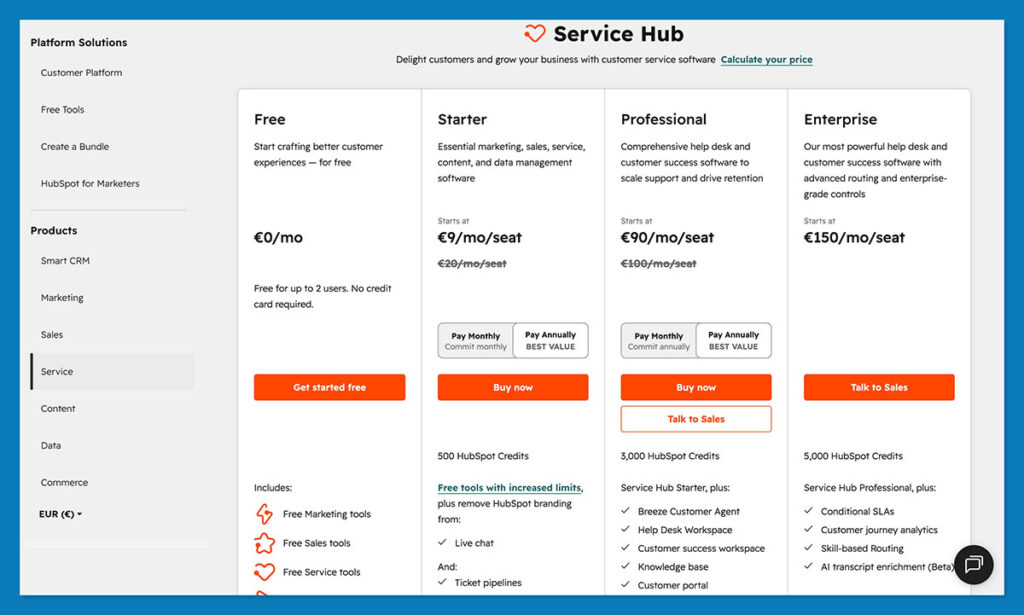
Ultimately, your choice will define the "personality" of your support team. Ensure that personality matches your brand’s promise to your customers.
