
Precision Optimization: How Crazy Egg’s New Audience Targeting Revolutionizes A/B Testing
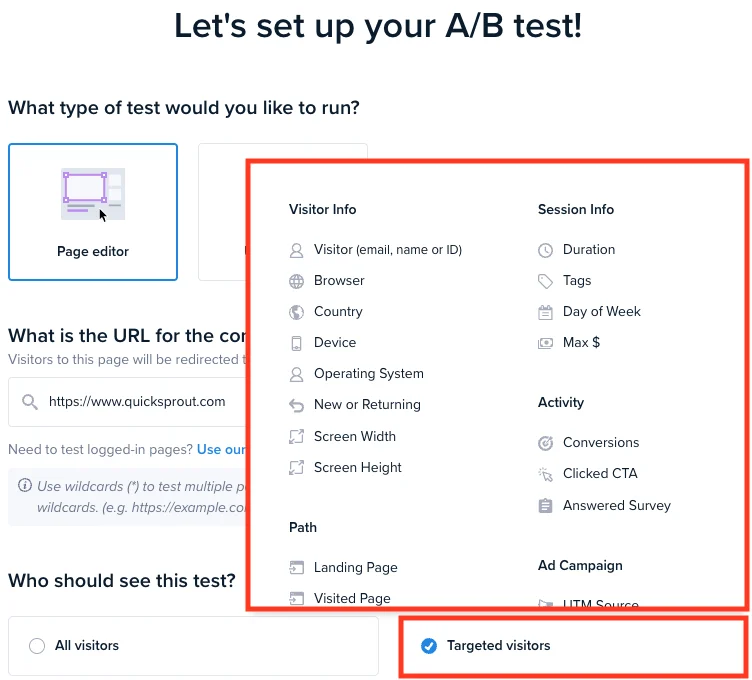
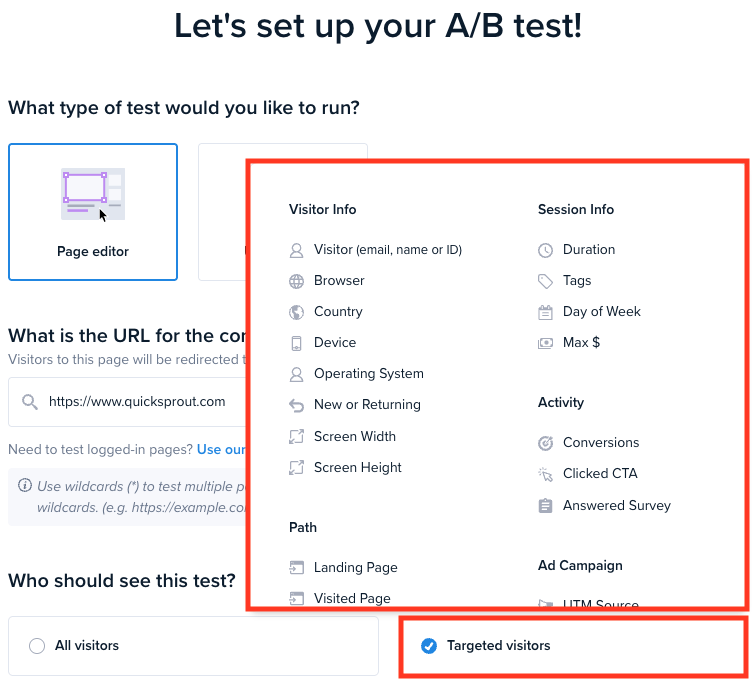
In the hyper-competitive landscape of digital commerce, the "one-size-fits-all" approach to web design is rapidly becoming a relic of the past. As user expectations shift toward personalized experiences, the pressure on growth marketers to deliver relevant content in real-time has intensified. Addressing this, Crazy Egg has officially unveiled a powerful new capability: granular audience targeting for A/B testing. This update allows marketers to deploy experiments specifically tailored to distinct visitor segments based on device type, geographic location, traffic source, and campaign origin.
For growth teams, this represents a significant shift from broad-spectrum testing to surgical optimization. By enabling marketers to isolate how different subsets of their audience respond to specific page variations, Crazy Egg is narrowing the gap between raw data collection and actionable, personalized conversion strategies.
The Evolution of Conversion Optimization: Why Targeting Matters
For years, A/B testing platforms operated on a binary premise: show a version of a page to a randomized percentage of the total traffic and determine which performs better globally. While effective for general usability improvements, this method often masked critical insights. A page design that converts well for desktop users in the United States might underperform for mobile users arriving via social media ads in Europe.
By introducing audience segmentation into the A/B testing framework, Crazy Egg is empowering users to move beyond "average" metrics. This release acknowledges that the modern customer journey is fragmented; a visitor arriving from a targeted LinkedIn campaign has an entirely different intent and context than a user who found the site through an organic Google search.
The Mechanics of the Update
The integration of targeting options allows users to trigger experiments based on:
- Device Type: Optimizing layouts for mobile-first shoppers versus desktop-bound enterprise clients.
- Geographic Location: Tailoring messaging, currency, or cultural nuances to specific countries.
- Traffic/Campaign Source: Aligning the landing page experience with the messaging used in specific ad campaigns.
- Funnel Position: Delivering different value propositions to returning visitors versus first-time prospects.
Chronology of the Release: From Beta to Broad Deployment
The move toward granular targeting did not happen in a vacuum. It was the result of a concerted effort by the Crazy Egg product and engineering teams to address the growing complexity of their users’ tech stacks.
- Q1 2026 – The Feedback Loop: During the early months of 2026, the Crazy Egg growth team, led by Director of Growth Marketing Stephen Ngo, began identifying a common bottleneck among their Pro-tier users. Clients were frequently asking for ways to segment their heatmaps and tests to mirror the segmentation already present in their ad platforms like Meta and Google Ads.
- April 2026 – The Pilot Phase: A select group of "Early Adopters" were invited to beta-test the segmented A/B testing interface. These users were primarily enterprise-level e-commerce and SaaS brands who needed to test localized variations of their checkout flows without disrupting the experience for their global user base.
- May 25, 2026 – Public Launch: The feature officially moved out of beta. With this release, the platform integrated the targeting logic directly into the existing A/B test setup flow, ensuring that even non-technical marketers could deploy complex experiments without writing custom code or relying heavily on engineering resources.
Supporting Data: The Case for Segmented Testing
Why invest in segmented testing? The answer lies in the diminishing returns of generic optimization. Industry benchmarks suggest that personalized experiences can increase conversion rates by as much as 15% to 20% compared to static, non-targeted pages.
The Power of Contextual Relevance
When a user clicks on an ad, they are promised a specific solution. If the landing page they arrive on is optimized for a general audience rather than that specific ad’s demographic, the "message match" is broken. High bounce rates are often a direct symptom of this disconnect.
Early users of the new Crazy Egg targeting tools have reported:
- Reduced Bounce Rates: By serving device-specific designs, mobile users no longer struggle with desktop-optimized elements, leading to a smoother, faster transition.
- Higher Ad ROI: By syncing landing page variants with specific ad sets (e.g., testing different headlines for "Facebook Mobile" traffic versus "Search" traffic), companies have seen a notable improvement in Cost-Per-Acquisition (CPA).
- Localized Conversion Uplift: Global brands testing region-specific calls-to-action have reported significant spikes in regional engagement, proving that local nuances are often the deciding factor in the final stage of the conversion funnel.
Official Perspective: Growth at Scale
In his capacity as Director of Growth Marketing, Stephen Ngo has been a vocal proponent of this feature. According to the internal philosophy at Crazy Egg, the objective is to make enterprise-level testing tools accessible to teams of all sizes.
"We recognize that our users are managing increasingly complex marketing ecosystems," Ngo noted in recent discussions. "When you are running ads across multiple channels and targeting a global audience, treating every visitor as the same is a missed opportunity. This feature is about providing the tools to match the sophistication of the modern marketing funnel."
The company emphasizes that while the "Page Editor" and "URL Redirect" features remain the core of the testing suite, the addition of targeting creates a new layer of control. For users on the Plus or Pro tiers, the platform offers these capabilities as a means to extract more value from existing traffic rather than simply spending more on acquisition.
Implications for Digital Marketing Strategy
The introduction of audience-targeted A/B testing has profound implications for how digital marketing teams will operate over the next 18 months.
1. The Death of the "Average" Metric
Conversion Rate Optimization (CRO) professionals have long cautioned against relying solely on "average" metrics. A 2% conversion rate might look healthy on a dashboard, but it could hide a 5% conversion rate on mobile and a 0.5% rate on desktop. This new capability forces marketers to look at the "why" behind the numbers. If a segment is underperforming, teams now have the mechanism to test a fix specifically for that segment without risking the performance of other, higher-converting groups.
2. Streamlining the Tech Stack
Previously, achieving this level of segmentation often required expensive, standalone personalization platforms or complex third-party integrations. By embedding these capabilities directly into the Crazy Egg ecosystem, the company is effectively simplifying the marketer’s toolkit. Teams can now manage their heatmaps, recordings, and A/B tests in one unified environment, reducing the friction of switching between tools.
3. Ethical and Data-Driven Personalization
As the industry moves toward a privacy-first web, the importance of first-party data has surged. Crazy Egg’s approach relies on the platform’s own data to segment users, ensuring that testing remains compliant and transparent. This allows brands to provide a personalized experience that feels helpful rather than intrusive, building trust with users through relevant, well-timed content.
Implementation: How to Get Started
For those looking to leverage these new features, the process is designed for simplicity. The workflow is integrated into the standard "Create A/B Test" flow:
- Selection: Choose between the "Page Editor" (for minor visual tweaks) or "URL Redirect" (for major layout overhauls).
- Targeting: Upon defining the experiment URLs, a new targeting module appears. Users can define parameters such as "Country equals Canada" or "Device equals Mobile."
- Launch: Once the parameters are set, the experiment goes live only for visitors who meet the criteria. The platform then tracks the performance of the variant against the original, specifically for that segment.
For users currently on the Plus or Pro plans who do not yet see these options in their dashboard, the company advises reaching out to their support team directly at [email protected] to have the feature enabled on their account.
Looking Ahead: The Future of Optimization
As the digital landscape continues to evolve, tools like Crazy Egg are moving toward a more proactive, automated future. While manual A/B testing remains a cornerstone of the industry, the next frontier will likely involve AI-driven segment identification—where the software itself identifies which audience segments are underperforming and suggests specific tests to rectify them.
For now, the ability to manually target these experiments gives marketers the agency to conduct high-stakes testing with precision. In an era where every click counts, the brands that can deliver the most relevant, context-aware experiences will undoubtedly lead the market. Crazy Egg’s latest update is a definitive step in that direction, providing the granular control necessary to turn traffic into long-term customer relationships.
