

The Data-Driven Revolution: How Global CPG Titans are Redefining Social Video Strategy
In the rapidly shifting landscape of digital marketing, the Consumer Packaged Goods (CPG) sector is undergoing a profound transformation. For years, the industry relied on broad-reach traditional advertising to capture market share. Today, however, some of the world’s most recognizable brands are rewriting the rules of engagement, pivoting away from intuition-based creative toward a rigorous, data-backed approach to social video.
From Red Bull’s surgical precision in platform-specific content to Heineken’s unconventional influencer partnerships, the new CPG playbook is defined by a single mandate: every decision must be deliberate, and every creative choice must be informed by deep-dive audience insights.
The Paradigm Shift: Moving Beyond Assumptions
The core tenet of modern social video success is the abandonment of assumptions. Historically, brands operated under the belief that "more is better"—more posts, more platforms, and more volume. However, recent performance data reveals a different reality. Success today requires a nuanced understanding of how specific audience segments interact with content across diverse digital ecosystems.
A successful CPG strategy now prioritizes engagement metrics over vanity metrics, selects distribution platforms based on high-impact performance rather than convenience, and utilizes granular audience intelligence to navigate the turbulent waters of shifting social trends.
A Chronology of Strategic Evolution
The evolution of CPG social video can be traced through the distinct, yet convergent, paths taken by industry leaders over the past 24 months.
The Red Bull Approach: The Nuance of Platform Utility
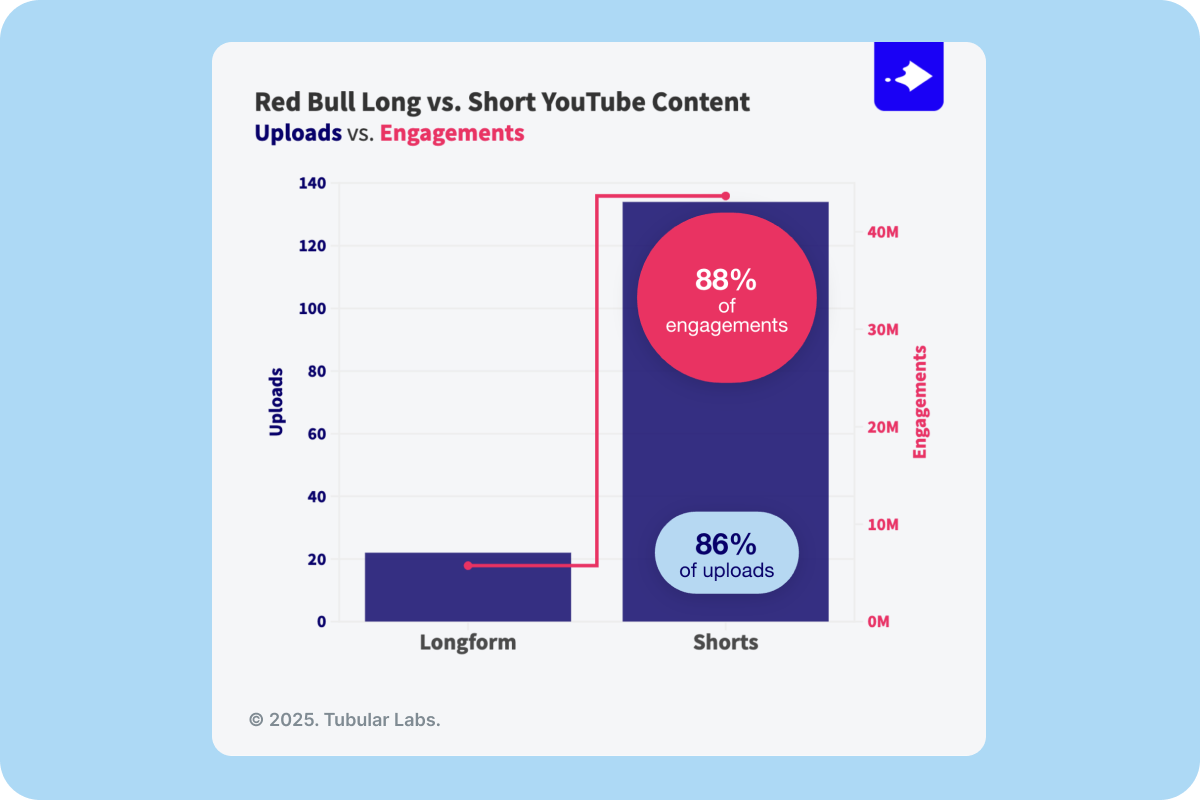
Red Bull, a pioneer in content marketing, faced the 2025 landscape with a clear observation: 77% of all global YouTube views were driven by videos under 60 seconds. While the brand leaned into short-form content to match this behavioral trend, their internal data yielded a surprising discovery regarding cross-platform ROI.
On YouTube, Red Bull’s engagement mirrored their upload volume, suggesting a linear relationship between output and interest. However, the data told a radically different story on TikTok. Despite accounting for only 14% of their total cross-platform uploads, TikTok generated 63% of their total engagement. This discrepancy highlights a crucial lesson: short-form content is not a monolith. Its efficacy varies wildly depending on the platform’s specific culture and the audience’s intent.
The Heineken Pivot: Cultural Fit Over Category Fit
In the beverage sector, Heineken demonstrated that the most effective partnerships are often the least expected. By collaborating with Brazilian fashion creator @mikaelgama—a niche influencer far outside the traditional "beer" or "lifestyle" category—Heineken unlocked unprecedented growth.
Within just 50 days, the campaign amassed 168 million views and 1 million engagements. Despite Mikael’s relatively modest initial following of 136,000, his visual aesthetic and the trust he cultivated with his audience allowed for a seamless, high-resonance brand integration. This serves as a masterclass in the "cultural fit" theory, proving that when a brand’s values align with a creator’s unique aesthetic, the resulting engagement transcends traditional demographic boundaries.
Charlotte Tilbury: Breaking Silos via Audience Overlap
The beauty industry often operates within its own echo chamber, but Charlotte Tilbury’s partnership with the Formula 1 Academy shattered these norms. By becoming the first female-founded beauty brand to align with F1, the brand tapped into the high-intent overlap between luxury aesthetics and high-performance motorsports. This move was not a gamble, but a calculated play based on audience overlap data, resulting in a surge of organic user-generated content (UGC) and a measurable expansion into new, affluent consumer segments.
The Old Spice Playbook: Targeted Precision
Old Spice’s recent dominance on YouTube offers a final, critical insight: scaling reach does not require flooding the platform with content. By focusing on purposeful, targeted uploads and leveraging high-impact formats like YouTube Shorts, Old Spice has successfully expanded its footprint without sacrificing quality or brand identity. Their growth model underscores that reach is a byproduct of strategic relevance, not just high-frequency output.
Supporting Data: The Pillars of Modern Performance
The data supporting these case studies is consistent across the board:
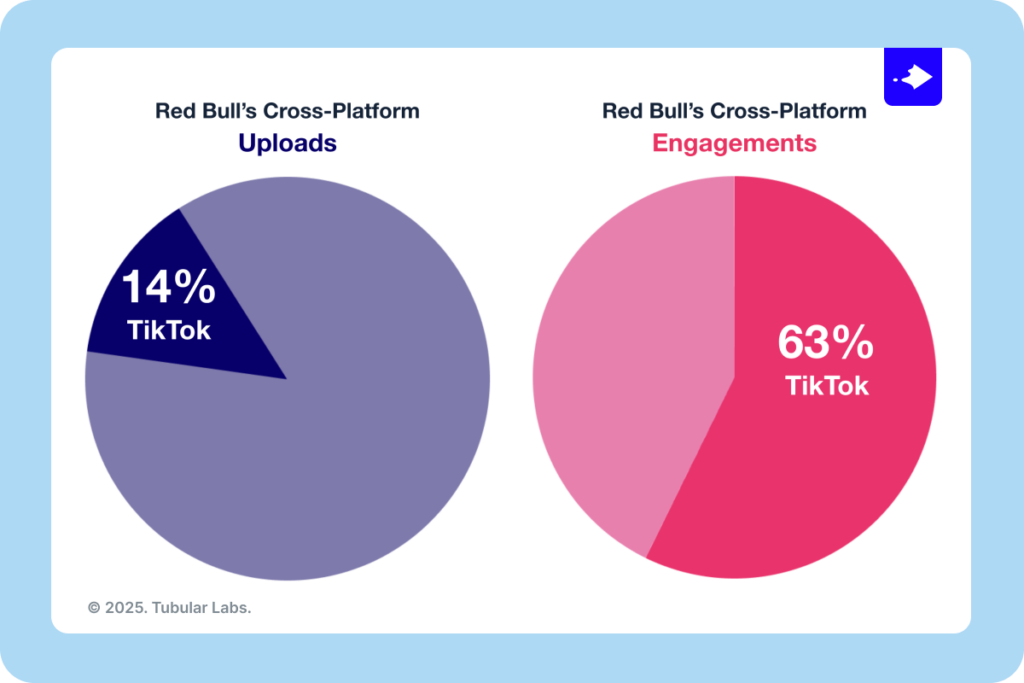
- Platform Disparity: As evidenced by Red Bull, the highest-volume platform is rarely the highest-impact platform. Brands must evaluate each channel individually.
- The Creator Economy: The success of Heineken’s partnership with @mikaelgama illustrates that "niche" does not mean "low reach." When audience intelligence is layered with search and shopping affinity, brands can predict ROI far more accurately than when relying solely on follower counts.
- Audience Overlap: Charlotte Tilbury’s foray into F1 proves that identifying non-obvious audience intersections can unlock consumer segments that were previously invisible to the brand.
- Strategic Frequency: Old Spice’s performance confirms that a "less is more" approach, if executed with high-value content, maintains deeper audience retention than high-frequency, low-intent content.
Official Industry Perspectives
Market analysts from Tubular Labs emphasize that the "gold rush" era of social video is over. In its place is an era of optimization. As brands move forward, the consensus among industry leaders is clear:
"The era of guessing is over," notes the latest industry research. "Leading CPG brands are shifting toward a framework where they treat their social channels as a living laboratory. By continuously testing and iterating based on real-time viewer behavior, brands can move from being content creators to being audience architects."
Furthermore, there is a growing emphasis on the role of AI and predictive analytics in selecting partnerships. By analyzing search trends and historical performance data, brands are now able to forecast the success of a partnership before the first frame is even filmed.
Implications for the Future of CPG Marketing
The implications of these shifts are significant for any brand looking to remain competitive in the coming decade.

1. The Death of the "Vanity Metric"
Brands that continue to prioritize follower count as the primary indicator of success are destined to lose ground. Future-proof strategies will favor "Engagement Value" and "Audience Affinity"—metrics that indicate intent rather than mere exposure.
2. The Rise of "Unexpected Partnerships"
As the digital space becomes saturated, the novelty of unexpected collaborations will become a premium asset. Expect to see more cross-pollination between traditionally distinct categories (e.g., tech and culinary, automotive and wellness) as brands look to capture the "untapped middle" of overlapping audience bases.
3. Precision Over Prolificacy
The "content treadmill"—the pressure to post daily—is being replaced by the "precision model." Brands will focus their budgets on fewer, higher-quality assets that are optimized for specific platform algorithms and specific audience psychological triggers.
4. Continuous Data Feedback Loops
The most successful CPG brands will be those that integrate their marketing, sales, and data analytics teams into a single unit. When a video underperforms, the response should not be to simply change the thumbnail; it should be to re-examine the audience insight that informed the content in the first place.

Conclusion: How to Build Your Own Great Strategy
Transitioning from a "good" social video strategy to a "great" one requires a fundamental shift in mindset. A good strategy follows the rules—it posts consistently, uses trending audio, and monitors standard KPIs. A great strategy, however, uses audience data to challenge those rules.
To stay ahead, CPG brands must adopt the following practices:
- Audit Your Platforms: Don’t assume your largest platform is your most effective. Conduct a deep audit to find where your audience truly engages.
- Prioritize Cultural Fit: When vetting creators, look beyond their follower count. Analyze their audience’s search habits and shopping behaviors to ensure true brand-influencer alignment.
- Map Your Overlaps: Look at your data to find adjacent categories where your audience already spends their time.
- Optimize for Length: Utilize performance data to determine the ideal video duration for each specific platform, rather than relying on industry averages.
Social video is a fast-moving, high-stakes environment. While the trends of today may evolve tomorrow, the foundation of success remains the same: the brands that let data lead the way will always find their way to the top. As we look toward the remainder of the year and beyond, the message for CPG marketers is clear—stop guessing, start measuring, and get ready to rewrite the rules.
