
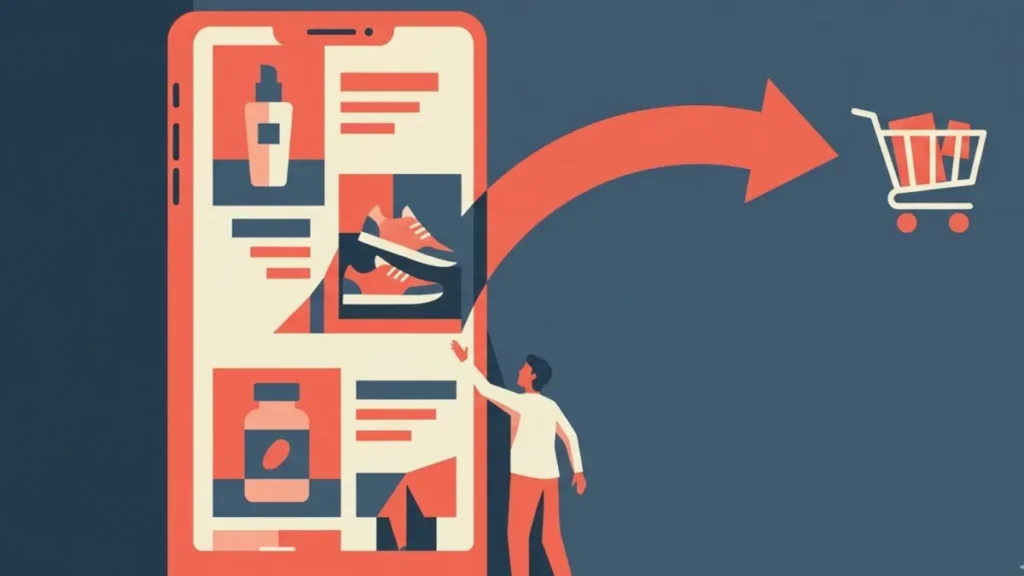
The Impulse Economy: How Unplanned Purchasing is Rewriting the Rules of Modern Marketing
The traditional marketing funnel—that neat, linear progression from awareness to consideration to conversion—is no longer just fraying; it is being bypassed entirely. According to landmark research published by Adobe for Business on June 15, 2026, the modern consumer journey has been fundamentally transformed by the "Impulse Economy."
With 86% of U.S. online shoppers reporting at least one unplanned purchase every month, marketers are facing a reality where the moment of discovery and the moment of transaction are collapsing into a single, high-speed event. This behavioral shift, driven by social discovery and exacerbated by the digital "always-on" environment, suggests that the vast majority of consumer spending now occurs outside the boundaries of planned budgets and traditional attribution models.
The Scale of Impulse Spending: A New Budgetary Baseline
The headline figures from Adobe’s study of 1,003 U.S. consumers are staggering. It is not merely that impulse buying is common; it has become the dominant mode of consumption. Beyond the 86% who participate monthly, a significant segment of the population is hyper-active: over 20% of respondents complete five or more unplanned purchases within a 30-day window.
Financially, this represents a substantial reallocation of household capital. Nearly one in five respondents earmarks upwards of $1,800 annually for these spontaneous buys. When adjusted for the average American household income, this expenditure represents a significant, non-discretionary shift. It is a "shadow budget"—money that is not accounted for in planned spending but is instead captured by the first brand that successfully leverages emotional triggers at the right time.
While Adobe acknowledges that the study relies on self-reported data—a methodology that can sometimes deviate from precise bank-statement tracking—the 95% confidence level provides a robust snapshot of a market that is moving faster than current analytical tools can track.
Chronology of the Shift: A Year of Consumer Disruption
The June 2026 findings are the latest in a series of reports from Adobe that have systematically dismantled the assumptions of the 2020s marketing landscape:
- March 2026: Adobe released a study highlighting how Millennials are abandoning brands at record speeds due to disconnected shopping journeys. This established that friction in the digital experience is a terminal flaw.
- April 2026: A follow-up playbook on AI search readiness revealed that 98% of marketers lack a documented AI optimization strategy, leaving them blind to the evolving ways consumers find products via algorithmic search.
- April 2026 (Industry Context): Independent research from MiQ, covering 53 million households, confirmed that customer journeys now occur in minutes rather than weeks, a compression driven by multi-screen shifting.
- June 15, 2026: Adobe’s latest research synthesizes these trends, proving that the speed of decision-making is now the primary factor in conversion, rather than the depth of brand research.
Speed and Category: Where Conversion Happens in Seconds
The "speed of decision" is not uniform across all sectors. Adobe’s research provides a clear hierarchy of how quickly consumers move from discovery to checkout.
Beauty currently sits at the top of the hierarchy, with 48% of shoppers finalizing purchases within seconds or minutes of discovery. This is followed by Health and Wellness (37%), Media (35%), and Apparel (33%).
The order of these categories reveals the core driver of modern impulse buying: identity and emotion. Cosmetics and wellness products are highly visual, identity-linked goods. When a consumer encounters a high-quality video or social post in these categories, the "need" is often synthesized instantaneously. Conversely, Software—which requires evaluation, compatibility checks, and trial periods—closes at a much slower pace (15%), proving that even in an impulse-driven world, technical complexity remains a barrier to instantaneous conversion.
Generational Texture: The Psychology of the Impulse
While the phenomenon of impulse buying is universal, the "why" varies significantly across age groups.
- Flash Sales: These are the universal language of impulse. 60% of Gen Z, 59% of Millennials, 52% of Gen X, and 39% of Baby Boomers cite flash sales as their primary trigger.
- The Gen Z Stress-Relief Gap: For Gen Z, the purchase is often a tool for emotional regulation. 43% of this cohort cites stress relief as a top trigger, making them 73% more likely than older generations to buy spontaneously to alleviate anxiety.
- Browse-Induced Impulse: This is the realm of the "accidental discovery." While it is the second or third most common trigger for Gen X and Boomers, it is noticeably less potent for Gen Z, who respond more aggressively to emotional and time-bound stimuli.
This data forces a pivot in strategy. If Gen Z is buying for emotional relief, marketing content that emphasizes "logic" or "feature sets" will fail. If older generations are buying based on accidental browsing, the strategy must shift to broad-spectrum visibility in non-commercial feeds.
The Attribution Crisis: Why the Funnel is Broken
The most alarming finding for marketing directors is the total collapse of the traditional attribution path. 41% of shoppers cannot recall their first touchpoint. Of those who can, 60% admit to switching devices or platforms before the transaction is finalized.
This "fractured path" renders the first-touch attribution model largely obsolete. If the discovery happens on a TikTok video, the interest is solidified on an Instagram story, and the transaction is finalized on a mobile browser, standard analytics suites—which often struggle to bridge these "walled gardens"—will fail to give proper credit. The result is a skewed view of ROI, where brands continue to pour money into "last-touch" channels while ignoring the organic social content that actually started the fire.
Digital Fatigue: The Risk of Over-Exposure
The research also highlights a growing consumer backlash against "always-on" commerce. 45% of shoppers report that constant shopping suggestions are overwhelming. This has led to a rise in "active avoidance" behaviors:
- 47% of consumers unsubscribe from email lists.
- 35% turn off notifications.
- 28% employ ad blockers.
Notably, Gen Z is 35% more likely than older generations to simply limit their overall screen time when they feel bombarded. For marketers, this creates a "Frequency Ceiling." There is a delicate balance between being top-of-mind and being an annoyance that triggers a permanent opt-out.
Implications for Marketing Practitioners
The Adobe research carries specific mandates for different marketing disciplines:
For Paid Search
Search is no longer just about intent; it is about harvesting "spilled" intent from social channels. Keywords are increasingly being used as navigational tools by consumers who have already decided to buy but need to find the checkout link. Strategies must align with "Demand Gen" formats that capture the consumer in the middle of their entertainment journey.
For Social Advertisers
The fact that 71% of unplanned purchases start with organic content—rather than paid ads—is a massive validation of the "creator economy." Brands should shift from traditional, highly polished ad units to creator-led, authentic content that feels at home in a non-commercial feed.
For Email Marketing
The era of the "daily blast" is coming to a close. While flash sales remain the most powerful trigger, the high unsubscribe rate proves that frequency discipline is the only way to protect the integrity of the email list. Brands must treat their subscriber list as a limited-access asset, not a spam channel.
For Analytics Teams
The "measurement gap" identified by Adobe suggests that the industry is in dire need of a more holistic approach to data. Analytics must move away from platform-specific metrics and toward "cross-surface" identity mapping. If the data isn’t being stitched together, it is effectively invisible.
Conclusion: Adapting to the New Reality
The Adobe for Business research confirms what many in the industry have suspected: the "funnel" has been replaced by a "mesh." Consumers are moving through a fractured, multi-device, and highly emotional landscape where the primary goal is not to guide them through a journey, but to be present at the exact, fleeting moment they decide to click "buy."
For brands, the challenge of 2026 is not just reaching the consumer—it is earning the right to remain in their digital feed, capturing the impulse before it dissipates, and mastering the art of the sub-second conversion. In the Impulse Economy, speed is not just a competitive advantage; it is the fundamental requirement for survival.
