
Beyond the Hype: How 25 Weeks of Rigorous AI Testing is Reshaping Agency Operations
In the rapidly shifting landscape of digital marketing, the sheer velocity of AI innovation has transitioned from an exciting frontier to a source of genuine professional anxiety. For agency leaders, the pressure to integrate artificial intelligence is constant, yet the time required to vet, test, and implement these tools is a luxury few possess. Every week brings a new wave of LLMs, image generators, and automation suites, leading to "tool fatigue" and the dangerous trap of adopting technology that lacks genuine utility.
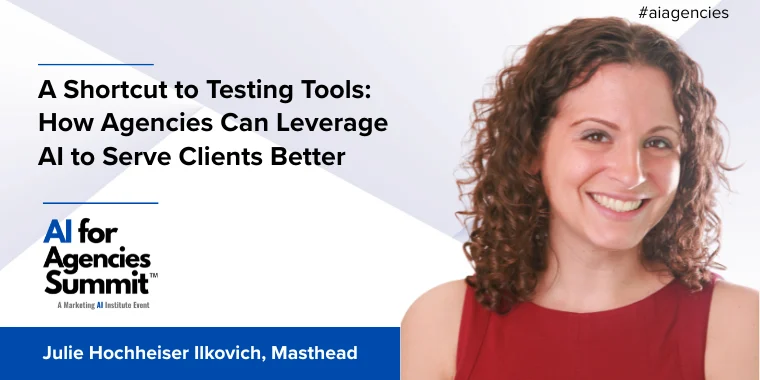
However, a new data-driven approach is emerging to cut through this noise. Julie Hochheiser Ilkovich, Managing Partner at Masthead, recently concluded a 25-week intensive research initiative designed to separate transformative AI solutions from marketing fluff. Her findings—and the methodology behind them—are set to take center stage at the upcoming AI for Agencies Summit, presented by Screendragon, on February 12, 2026.
The Chronology of an AI Audit: 25 Weeks, 25 Tools
The genesis of this project was born from a common agency pain point: the trial-and-error cycle. Many agencies approach AI adoption by dabbling in various platforms without a clear framework for success. Hochheiser Ilkovich and her team at Masthead opted for a more disciplined, systematic approach.
Over the course of six months, the team committed to a rigorous testing schedule. Each week was dedicated to deep-diving into a single AI tool, evaluating its performance against real-world agency workflows. This was not a superficial review; the team analyzed everything from content production and creative ideation to project management and data synthesis.
- Weeks 1-8 (The Discovery Phase): The team focused on high-frequency tasks, testing generative text tools and administrative automation platforms.
- Weeks 9-16 (The Integration Phase): Testing moved toward collaborative tools and AI-driven design software to see if these systems could integrate seamlessly into existing agency tech stacks.
- Weeks 17-25 (The Validation Phase): The final stretch focused on ROI—measuring the time saved, the quality of output, and whether the tools actually reduced the burden on the creative and operational teams.
This chronological commitment allowed Masthead to observe how AI tools evolve over time, providing a nuanced perspective that single-day reviews simply cannot capture.
Why Agency Leaders Are Struggling with AI Adoption
The primary challenge for modern agencies is not a lack of tools, but a lack of intentionality. During the AI for Agencies Summit, Hochheiser Ilkovich will address the "Agency Paradox": the desire to move fast and scale smart while being hamstrung by the exhaustion of constant evaluation.
"Most agencies are currently running on a model of ‘experimental chaos,’" says one industry analyst. "They are testing tools in silos, often failing to account for how those tools impact client confidentiality, creative integrity, and long-term overhead."
The data suggests that without a structured vetting process, agencies risk "technological sprawl"—a situation where an agency pays for dozens of subscriptions, yet none of them are used to their full potential. The Masthead initiative provides a roadmap to avoid this trap by focusing on the "Why" behind the "What." Before an agency integrates a new AI tool, they must ask:
- Does this tool improve operations or merely complicate them?
- Does it provide measurable efficiency that outweighs the cost of the subscription?
- Does the output actually elevate the creative work, or does it homogenize it?
The Expert Behind the Research
Julie Hochheiser Ilkovich is uniquely positioned to bridge the gap between creative storytelling and technological implementation. Her career spans some of the most influential media organizations of the last two decades. As an editorial director at Alloy Entertainment, she helped shape the narrative landscape behind cultural phenomena like Gossip Girl and The Vampire Diaries. Her tenure at Hearst, where she served as site director for Seventeen Magazine, provided her with a deep understanding of audience engagement and digital transformation.
Beyond her corporate experience, Hochheiser Ilkovich is a pillar in the professional community. As a co-founder of the Women in Content & Marketing Association (WICMA) and the AI Marketing Innovation Council (AIMIC), she has been at the forefront of the ethical and practical integration of AI in marketing. Her recognition by the New York Women in Communications with a WiCi Award highlights her standing as a rising leader who balances technical proficiency with the human element of communications.
Implications: The Future of the Agency Model
The findings from the "25 Tools, 25 Weeks" study suggest that the agency model is undergoing a permanent shift. The traditional hourly-billing structure is increasingly being challenged by the speed of AI-enabled production. Agencies that successfully adopt these tools are finding they can deliver higher-quality work in a fraction of the time, effectively shifting their value proposition from "execution speed" to "strategic insight."
However, this transition is not without risks. The implications of Hochheiser Ilkovich’s research are clear:
- Talent Re-skilling: Agencies must move beyond basic prompt engineering and focus on training staff to act as "AI Editors" who oversee and refine machine-generated output.
- Standardization: The most successful agencies are those that move from ad-hoc tool usage to a standardized AI toolkit that ensures consistent quality control.
- The Human Premium: As AI commoditizes content creation, the human touch—strategy, empathy, and brand voice—becomes the primary differentiator for clients.
Join the Conversation: The AI for Agencies Summit
For agency leaders, the path forward requires a balance of skepticism and curiosity. The AI for Agencies Summit, occurring virtually on February 12, 2026, serves as the premier venue for this transition.
During her session, titled "25 Tools, 25 Weeks: How Agencies Can Solve Marketing Challenges with AI," Hochheiser Ilkovich will present a candid breakdown of her team’s findings. Attendees can expect:
- The "Win" List: Tools that demonstrated immediate impact on agency profitability and creative speed.
- The "Miss" List: A cautionary guide on which tools promise high utility but deliver significant operational friction.
- Practical Frameworks: A step-by-step guide on how agencies can implement their own internal testing protocols to stay ahead of the curve.
"The goal is not to give you more tools to add to your already overwhelming To-Do list," Hochheiser Ilkovich notes. "The goal is to provide a shortcut through the noise. We’ve done the heavy lifting so you can focus on the tools that actually fit your specific agency model."
A Call to Intentionality
The rapid adoption of AI has created a landscape where the "first mover" advantage is often negated by the "first failure" cost. Agencies that pause to evaluate their tools with the same rigor they apply to their client strategies will be the ones that thrive in the coming decade.
As the industry looks toward the 2026 summit, the message is clear: AI is not a magic bullet, but it is an essential component of the modern agency’s toolkit. By learning from the experiences of leaders like Hochheiser Ilkovich, agency practitioners can move away from the frantic pace of reactive adoption and toward a future of intentional, high-impact growth.
Registration for the AI for Agencies Summit is currently open. For those looking to refine their agency’s AI strategy, this session offers a rare opportunity to learn from a systematic, 25-week experiment that turns the chaos of innovation into a clear, actionable roadmap.
To learn more about the research or to register for the upcoming summit, visit the AI for Agencies Summit portal. Stay connected with Julie Hochheiser Ilkovich on LinkedIn and follow the latest developments at Masthead Media.
