
Beyond the Early Adopter: Why Addressable TV is Defining the 2026-2027 Upfronts
The television advertising landscape has undergone a seismic shift, moving from the era of mass-reach guesswork to the precision of deterministic targeting. According to a landmark guide published this week by the Video Advertising Bureau (VAB), addressable TV has officially shed its "experimental" label, cementing itself as a cornerstone of modern media planning. With 92% of pay TV households now addressable-enabled, the medium is no longer a niche tactic for tech-forward brands; it is the new standard for efficiency and performance in the living room.
Titled Addressable TV: Embracing Innovation Through the Exploration of Modern Ad Solutions, the VAB’s June 9, 2026, release serves as a comprehensive playbook for a medium that is poised to command a significant share of the upcoming 2026-2027 Upfront negotiations.
The Core Transformation: Redefining the TV Buy
At its heart, addressable TV represents a structural departure from the traditional linear broadcast model. In the conventional paradigm, every household watching a program receives the exact same commercial—a "one-to-many" approach that inevitably leads to wasted impressions.
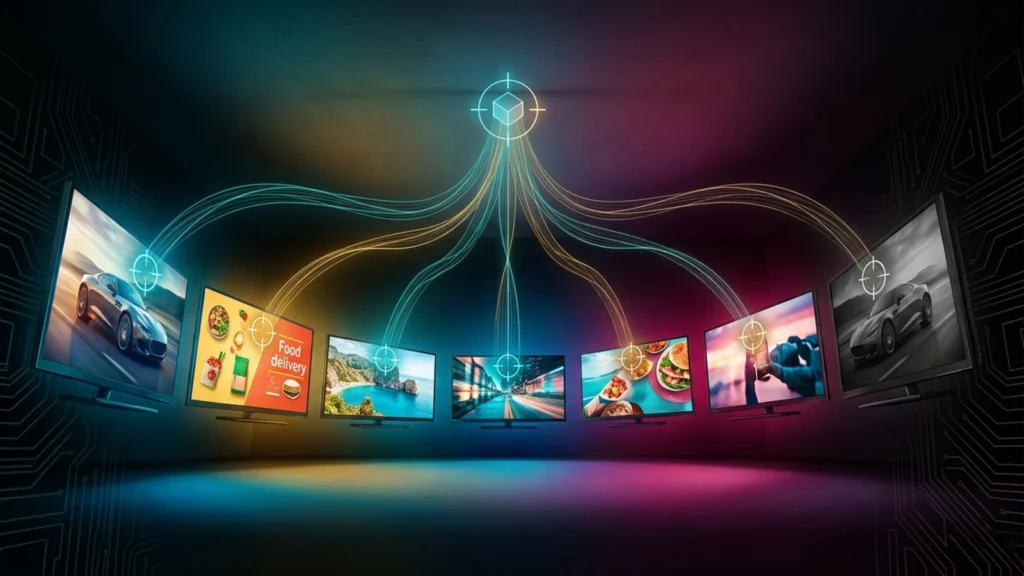
Addressable TV flips this dynamic. By utilizing a single message from an advertiser that is precisely matched to an advertiser-defined audience segment, the technology enables the delivery of different commercials to different households simultaneously, even while they watch the same network. This is not merely a digital trend; it is a fundamental reconfiguration of the television infrastructure that powers the majority of American homes.
The VAB defines this evolution through the lens of "authenticated audiences." By confirming the identity of a consumer on behalf of marketers, platforms can provide precise targeting and robust measurement, moving away from the probabilistic, IP-based guesswork that has plagued connected TV (CTV) for years.
Chronology: A Roadmap of Adoption
The rise of addressable TV has been a calculated, multi-year progression supported by the Go Addressable coalition—a powerful trade group including industry titans such as Comcast Advertising, DirecTV Advertising, DISH Media, AMC Networks, and Spectrum Reach.
- October 2024: Initial sentiment data indicated that 53% of advertisers had already elevated addressable TV to "must-buy" status, signaling the early momentum for the current wave of adoption.
- April 2025: EMARKETER forecasted that 92% of pay TV households would be addressable-enabled, a milestone that provided the structural backbone for today’s market accessibility.
- September 2025: A survey conducted by Advertiser Perceptions revealed that 63% of current non-users were planning to initiate addressable campaigns within the next 12 months, setting the stage for the 2026 surge.
- Q1 2026: DoubleVerify’s Global Insights report highlighted a 140% rise in CTV fraud schemes, inadvertently fueling the demand for the brand-safe, authenticated environments provided by addressable TV.
- May 2026: During the Go Addressable Upfronts Brunch, industry research confirmed that nearly 78% of advertisers intended to incorporate addressable TV into their 2026-2027 Upfront deals.
- June 9, 2026: The VAB publishes its definitive, updated guide, synthesizing these years of data into a practical framework for the industry.
Supporting Data: The Case for Investment
The numbers behind the 2026 adoption cycle are compelling. Beyond the technical feasibility, the financial logic for advertisers is becoming undeniable. The VAB reports that nearly half of current addressable TV advertisers expect to increase their investment in the channel this year—a 16% year-over-year growth rate.
The Precision Advantage
The technical superiority of addressable TV is rooted in deterministic data. Unlike probabilistic models, which rely on statistical inference—often missing up to 87% of households when using IP-to-postal linkage—deterministic data uses direct inputs to verify the audience.
Data from Experian (October 2024) underscores the value of this approach: authenticated users generate 42% more revenue than their non-authenticated counterparts. This capability is critical in a "cookieless" future, as deterministic identity resolution allows brands to maintain reach and attribution even in restricted browser environments like Apple’s Safari.
Performance Outcomes
The VAB’s guide cites attribution trends analysis from Kochava (Q2 2024–Q2 2025) to illustrate the tangible business impact of these campaigns. Users exposed to a media mix containing addressable TV and CTV showed a 10% increase in attributed conversions and a 9% increase in total video viewing across streaming services compared to those who were not. These metrics are driving a "second wave" of adoption, as skeptical brands realize that addressable is not just about targeting, but about driving measurable bottom-line outcomes.
Official Responses and Industry Sentiment
The shift toward addressable TV is being championed by both coalition leaders and agency practitioners who see the medium as the only logical response to media fragmentation.
Tim Myers, Executive Director of Go Addressable, notes that the barriers to entry are collapsing: "Addressable advertising execution has steadily increased in simplicity and adoption for brands and agencies. Our survey data shows that the spend-drivers are measurement, programmatic execution, and identity accuracy."
Practitioners in the field echo this sentiment. Kelly Metz, Chief Investment Officer at Spark Foundry, highlights the dual power of the medium: "The power of addressable is being able to do both at the same time: understanding both the content and the context in which you’re running, but also doing that in the fully addressable way of reaching the exact audience you seek."
Joshua Abneri, Director of Addressable Strategy at Kinesso, argues that addressable is no longer optional. "It’s hard to capture a large portion of your audience with one or a few partners," Abneri states. "You really need to strategize where you have your focused addressable approach and targeted mass reach approach."
Implications for the 2026-2027 Upfronts
The implications of this shift are profound for the advertising economy. As the industry moves into the height of the Upfront season, the "addressable" conversation is no longer about whether to test the format, but how to scale it across the entire media mix.
1. The Death of the "Niche" Label
With 92% penetration, addressable TV is now a mass-market tool. Agencies that continue to treat it as a secondary, supplementary tactic risk losing the ability to effectively manage frequency and reach across increasingly fragmented viewing environments. The ability to perform household-level frequency capping is becoming the most sought-after feature for national advertisers looking to mitigate ad fatigue.
2. Operational Complexity vs. Simplicity
The VAB’s five-step activation framework—which includes audience establishment, forecasting, activation, monitoring, and post-campaign reporting—standardizes the workflow for what was once a complex, fragmented process. By aligning with programmatic buying standards, addressable TV is becoming as easy to buy as digital, while retaining the premium, brand-safe environment of traditional television.
3. The Measurement Wars
The push for deterministic, authenticated data is a direct challenge to the status quo of GRP-based measurement. As platforms like DIRECTV integrate with LiveRamp’s CAPI Hub and AMC Global Media brings its inventory into programmatic buying via Magnite’s ClearLine, the industry is creating a unified, privacy-compliant ecosystem. Advertisers who move early to adopt these integrated measurement solutions will likely gain a competitive advantage in ROI.
4. Future-Proofing for Privacy
As global privacy regulations tighten and third-party cookies face total obsolescence, the "authenticated" nature of addressable TV provides a safe harbor. Because addressable relies on first-party data and direct subscriber authentication rather than tracking cookies, it is inherently more compliant with emerging privacy standards. This makes it a foundational component of any long-term, future-proofed marketing strategy.
Conclusion: The Path Forward
The VAB’s updated guide serves as a timely reminder that the television landscape has changed permanently. The combination of deterministic identity, authenticated audiences, and multi-platform delivery has transformed the living room into a high-precision, addressable environment.
As nearly 80% of advertisers prepare to integrate these solutions into their 2026-2027 Upfront strategies, the industry is entering a new era of accountability. For brands that have remained on the sidelines, the message is clear: the infrastructure is ready, the data is verified, and the audience is waiting. The question for the remainder of 2026 is no longer about the potential of addressable TV, but about how quickly advertisers can adapt their budgets to capture the efficiency and growth it offers.
For those looking to navigate this transition, the VAB’s "What Is…" educational series, including the full addressable TV guide, is available to members and verified marketing professionals at theVAB.com.
