
The Digital Shift: How LATAM News Publishers Are Redefining Engagement in the Social Video Era
In the rapidly evolving media landscape of Latin America (LATAM), the traditional morning newspaper or evening television broadcast is no longer the primary touchpoint for the public. Instead, news is discovered, debated, and disseminated at scale through the algorithm-driven feeds of social media platforms. According to the Reuters Institute Digital News Report 2025, between 58% and 64% of respondents across Argentina, Chile, Colombia, Mexico, and Peru now rely on social media as their primary source of news.
This shift presents a dual reality for legacy publishers: some have successfully pivoted their strategies to dominate the social video space, while others find themselves being eclipsed by agile, social-first creators. As competition for the digital audience intensifies, the ability to decode how viewers engage with news content has become the most critical competitive advantage in the industry.
By analyzing 2025 performance data from Tubular Labs, we can gain a clear view of the trends shaping the 2026 media landscape and identify the strategic levers that LATAM publishers must pull today to secure their relevance.
The Landscape of News in the Digital Age
The sheer volume of digital consumption in the region is staggering. Between January 1 and July 31, 2025, social video content across all categories in LATAM generated a monumental 4.05 trillion views. Within this massive ecosystem, the "News & Politics" category—the lifeblood of a functioning democracy—accounted for 27.1 billion of those views across 293,000 unique uploads.
However, a closer look reveals a striking disparity. While 27.1 billion views may seem substantial, the News & Politics category represented only 0.67% of total video uploads in the region. This indicates a significant "whitespace" opportunity. For established media houses, the path to growth is clear: they must move beyond traditional formats and align their output with the actual behaviors of digital audiences rather than relying on historical assumptions about consumption.
YouTube: Navigating the Mobile-First Reality
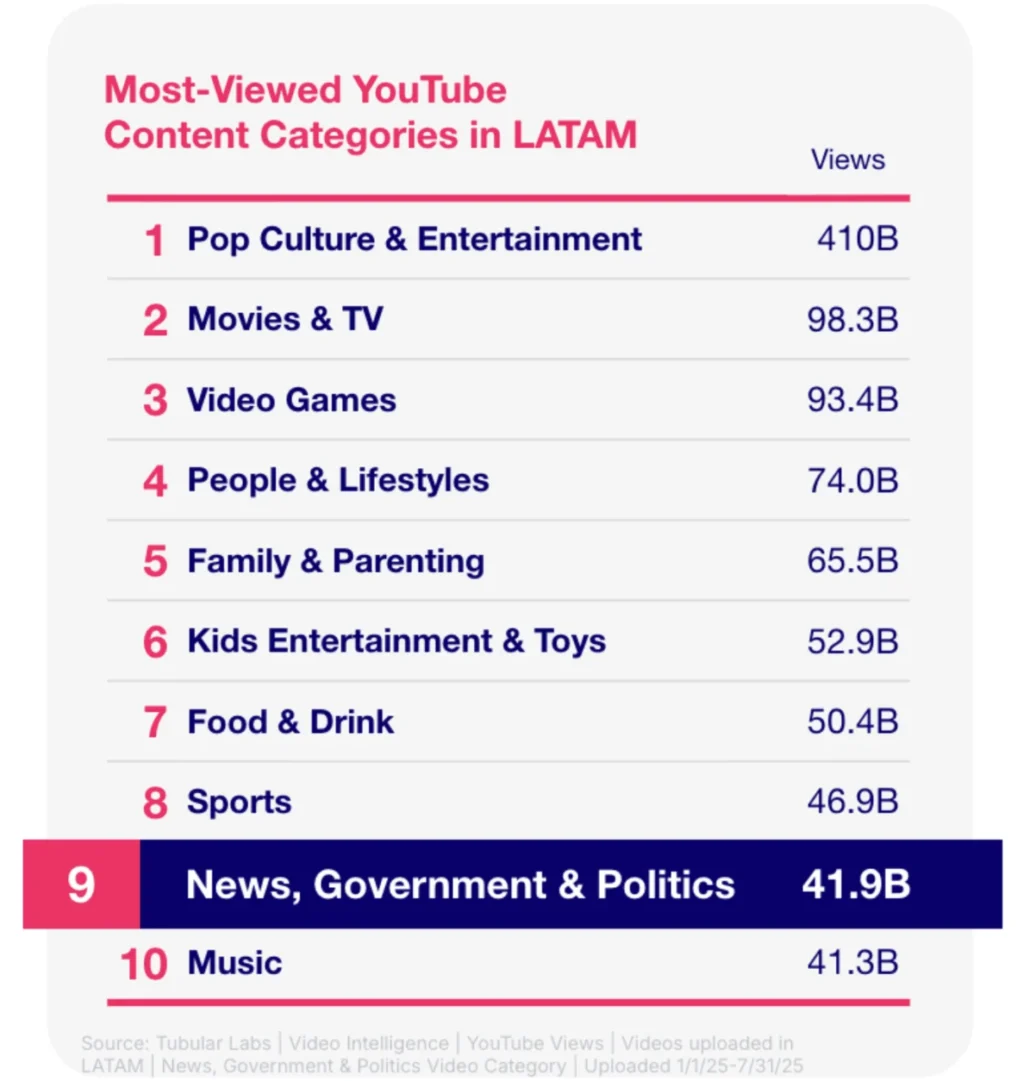
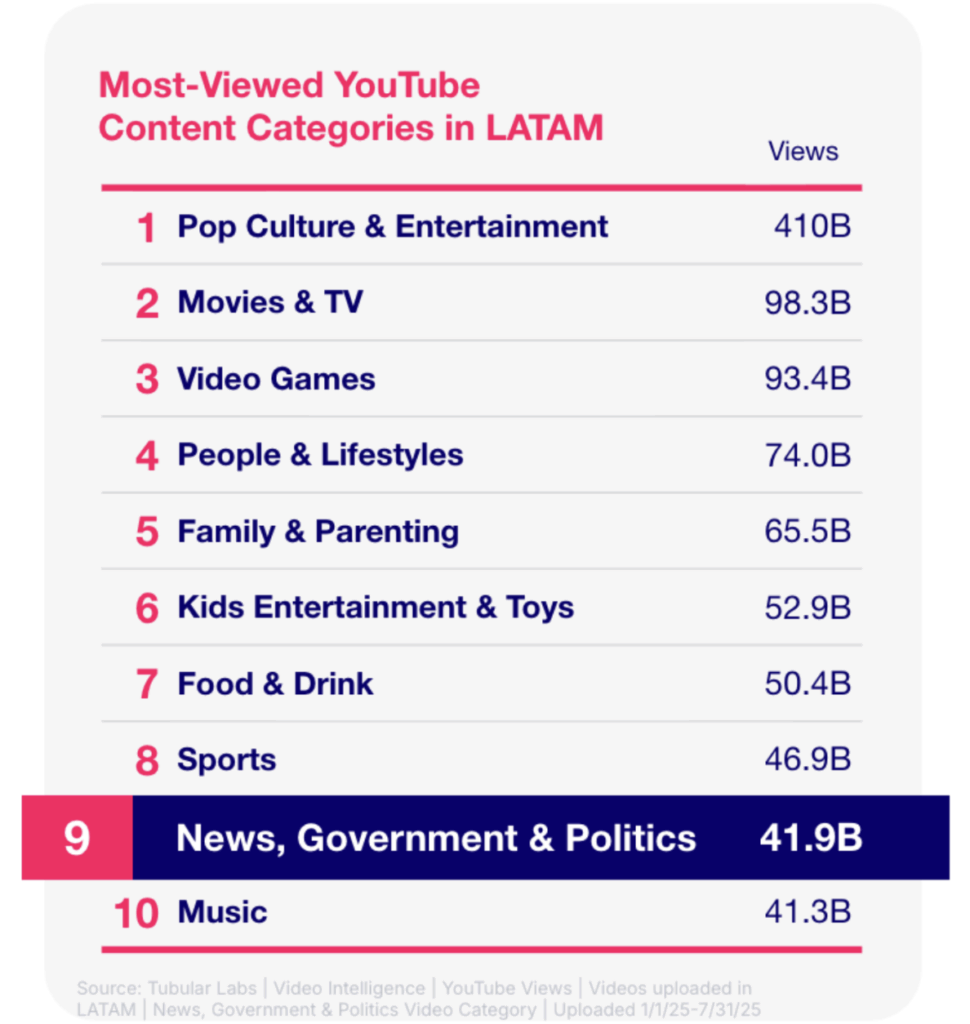
On YouTube, the world’s largest video repository, News, Government & Politics ranked as the #9 most-viewed category in LATAM, amassing 41.9 billion views. Notably, this category outperformed Music in terms of raw viewership, despite a lower volume of total uploads. This demonstrates that when news content is delivered effectively, the audience demand is insatiable.
The Duration Paradox
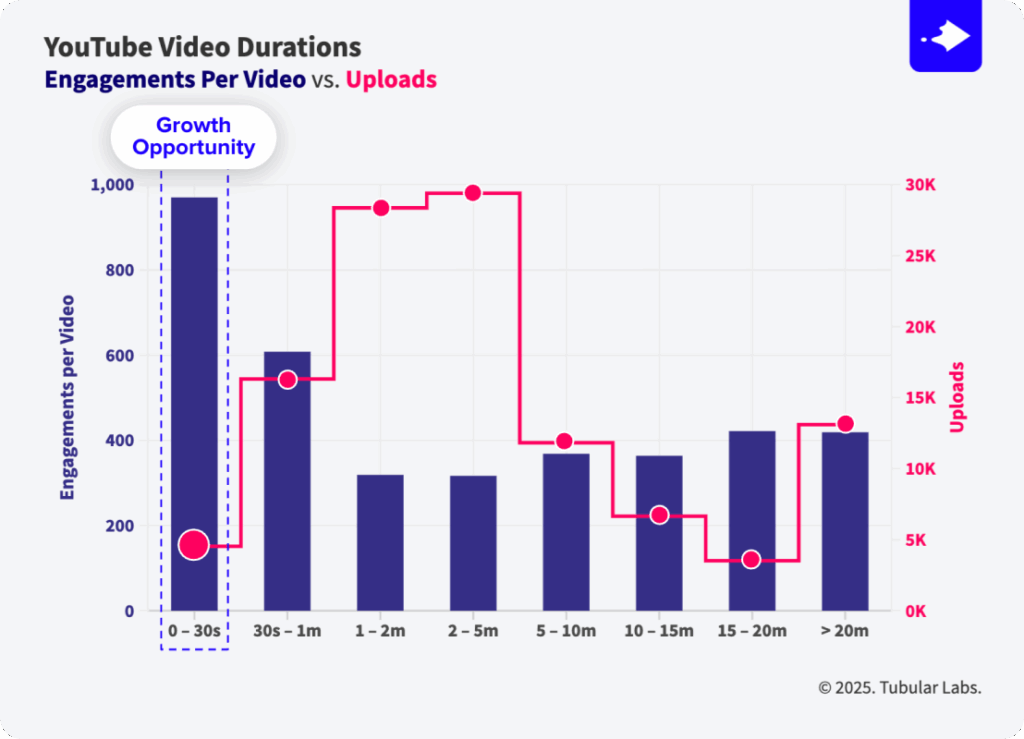
One of the most counterintuitive findings from the 2025 data is the correlation between video duration and audience engagement. While the majority of industry uploads fall into the 1-to-5-minute bracket, this length actually produces the lowest engagement per video. Conversely, videos under 30 seconds deliver the highest engagement rates across the platform.
This discrepancy highlights a disconnect in current editorial strategies. Many publishers are still operating under the assumption that "news" requires depth and duration, but the data suggests that for the average LATAM social viewer, brevity is the soul of engagement. The "under-30-second" format is an under-utilized growth tool that legacy publishers must prioritize to capture the mobile-scrolling generation.
Mobile vs. The Living Room
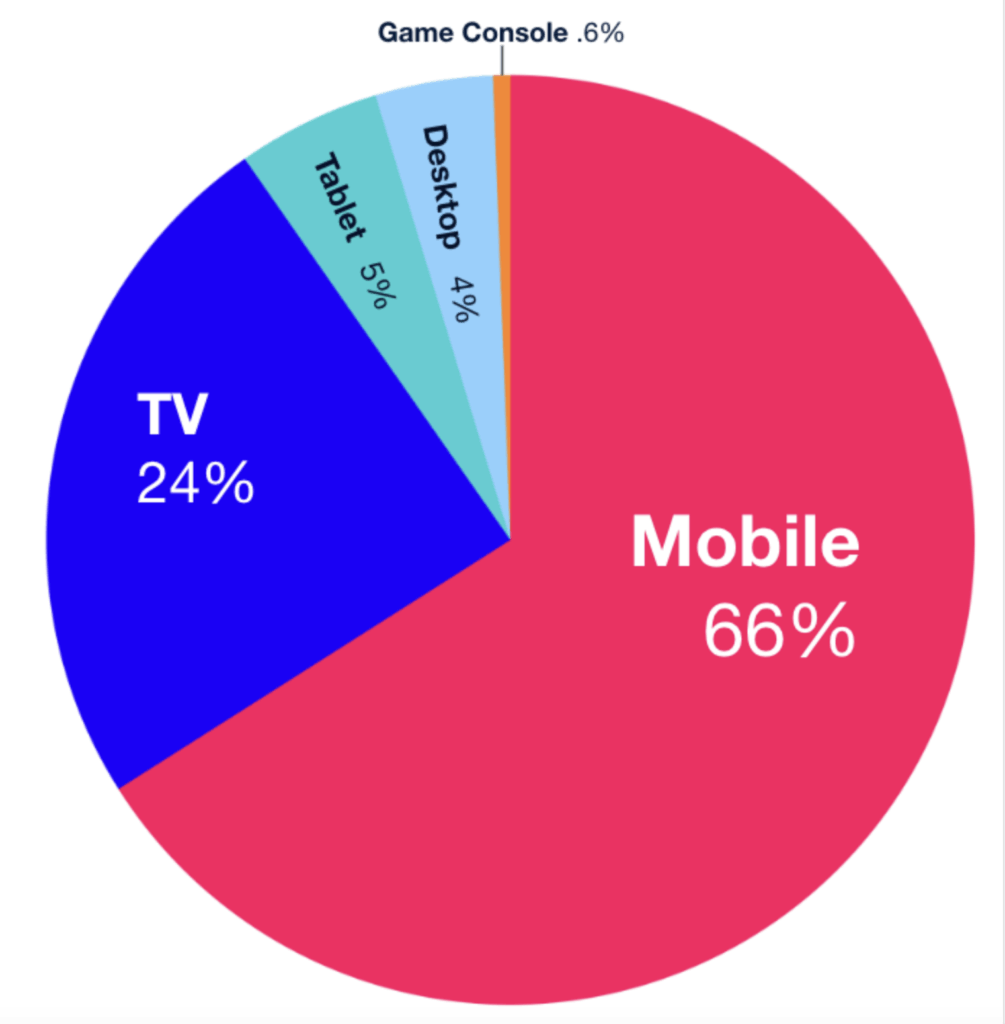
The data confirms a distinct shift in hardware preference: mobile devices account for 66% of YouTube views for News & Politics content, compared to only 24% on connected TV. This reinforces the necessity for a mobile-first production mindset. Vertical video, rapid-fire editing, and high-impact visual hooks are no longer optional "nice-to-haves"—they are the baseline for survival.
The Rise of TikTok as a Growth Engine
While YouTube remains a pillar, TikTok has emerged as the undisputed powerhouse for engagement. Despite accounting for a smaller share of total uploads, TikTok drives 71% of all cross-platform social interactions for LATAM news media.
Case Studies in Strategic Success
The effectiveness of a TikTok-first approach is best illustrated by industry leaders like C5N. An analysis of their performance shows that TikTok content made up only 25% of their total cross-platform uploads, yet it was responsible for a staggering 71% of their total engagement.
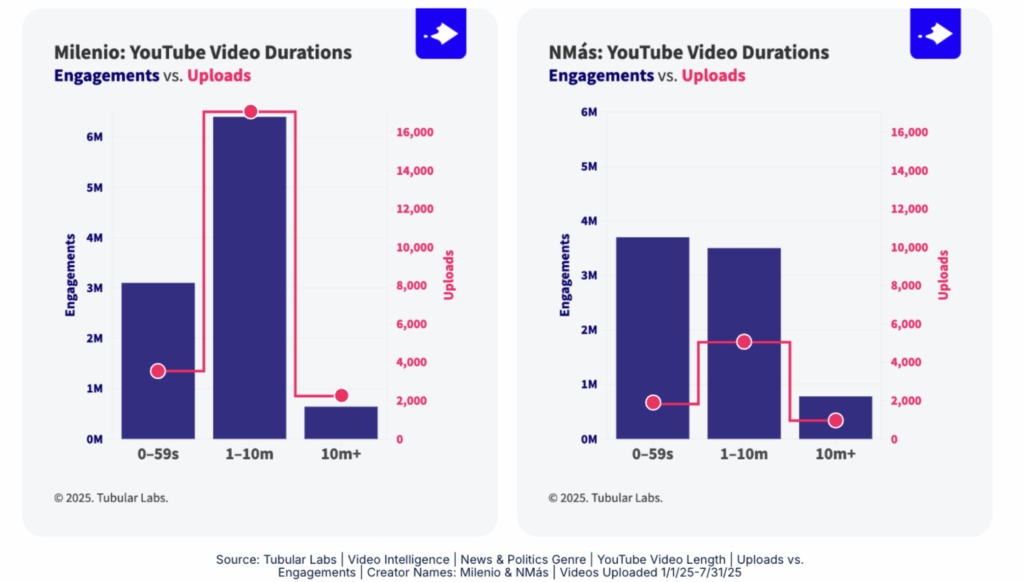
Similarly, other major outlets are finding that diversifying their format pays dividends. For Milenio, YouTube Shorts represented only 15% of their uploads but captured 31% of their total cross-platform engagements. NMás provides perhaps the most compelling evidence: despite posting 2.8 times more mid-length videos, they secured nearly half of their total engagement from short-form content.
These statistics offer a roadmap for publishers: splicing long-form investigative pieces or studio interviews into snackable, high-impact Shorts or TikToks is not just a distribution tactic—it is a mandatory retention strategy.
Data-Backed Strategy: Aligning Content with Behavior
The 2025 analysis provides several actionable takeaways for media strategists looking to optimize their performance in 2026:
- Timing is Everything: Performance data indicates that videos uploaded on Sundays earn the highest engagement. Publishers should move away from the "Monday-Friday" news cycle mentality and automate their content calendars to capture the weekend audience, even if it falls outside traditional office hours.
- Topic-Platform Alignment: Audience interests vary by platform. Our data suggests that certain topics perform better in specific digital environments. For instance, content regarding immigration or social issues like women’s rights finds significant traction on Instagram and TikTok, whereas topics related to law enforcement or government regulation often see higher engagement on Facebook.
- The Device-Length Correlation: According to Chartbeat, there is a clear divide in how users consume content based on their device. Audiences on smart TVs and gaming consoles are comfortable with long-form content (20+ minutes), while mobile and desktop users consistently prefer videos under one minute. A "one size fits all" distribution strategy is doomed to fail; publishers must customize their edit lengths based on the device they expect their viewers to use.
Implications: The Road to 2026
The transition from traditional broadcast journalism to social-first video production is not merely a change in medium; it is a change in culture. The 0.67% share of total uploads currently held by the News & Politics category represents a massive, untapped audience waiting to be captured by publishers who are willing to pivot.
For media strategists, the mission for 2026 is clear: stop relying on the intuition of the past. The data is unambiguous. The winners in the LATAM news space will be those who embrace short-form video, respect the mobile-first behavior of their audience, and treat the algorithm not as an enemy, but as a distribution partner.
Key Summary for Digital Teams:
- Whitespace Exists: News is currently under-represented in the total social video ecosystem.
- Short-Form is King: Videos under 30 seconds are the most efficient drivers of engagement.
- TikTok is Mandatory: It is the primary engine for social interaction, even if it requires fewer uploads than legacy platforms.
- Strategy over Frequency: Quality and timing (such as Sunday posting) outweigh the act of simply posting more often.
The era of passive news consumption is over. The era of the "social-first" newsroom has begun, and for those who adapt, the potential for audience growth and influence is unprecedented. By aligning editorial strategy with the hard, empirical reality of audience behavior, LATAM publishers can secure their place at the center of the regional conversation for years to come.
