

The Compliance Paradox: Why Every Privacy Law Adds a Checkbox Someone Has to Explain
In the modern digital ecosystem, the user experience is increasingly defined by a series of repetitive, often exasperating hurdles. Every time a new privacy regulation is passed—whether it is a state-level statute in the U.S. or an updated directive from the European Union—the consumer is met with a familiar, yet wearying, sight: the consent banner. Beneath the surface of these “I Agree” buttons lies a complex, multi-billion-dollar apparatus of legal compliance, software engineering, and strategic communication.
As the regulatory landscape grows more fragmented, the burden of explaining these checkboxes to the average user has become a specialized field of its own. It is no longer just about data protection; it is about managing the psychological friction between legal mandates and the seamless user experience that tech giants strive to maintain.
The Evolution of the Consent Banner: From Utility to Liability
The history of the digital consent banner is a testament to the law of unintended consequences. What began as a simple "cookie notice" following the introduction of the EU’s ePrivacy Directive has morphed into a sprawling, multi-layered architecture of "consent management platforms" (CMPs).
The Chronology of Compliance
- The Early 2010s: The "Cookie Law" era. Sites began deploying basic, often dismissive banners to notify users that cookies were in use.
- 2018 (The GDPR Watershed): The General Data Protection Regulation changed the game. It demanded "affirmative, informed consent," forcing companies to build systems that could record, store, and honor user preferences.
- 2020–2024 (The State-Level Patchwork): With the arrival of CCPA/CPRA in California and subsequent laws in states like Virginia, Colorado, and beyond, the requirements became granular. It wasn’t just about cookies; it was about "selling" vs. "sharing" data, "opt-out" signals like GPC (Global Privacy Control), and the "right to limit" sensitive information.
- 2026 and Beyond: We have entered an era of AI-driven data processing, where consent banners must now account for whether user data is being fed into Large Language Models (LLMs) or used for automated profiling.
The Economics of the Checkbox: Supporting Data and Industry Costs
The proliferation of these checkboxes is not merely a design nuisance; it is a profound economic driver. Companies are spending record amounts on compliance infrastructure.
According to industry data, the cost of managing consent for a mid-to-large enterprise has risen by approximately 40% since 2022. This is driven by several factors:
- Legal Scrutiny: The risk of non-compliance—often tied to a percentage of global annual turnover—has turned privacy compliance from an IT task into a boardroom priority.
- Tech Debt: Many legacy systems were not built to handle the "opt-out" requests that are now legally required. Retrofitting these systems involves significant engineering overhead.
- The "Consent Tax": Research indicates that every additional step in a consent flow results in a 5% to 15% drop-off in user engagement. For publishers, this translates to lower ad-tech efficacy and, ultimately, lower revenue.
The irony is that as we strive for "privacy by design," the complexity of the design itself often leaves the user less informed. When a user is presented with a 16-item list of granular data-sharing toggles, they are more likely to click "Accept All" just to reach the content they came for, defeating the legislative intent of the law.
The Industry Perspective: Official Responses and Strategic Shifts
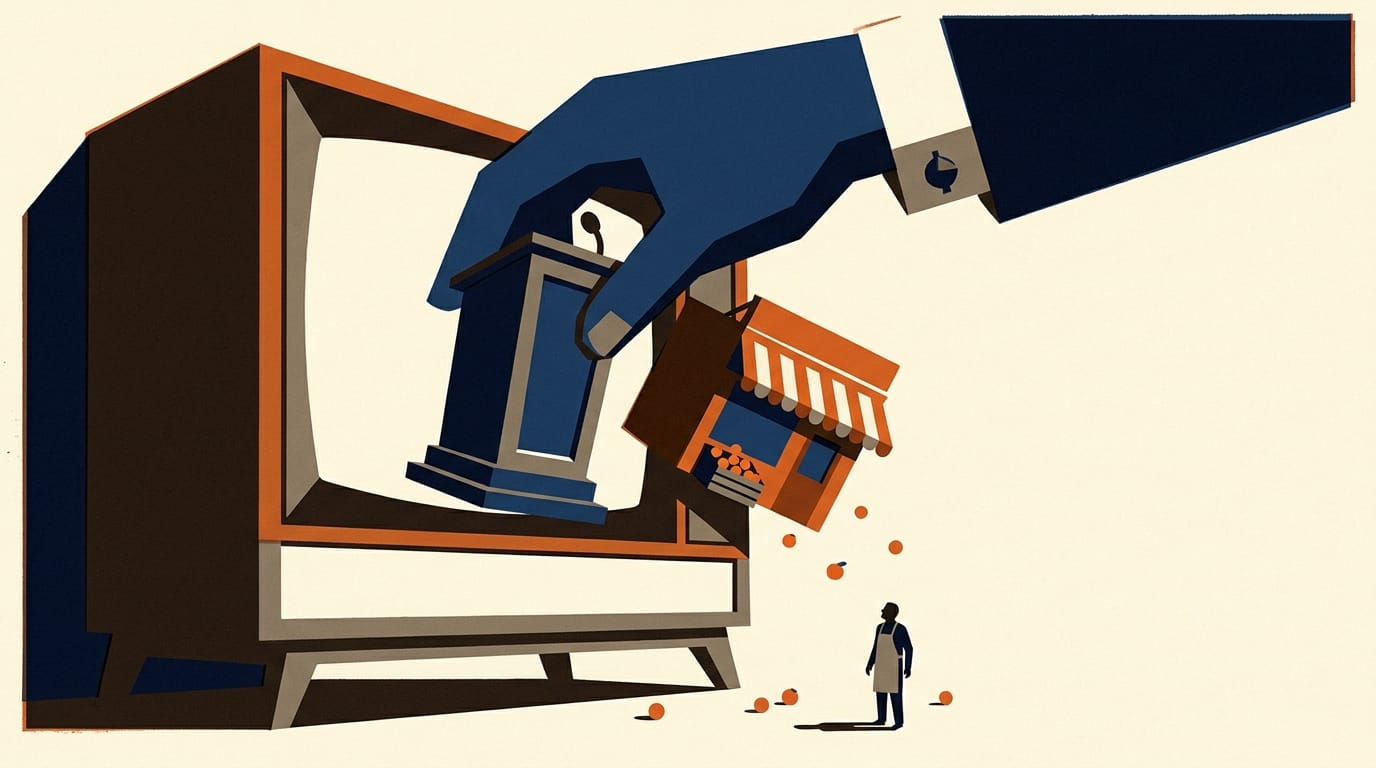
Major technology stakeholders have adopted varying strategies to deal with the "checkbox fatigue."
Google and the Two-Tiered Approach
Google has recently moved to categorize its ad-tech policy violations into a "two-tier" system. For platforms, this is a signal that the era of loose enforcement is over. By automating the penalty process—effectively assigning "red" and "yellow" cards for non-compliance with child-safety or data-sharing rules—Google is forcing its partners to take the "checkbox" seriously. If a publisher fails to explain their data usage correctly, they risk being cut off from the primary programmatic ad supply.

The Role of Meta and Ad-Tech Efficiency
Meta’s recent research into "conversion-based" advertising suggests that the quality of data is becoming more important than the quantity. They have noted that ad sets failing to hit a baseline of 50 weekly conversions see a 28% increase in costs per purchase. This data suggests that when consent banners are confusing or intrusive, they throttle the machine-learning models that fuel digital marketing. The result is a paradox: companies need more data to be efficient, but privacy laws are making the collection of that data increasingly difficult.
Implications for the Future of the Web
What does this mean for the future of the internet? We are heading toward a "Compliance-First" internet, where the user experience is filtered through the lens of legal risk mitigation.

1. The Rise of "Consent-Less" Personalization
As the value of first-party data increases, companies are moving away from third-party trackers that trigger the most annoying consent banners. We are seeing a shift toward "contextual" advertising—where ads are served based on the content of the page rather than the identity of the user. This is a return to a 1990s-style model, but powered by 2026-era AI that can understand page sentiment and context with surgical precision.
2. The Standardization of Privacy UX
Currently, every website has its own unique interpretation of how to present a privacy notice. This inconsistency breeds distrust. Industry groups are beginning to push for a "universal" privacy UI—a standardized icon or button that users recognize, much like the "HTTPS" lock icon, which signals that a site respects user privacy without needing a full legal treatise.

3. The "Privacy Professional" as a New Creative Role
The job of "explaining the checkbox" is shifting from lawyers to UX designers and copywriters. Companies are hiring "Privacy Experience Designers" to make the legal jargon digestible. This is a recognition that the law is no longer just a set of rules to be filed away—it is a part of the brand. How a company handles your data is increasingly being viewed as a metric of brand integrity.
Conclusion: Bridging the Gap
The proliferation of privacy laws has created a tension that the industry has yet to resolve. On one side, we have the rightful demand for individual sovereignty over digital identities. On the other, we have a digital economy that is fundamentally built on the ability to connect audiences with relevant content and commerce.

The "checkbox" is currently the clumsy bridge between these two worlds. It is a symbol of a transitional phase in our digital history. As we move forward, the solution will not be "more checkboxes," but rather a fundamental shift in how data is treated at the architecture level.
Until that happens, the burden remains on the publishers, the advertisers, and the tech platforms to simplify the complex. The goal should not be to trick the user into clicking "Accept," but to build systems so transparent and respectful that the consent process becomes a frictionless part of a trusted relationship.

The future of the web depends on whether we can move beyond the "checkbox" and into an era of genuine, understandable, and sustainable digital stewardship. As the regulatory landscape continues to evolve, those who treat privacy as a competitive advantage rather than a compliance burden will be the ones who define the next decade of the internet.
Quick Summary of Key Trends:
- Ad Tech Fragmentation: With platforms like YouTube and DV360 refining their ad-buying processes, the focus is shifting toward "curated bundles" where privacy compliance is baked into the ad-buying package.
- The AI Pivot: As simple AI tasks are routed to cheaper, more efficient models, the demand for high-quality, consent-verified data is skyrocketing.
- The Trust Economy: Companies that prioritize transparent communication about data usage are seeing higher retention rates, proving that privacy is not just a legal hurdle, but a business opportunity.
As we look toward 2027 and beyond, the "checkbox" will likely fade, replaced by browser-level signals and decentralized identity protocols. But for now, the explanation remains: it is the price we pay for a connected, yet increasingly guarded, digital existence.
