
The Great Martech Expansion: Navigating the 15,384-Solution Landscape of 2025
The marketing technology (martech) industry has long defied the gravity of market skeptics. Since the inception of the first "Marketing Technology Landscape" in 2011, industry pundits have periodically forecasted a mass consolidation or a market crash. Yet, the data continues to tell a different story: a persistent, aggressive, and creative expansion.
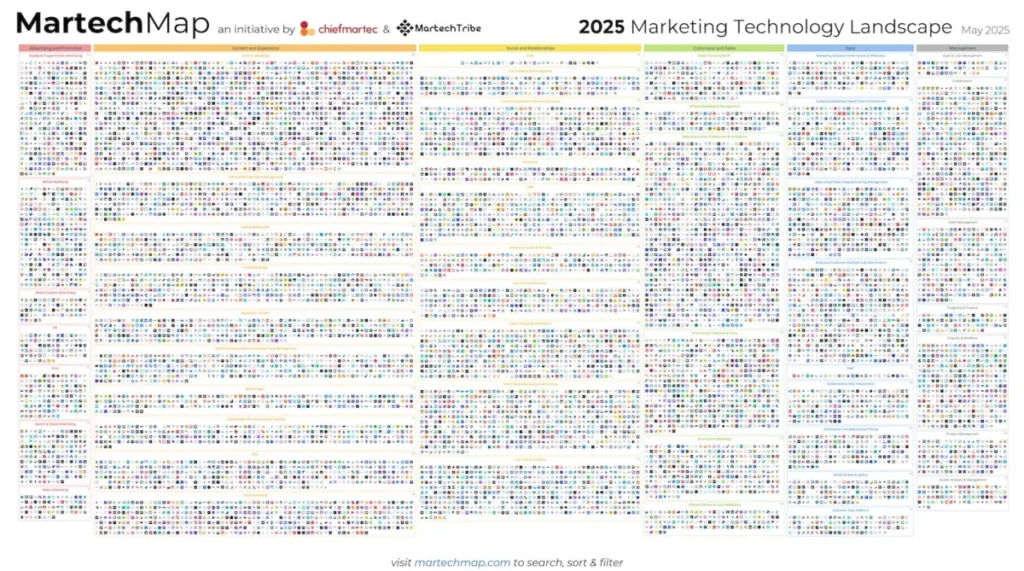
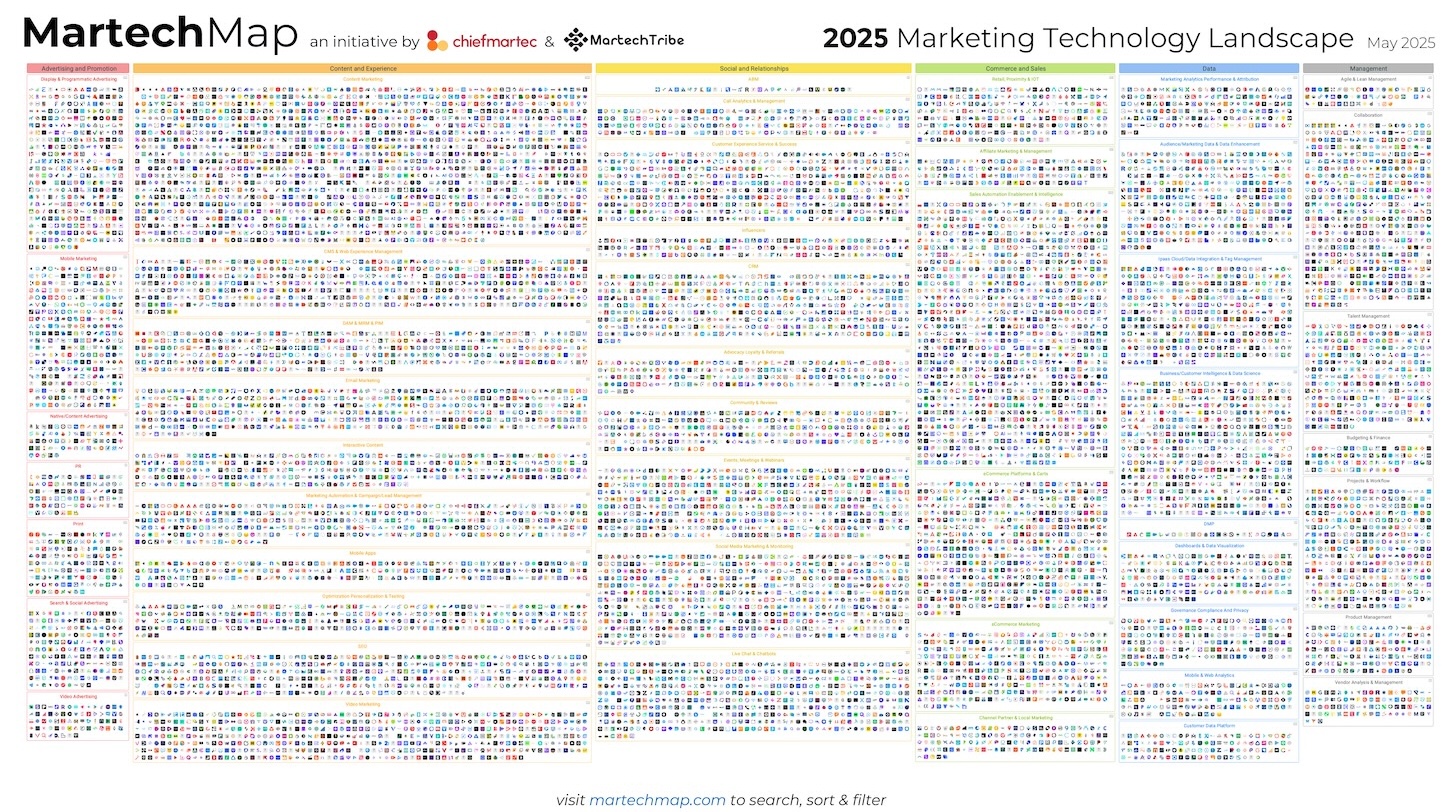
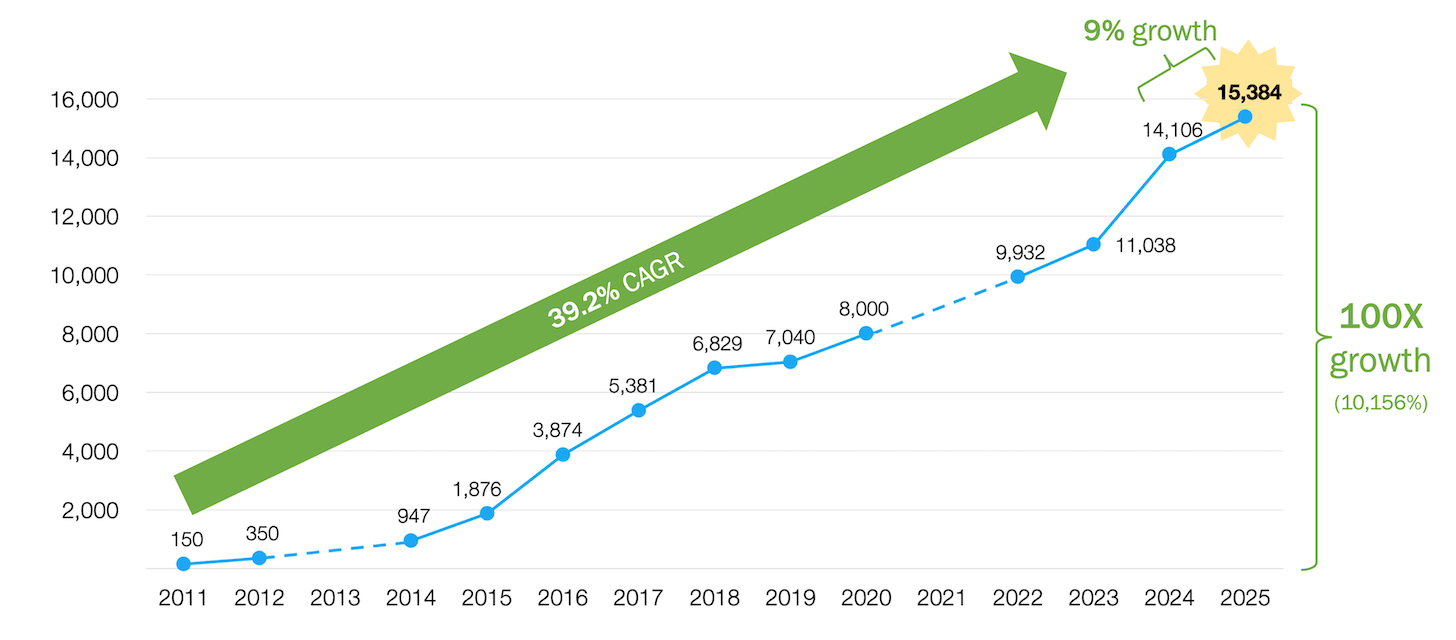
As of May 2025, the official martech landscape has reached a staggering 15,384 unique solutions, marking a 9% year-over-year increase from the 14,106 products tracked in 2024. This growth, detailed in the newly released State of Martech 2025 report, underscores a fundamental shift in how modern enterprises build, maintain, and evolve their technology stacks.
A 15-Year Chronology of Exponential Growth
To understand the current state of the industry, one must look back at the trajectory of the last decade and a half. In 2010, the concept of a "Marketing Technologist"—a hybrid role between creative marketer and systems engineer—was considered a fringe necessity. When the first official infographic was published in 2011, it featured a modest 150 solutions.
By the mid-2010s, the "martech explosion" was in full swing, fueled by the shift toward cloud-based SaaS models and the democratization of digital advertising. The landscape grew from hundreds to thousands, evolving into an industry-wide shorthand for the complexity of the modern CMO’s job.
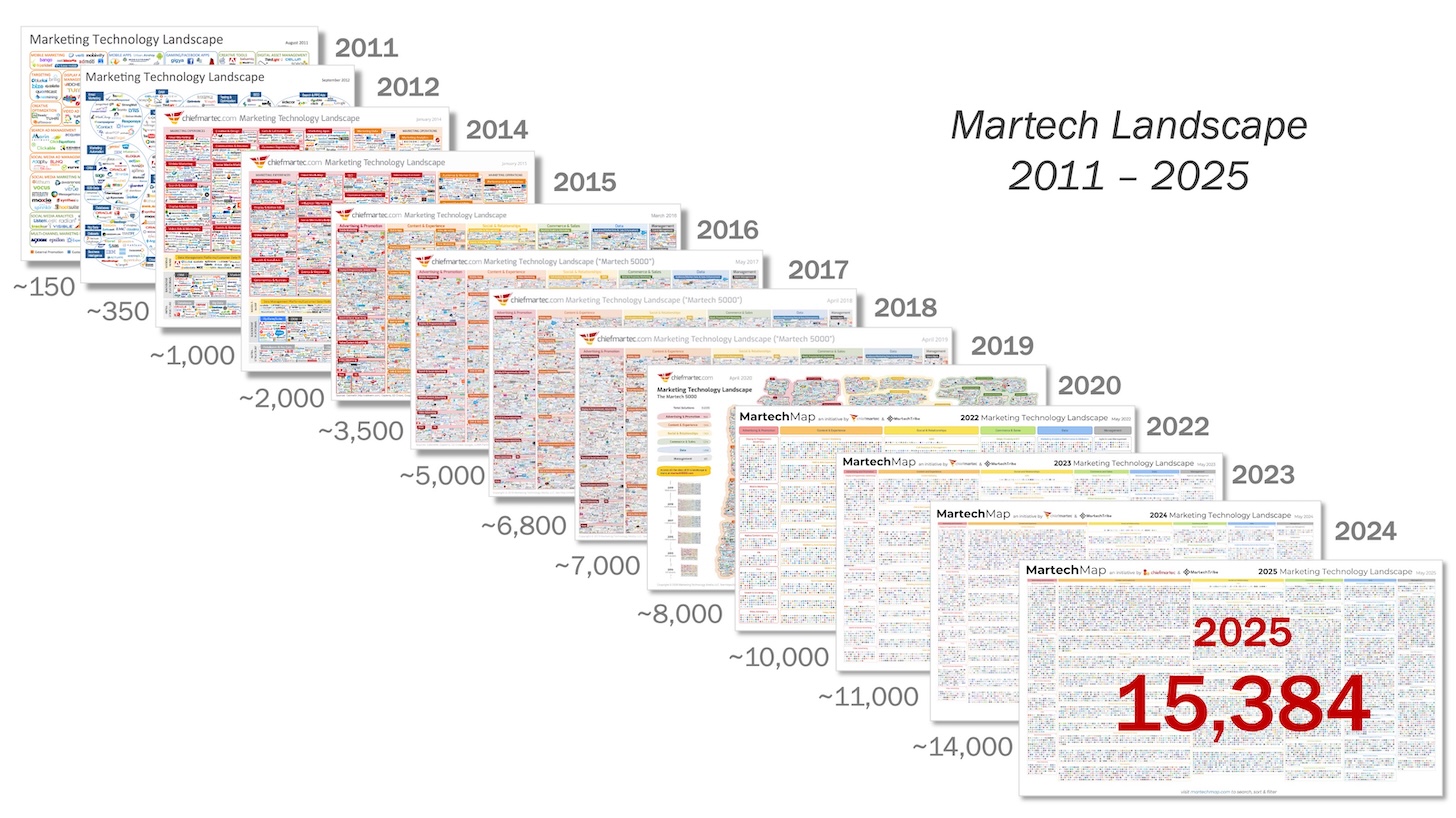
The 2025 landscape, co-produced by Scott Brinker and Frans Riemersma, reflects a 100x increase since that inaugural chart. This growth represents an astounding 10,156% expansion, a figure that continues to baffle market analysts who expected the "death of the salesperson" or a sudden market correction years ago. Instead, the ecosystem has matured, diversifying into 49 distinct categories that span everything from traditional CRM to AI-driven predictive modeling.
Supporting Data: Churn, Growth, and the "Hypertail"
The sheer volume of 15,384 solutions is not merely a reflection of new entrants; it is the result of a complex churn process. This year, the research team evaluated 11,133 new candidates, with 2,489 meeting the rigorous criteria for inclusion. Simultaneously, 1,211 products were removed from the landscape due to acquisition, bankruptcy, or obsolescence.
The Churn Paradox
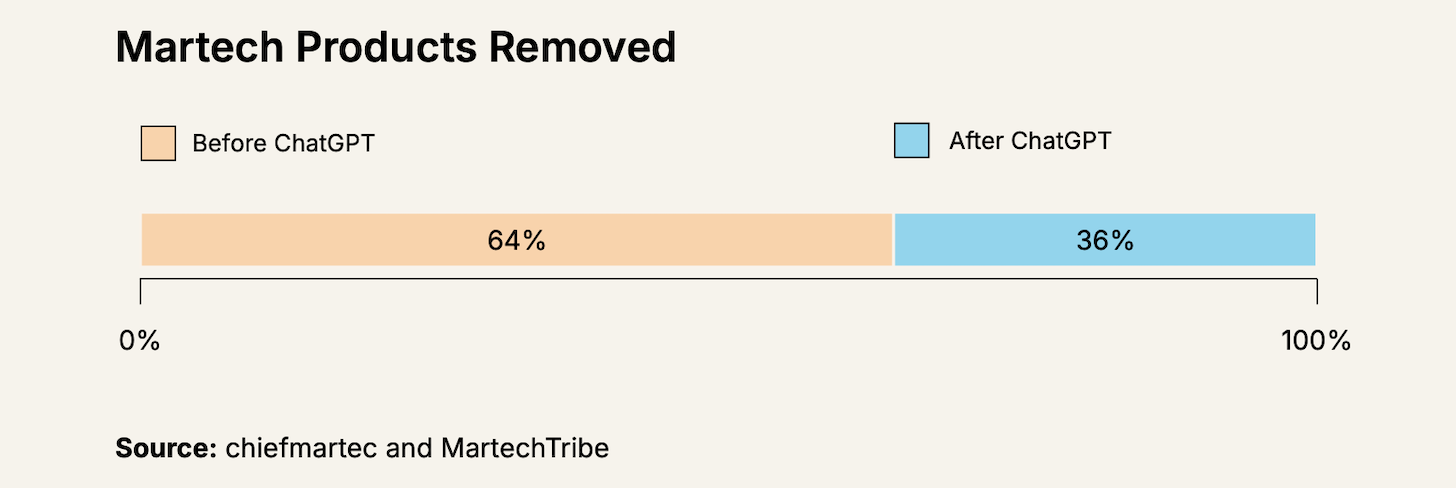
The churn rate of 8.6% is telling. Contrary to the assumption that most exits would be recent AI-native startups, approximately two-thirds of the products that vanished were legacy solutions from the 2010–2020 period. This confirms a long-awaited market trend: the "first wave" of martech is finally consolidating. The laws of economic gravity have caught up with venture-backed darlings that failed to scale or were superseded by more agile, integrated platforms.
The Rise of the "Hypertail"
Perhaps the most significant revelation in the 2025 data is the emergence of the "hypertail." While the long tail of commercial software is well-documented, the hypertail refers to the massive, invisible proliferation of custom-built applications.
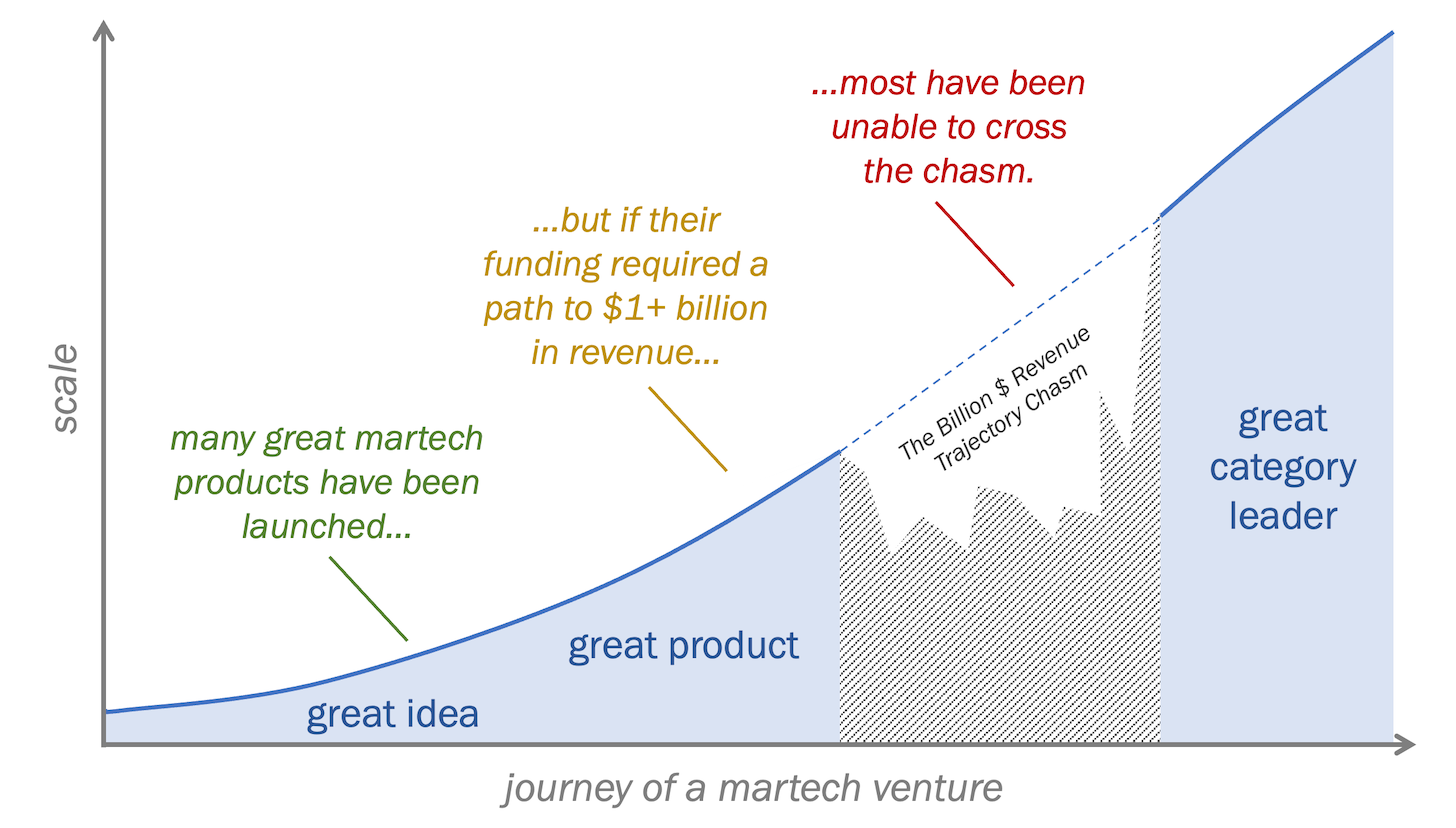
Thanks to the rapid adoption of low-code and no-code platforms, coupled with the "vibe coding" capabilities of generative AI, the barrier to creating custom software has effectively collapsed. Marketing teams are no longer beholden to IT departments or third-party vendors for simple automation; they are building bespoke solutions that solve narrow, specific pain points. These are not products appearing on the landscape; they are millions of proprietary agents and scripts operating within the private infrastructure of modern companies.
Implications for Marketing Operations
The expansion of the landscape has direct consequences for the average corporate tech stack. Despite recurring narratives of "stack consolidation," the average enterprise tech stack grew by 2.2% over the last year. This suggests that while organizations are seeking efficiency, they are simultaneously integrating specialized tools to maintain a competitive edge.
The Shifting Center of the Stack
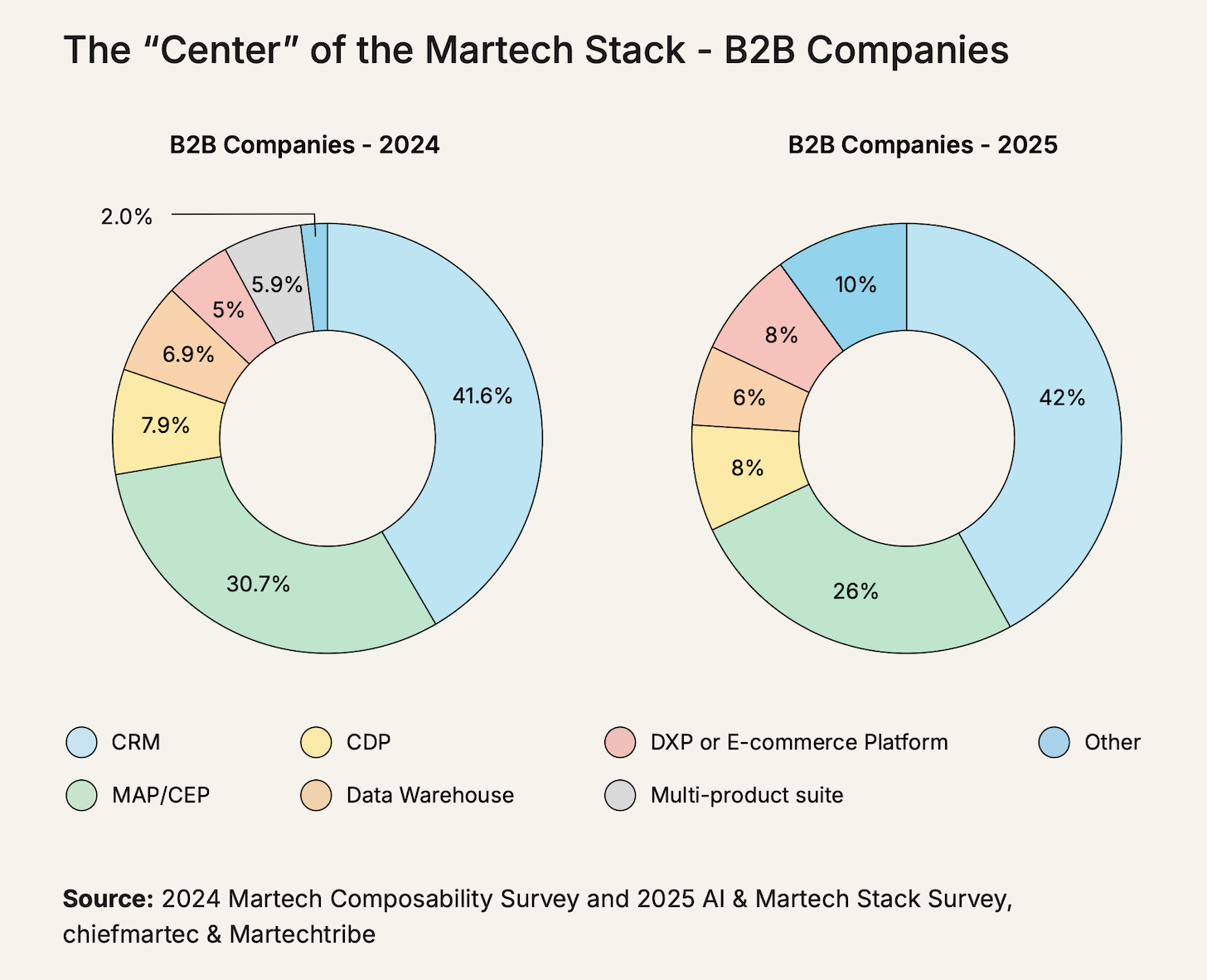
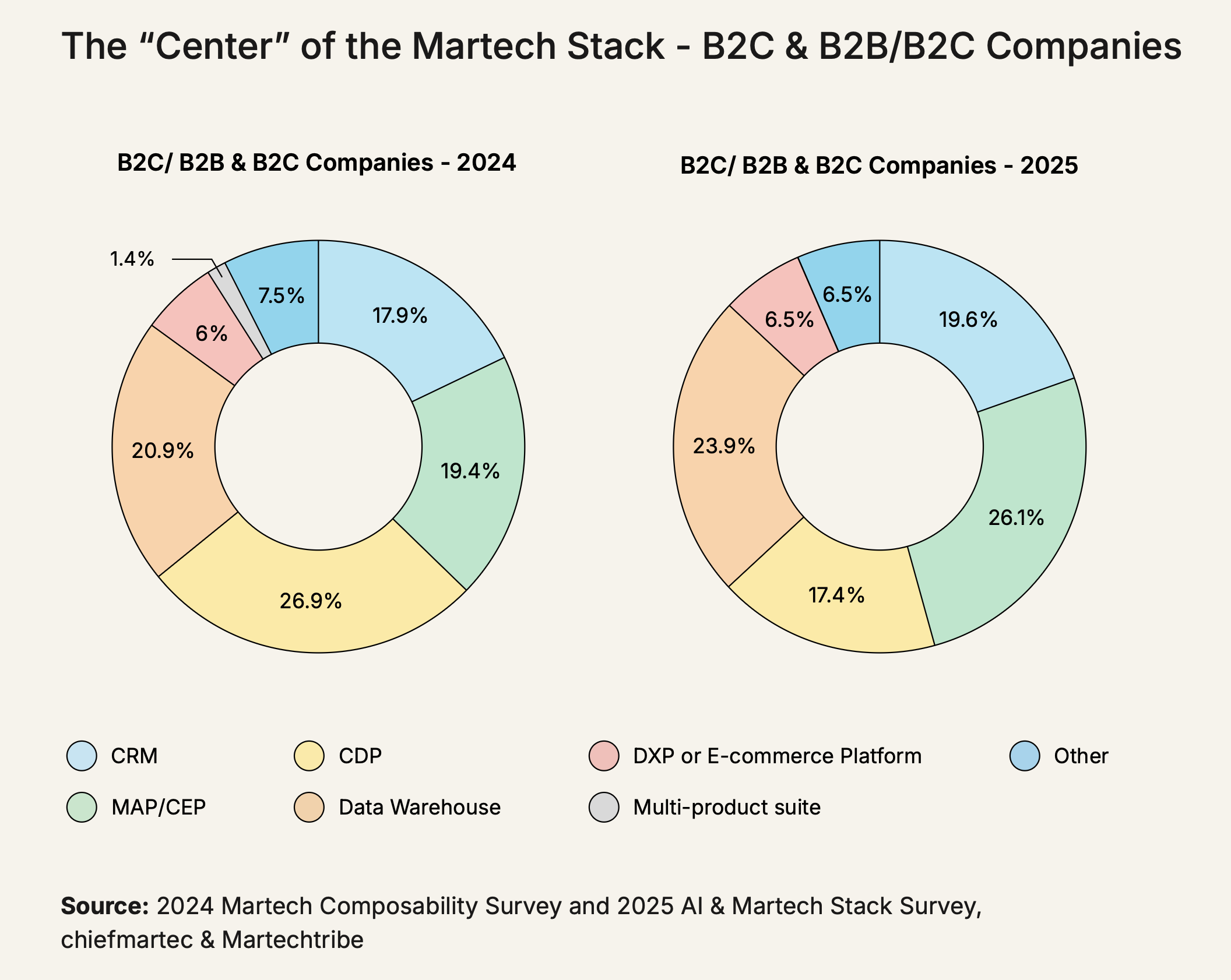
The State of Martech 2025 report reveals a notable shift in what leadership considers the "center" of their stack:
- B2B Dynamics: The center remains largely split between CRM and Marketing Automation Platforms (MAP). However, there has been a 5x increase in "Other" responses (up to 10%), signaling a trend toward custom-built, unified platforms that bridge the gap between disparate tools.
- B2C and Hybrid Dynamics: This sector is seeing the most disruption. Customer Data Platforms (CDPs) have seen a decline as the identified "center," dropping from 26.9% to 17.4%. This is attributed to a "squeezing" effect: data warehouse capabilities are absorbing the data-layer functions, while engagement layers (MAPs/CEPs) are absorbing the activation functions. The "composable CDP" architecture is clearly winning in the minds of infrastructure architects.
SEO: The Unexpected Growth Leader
In a display of ironical resilience, SEO—a category frequently declared "dead" by industry critics—saw the highest growth of all subcategories, expanding by 24%. This growth is driven by the rise of "AI Optimization" (AIO). As brands rush to capture traffic in a world where AI agents and chatbots answer search queries, the need for tools to manage visibility in an AI-first ecosystem has become a critical marketing investment.
Expert Analysis: The AI Multiplier Effect
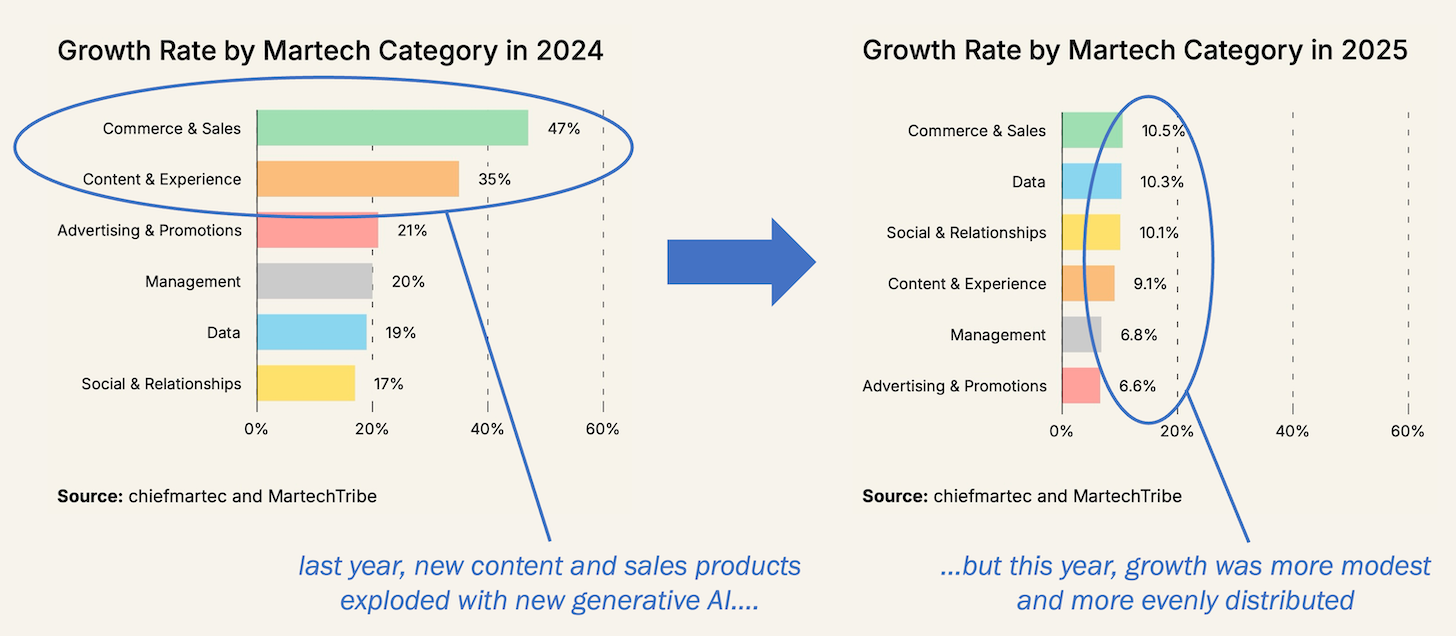
The "AI-native" surge that began with the release of ChatGPT has fundamentally altered the R&D cycle. In 2024, content and sales categories saw massive growth (35% and 47%, respectively). In 2025, that growth has stabilized to a steady 7–10% across all domains, suggesting that the initial hype has moved into a phase of widespread, practical application.
Scott Brinker notes that AI is not just a feature; it is an engine of software creation. The ability to generate functional code via natural language prompts allows for "instant software." This disruption follows the classic Christensen model: start by serving the underserved with simple tools and steadily climb the value chain until even enterprise-grade software is being modified by the users themselves.
Conclusion: A New Era of Software Literacy
The 2025 martech landscape serves as a reminder that the digital marketing discipline is permanently intertwined with software development. The "hypertail" of custom, AI-assisted software means that the future of marketing will be defined not by which vendors a company buys, but by how well they can orchestrate an environment of proprietary and commercial tools.
For those attempting to make sense of this ecosystem, the State of Martech 2025 provides the necessary empirical foundation. By moving away from the "squinting at logos" approach and focusing on the structural shifts—the consolidation of the first wave, the rise of the data warehouse, and the democratization of custom software—marketing leaders can better navigate the next 15,000 solutions.
As the industry moves forward, the message from the 2025 report is clear: the era of the "all-in-one" suite is being challenged by a "best-of-breed plus custom-built" reality. In this new paradigm, the most successful companies will be those that embrace the fluidity of their tech stack, treating their internal digital capabilities as a core competency rather than an outsourced utility.
For further insights, researchers and practitioners are encouraged to download the full, ungated State of Martech 2025 report.
