
Scaling Success: How Modern Agencies Are Solving the Multi-Client Email Management Bottleneck
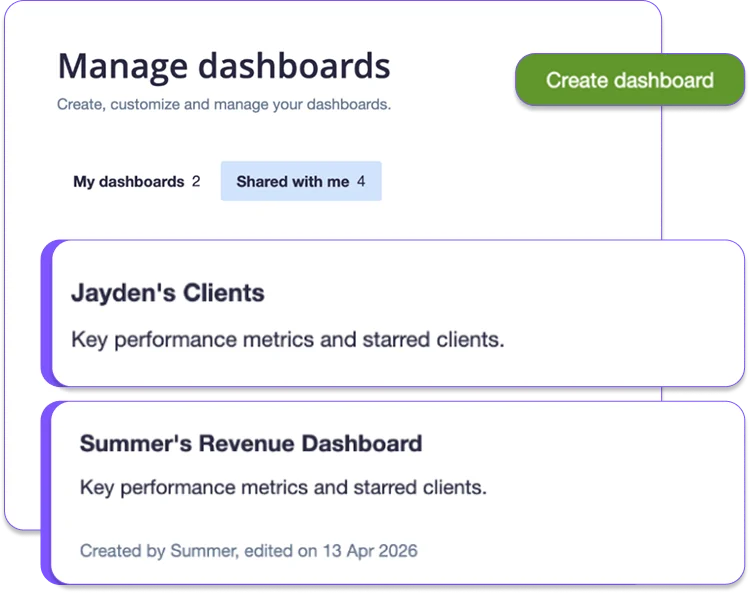
In the high-stakes world of digital marketing, agencies are often judged by their ability to scale. However, as an agency’s client roster grows, a silent, invisible tax begins to erode productivity: the administrative burden of juggling fragmented email marketing accounts. When performance data, campaign schedules, and subscriber lists are siloed within individual accounts, agencies find themselves spending more time on manual data entry than on the high-level strategy that clients actually pay for.
For marketing agencies, the transition from managing a handful of accounts to overseeing dozens creates a critical inflection point. If the infrastructure isn’t designed for multi-tenant management, the agency risks becoming an "administrative shop" rather than a strategic partner.
The State of Agency Operations: The Fragmentation Problem
Main Facts and Operational Realities
The core of the issue lies in the design of most standard email platforms. Historically, email software was built for the "single-marketer, single-brand" model. This paradigm assumes that one person logs in, manages one audience, and tracks one set of KPIs.
For an agency, this creates a catastrophic friction point. To report on five different clients, a manager must manually log in and out of five separate dashboards, export five sets of spreadsheets, and spend hours normalizing that data into a coherent presentation. This manual synthesis process is not just time-consuming—it is prone to human error and obscures the big-picture view of agency health.
The Chronology of Scalability Challenges
- The Startup Phase: When an agency begins with 1–3 clients, the "manual switch" method is sustainable. It feels personal and manageable.
- The Growth Inflection: As the client list grows to 10+, the administrative overhead begins to cannibalize the creative process. Strategy meetings are replaced by data-wrangling sessions.
- The Scaling Crisis: Once an agency crosses the 20-client threshold, the lack of centralized management becomes a liability. The team loses the ability to proactively monitor account health, leading to missed opportunities and potential client churn.
- The Modern Solution: Agencies are now adopting purpose-built "agency-first" platforms that consolidate oversight without compromising individual client privacy or account integrity.
Leveraging Centralized Dashboards: The Strategic Pivot
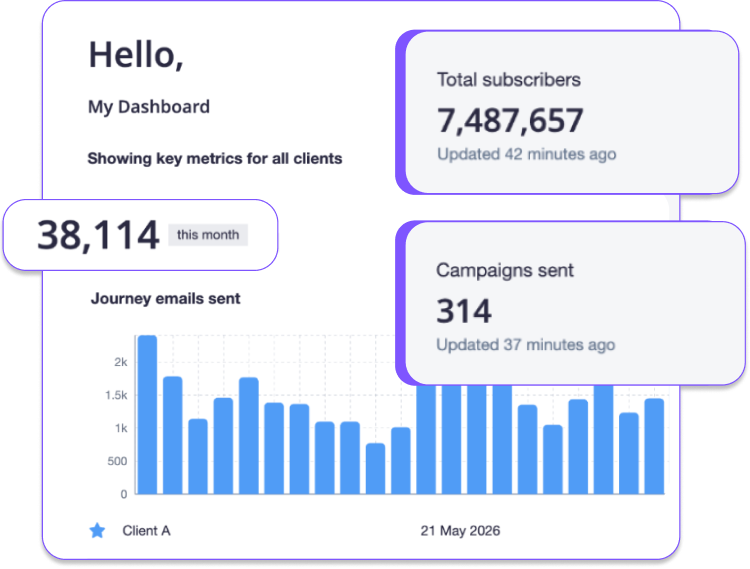
The primary solution to this bottleneck is the implementation of a unified agency dashboard. Modern platforms, such as Campaign Monitor, have introduced centralized command centers—often called "My Dashboard"—to act as a single source of truth for the entire agency portfolio.
Enhancing Real-Time Visibility
A dashboard is more than a display; it is a diagnostic tool. By aggregating data across every client account into a single view, team leads can immediately identify:
- Performance Trends: Which clients are seeing declining open rates?
- Revenue Drivers: Which accounts are currently yielding the highest ROI?
- Audience Health: Where are lists growing, and where are they stagnating?
By surfacing this information immediately upon login, agencies shift from being reactive—waiting for a client to ask for a report—to being proactive, identifying issues before the client even notices them.
Transforming Data into Client Value
Supporting Data and Methodology
The shift toward automated, visual reporting is not just about convenience; it is about the "Quality of Insight." When a team spends 80% of their time collecting numbers, they have only 20% of their time to interpret those numbers.
By utilizing interactive, widget-based reporting, agencies can flip this ratio. When metrics are visualized—showing revenue fluctuations, subscriber growth curves, and campaign efficacy—the team can skip the "what happened" phase of the meeting and move directly to the "what we should do next" phase.
Key Metrics for Agency Reporting:
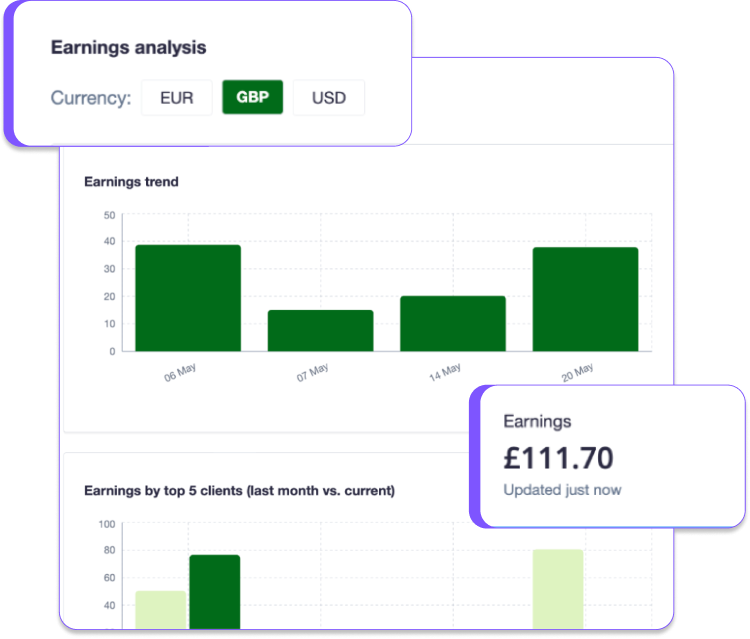
- Earnings Widgets: Tracking month-over-month revenue contribution helps agencies demonstrate their direct impact on the client’s bottom line.
- Campaign Heatmaps: Visualizing send performance across the entire client portfolio allows for better resource allocation.
- Growth Trends: Monitoring subscriber fluctuations allows for timely intervention in list-cleansing or acquisition strategies.
The "Starred Client" Framework: Managing Complexity
One of the biggest risks in a large agency is "client drift," where smaller or less-demanding accounts are ignored until they become a problem. To combat this, successful agencies are adopting tiered management strategies, often supported by features like "Starred Clients."
Prioritization Tactics
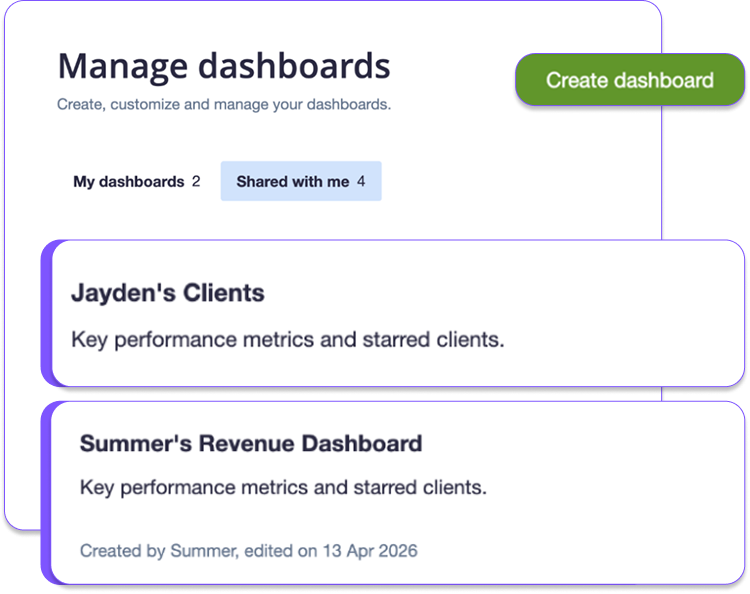
By pinning priority accounts to the top of the dashboard, account managers ensure that high-touch clients—or those in the middle of a critical launch—receive the necessary attention. This creates a "tiered visibility" structure:
- Tier 1 (Starred): High-priority or high-revenue accounts requiring daily or weekly check-ins.
- Tier 2 (Portfolio): General accounts that are monitored through automated alerts and routine reviews.
- Tier 3 (Archival/Paused): Accounts that are accessed only when specific historical data or long-term reporting is required.
This structure allows an agency to keep a portfolio of 50+ clients while maintaining the agility to focus on the 3–5 that need immediate intervention.
Official Industry Perspective: The Future of Agency Software
Industry experts suggest that the "agency-first" software category is the fastest-growing segment of the email marketing landscape. The consensus among agency leadership is clear: Tools should be invisible; expertise should be visible.
"When we talk to agencies, the complaint isn’t that they lack data," says a spokesperson for a leading marketing platform provider. "The complaint is that the data is trapped. The goal of modern agency software is to liberate that data, allowing the strategist to do what they were hired to do: provide judgment, context, and creative direction."
Implications for the Future of Client Relations
The ultimate goal of streamlining agency operations is to redefine the client-agency relationship. When an agency can answer questions about a campaign from six months ago in seconds rather than hours, the perception of their value changes.
Why Efficiency Breeds Loyalty
- Increased Confidence: When an agency provides immediate, data-backed answers, client trust deepens.
- Strategic Focus: By offloading the "administrative work" to automated dashboards, the agency has the capacity to offer higher-value services, such as complex automation architecture, segmentation strategies, and creative A/B testing.
- Scalable Excellence: Agencies that master their own internal efficiency are better positioned to take on more clients without a proportional increase in headcount. This improves profit margins and long-term sustainability.
Conclusion: Choosing the Right Foundation
Choosing an email marketing platform is no longer just about features like drag-and-drop editors or template variety. For agencies, the most important feature is the ability to manage complexity.
Whether your agency is a boutique firm or a growing enterprise, the requirement remains the same: you need a platform that acts as a force multiplier. By centralizing reporting, automating historical lookups, and providing a high-level view of your entire portfolio, you reclaim the time needed to provide the one thing clients cannot get from software: your expert judgment.
As the digital landscape becomes more crowded and competitive, the agencies that thrive will be those that have mastered the art of managing their own time as effectively as they manage their clients’ campaigns. By investing in the right infrastructure today, agencies can stop fighting the administrative clock and start focusing on what truly matters: driving results that make a difference.
