
The End of the "NPS Promoter" Era: Why B2B SaaS Must Overhaul Its Review Strategy for the AI Age
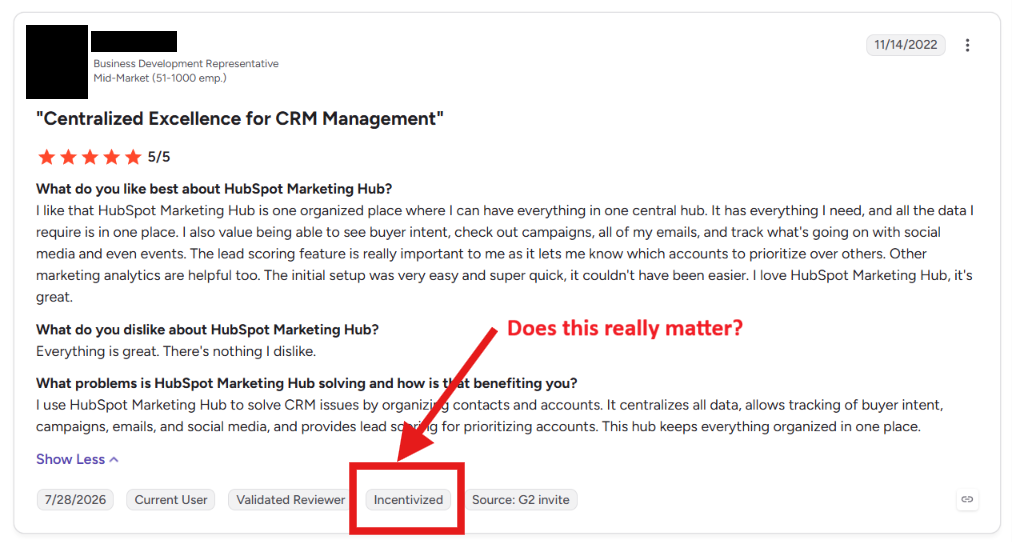
For over a decade, the playbook for B2B SaaS review generation has been remarkably consistent: run an NPS survey, identify the "promoters" (those who rate you 9 or 10), and offer them a small incentive—a gift card or a discount—to write a glowing recommendation on G2 or Capterra. This "pay-to-play" model helped companies dominate category leaderboards, earn shiny badges for their pricing pages, and create a veneer of universal customer satisfaction.
But the ground has shifted. Traffic to traditional review aggregators is stagnating or declining. Today’s buyers are bypassing these sites entirely, turning instead to LLMs (Large Language Models) like ChatGPT, Claude, and Perplexity to act as their research concierges. They are no longer passively reading generic five-star reviews; they are interrogating AI to find specific product flaws, compare integration capabilities, and verify vendor claims.
In this new ecosystem, chasing volume through incentivized "happy path" reviews isn’t just ineffective—it is becoming a liability.
The Old Guard: The Rise and Fall of the Incentivized Review
To understand the current crisis of confidence, one must look at how the model was built. Startups have long treated reviews as marketing collateral rather than objective feedback. By requesting reviews immediately after a successful product milestone or a closed deal, vendors intentionally capture the "peak" of customer happiness.
This approach created a culture of bias that has not gone unnoticed by the market. Toni Hoppen, founder of LandingRabbit, represents a growing contingent of founders who are opting out of the incentive treadmill. "On some platforms, reviews are marketing-generated," Hoppen notes. "On others, they might not represent the whole customer base—just the loudest. For AI search, reviews are just one piece of data."
The core problem is that LLMs don’t just "read" reviews; they synthesize them. They look for patterns, contradictions, and sentiment across thousands of data points. If a company’s review profile is composed entirely of cherry-picked, incentivized praise, an AI model will quickly identify the lack of depth and the absence of critical discourse, potentially flagging the brand as suspicious or "too good to be true."
The Non-Linear Buyer Journey and the Role of AI
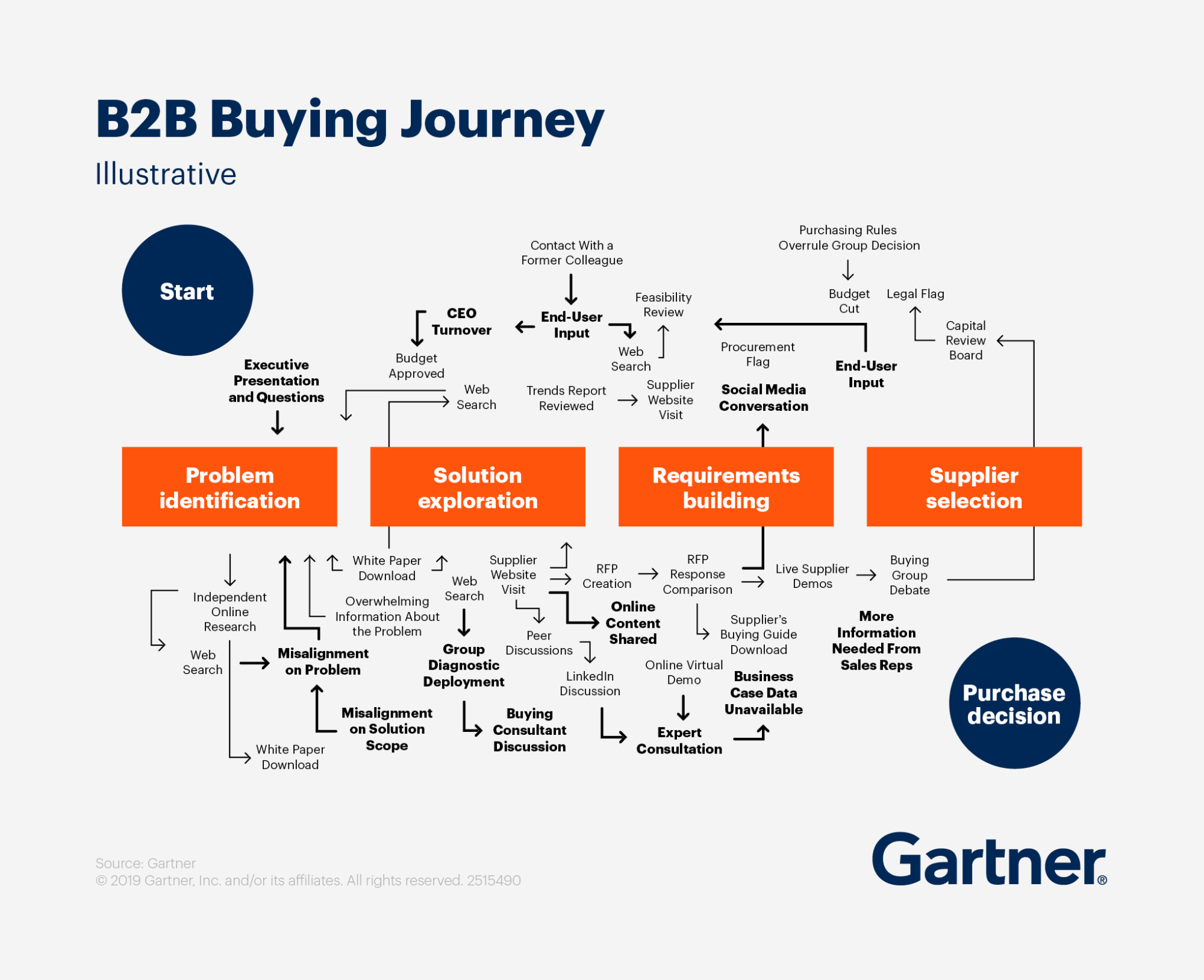
The traditional B2B sales funnel—awareness, interest, decision—has effectively collapsed. Modern research, supported by data from Dreamdata, shows that the average B2B buyer journey now involves 10 stakeholders and upwards of 88 touchpoints.
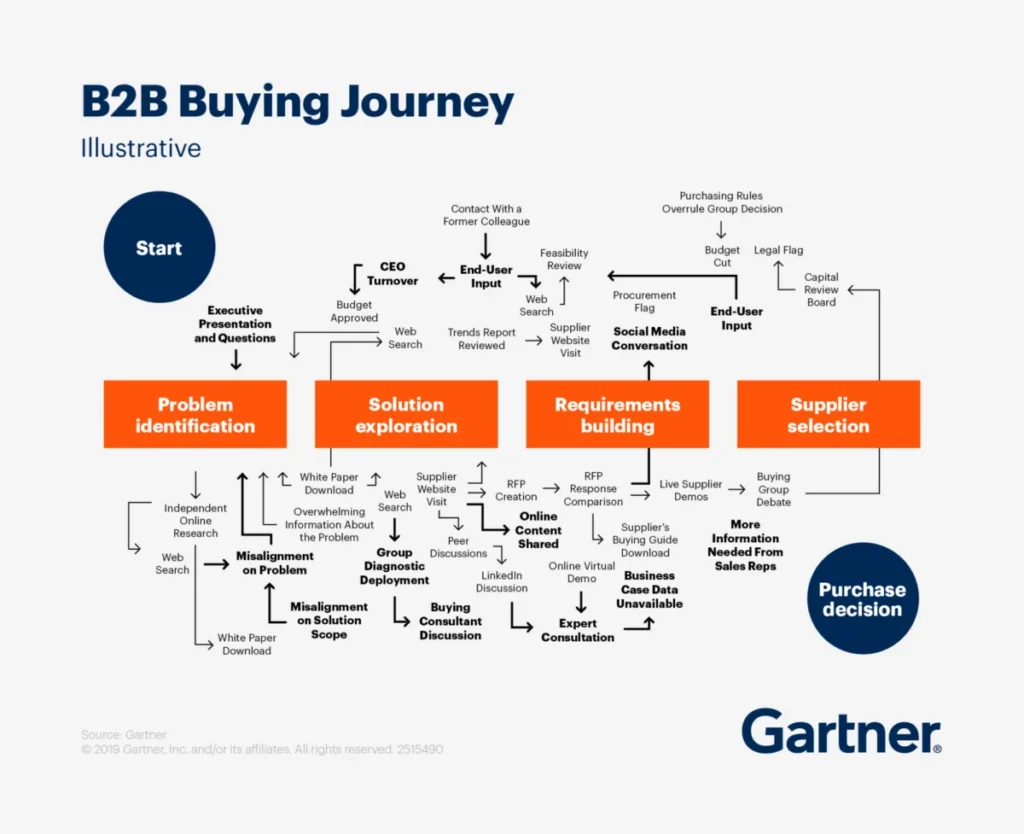
Gartner’s "buying-jobs" model is more reflective of this reality, viewing the process as a series of tasks: problem identification, requirements building, and supplier validation. Reviews sit at the tail end of this process, serving as the "validation" phase. However, as 94% of buyers now integrate AI into their research workflows, the way they access that validation has changed.
According to research from Semrush, AI is now utilized at every stage: 72% of buyers use it for early research, 62% for comparison, and 48% for fine-tuning their shortlists. When a buyer asks an LLM, "What are the common shortcomings of [Product X] for an enterprise retail team?" the AI doesn’t look for your five-star badge. It scans the collective narrative of your users. If that narrative is thin, the AI’s answer will be shallow—or worse, it will favor a competitor with more robust, detailed, and balanced customer evidence.
The Data: Why Traffic Isn’t the Only Metric
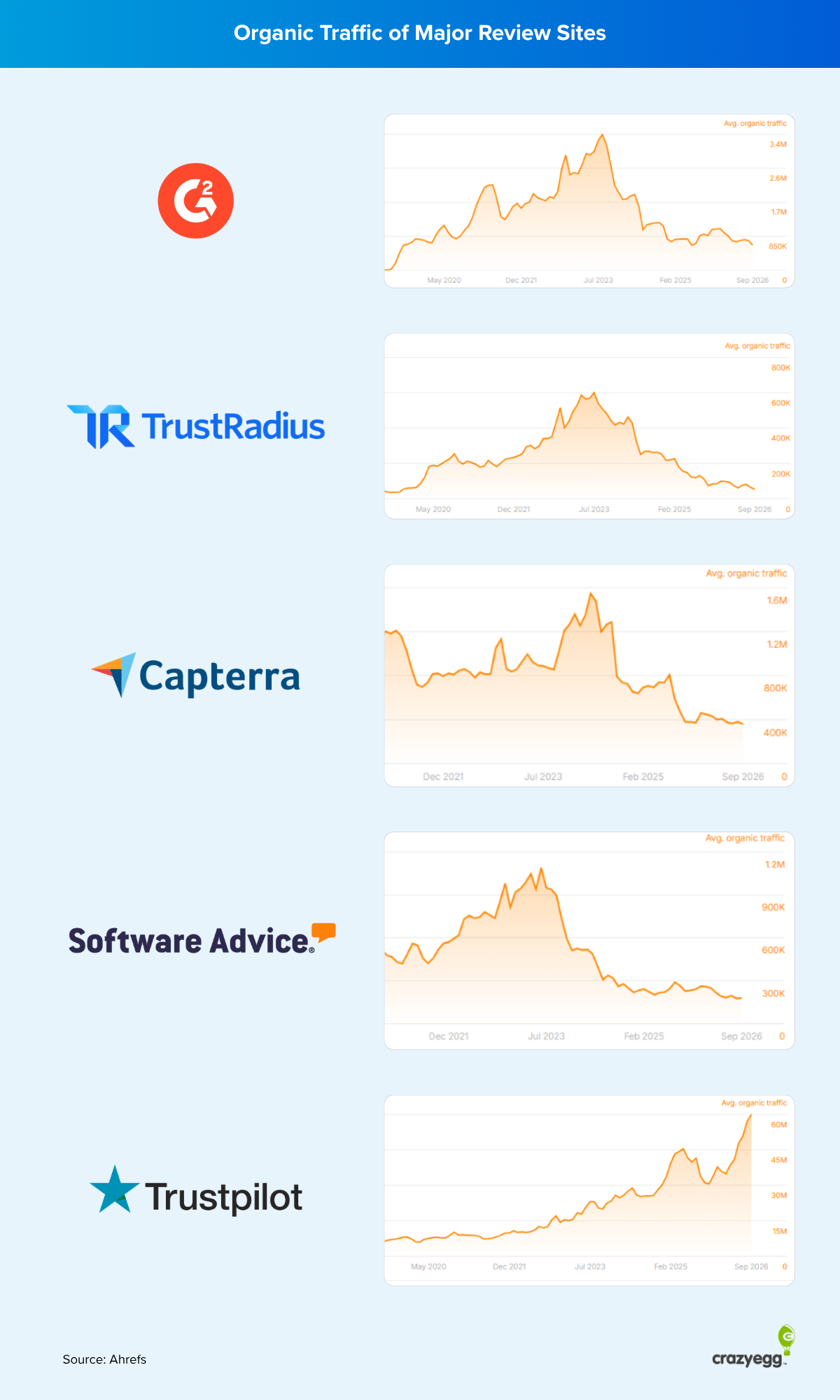
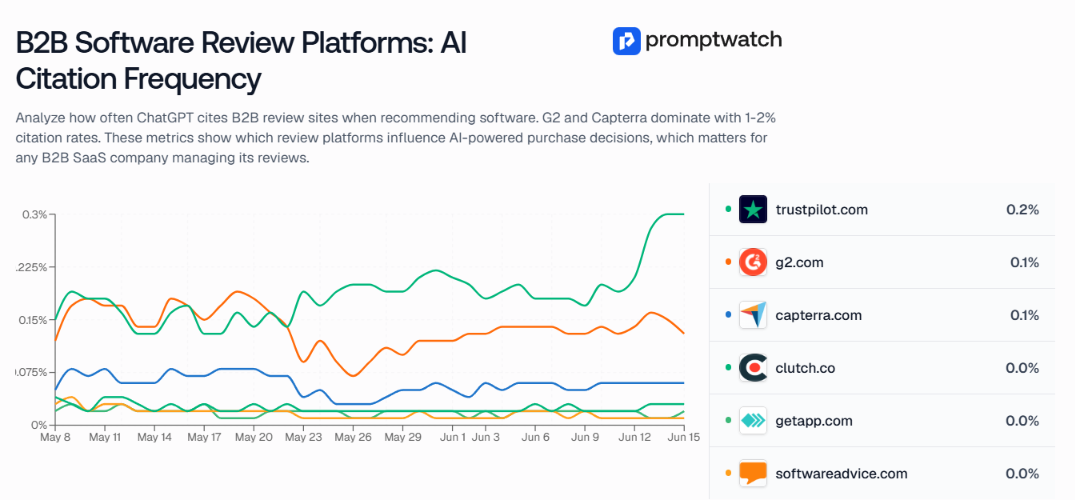
While organic traffic to major review sites like G2 and Capterra has shown a marked decline, the citation frequency of these sites by LLMs is rising. This creates a paradox: buyers aren’t visiting the sites, but they are consuming the data held within them via AI interfaces.
Data from PromptWatch indicates that review platforms are among the top sources cited by ChatGPT in B2B software queries. PeerSpot, which focuses on deep, verified enterprise insights, has seen its relevance soar precisely because its data is structured in a way that AI models find highly credible.
"Testimonials are ten times more valuable than anonymous ‘objective’ reviews in the B2B space," says Axel Lavergne, founder of Reviewflowz. Lavergne argues that the industry’s obsession with "five-star volume" is a hangover from the B2C world. In B2B, a review that details a specific, nuanced challenge—and how the software helped solve it—is far more persuasive to a high-intent buyer and more "digestible" for an LLM looking for factual proof.
Expert Perspectives: A New Strategic Framework
To navigate this transition, we spoke with three industry veterans to establish a roadmap for the future of customer evidence.
Russell Rothstein (PeerSpot): Prioritize Depth over Volume
Rothstein argues that the "sanitized" view provided by NPS-only reviews is fundamentally at odds with the transparency buyers demand today. "We always ask the reviewer to provide room for improvement," he explains. "Transparency is the best way to build trust with software buyers." PeerSpot’s strategy of verifying deep, qualitative insights has positioned them as the preferred provider for major marketplaces like AWS and Google Cloud, which are increasingly replacing traditional search for software procurement.
Branca Ballot: The Case for Sequential Expansion
Ballot, a veteran SaaS marketing leader, warns against the "spray and pray" approach. "Don’t spread yourself too thin," she advises. "Get one review site going well, and then you expand." Her approach emphasizes time-based campaigns over direct bribery. By offering a chance to win a high-value prize for providing honest, detailed feedback, she manages to capture a broader range of user sentiment, which in turn feeds the AI with a more accurate, diverse dataset.

Axel Lavergne: The Myth of the "Negative Review" Fear
Lavergne highlights a key psychological insight: B2B users are rarely interested in public shaming. "In the B2B space, it is extremely rare to go and publicly shame a company," he notes. "It makes employees look bad to potential recruiters." Therefore, vendors should stop fearing negative feedback. A four-star review that admits to a minor integration hurdle is often viewed as more credible by an AI—and a human—than a dozen generic five-star platitudes.
Implications: Building an AI-Resistant Narrative
For SaaS companies, the implications are clear: you must pivot from "Review Collection" to "Narrative Engineering." Your goal is to ensure that when an LLM synthesizes information about your brand, it finds a consistent, detailed, and honest account of your value proposition.
1. Broaden Your Net
Stop filtering by NPS score. By soliciting feedback from your entire user base—including those with "average" experiences—you provide the AI with the longitudinal data it needs to construct a realistic picture of your product’s strengths and weaknesses.

2. Focus on Use-Case Specificity
Encourage your customers to talk about their specific vertical and use case. An LLM performs best when it can answer a prompt like, "How does this platform handle API latency for high-frequency trading firms?" The more detail your reviews contain, the more likely the AI is to cite your product as the answer to niche queries.
3. Synchronize Your Owned Assets
Your website, whitepapers, case studies, and documentation must align with the sentiment in your reviews. If your marketing copy claims you are an "all-in-one enterprise solution" but your reviews consistently mention "clunky UI for small teams," the AI will pick up on this dissonance. A cohesive narrative across all digital touchpoints is the best defense against being misrepresented by a hallucinating model.
4. Diversify Your Presence
G2 is not the internet. While it remains a significant source, the rise of cloud marketplaces and specialized review platforms means you must look where your buyers are actually transacting. If you are an enterprise-focused company, a review on PeerSpot or a mention on a trusted industry forum may carry more weight with an AI than a hundred generic G2 submissions.

Final Thoughts: The Future of Evidence
The era of the "Review Badge" is drawing to a close. As we move further into an era of AI-augmented discovery, the companies that win will be those that prioritize authenticity over vanity metrics. By building a body of customer evidence that is detailed, varied, and transparent, you aren’t just pleasing a human buyer—you are training the AI to become your most effective sales advocate.
The strategy is no longer about generating the most noise; it is about providing the highest quality signal. In the age of the LLM, the truth is not just a moral imperative—it is your competitive advantage.
