

The Ultimate Guide to Instagram Verification: Navigating the Blue Checkmark in 2025
For years, the blue checkmark on Instagram was the ultimate status symbol. It served as a digital "Velvet Rope," reserved exclusively for celebrities, high-profile public figures, and global brands. It was a mark of authenticity that promised a level of exclusivity and prestige. However, the landscape of social media verification has undergone a seismic shift. With the introduction of Meta Verified, the gatekeeping of the blue badge has effectively ended, transforming it from a reward for fame into a subscription-based security feature.

Whether you are a creator looking to build authority or a business owner aiming to protect your brand identity, understanding the dual paths to verification is essential. This guide breaks down the nuances of Instagram verification, the differences between "notable" and "paid" status, and the tactical steps to securing your account.

1. The Anatomy of Instagram Verification: What It Actually Means
At its core, Instagram verification is a verification of identity. The blue checkmark acts as a badge of authenticity, signaling to your audience that your account is the genuine presence of the public figure, celebrity, or brand it claims to be.

Historically, the process was shrouded in mystery. Instagram’s internal teams manually reviewed applicants to determine if they met a threshold of "notability"—a subjective metric that often left small-to-medium businesses and aspiring creators in the dark. Today, the platform offers two distinct paths:

- Traditional Verification: The "notable" route, which remains free but highly selective.
- Meta Verified: The subscription-based route, which provides the badge in exchange for a monthly fee and identity confirmation.
It is important to note that the blue checkmark looks identical regardless of the path taken. To the average follower, there is no visual distinction between a verified celebrity and a verified local business owner. This democratization of the badge has changed the social currency of the icon, shifting its primary value from "fame" to "account security and legitimacy."
2. A Brief Chronology of the Blue Badge
To understand where we are, we must look at how we arrived here.
- The Early Era (Pre-2018): Verification was essentially an invite-only system. Users had to be "in the know" or have high-level PR representation to get the attention of Meta’s internal team.
- The Transparency Shift (2018): Instagram finally launched an in-app form for requesting verification. This allowed any user to apply, though the criteria remained strictly focused on "notability."
- The Paid Paradigm (2023): Facing shifting revenue models and the need to curb impersonation, Meta introduced "Meta Verified." This subscription service allowed users to verify their identity through government-issued ID in exchange for a monthly fee.
- The Current Landscape (2025): We now live in a bifurcated system where traditional, merit-based verification coexists with subscription-based verification, catering to both global entities and individual power users.
3. Comparing the Two Paths: Data and Eligibility
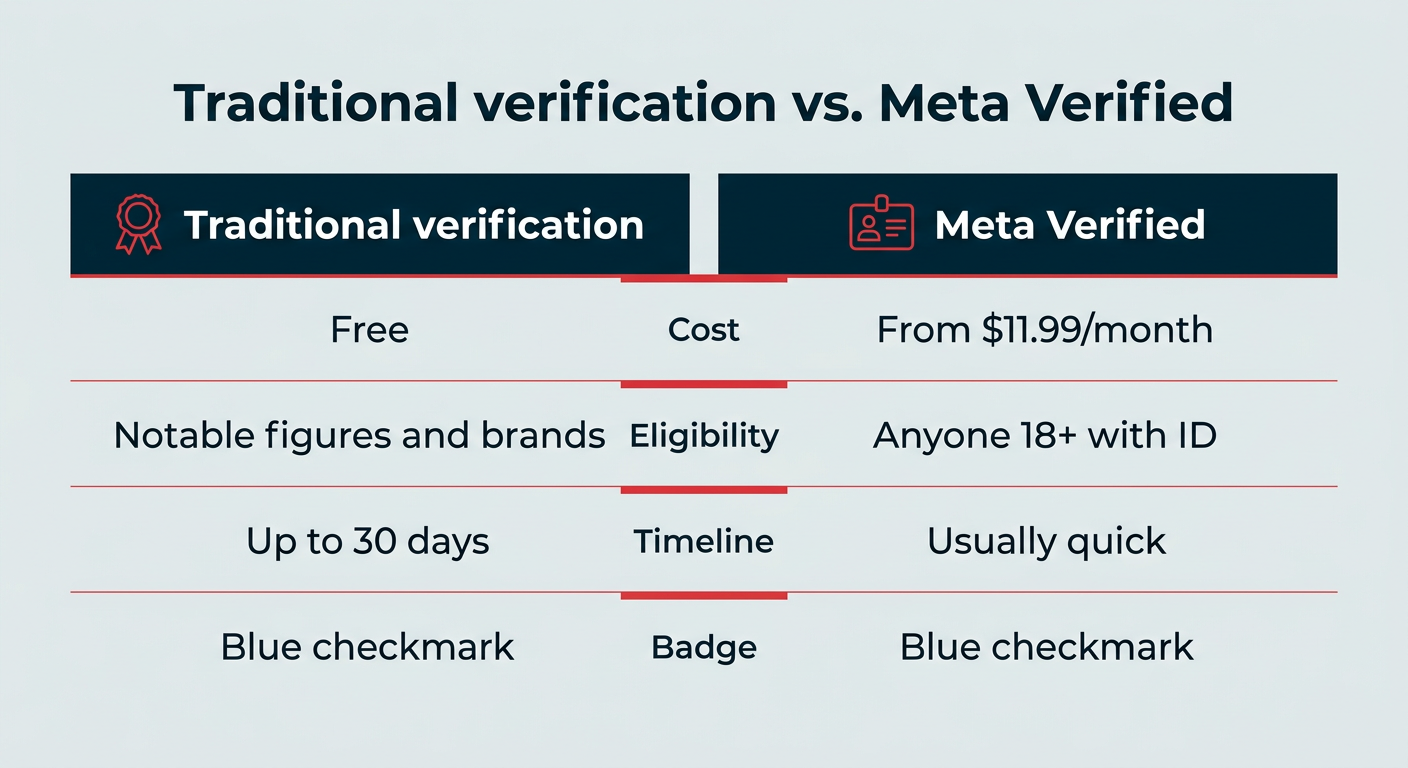
Choosing the right path depends on your goals. If you are a high-profile brand with consistent press coverage, the traditional route is the gold standard. If you are a creator, freelancer, or small business, Meta Verified is often the more pragmatic choice.
| Feature | Traditional Verification | Meta Verified |
|---|---|---|
| Cost | Free | From $11.99/mo (Web) / $14.99/mo (App) |
| Criteria | Notability, Press, Authenticity | Government ID, Age 18+, 2FA |
| Review Time | Up to 30 days | Rapid (post-ID review) |
| Security | Standard | Proactive impersonation monitoring |
| Support | Basic | Enhanced account support |
The "Notability" Hurdle
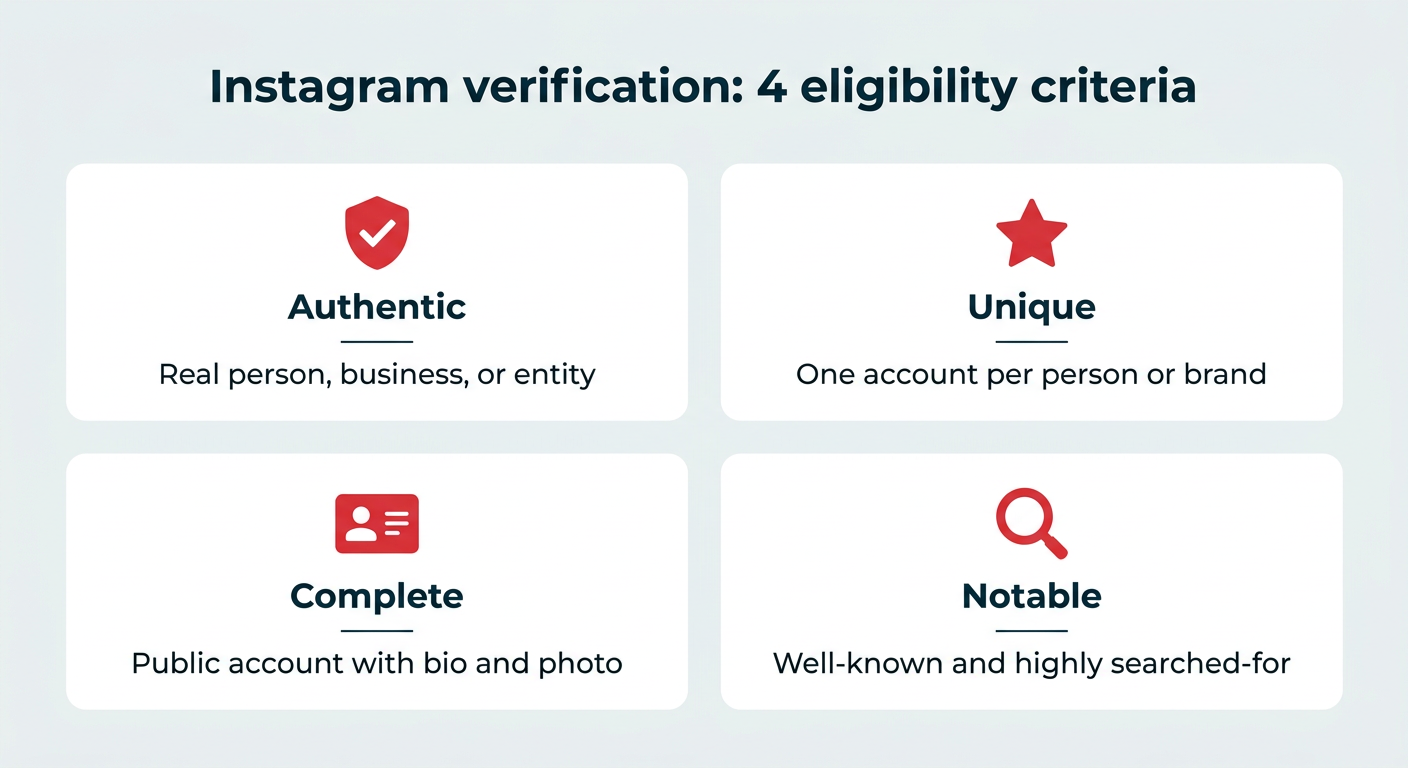
Traditional verification requires you to be "notable." Instagram defines this as being a person or brand that is "widely searched for." They look for a presence in multiple news sources (not including paid or promotional content). If you aren’t currently being written about in reputable publications, your chances of receiving a "No" on the traditional application are statistically high.

4. How to Apply: A Step-by-Step Tactical Guide
The Traditional Application (Free Route)
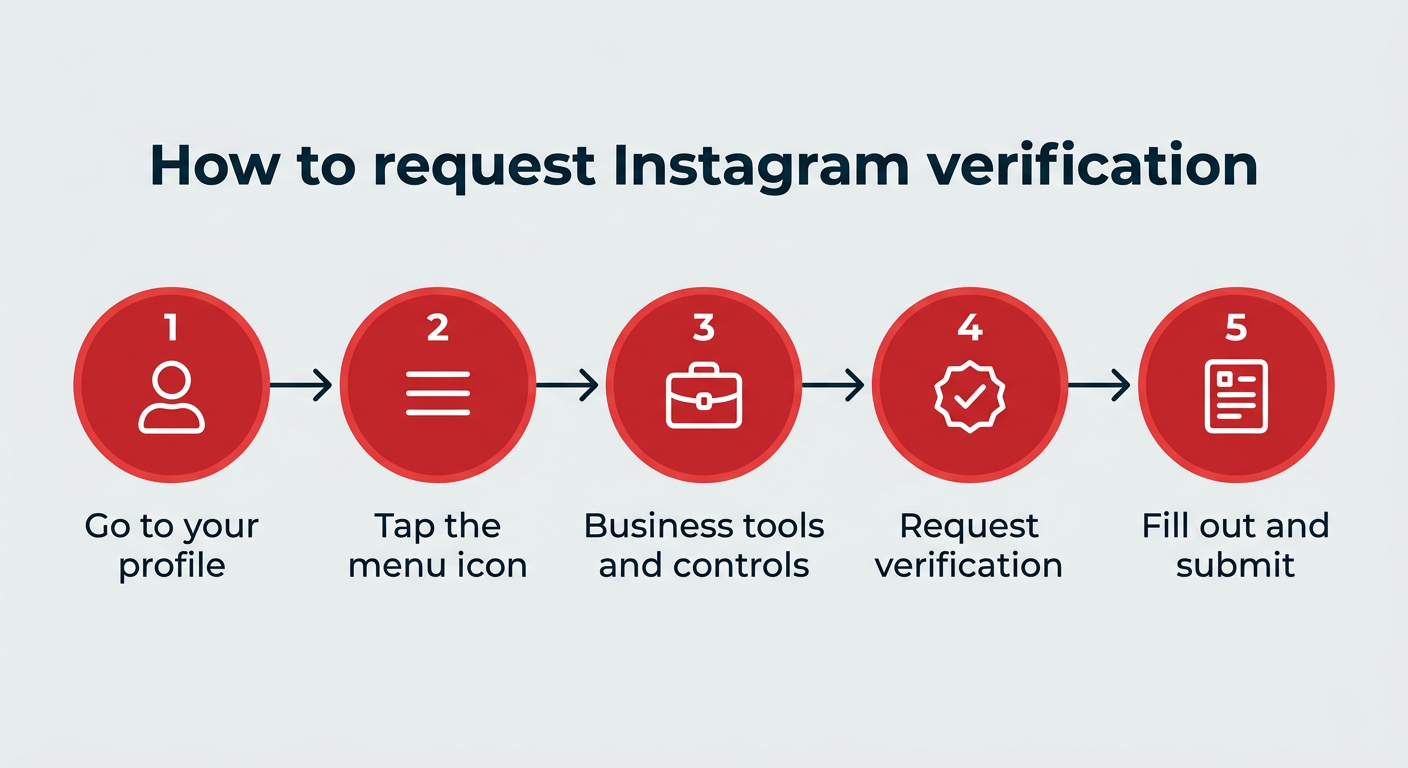
You must apply through the Instagram mobile app:

- Navigate: Go to your profile and tap the "hamburger" menu (three lines) in the top right.
- Access: Tap "Business tools and controls."
- Request: Select "Request verification" at the bottom of the menu.
- Documentation: You will be prompted to submit government-issued identification (for individuals) or business formation documents (for companies).
- Evidence: Add up to three links to news articles or social media accounts that prove your "notability."
The Meta Verified Application (Subscription Route)
If you do not meet the notability requirements, you can opt for the paid path:

- Follow the same steps as above until you reach the verification screen.
- Look for the "Meta Verified" prompt: If you don’t qualify for traditional, you will be invited to "Unlock benefits" via a subscription.
- Verification: You will be required to upload a government ID that matches your profile name and photo.
- Waitlist: In some regions or for some account types, you may be placed on a short waitlist before you can complete the purchase.
5. Six Strategies to Improve Your Approval Odds
If you are determined to pursue traditional, free verification, you must treat your digital footprint as a marketing project.

- Optimize Your Profile: Your bio, profile picture, and link-in-bio must be professional and consistent across all platforms. A sparse profile is an automatic disqualifier.
- Consistency is King: Instagram’s algorithm favors active, consistent users. Ensure you have a regular content schedule. Use tools like Hootsuite to manage and automate your output to ensure you never have a "dead" week on your feed.
- Leverage Strategic Collaborations: Partnering with already-verified accounts creates a "halo effect." When you are tagged in high-quality, relevant content, it reinforces your identity and digital footprint.
- Prioritize Authenticity: Ensure your account name is your actual name or your legally registered business name. Avoid "keyword stuffing" (e.g., @JohnDoeRealMarketingExpert123).
- Build Off-Platform Authority: This is the most crucial step. Use SEO to get your name or brand mentioned in news outlets, podcasts, or industry blogs. The more the internet "talks" about you, the easier it is for Instagram’s automated systems to verify your notability.
- Avoid "Verification Scams": Any third-party service claiming they can "guarantee" you a blue checkmark is a scam. These entities often attempt to phish for your login credentials or steal your identity documents. Only interact with the official Meta interfaces within the app.
6. What If You Are Denied?
A denial is not the end of the road. It is a signal that your documentation or notability footprint needs work. If you receive a rejection notice:

- Wait and Pivot: You can reapply, but don’t just hit "submit" again. Wait 30 days, during which you should actively work on getting more press coverage or building your follower base.
- Audit Your Links: Ensure the links you provided in your last application were actually public, high-quality, and relevant.
- Consider the Paid Path: If you are not a major public figure, don’t let the "notable" requirement discourage you. Thousands of businesses and creators have successfully moved to the Meta Verified program, which provides the same visual credibility as the traditional badge.
7. Implications: The Changing Value of the Badge
The move toward paid verification has fundamentally altered the power dynamics on Instagram. Previously, the badge was a "top-down" award given by the platform. Now, it is a "bottom-up" tool for users to protect their accounts.

The primary implication is security. Verified accounts are significantly harder to impersonate. When a user pays for Meta Verified, they gain access to proactive monitoring that helps prevent others from stealing their profile photos and creating "copycat" accounts. For brands, this is a massive win in terms of customer trust.

Furthermore, while Instagram has stated that verification does not offer a direct, algorithmic boost to your content reach, the secondary effects are real. A verified account looks more trustworthy in the comment section and in search results. When a user clicks on your profile and sees the blue check, the friction to hit the "Follow" button decreases.

Conclusion: Is It Worth It?
If you are an established brand or public figure, the free, traditional route is worth pursuing for the sake of prestige and authenticity. However, for the vast majority of users—entrepreneurs, local business owners, and growing influencers—the cost of a Meta Verified subscription is a small price to pay for the security, professional appearance, and customer support it provides.

Don’t let the "blue checkmark mystery" hold you back. Whether you earn it through reputation or subscribe to it for security, having that badge is a vital step in modernizing your digital presence in 2025. Stay consistent, stay authentic, and keep building your brand off-platform; the verification will follow.
